Lardirago Castle
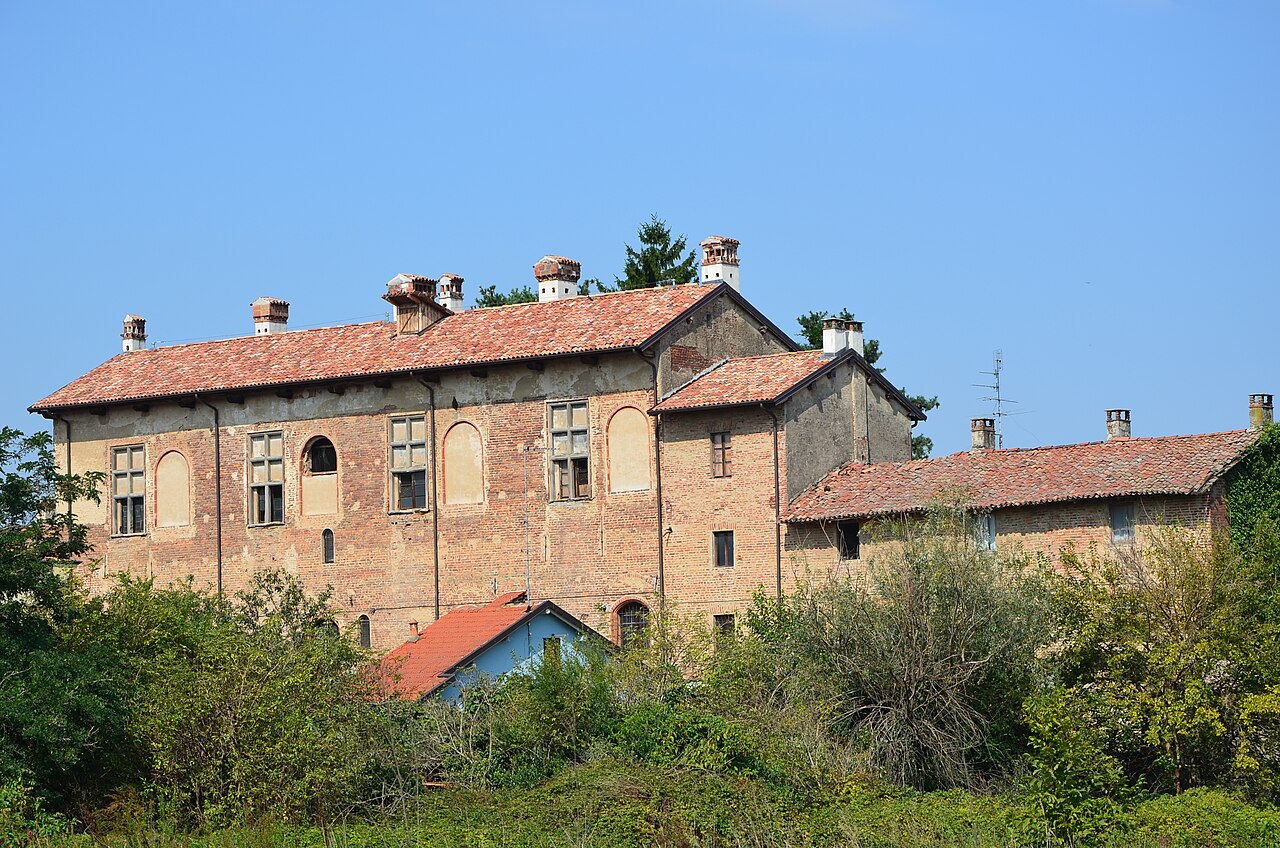
Lardirago Castle is a prominent hill castle located in the municipality of Lardirago, in the Lombardy region of northern Italy. Its strategic position near the historical border between the territories of Pavia and Milan highlights its military and administrative significance from the early medieval period onward. The castle's origins trace back to late antiquity or the early medieval era, as evidenced by archaeological finds including late Roman ceramics and distinctive brickwork arranged in a herringbone pattern, a technique characteristic of early medieval masonry.
The site originally belonged to the monastery of San Pietro in Ciel d’Oro from the late 10th century, serving as part of the monastery's extensive landholdings. During this period, an oratory with a semicircular apse was established, functioning as the monastery’s administrative center. The castle complex evolved through the centuries, with masonry additions from the 11th to the 13th centuries, including an early 13th-century "L"-shaped structure. Later, the castle was reshaped into a quadrangular courtyard design typical of Lombard fortifications, especially under the influence of the Visconti family, who controlled the region in the late medieval period.
Historical context and ownership
The first documented mention of Lardirago Castle dates to 1254, when the monastery granted nearby lands to a nobleman named Bonifacio Beccaria, signaling the castle’s growing political and military importance. Throughout the 11th to 13th centuries, the castle was situated in a contested zone marked by frequent conflicts between the rival city-states of Pavia and Milan.
In the late 14th century, the castle came under the possession of Gian Galeazzo Visconti, the powerful Duke of Milan. During his tenure, significant construction projects enhanced the castle’s fortifications and residential quarters. Following his death in 1402, ownership reverted to the monastery around 1410, which leased the estate to tenants who improved its agricultural infrastructure by introducing advanced hydraulic systems.
The castle’s turbulent history continued into the 15th and early 16th centuries. It hosted the famous condottiero Francesco Sforza in 1447 and endured attacks and plundering by Swiss and Venetian forces in 1512. The castle also suffered damage during the Battle of Pavia, a decisive conflict that further emphasized the region’s military volatility.
In 1569, Pope Pius V granted the castle and its lands to the Ghislieri College in Pavia. The college managed the estate through appointed agents who continued to enhance the agricultural productivity of the lands. Since around the year 2000, restoration efforts by the Ghislieri College have aimed to adapt the castle for cultural, conference, and exhibition uses, preserving its historical and architectural legacy.
Architectural features and layout
Castle structure and defensive elements
The Lardirago Castle complex is arranged around a rectangular courtyard, formed by four buildings of varying widths but consistent heights, joined at right angles. This layout reflects the castle’s architectural evolution from early medieval origins through Renaissance modifications. The castle’s exterior walls display a variety of window styles, including semicircular single-light windows, pointed biforas with slender marble columns introduced during the Visconti period, and 14th-century pointed windows featuring ornamental polylobed arches.
One of the castle’s most distinctive defensive features is the ricetto, a fortified enclosure located to the south of the main castle. This space dates to the late 14th century and is accessed through a tower near the barbican, a fortified gate passageway constructed in the mid-13th century. The ricetto served not only military purposes but also housed agricultural and industrial facilities such as a mill, press, hydraulic mortar, and saw, underscoring the castle’s role as a center of production as well as defense.
Entrances and portals
The castle’s main entrance features a large 13th-century portal, originally equipped with a metal portcullis designed to slide vertically for defense. This portal is adorned with an archivolt composed of alternating trapezoidal blocks of blond sandstone and paired bricks, a hallmark of Lombard construction techniques of the era.
Towers and chapel
Dominating the eastern façade is a prominent tower rising above the castle roofline. The northern section of this tower includes a portico with exposed brick arches resting on a granite base. Within the tower lies the Romanesque chapel of San Gervasio, dating to the 11th century. This chapel, accessible from the internal courtyard, retains significant historical value with a 14th-century terracotta portal richly decorated and recently uncovered frescoes from the 11th and 12th centuries.
Interior decoration and artistic heritage
The interiors of Lardirago Castle feature a rich array of frescoes spanning several centuries. These include 14th-century geometric patterns in the porticos, early 15th-century paintings depicting ladies in a garden within the southern wing, and 16th-century frescoes accompanied by painted coffered ceilings and ornate fireplaces. A notable architectural element inside the castle is a large spiral staircase in the southern wing, designed wide enough to allow horseback riding, illustrating the castle’s functional adaptations over time.
The northwest façade presents a broad portico with pointed arches, each framed by projecting moldings on their archivolts, adding to the castle’s aesthetic complexity and reflecting the layered architectural styles accumulated over centuries.
Associated structures and agricultural heritage
East of the castle lies the Cascina Cortegrande, a farmstead constructed between the 16th and 17th centuries. This complex follows the traditional Lombard farmhouse design, arranged around a large square courtyard, serving the agricultural needs connected to the castle estate. The castle’s association with agricultural production is further emphasized by the presence of hydraulic infrastructure and industrial facilities within the ricetto.
Today, Lardirago Castle stands as a testament to the region’s complex history, architectural evolution, and enduring cultural significance. Its ongoing restoration and adaptive reuse underscore the importance of preserving such historic sites for future generations.
Information
Website
Visit websiteSources & official resources
Verify the information above using these authoritative references.
Loading map...
Visitor reviews
No reviews yet. Been here? Write the first review and help other travelers!
Write the first reviewVisited this castle? Share your experience
Your review helps other travelers and adds first-hand knowledge to our encyclopedia.