Castello Visconteo
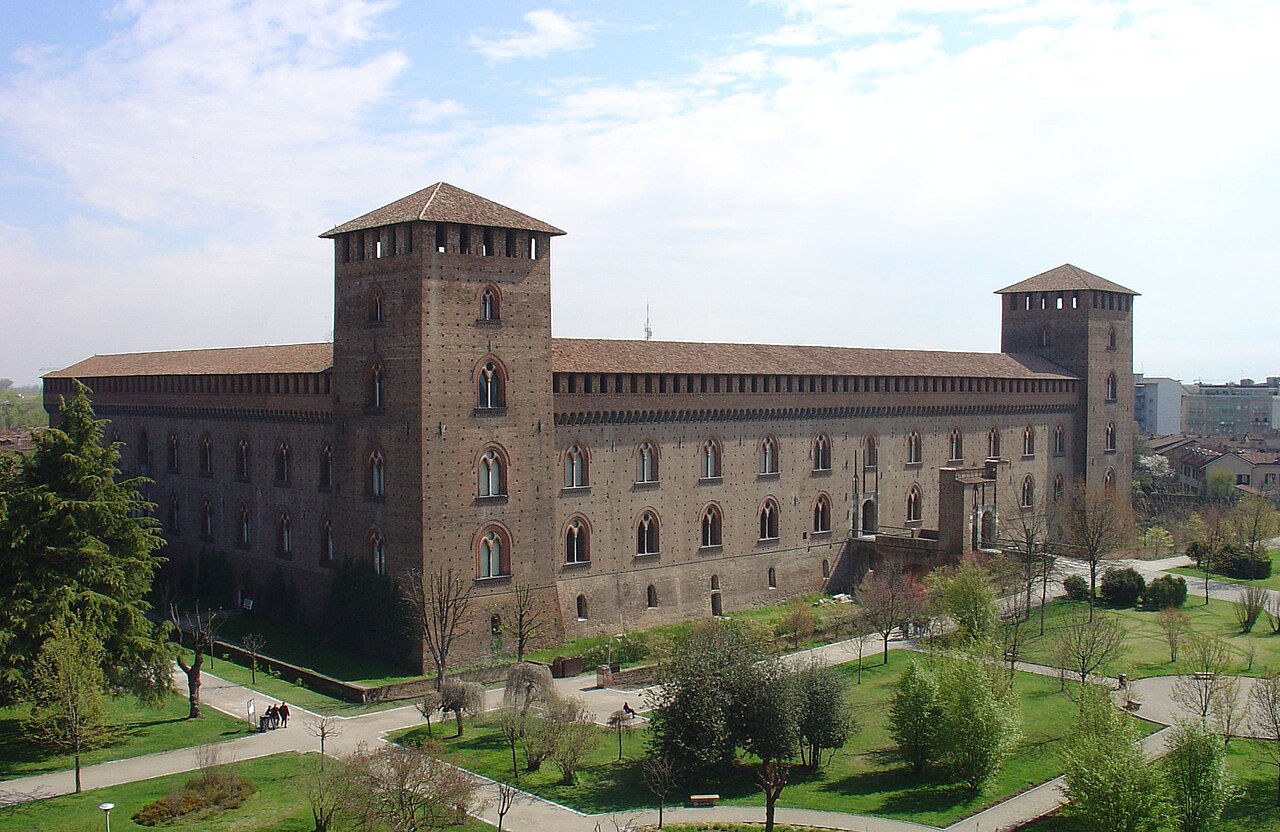
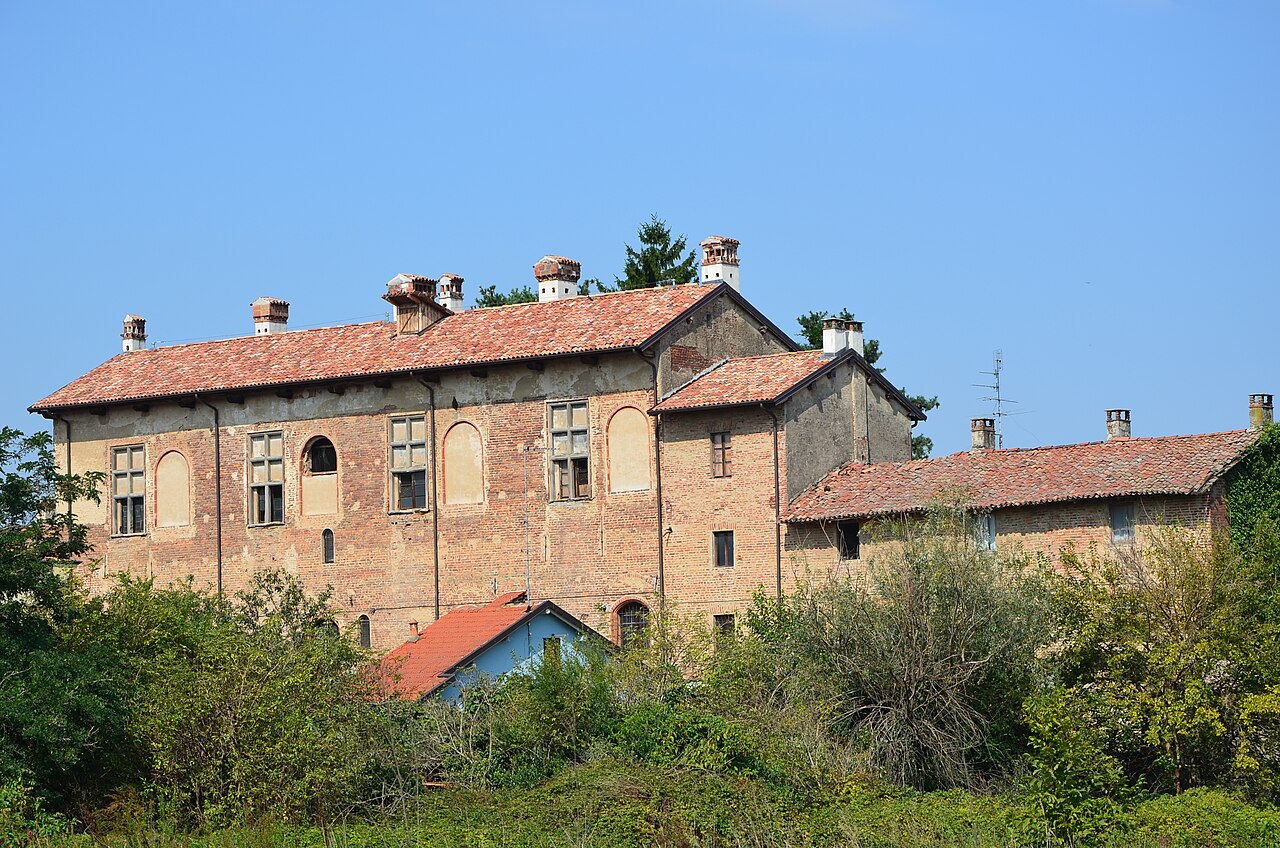
Castello Visconteo in Somma Lombardo, Italy, stands as a remarkable example of a medieval fortress that evolved into a noble residence over several centuries. Originally constructed as a defensive stronghold, the castle's history is deeply intertwined with the powerful Visconti family, who played a crucial role in the political and cultural landscape of Lombardy during the Late Medieval and Renaissance periods.
The castle's origins trace back to the early medieval period, with archaeological evidence indicating buildings on the site from as early as the ninth century. By the thirteenth century, this location had been fortified as part of a strategic defensive system along the Ticino River, protecting the vital corridor between Milan and Lake Maggiore. The site's military significance was enhanced when the Visconti family, rising in prominence, took control and transformed the fortress into a symbol of their regional power.
In 1360, the nearby Castello Visconteo of Pavia was built by Galeazzo II Visconti after the Visconti's conquest of the city, serving as their main residence. However, the Somma Lombardo castle retained its importance as a defensive and residential site for the Visconti lineage, particularly during periods of political upheaval.
The Visconti family's influence and castle development
Following the decline of the Visconti ducal line and the establishment of the Ambrosian Republic in Milan in the mid-fifteenth century, the castle at Somma Lombardo gained renewed significance. In 1448, brothers Francesco and Guido Visconti sought refuge within its walls, dividing the estate between them and initiating substantial renovations to adapt the fortress for both defensive and residential purposes.
Francesco founded the Visconti di San Vito branch, while Guido established the Visconti di Modrone line. Their renovations expanded the castle's living quarters and administrative spaces, reflecting the dual role of the castle as a stronghold and noble residence. The northwestern wing, known as the "degli Armigeri," preserves elements from the fourteenth and fifteenth centuries, showcasing traditional masonry and fortified features.
Architectural evolution and features
The castle complex comprises interconnected buildings arranged around a central courtyard, illustrating a blend of medieval and Renaissance architectural styles. The eastern wing, added in the fifteenth century, expanded the residential and administrative areas, while the southern wing, constructed in the sixteenth century, further extended the castle's footprint.
Originally, a continuous moat surrounded the castle and adjacent noble homes, underscoring its defensive purpose. Although the moat no longer encircles the entire complex, remnants remain visible today. Inside, the Salone d’Onore (Hall of Honor) is notable for its early seventeenth-century frescoes, attributed to artists influenced by the Procaccini family. These frescoes were inspired by detailed Flemish engravings from artists such as Crispjin van de Passe, Theodor and Philippe Galle, and Adriaen Collaert.
The castle chapel, dedicated to the Madonna Assunta, contains liturgical objects and an altarpiece of the Annunciation, credited to the workshop associated with the artist Cerano. These artistic elements highlight the castle's role as a religious as well as a residential site.
Historical significance and notable residents
Throughout the early modern period, the Visconti di San Vito family maintained residence at the castle. In 1619, King Philip III of Spain granted this branch the hereditary title of Marquis of San Vito, cementing their aristocratic status in the region.
The castle also hosted notable historical figures. Niccolò Sfondrati, born at the castle in 1535, later became Pope Gregory XIV. Additionally, Italian kings such as Vittorio Emanuele II and Umberto I stayed at the castle during military exercises and hunting expeditions, underscoring its continued use as a royal retreat into the nineteenth century.
In the nineteenth century, Marquis Carlo Ermes Visconti amassed a unique collection of approximately 400 eighteenth-century barber’s basins, known as bacili, sourced from Faenza, Savona, and other European centers. This collection remains a distinctive feature of the castle's museum holdings.
Preservation and cultural heritage
Today, the castle is under the stewardship of the descendants of the Visconti family. Gabrio Luigi Visconti di San Vito, the last direct descendant, established a preservation organization in 1997 to protect the site and promote its cultural heritage.
The castle now houses the Civic Museums of Pavia (Museo Civici di Pavia), offering visitors access to its rich collections and well-preserved interiors. Among the highlights is the Camera Reale (Royal Chamber), featuring a grand seventeenth-century wooden bed from Lombardy, reserved for the visits of Italian monarchs. Another room commemorates Count Gabrio Casati, a key figure in the Risorgimento and related to the Visconti family, with a portrait painted by Eliseo Sala.
Archaeological finds on the castle grounds, including Roman-era inscriptions, boundary stones, and altars, reveal the site's ancient origins and long-standing significance in the region. These artifacts deepen the historical narrative beyond the medieval and Renaissance periods.
Overall, the Castello Visconteo of Somma Lombardo represents a fascinating convergence of military architecture, noble residence, and cultural heritage. Its well-preserved frescoes, furnishings, and extensive collections provide a vivid window into the aristocratic life and historical continuity of Lombardy from the Middle Ages through the modern era.
Frequently asked questions (FAQ)
- What is the historical significance of Castello Visconteo?
- Castello Visconteo is a medieval castle that dates back to the 14th century, built by the Visconti family, who played a crucial role in the history of Milan. It served as a fortress and a residence, reflecting the power and influence of the Viscontis during the late Middle Ages.
- When was Castello Visconteo constructed?
- Construction of Castello Visconteo began in 1370 under the direction of the Visconti family. The castle has undergone various modifications and restorations over the centuries, preserving its historical essence and showcasing its architectural beauty.
- What are the opening hours of Castello Visconteo?
- Castello Visconteo is typically open to visitors from Tuesday to Sunday, with specific hours that may vary seasonally. It is advisable to check the castle's official website for the most up-to-date information on opening hours before planning your visit.
- Can I purchase tickets online for Castello Visconteo?
- Yes, tickets for Castello Visconteo can be purchased online through the official website, which allows you to skip the lines and ensure your entry. Online bookings often offer discounts or special deals for groups or families.
- Is it possible to access Castello Visconteo with mobility aids?
- Castello Visconteo is committed to providing accessible facilities for all visitors. While some areas may have limited accessibility due to the castle's historical structure, ramps and assistance are available to help guests navigate their visit.
- What are the best times to visit Castello Visconteo?
- The best times to visit Castello Visconteo are during the spring and fall when the weather is mild, and the tourist crowds are smaller. Visiting during weekdays can also enhance your experience, allowing for a more peaceful exploration of the castle.
- What nearby attractions should I consider visiting?
- In addition to Castello Visconteo, visitors can explore the charming town of Somma Lombardo and its beautiful churches, such as the Basilica di San Bartolomeo. The nearby Lake Maggiore offers stunning views and recreational activities, making it a perfect complement to your castle visit.
- How much are the ticket prices for Castello Visconteo?
- Ticket prices for Castello Visconteo are generally affordable, with discounts available for children, seniors, and groups. It is advisable to check the official website for the latest pricing information and any special promotions that may be offered.
Information
Website
Visit websiteSources & official resources
Verify the information above using these authoritative references.
Loading map...
Visitor reviews
No reviews yet. Been here? Write the first review and help other travelers!
Write the first reviewVisited this castle? Share your experience
Your review helps other travelers and adds first-hand knowledge to our encyclopedia.