Virtsu Castle Ruins
The Virtsu castle ruins are located in Hanila, Estonia, representing the remains of a late-medieval fortress that once played a significant role in the feudal landscape of the region. Constructed in 1430 by the noble Uexküll family, the castle was part of the defensive network under the control of the Bishopric of Ösel-Wiek, a feudal state that governed the western part of present-day Estonia, including parts of Saaremaa and Hiiumaa.
Historical context and significance
The castle's establishment in the early 15th century reflects the strategic importance of the Virtsu area within the Bishopric's territory. The Bishopric of Ösel-Wiek was a powerful ecclesiastical principality during the late medieval period, and its vassals, including the Uexküll family, were responsible for maintaining control over key locations and trade routes. Virtsu castle served as a military and administrative center, overseeing the surrounding lands and protecting the approaches to the coast.
Although the castle was destroyed in the 16th century, likely due to conflicts such as the Livonian War (1558–1583) or other regional upheavals, its ruins remain a testament to the turbulent history of medieval Estonia. The destruction marked the end of its active use, and over time, nature reclaimed much of the site.
Architectural features and layout
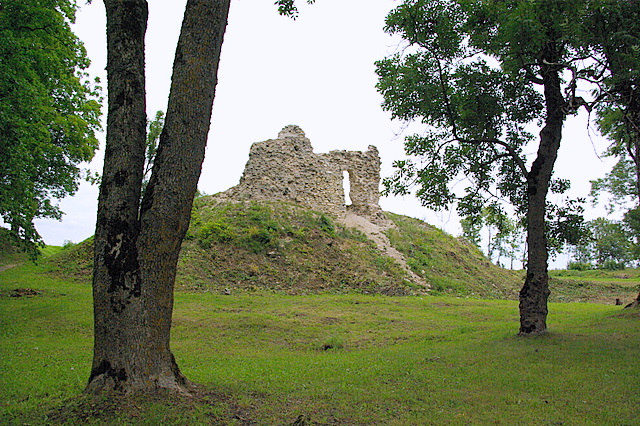
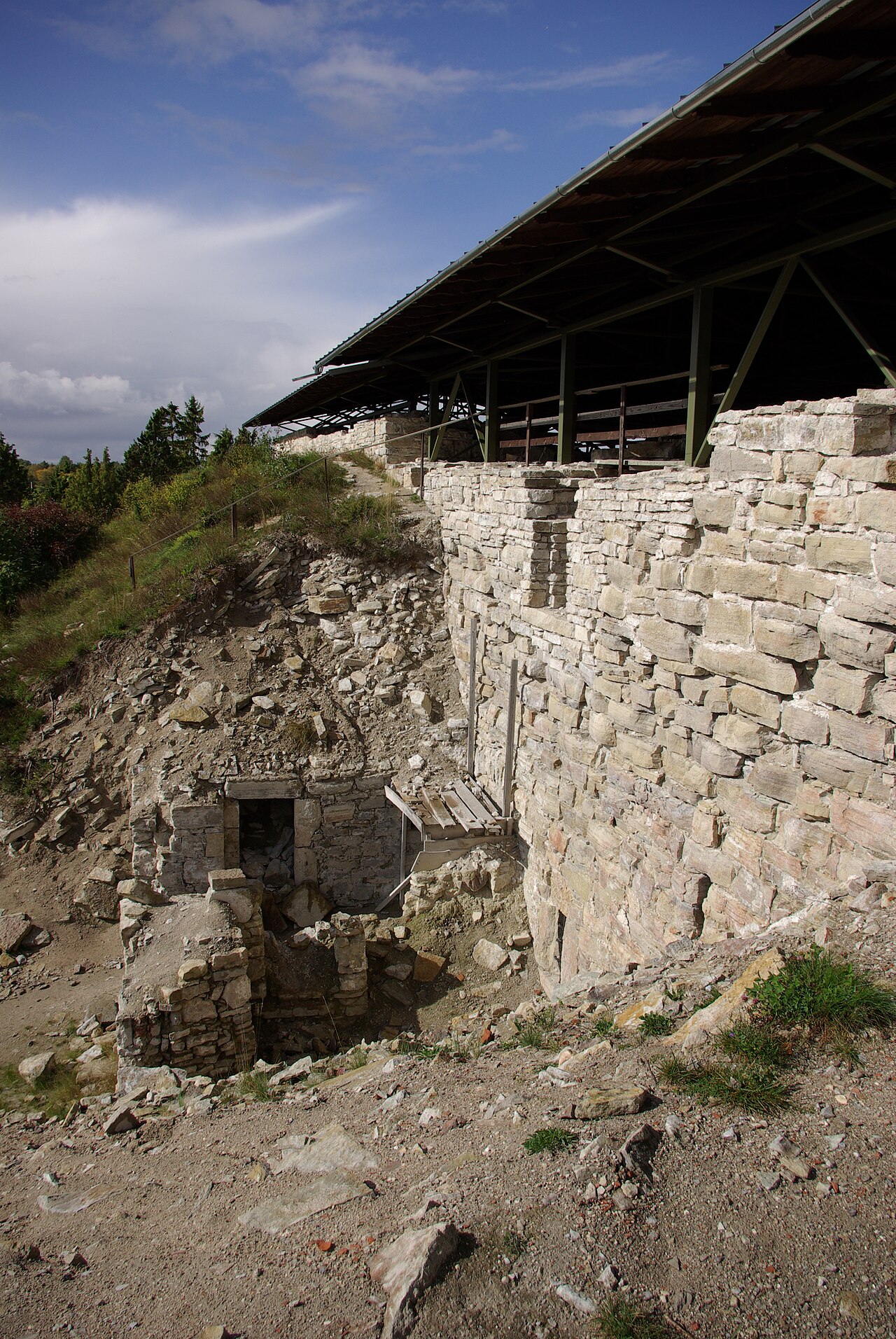
While only remnants survive today, the ruined walls of Virtsu castle still rise a few metres high. The structure was typical of late-medieval fortifications in the Baltic region, likely featuring a stone curtain wall enclosing a courtyard, with defensive towers and a gatehouse to control access. The castle's design would have reflected both military needs and the residential requirements of the noble family.
The overgrowth of grass and bushes on the ruins obscures much of the original layout, but archaeological studies and historical records suggest a compact fortress adapted to the local terrain. The use of local limestone and other materials was common in such constructions, providing durability against both siege and the harsh Baltic climate.
Current condition and preservation
Today, the Virtsu castle ruins are classified as ruins, with only partial walls remaining visible above ground. The site is overgrown with vegetation, which both conceals and protects the fragile remains. Despite this, the ruins attract visitors interested in medieval history and Estonian heritage.
Efforts to preserve the site have been limited, and the castle remains an evocative but fragile historical monument. Its condition offers insight into the challenges of conserving medieval structures in natural environments where vegetation can accelerate decay but also shield stonework from direct exposure.
Visiting Virtsu castle ruins
The castle ruins are accessible to the public, offering a glimpse into the medieval past of Estonia. Visitors can explore the site, though facilities are minimal due to the ruinous state. The surrounding landscape provides a peaceful setting for reflection on the region's feudal history.
Nearby, the village of Virtsu and the coastal areas offer additional attractions, including maritime heritage and natural beauty. The castle's location near the Baltic Sea adds to its historical significance as a coastal stronghold.
Legacy and cultural importance
Despite its ruined condition, Virtsu castle remains an important symbol of the medieval period in Estonia. It reflects the complex feudal structures and the influence of the Bishopric of Ösel-Wiek in shaping regional politics and defense. The castle's history is intertwined with the noble families like the Uexkülls who played key roles in local governance.
As a heritage site, the ruins contribute to understanding the architectural and historical development of Baltic fortifications. They also serve as a reminder of the region's shifting political landscape during the late medieval era.
Frequently asked questions (FAQ)
- What is the historical significance of Virtsu Castle Ruins?
- Virtsu Castle Ruins, dating back to the 14th century, played a crucial role in the defense and administration of the region during medieval times. Its strategic location provided a vantage point over the surrounding landscape, making it an important site for controlling trade routes and protecting against invasions.
- When was Virtsu Castle built?
- Construction of Virtsu Castle began in the late 13th century and was completed in the early 14th century. The castle was part of the Teutonic Order's efforts to establish control in the area and underwent various alterations throughout its history.
- Can I visit Virtsu Castle Ruins?
- Yes, visitors are welcome to explore the ruins of Virtsu Castle. While there are no formal guided tours, the site is open to the public, allowing guests to wander through the remains and appreciate the historical architecture.
- What are the opening hours for Virtsu Castle Ruins?
- Virtsu Castle Ruins are generally accessible year-round, but it's advisable to check local resources for any seasonal variations in visiting hours. The site is usually open during daylight hours, allowing plenty of time for exploration.
- Is it possible to access Virtsu Castle by public transportation?
- Yes, public transportation options are available for reaching Virtsu Castle Ruins. Buses from nearby towns can take you close to the site, making it convenient for visitors without personal vehicles.
- What is the best time to visit Virtsu Castle Ruins?
- The best time to visit Virtsu Castle Ruins is during the late spring and early autumn months when the weather is mild and the landscape is particularly beautiful. This timing allows visitors to enjoy the surrounding nature and capture stunning photographs of the ruins.
- Are there any nearby attractions to visit?
- Yes, there are several attractions near Virtsu Castle Ruins, including picturesque coastal areas and charming local villages. Visitors can also explore the nearby nature trails and enjoy the beautiful Estonian countryside.
- What are the ticket prices for visiting Virtsu Castle Ruins?
- Visiting Virtsu Castle Ruins is typically free of charge, allowing everyone to experience the historical site without an entry fee. However, donations are appreciated to help with the preservation and maintenance of the ruins.
- How do I get more information about Virtsu Castle Ruins?
- For more information, visitors can check the local tourism website or contact the Hanila municipality office. They provide details on visiting hours, special events, and historical context for a more enriching experience.
Information
Website
Visit websiteSources & official resources
Verify the information above using these authoritative references.
Loading map...
Visitor reviews
No reviews yet. Been here? Write the first review and help other travelers!
Write the first reviewVisited this castle? Share your experience
Your review helps other travelers and adds first-hand knowledge to our encyclopedia.