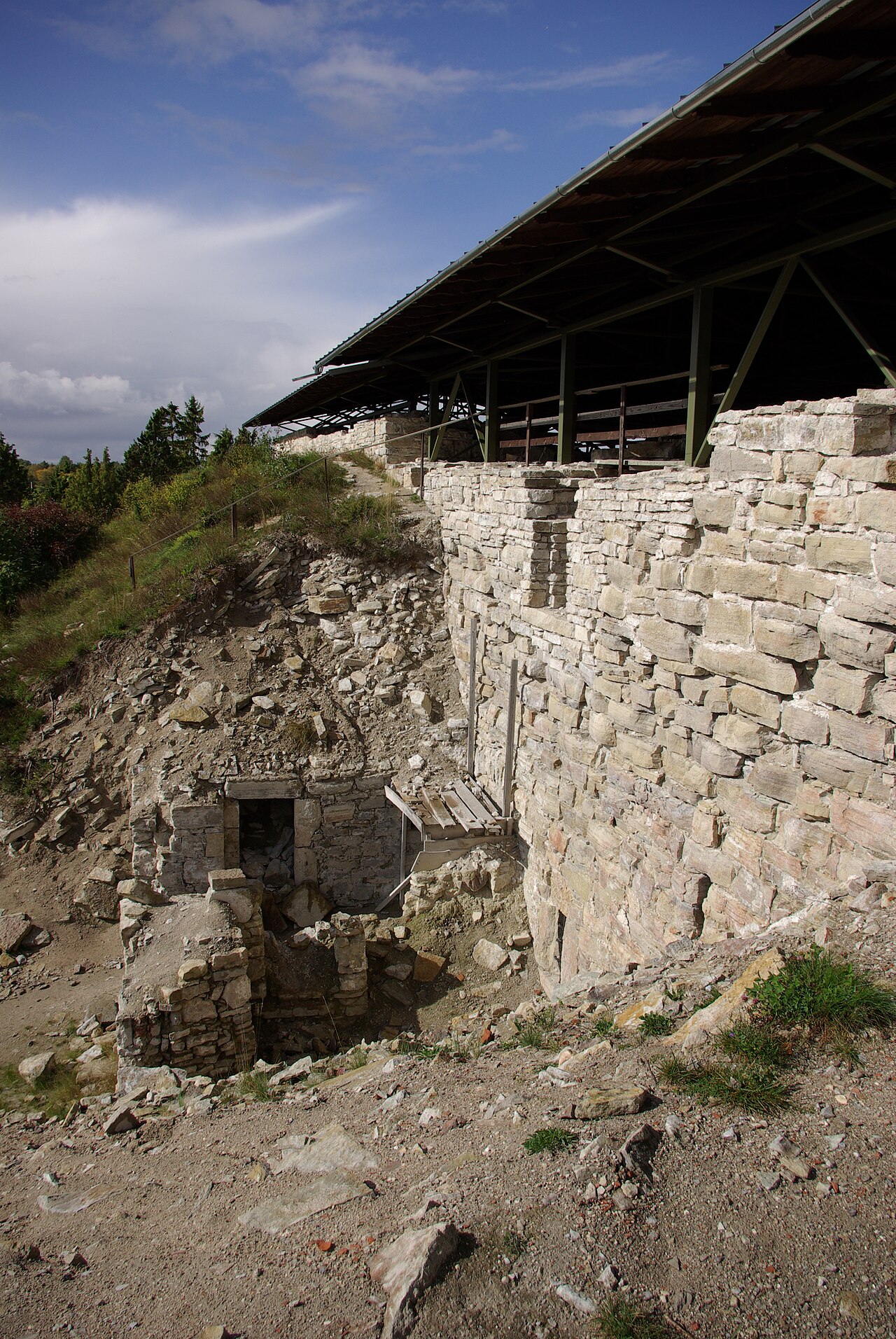
Maasi Fortress Ruins
The Maasi fortress ruins stand as a significant late-medieval relic on the island of Saaremaa, Estonia. This seaside fort-castle was constructed in the 14th century under the authority of the Livonian Order, a powerful military and religious order that controlled much of the Baltic region during the Middle Ages. The fortress was built primarily through the forced labor of the island's indigenous inhabitants, a punitive measure imposed by the Livonian Order following an uprising that had destroyed the Order's previous stronghold in the area.
Historical context and construction
The Maasi fortress was erected as a strategic military installation to assert control over Saaremaa and the surrounding maritime routes. Its location near the sea provided both defensive advantages and control over important trade and military pathways in the Baltic Sea. The construction involved robust stone walls reaching approximately 8 meters in height, which have remarkably endured centuries of weathering and conflict.
The fortress' design reflected typical late-medieval military architecture of the Baltic region, with thick defensive walls and limited access points to repel attackers. The use of local materials and the labor force drawn from the island's population highlight the social and political tensions of the period, particularly the dominance of the Livonian Order over the native Estonian populace.
Military significance and conflicts
Throughout its active use, the Maasi fortress was considered a strong defensive position. It remained undefeated during its operational period until it faced destruction at the hands of the Danish forces. The fortress was ultimately blown up in 1576 by the Danes as a strategic move to prevent its capture by the advancing Swedish army during the turbulent conflicts of the Northern Wars. This deliberate demolition marked the end of its military use and initiated a long period of abandonment.
Post-destruction and preservation
Following its destruction, the Maasi fortress was left in ruins for over three centuries. No significant restoration or rebuilding efforts were undertaken during this time, allowing the remnants of the fortress to become a historical landmark. The surviving 8-meter-high walls stand as a testament to the fortress' original scale and defensive capabilities.
Today, the ruins of Maasi fortress are an important cultural and historical site in Saaremaa. They provide insight into the medieval military architecture of the Baltic region and the complex history of the Livonian Order's rule. The site attracts historians, archaeologists, and visitors interested in medieval fortifications and Estonian heritage.
Architectural features and layout
The fortress featured thick stone walls designed to withstand sieges and attacks, with battlements and limited entry points to control access. While much of the internal structures have not survived, the remaining walls outline the original footprint of the castle, indicating a compact but formidable defensive complex typical of late-medieval seaside fortifications.
The fortress likely included essential military features such as towers for surveillance, a gatehouse for controlled entry, and possibly a courtyard within the walls. The seaside location may have also included a small harbor or landing area for supplies and reinforcements arriving by sea.
Visiting Maasi fortress ruins
Visitors to the Maasi fortress ruins can explore the surviving walls and imagine the historical significance of this 14th-century stronghold. The site offers panoramic views of the surrounding landscape and the Baltic Sea, emphasizing its strategic position. Interpretive signage and local guides may provide additional context about the fortress' history and the Livonian Order's influence in the region.
The ruins serve as a poignant reminder of the medieval conflicts that shaped Estonia and the Baltic states, as well as the resilience of the local population through centuries of foreign domination and warfare.
Frequently asked questions (FAQ)
- How do I get to Maasi Fortress Ruins?
- Maasi Fortress Ruins is located on Saaremaa Island, which can be accessed by ferry from the mainland of Estonia. Once on the island, you can reach the ruins by car or local transport, as they are situated near the village of Maasi.
- What is the historical significance of Maasi Fortress Ruins?
- Maasi Fortress, built in the 14th century, played a crucial role in the defense of the region against various invasions. It reflects the medieval military architecture of the time and provides insight into the historical conflicts in Estonia.
- When was Maasi Fortress built?
- Construction of Maasi Fortress began in the late 14th century, specifically around 1380. It was part of a broader network of fortifications developed during the period to protect against external threats.
- Can I visit Maasi Fortress Ruins year-round?
- Yes, Maasi Fortress Ruins are open for visitors year-round. However, accessibility may vary depending on the weather conditions, especially during the winter months when snow may cover the site.
- Why is Maasi Fortress considered an important architectural site?
- Maasi Fortress is notable for its unique remnants of medieval military architecture, including defensive walls and towers. Its design showcases the strategic importance of fortifications during the medieval period in Estonia.
- Is it possible to take guided tours of Maasi Fortress Ruins?
- Currently, self-guided tours are the most common way to explore Maasi Fortress Ruins. However, local guides may offer tours during the peak tourist season, so it’s advisable to check in advance.
- What are the opening hours for Maasi Fortress Ruins?
- The ruins are accessible from dawn until dusk, allowing visitors plenty of time to explore the site. It's recommended to visit during daylight hours for the best experience and safety.
- What is the best time to visit Maasi Fortress Ruins?
- The best time to visit is during the late spring and summer months, from May to September, when the weather is warm and conducive for exploring. This period also offers the chance to enjoy local festivals and events on the island.
- Are there any nearby attractions to Maasi Fortress Ruins?
- Yes, nearby attractions include the picturesque coastal areas of Saaremaa, as well as other historical sites like Kuressaare Castle. Visitors can also explore local nature trails and enjoy the beautiful landscapes surrounding the ruins.
- What are the ticket prices for visiting Maasi Fortress Ruins?
- There is no entrance fee to visit the Maasi Fortress Ruins, making it an affordable destination for travelers. Donations are appreciated to help maintain the site and support local heritage efforts.
Information
Loading map...
Visitor reviews
No reviews yet. Been here? Write the first review and help other travelers!
Write the first reviewVisited this castle? Share your experience
Your review helps other travelers and adds first-hand knowledge to our encyclopedia.