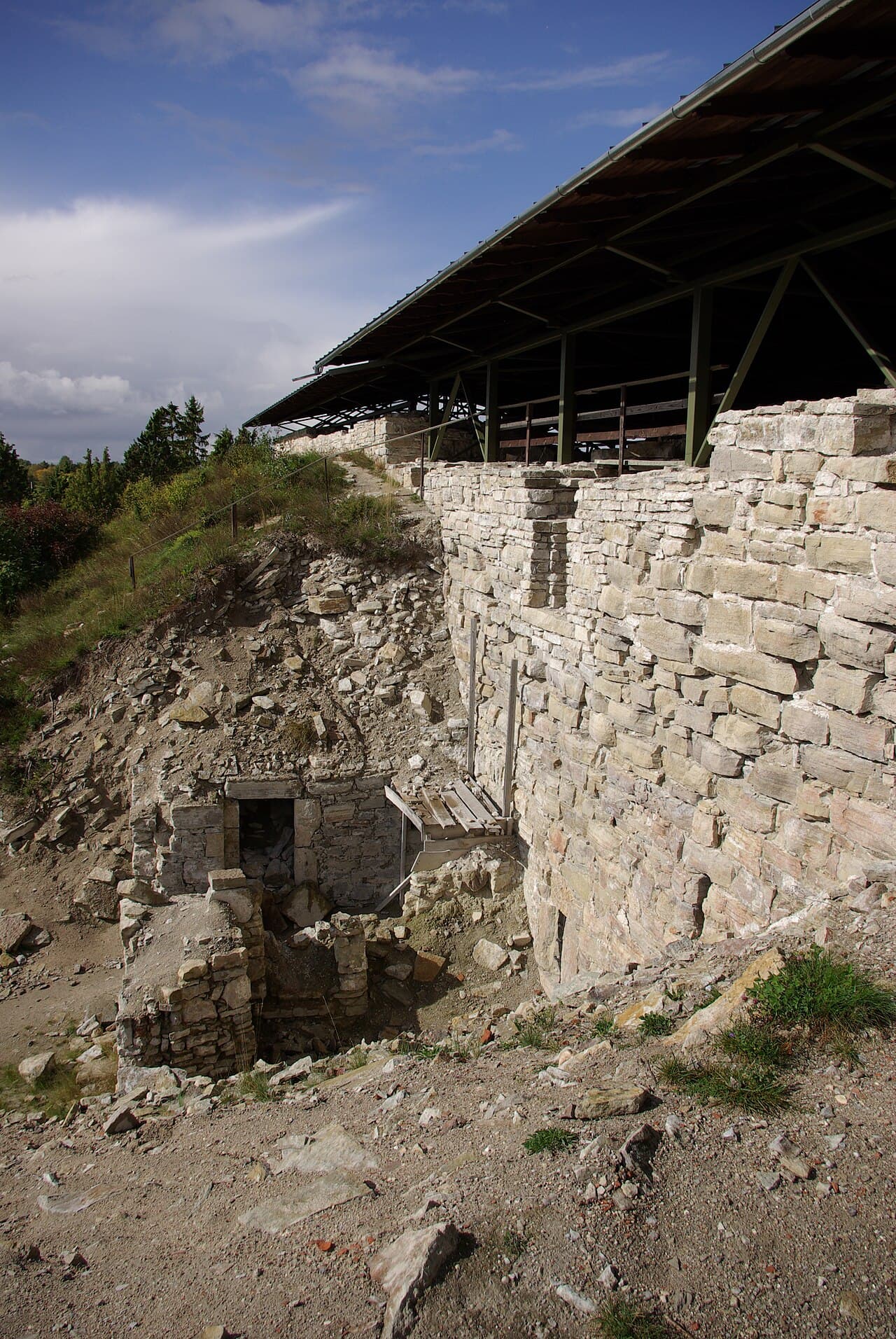
Maasilinna Castle
Maasilinna Castle stands as a significant medieval fortress located in the municipality of Maasi, on the island of Saaremaa, Estonia. Originally constructed by the Livonian Order in the mid-14th century, this castle played a crucial role as both a military stronghold and administrative center for over two centuries. Its history is deeply intertwined with the turbulent conflicts and power struggles in the Baltic region during the medieval and early modern periods.
Historical background and construction
The construction of Maasilinna Castle began in 1345 as a direct response to the 1343 Saaremaa uprising, during which local rebels destroyed the nearby Pöide Castle. The Livonian Order's master, Burchard von Dreileben, initiated the building of a new fortress to reassert control over the island and prevent further rebellions. Initially, the castle was constructed partly from wood, reflecting the urgent need for a defensive structure following the devastation of the revolt.
Throughout the 14th and 15th centuries, the castle underwent significant reconstruction under the leadership of Goswin von Herike, who oversaw the transition from wooden fortifications to a more permanent stone structure. This evolution marked Maasilinna as a durable and imposing fortress, characteristic of the medieval military architecture of the Baltic region.
Architectural features and layout
Core structure and defensive elements
The castle's layout is notable for its combination of defensive and residential elements, reflecting its dual purpose as a fortress and administrative residence. The core consisted of two long parallel wings enclosing a central courtyard, forming a castellum-type design. The main building stretched approximately 47 meters in length and 12 meters in width, aligned along an east-west axis.
The original structure included an earlier residential tower called the kemenaat, measuring roughly 12 by 21 meters. This tower featured advanced hypocaust heating, a Roman-style underfloor heating system, and a large chimney on the southern wall, indicating a focus on comfort and functionality within the living quarters. The tower likely rose to three stories, with vaulted halls on the ground floor and upper floors accessed via external staircases.
Walls, curtain, and artillery defenses
The castle's walls were robust, ranging between 2 and 3 meters thick, constructed to withstand sieges and artillery attacks. Surrounding the main complex was an irregularly shaped curtain wall measuring approximately 53 by 41 meters, with the main gate probably located on the western side, providing controlled access to the courtyard.
In the early 16th century, reflecting advancements in military technology, a new outer defensive line was added. This included a circular wall with bastions and towers designed for artillery defense. Two artillery towers from the mid-1500s survive partially: a cylindrical tower and a pentagonal tower. Both towers were equipped to accommodate firearms and feature Renaissance-style carved stone decorations, showcasing the blend of military innovation and artistic trends of the period.
Water defenses and economic aspects
Water defenses were integral to Maasilinna's fortifications. The castle was surrounded by a moat connected to three large fishponds to the south, which not only enhanced defense but also supported fish farming, contributing to the castle's self-sufficiency and economy. A small settlement with a harbor developed nearby, facilitating trade and supply routes essential for the castle's operation.
Role and significance during the medieval and early modern periods
Maasilinna Castle served as the residence and administrative center for the Livonian Order's vogt (bailiff), overseeing a wide territory that included numerous manors and farms on Saaremaa. This role underscored the castle's importance as both a military bastion and an economic hub, consolidating the Order's authority in the region for more than two centuries.
In 1562, during the ongoing conflicts of the Northern Seven Years’ War, the castle was sold to Denmark. Positioned along the contested border between Danish and Swedish territories, Maasilinna became a focal point of military contention. The Danes destroyed the fortress in 1566 to prevent its capture by Swedish forces, but it was later repaired and changed hands multiple times.
Ultimately, Danish King Frederick II ordered the castle's final demolition in 1576 to ensure it would no longer serve strategic military purposes. Following this, the castle ceased to function as a military or administrative site. Despite Saaremaa's transfer to Swedish control in the 1645 Treaty of Brömsebro, Maasilinna remained in ruins and was never rebuilt.
Ruins and archaeological research
Today, Maasilinna Castle exists as a partially preserved ruin, with many stone elements remarkably intact despite centuries of decay and stone removal for local building projects in the 19th century. The ground floor vaulted halls, thick curtain walls, and fragments of first-floor interiors survive in situ, offering valuable insights into medieval construction techniques.
One bastion and the northeastern artillery tower escaped significant damage from the 1576 explosion and were used as navigation landmarks at sea until the 19th century. Archaeological excavations began in 1904, revealing important details about the castle's layout and historical phases.
Modern conservation efforts, initiated in the early 21st century, have focused on stabilizing the ruins. These include roofing exposed sections of the main building, clearing cellar spaces, and reinforcing fragile architectural features such as arches and staircases. These preservation measures aim to protect the visible remains while enhancing understanding of Maasilinna's historical and architectural significance.
Architectural legacy and cultural importance
Maasilinna Castle exemplifies the architectural evolution of medieval fortresses in the Baltic region, particularly the transition from wooden to stone construction and the adaptation to artillery warfare in the Renaissance period. Its combination of hypocaust heating, vaulted halls, and Renaissance artillery towers with decorative stonework illustrates the blend of practicality, comfort, and artistic expression in military architecture.
As a historic site, Maasilinna offers valuable insights into the Livonian Order's presence and influence on Saaremaa, reflecting broader geopolitical shifts in Northern Europe during the Middle Ages and early modern era. The castle's ruins remain a testament to the region's turbulent history and architectural heritage, attracting scholars, archaeologists, and visitors interested in medieval military architecture and Baltic history.
Frequently asked questions (FAQ)
- When was Maasilinna Castle built?
- Maasilinna Castle was built beginning in 1345 by the Livonian Order following the 1343 Saaremaa uprising.
- What architectural style characterizes Maasilinna Castle?
- The castle primarily features Gothic architectural elements, with later Renaissance additions such as artillery towers.
- Can visitors explore the ruins of Maasilinna Castle?
- Yes, the castle ruins are open to the public daily from 10:00 to 18:00, and admission is free.
- What defensive features does Maasilinna Castle have?
- The castle includes thick stone walls, vaulted halls, a curtain wall, a moat, and artillery towers designed for firearms defense.
- Why was Maasilinna Castle demolished?
- The castle was demolished in 1576 by order of Danish King Frederick II to prevent its use by enemy forces during regional conflicts.
Photo gallery

Information
Opening hours
10:00-18:00, daily
Ticket prices
Free
Current owner
Municipality
Loading map...
Visitor reviews
No reviews yet. Been here? Write the first review and help other travelers!
Write the first reviewVisited this castle? Share your experience
Your review helps other travelers and adds first-hand knowledge to our encyclopedia.


