Virneburg Castle
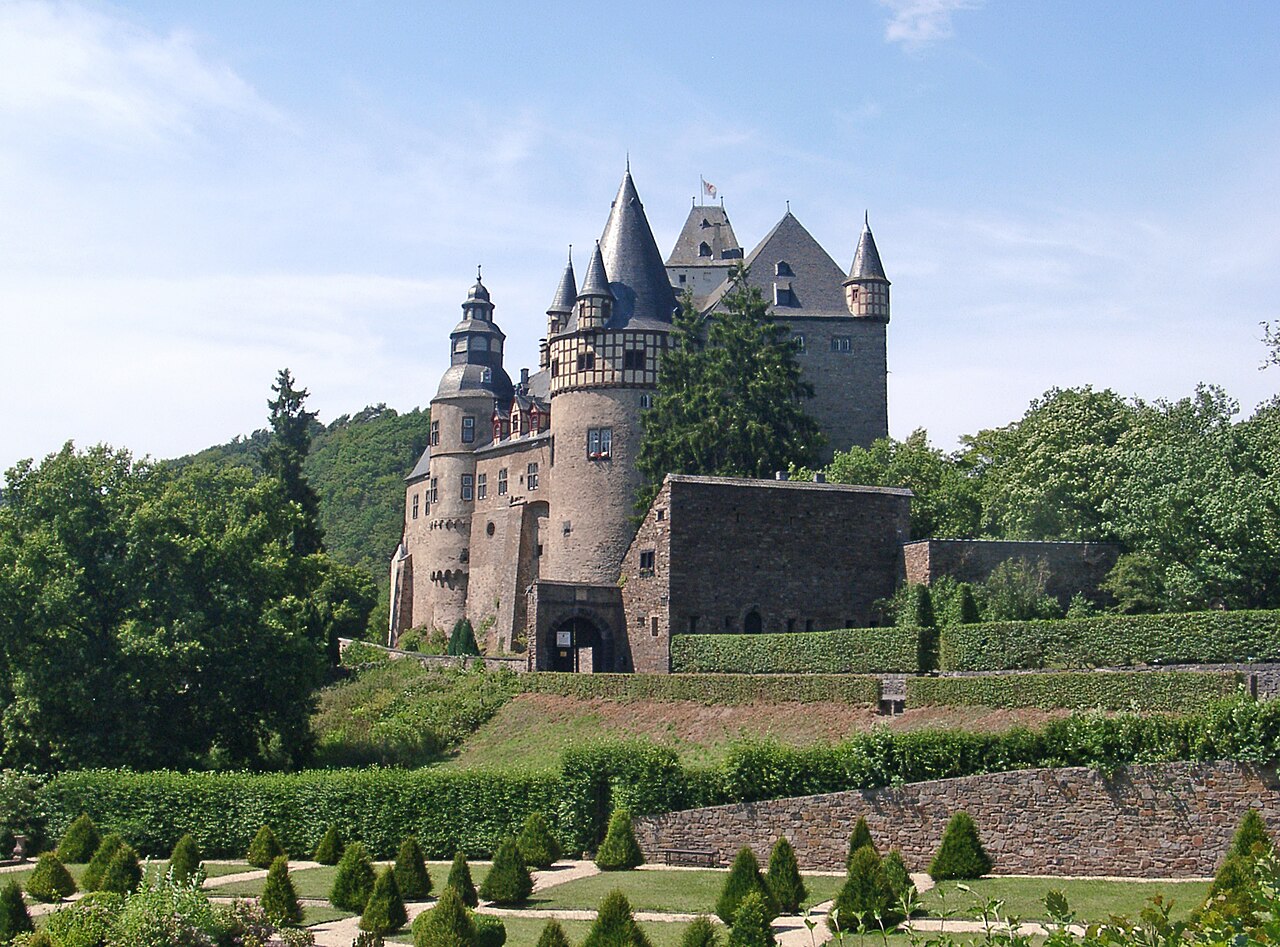
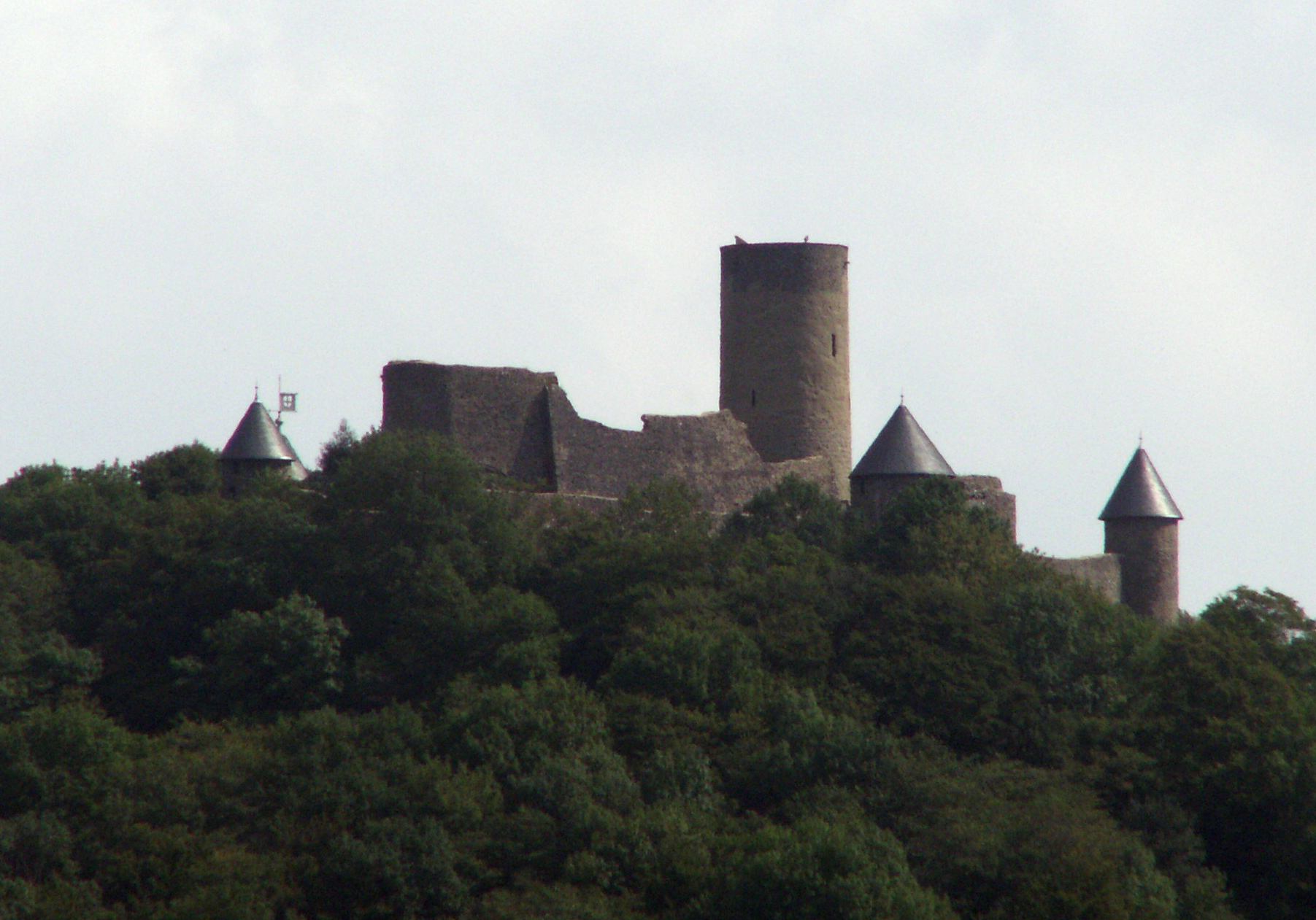
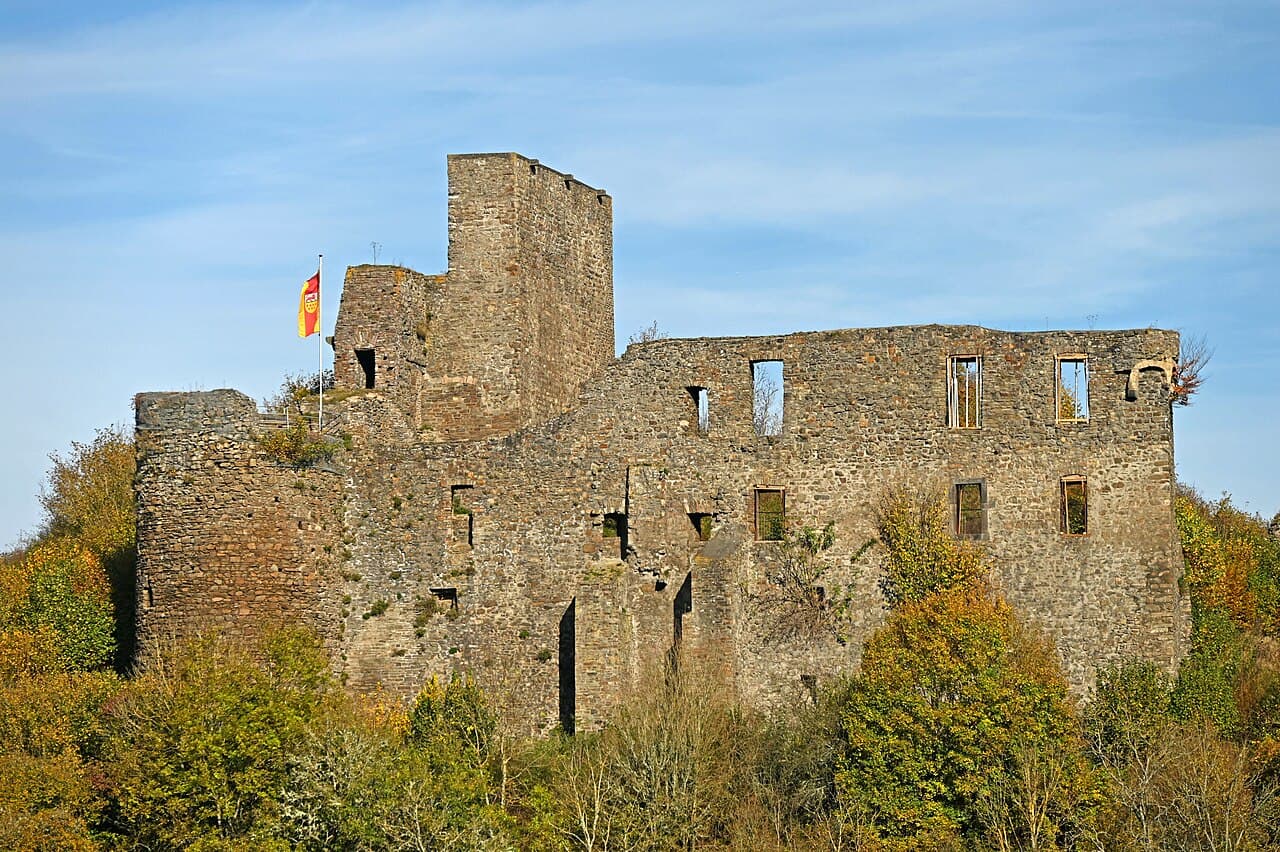
Virneburg Castle is a significant high medieval hill castle ruin located on a slate hill approximately 430 meters above sea level in the village of Virneburg, Rhineland-Palatinate, Germany. The castle's strategic position above the Nitzbach stream valley provided natural defensive advantages typical of hill castles constructed during the 12th century. It was originally built in the second half of the 12th century as a fief under the authority of the Count Palatine, a prominent noble title in the Holy Roman Empire. This establishment reflects the feudal system and territorial conflicts characteristic of the high medieval period in the Rhineland region.
Historical background and ownership
The castle first appears in historical records in the 13th century, with notable documentation from 1339 when Count Rupert of Virneburg transferred part of the castle to Elector Baldwin of Trier as repayment for a debt. This transaction illustrates the castle's role not only as a military fortress but also as a valuable asset in political and financial dealings among regional powers. The castle remained under the influence of various noble families connected to the Electorate of Trier and the Palatinate over the centuries.
Architectural features and construction
The bergfried and enceinte
The castle's most prominent architectural feature was its bergfried, referred to historically as the "hoechste thurn" or "highest tower." This tower, likely constructed during the original 12th-century build phase, served as a fortified keep and lookout point. The bergfried was a typical component of high medieval castles, designed for defense and as a symbol of lordly authority. Surrounding the castle was a defensive enceinte, or curtain wall, which protected the inner ward and residential buildings.
Materials and layout
Built primarily from local slate and stone, the castle's walls and towers were adapted to the natural contours of the hill, maximizing defensive capabilities. The layout included residential quarters, storage facilities, and defensive structures arranged around a central courtyard. The castle's elevated position and the surrounding Nitzbach stream provided natural barriers against attackers.
Decline and destruction
By the 17th century, Virneburg Castle was in a state of significant disrepair. Records from 1663 describe the castle as "very dilapidated," reflecting the common fate of many medieval castles that lost military importance with the advent of gunpowder and changing political conditions. In 1670, the bergfried was demolished due to its poor condition but was rebuilt the following year along with repairs to the enceinte and other essential structures.
The French invasion and final ruin
The castle met its ultimate destruction during the French invasion of the Eifel region in 1689, part of the wider conflicts of the Nine Years' War. French forces deliberately blew up the castle, destroying the bergfried completely and setting fire to the residential buildings. The enceinte was also slighted, leaving the castle in ruins. Since then, it has remained a ruined archaeological site, with remnants of walls, towers, and foundations visible to visitors.
Present condition and significance
Today, Virneburg Castle stands as a ruined hill castle and an important cultural heritage site in Rhineland-Palatinate. The ruins offer insight into high medieval castle architecture and feudal history in the region. The site is accessible to visitors who can explore the remains of the bergfried's base, parts of the enceinte, and the castle's overall layout on the slate hill overlooking the village.
Archaeological and touristic aspects
Archaeological studies have helped to clarify the castle's construction phases and historical development. The castle's ruins contribute to the understanding of medieval fortification techniques, especially in hilltop settings typical of the Eifel and Rhineland areas. Visitors appreciate the panoramic views of the surrounding landscape and the historical ambiance of the site.
Architectural and historical context
Virneburg Castle exemplifies the typical high medieval hill castle built during the feudal era in western Germany. Its design reflects defensive needs, social hierarchy, and the political turbulence of the period. The bergfried, enceinte, and use of local stone materials align with architectural trends of the 12th century that prioritized strongholds on elevated terrain for control and protection.
The castle's history of ownership, partial destruction, and rebuilding mirrors the broader historical dynamics of the Rhineland, where castles often changed hands through inheritance, debt settlements, and military conflict. The final destruction by French forces in the late 17th century marks the end of its military relevance and the transition of such castles into historical monuments.
Frequently asked questions (FAQ)
- How do I get to Virneburg Castle?
- Virneburg Castle is conveniently located in the village of Virneburg, Germany. You can reach it by car, with ample parking available nearby. Public transport options include regional trains and buses that connect to the local area.
- What is the historical significance of Virneburg Castle?
- Virneburg Castle dates back to the 12th century and played a crucial role in the region's medieval history. It served as a strategic fortress and residence for noble families, reflecting the architectural styles of its time. The castle's history is rich with tales of sieges and renovations, making it an intriguing site for history enthusiasts.
- When was Virneburg Castle constructed?
- The construction of Virneburg Castle began in the 12th century, around 1150, making it one of the oldest fortifications in the area. Over the centuries, it has undergone several renovations and expansions, which have added to its architectural diversity. Visitors can see elements from different periods, showcasing the evolution of castle architecture.
- Can I visit Virneburg Castle year-round?
- Yes, Virneburg Castle is open to visitors throughout the year. However, the best time to visit is from spring to early autumn when the weather is pleasant and garden areas are in full bloom. Always check the official website for any seasonal hours or closures.
- Why is Virneburg Castle considered an architectural gem?
- Virneburg Castle is admired for its unique combination of Romanesque and Gothic architectural styles. The structure features impressive towers, robust walls, and intricate stonework that reflect its historical significance. The surrounding landscape adds to its charm, making it a picturesque site for visitors.
- Is it possible to tour the interiors of Virneburg Castle?
- Yes, guided tours are available that allow visitors to explore the interiors of Virneburg Castle. During the tour, you can learn about the castle's history, architecture, and the lives of those who lived there. Be sure to check the tour schedule in advance, as availability may vary.
- What are the ticket prices for visiting Virneburg Castle?
- Ticket prices for Virneburg Castle are generally modest, with discounts available for students and seniors. Children under a certain age can often enter for free or at a reduced rate. It's a good idea to check the official website for the most current pricing and any special offers.
- What are the opening hours for Virneburg Castle?
- Virneburg Castle typically opens daily from 10 AM to 6 PM, but hours may vary by season. It’s advisable to verify the current opening hours on the official website or by contacting the castle's visitor center. This will ensure you have the most accurate information before planning your visit.
- What nearby attractions should I visit while at Virneburg Castle?
- While visiting Virneburg Castle, you can also explore other nearby attractions such as the beautiful Eifel National Park and the charming town of Cochem on the Moselle River. There are several hiking trails and scenic spots in the area that offer breathtaking views. These attractions make for a perfect day trip to complement your castle visit.
Photo gallery

Information
Loading map...
Visitor reviews
No reviews yet. Been here? Write the first review and help other travelers!
Write the first reviewVisited this castle? Share your experience
Your review helps other travelers and adds first-hand knowledge to our encyclopedia.