Villach Castle

Villach castle in Austria: history and architecture
Villach, Austria
Renaissance (15th–17th c.)
Partially Preserved

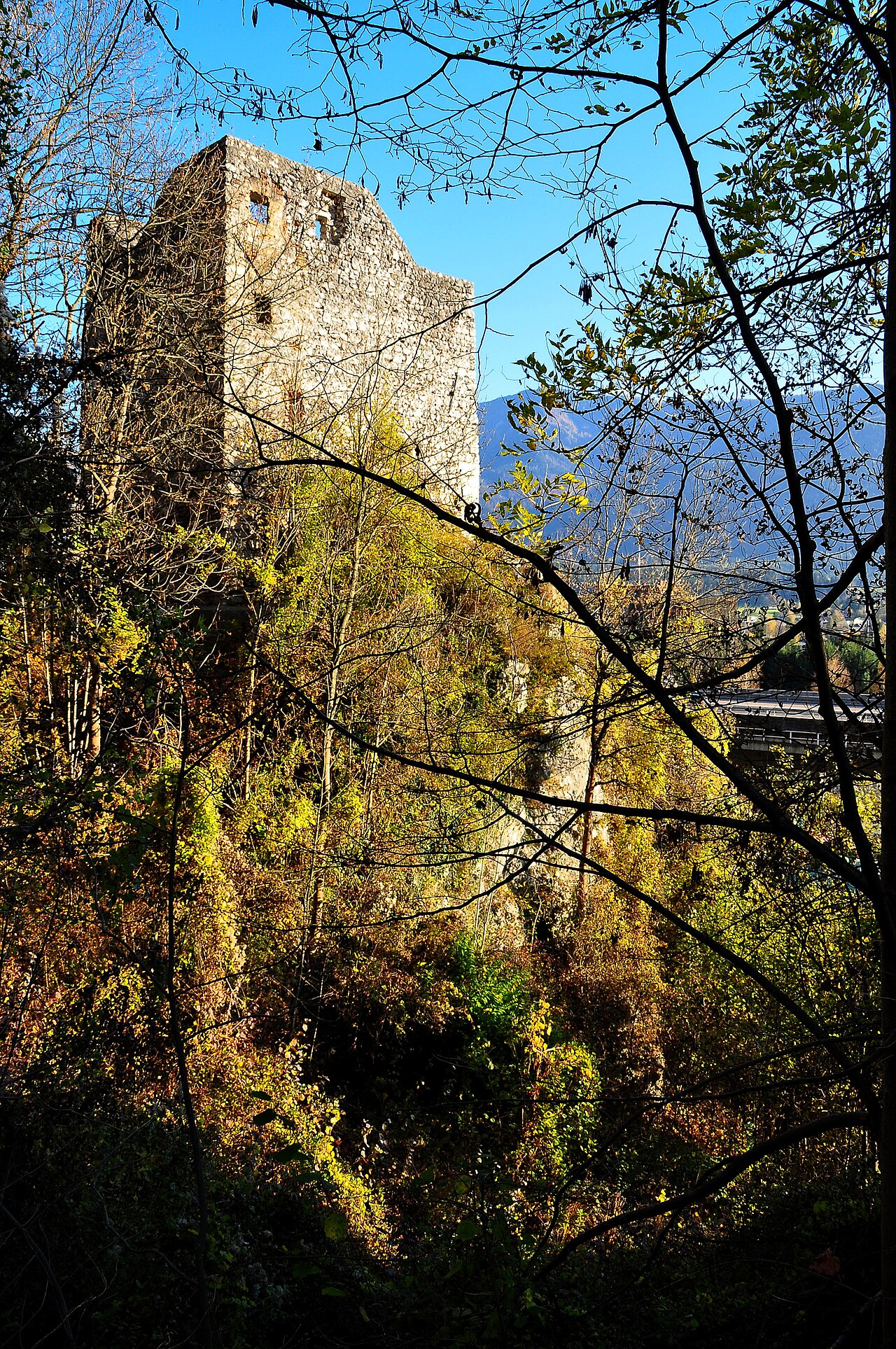
Villach castle, located in Villach, Austria, is a historic fortress with origins tracing back to the early 13th century. First mentioned in historical records in 1270, the castle is believed to have been initially constructed around 1233. This early medieval stronghold was strategically positioned to oversee the surrounding region and served as a defensive and administrative center.

Early construction and medieval features

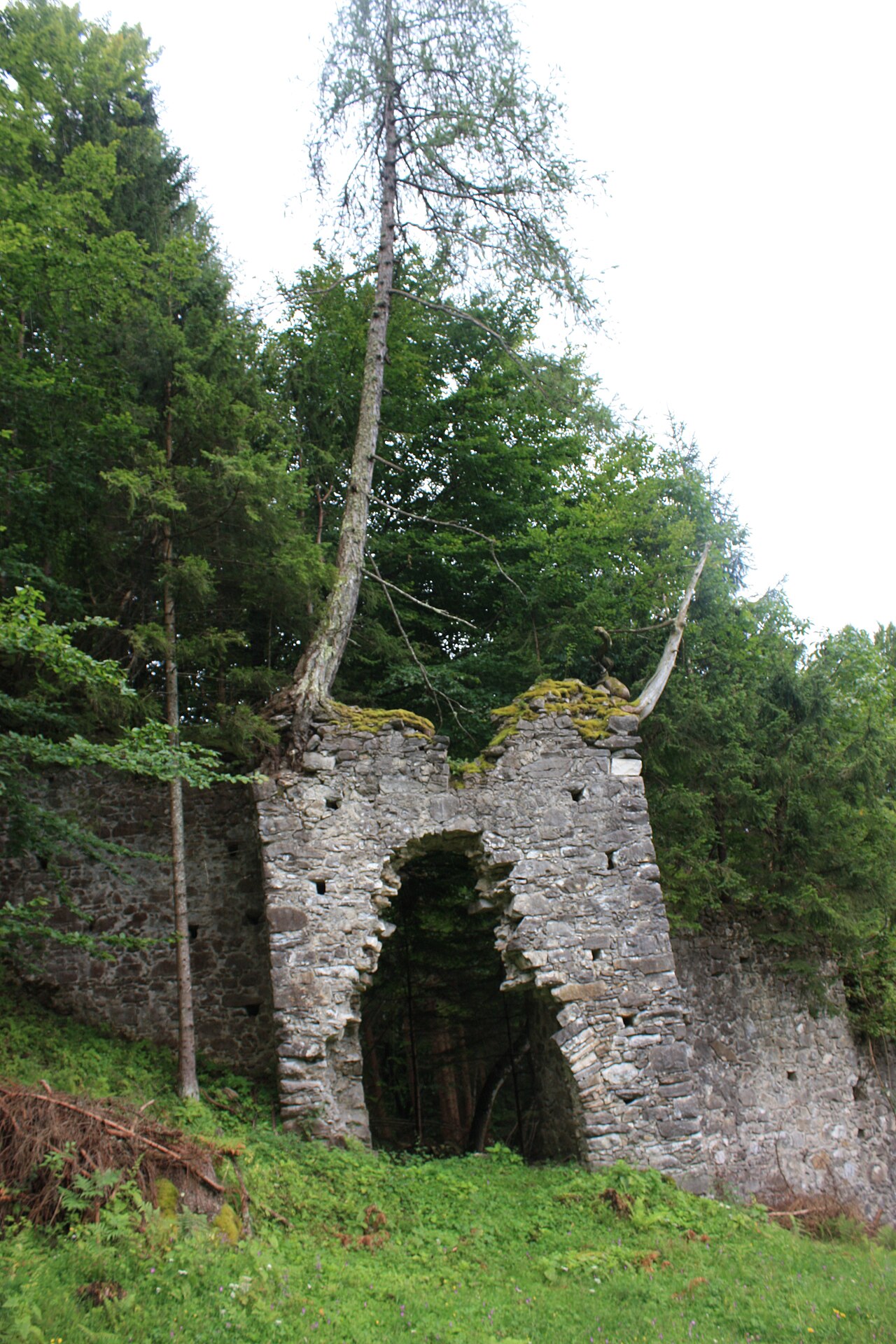
The original structure of Villach castle included a prominent tower and a north wall, remnants of which still survive today. These elements reflect the typical fortification style of the early medieval period, characterized by robust stonework and defensive design. The castle's chapel, dating from the 14th century, adds a religious and cultural dimension to the site, illustrating the importance of ecclesiastical presence within medieval castles.

Renaissance rebuilding and architectural evolution

In the 16th century, Villach castle underwent significant reconstruction, adopting the Renaissance architectural style that was prevalent across Europe at the time. This transformation included remodeling of the existing structures to incorporate Renaissance elements such as symmetrical layouts, decorative stonework, and enhanced residential quarters. Despite these updates, the castle retained parts of its medieval fabric, creating a blend of architectural periods.

Subsequent modifications

Following the Renaissance renovations, Villach castle experienced several further remodelings, adapting to changing needs and styles over the centuries. These modifications ensured the castle remained functional and relevant, though they also introduced a mix of architectural influences beyond the Renaissance core.

Archaeological significance and current use

Today, Villach castle serves as a cultural site hosting an exhibition of archaeological findings uncovered from the castle grounds and surrounding area. These artifacts provide valuable insights into the castle's long history and the lives of its inhabitants. The preservation of the original tower and north wall sections allows visitors to appreciate the castle's medieval origins alongside its later Renaissance character.

Visitor experience

Visitors to Villach castle can explore the exhibition and view the preserved architectural features, gaining a comprehensive understanding of the site's historical development. The castle's location within the city of Villach makes it accessible for those interested in medieval and Renaissance architecture as well as regional history.

Frequently asked questions (FAQ)

What is the historical significance of Villach Castle?
Villach Castle, with its origins dating back to the 11th century, played a crucial role in the defense of the region against invasions. It served as a noble residence and administrative center, reflecting the power dynamics of medieval Austria.
When was Villach Castle built?
The construction of Villach Castle began in the early 11th century, making it one of the oldest fortifications in the area. Over the centuries, it underwent several renovations and expansions, contributing to its architectural diversity.
What are the opening hours for Villach Castle?
Villach Castle is open to visitors from April to October, typically from 9 AM to 6 PM. During the off-peak months, hours may vary, so it’s advisable to check the official website before planning your visit.
Can I visit Villach Castle with children?
Yes, Villach Castle is family-friendly and offers engaging experiences for children. The castle grounds provide ample space for exploration, and educational programs are often available to make the visit enjoyable for younger guests.
Is it possible to access Villach Castle by public transport?
Yes, Villach Castle is accessible via public transport, with regular bus and train services connecting it to the city center. The short walk from the nearest stop to the castle makes it convenient for visitors without a car.
What is the best time to visit Villach Castle?
The best time to visit Villach Castle is during the spring and early fall when the weather is pleasant, and the gardens are in full bloom. This period also tends to have fewer tourists, allowing for a more relaxed experience.
Are there any nearby attractions to Villach Castle?
Yes, nearby attractions include the scenic Drau River and the beautiful Villacher Alpenstrasse, which offers stunning views of the surrounding mountains. Additionally, the charming town center of Villach, with its shops and cafes, is just a short distance away.
What are the ticket prices for Villach Castle?
Ticket prices for Villach Castle are generally affordable, with discounts available for students and seniors. Children under a certain age may enter for free, making it an economical option for families.
How do I get guided tours of Villach Castle?
Guided tours of Villach Castle can be arranged through the official website or at the entrance. These tours provide in-depth information about the castle's history, architecture, and surrounding landscapes, enhancing the overall visitor experience.

Information

Hill Castle

Loading map...

Visitor reviews

No reviews yet. Been here? Write the first review and help other travelers!

Write the first review

Visited this castle? Share your experience

Your review helps other travelers and adds first-hand knowledge to our encyclopedia.
Write a review

(5/5)

0/2000 characters

Your review will be visible after admin approval

Nearby castles

4 km
Landskron Castle — Austria castle

Landskron Castle

Villach, Austria

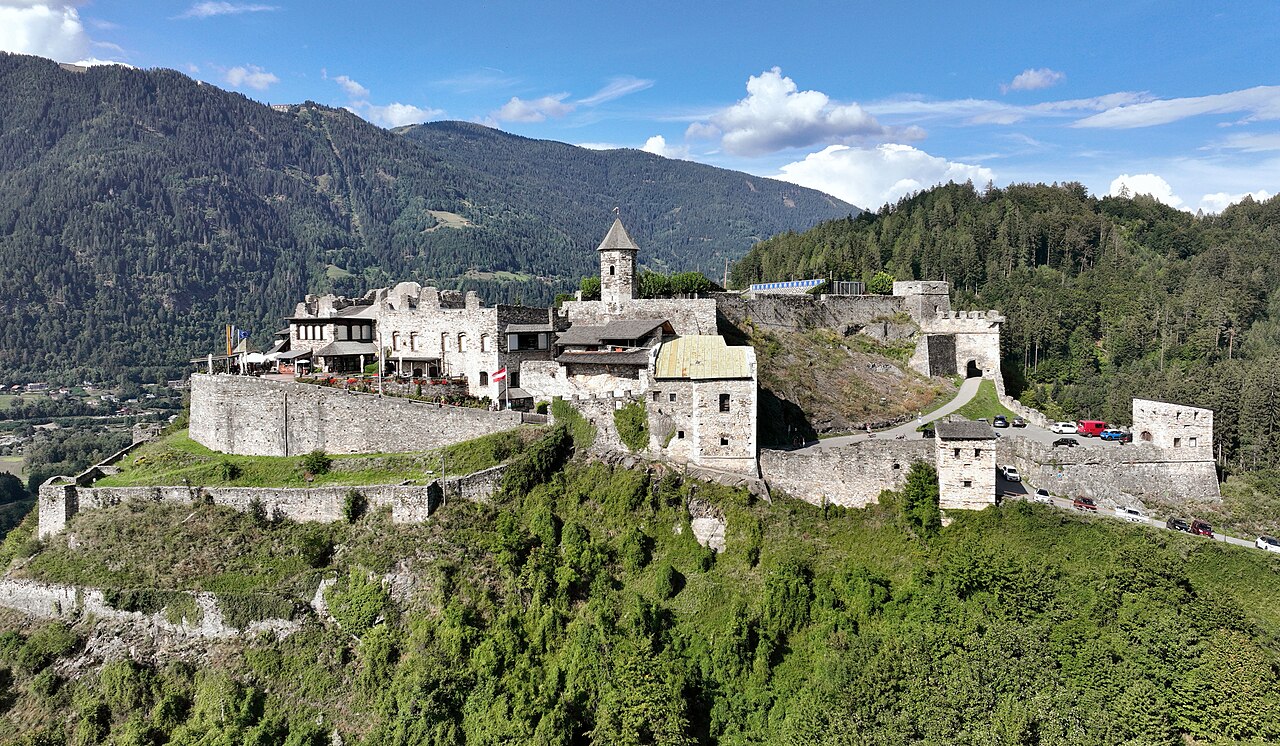
Landskron Castle stands as a remarkable example of a late-medieval hill castle transformed into a Renaissance fortress, located northeast of the city of Villach in the Austrian state of Carinthia. Perched on a rocky plateau between 658 and 676 meters above sea level near Lake Ossiach, it commands a strategic vantage point that has shaped its long and complex history. The castle's ruins today attract visitors not only for their historical significance but also for the unique falconry centre operating within its walls, offering regular flying demonstrations that celebrate medieval hunting traditions. Early history and strategic importance The estates surrounding Lake Ossiach were first documented in an 878 deed by King Carloman of Bavaria, who granted them to the monastery of Altötting. By the early 11th century, the lands became part of the possessions of Count Ozi of the Chiemgau, likely a member of the Otakar dynasty, who founded the nearby Ossiach Abbey. While the exact origins of the castle itself are unclear, a fortification existed on the site by the early 14th century, as the castle is first mentioned in documents from 1351. In 1330, the estates were held by the Counts of Ortenburg, who played a significant role in the region's medieval politics. In 1355, the castle was acquired by the Habsburg Duke Albert II of Austria, who was also Duke of Carinthia. This acquisition underscored the castle's strategic importance within the Carinthian possessions, especially as it was situated near lands controlled by the Bamberg prince-bishops. Over the following decades, ownership shifted among influential noble families, including the Counts of Celje and the Lords of Stubenberg, reflecting the turbulent political landscape of the region during the late medieval period. Renaissance transformation under the khevenhüllers The castle's most significant architectural transformation occurred after it was purchased in 1542 by Christoph Khevenhüller, the castellan of Ortenburg Castle. He undertook an extensive rebuilding campaign, converting Landskron into a lavish Renaissance-style fortress. The reconstruction included the addition of seven defensive towers and double curtain walls, enhancing the castle's fortifications and residential comfort. The castle complex featured two long wings at right angles, with four and five stories respectively, complemented by shorter side wings. While much of the original height of the western wing has been lost, the northern wing still retains significant portions of its Renaissance structure. During this period, the castle also gained cultural significance. In 1552, Emperor Charles V sought refuge at Landskron while fleeing Protestant forces, highlighting the castle's role as a secure imperial stronghold. The castle's chapel, built in the Gothic style and featuring an elongated nave with a semicircular choir and an octagonal bell tower, dates from this era. Some of its stained glass windows from around 1570 have been preserved and are now displayed in the Carinthian State Museum in Klagenfurt. Water supply and defensive features Between 1584 and 1594, a remarkable engineering feat was undertaken to secure the castle's water supply: a well was dug to a depth of 150 meters. This well was critical for withstanding sieges and maintaining the castle's self-sufficiency. The castle's fortifications, including its seven towers and double walls, exemplify Renaissance military architecture adapted to the terrain and evolving warfare technologies of the 16th century. Political upheaval and decline The Thirty Years' War brought significant upheaval to Landskron Castle. The Khevenhüllers, who were Protestant, were stripped of the castle by order of Emperor Ferdinand II in 1628 as part of the Counter-Reformation efforts. The castle subsequently passed to the comital family of Dietrichstein in 1639, although they did not reside there. Following the Peace of Westphalia in 1648, the Khevenhüllers initiated a prolonged legal battle to reclaim the castle, which ultimately failed. The castle suffered multiple destructive fires caused by lightning strikes in the early 16th century and later in 1542, 1585, and finally in 1812. The last blaze devastated the structure, and unlike previous incidents, the castle was not rebuilt afterward. This marked the beginning of its gradual decline into ruin. Preservation and modern use In 1953, efforts were made to conserve the remaining ruins of Landskron Castle. The site was stabilized to prevent further deterioration, and parts of the castle were adapted for modern use, including the establishment of a restaurant within the castle walls. This adaptive reuse has helped maintain the castle as a cultural landmark and tourist attraction. Today, Landskron Castle is also renowned for its falconry centre, which conducts regular flying demonstrations. This centre celebrates the medieval tradition of falconry and adds a dynamic cultural experience for visitors. The castle's location amidst mixed forests and mountainous terrain offers scenic views and a connection to Carinthia's natural heritage. Architectural remains and features The ruins of Landskron Castle reveal its complex architectural evolution. The large tower in the northern section, rising three stories above adjacent roofs, likely represents the medieval core of the fortress. The Gothic chapel south of the western wing is notable for its preserved walls up to four meters high and its distinctive octagonal bell tower. Despite the castle's ruinous state, the surviving structures provide valuable insights into Renaissance military architecture and the lifestyle of noble families in Carinthia during the 16th century. The castle's layout, with its angled wings, towers, and defensive walls, reflects the adaptation of medieval fortifications to Renaissance aesthetics and defensive needs. Cultural and historical significance Landskron Castle embodies the layered history of Carinthia, from its early medieval roots through its Renaissance transformation and eventual decline. Its association with prominent noble families, imperial figures, and military orders highlights its importance in regional politics and culture. The castle's preservation and contemporary use as a tourist site and falconry centre ensure that this heritage continues to be appreciated and explored by new generations.

Late Medieval (14th–15th c.)
Details
5.4 km
Burgruine Federaun — Austria castle

Burgruine Federaun

Austria, Austria

Burgruine Federaun stands as a significant high medieval hill castle ruin nestled in the municipality of Villach, within the Austrian region of Carinthia. Established in the 13th century, this fortress was constructed under the influence of the Bamberg ecclesiastical principality, serving as a vital stronghold to control regional trade routes and territorial access. The castle's strategic position atop a rocky promontory overlooking the Gail River allowed it to dominate an important crossing point on the road connecting Villach to Tarvis, a key commercial artery between Italy and the surrounding territories. This location not only provided military advantage but also control over the movement of goods and people, marking it as a crucial asset in medieval power dynamics. Historical significance and medieval conflicts Historical records trace the castle's prominence back to at least the late 12th century, with its role intensifying in the mid-13th century when Rudolf von Ras, a nobleman from Rosegg in the nearby Rosental valley, seized the fortress. From this base, Rudolf launched raids on trade caravans, disrupting commerce along the vital road. His actions prompted military intervention by Heinrich, Bishop of Bamberg, who in 1255 led forces to expel Rudolf, restoring control to the Bamberg principality. Following this event, the castle remained under ecclesiastical authority, maintaining its role as a regional administrative and defensive center. However, by the early modern period, its military significance waned, and the fortress gradually fell into disuse and decline, likely before the 17th century. No further notable military or administrative functions are documented beyond this time. Architectural layout and defensive features The castle complex occupies the western end of a ridge, originally dating to the late 12th century. Over the centuries, the site expanded eastward to include two large outer baileys, or Vorburgs, creating an unusually extensive fortified area for its era. The main castle's massive front façade once dominated the ridge, though today only fragments of these walls remain. Among the surviving architectural elements, the courtyard houses a remarkably well-preserved conical cistern constructed with finely arranged brickwork. This cistern was essential for collecting and storing water, a critical resource for sustaining the castle's inhabitants during sieges or dry periods. Another notable feature is a vaulted building within the castle grounds. While its exact date is uncertain, the vaulting demonstrates advanced masonry techniques of the period and has endured remarkably well, offering valuable insight into medieval construction methods. The eastern side of the fortress was protected by a deep defensive trench known as a neck ditch, designed to hinder attackers approaching from that direction. This feature highlights the strategic planning invested in the castle's defense, emphasizing control over vulnerable access points. Bridge watchtower and surrounding structures Extending down to the Gail River, the castle controlled a crucial crossing via a bridge watchtower perched on a rock above the river. Initially built as a defensive barrier to regulate passage along the road, this tower was later adapted for residential use. Its elevated position allowed for effective surveillance of traffic and reinforced the castle's dominion over the landscape. Historical documents also mention a second tower near the main site, though its precise location remains unknown. The fortress overlooks the nearby Fürnitz marshalling yard, underscoring its commanding view over important transportation networks that have evolved through centuries. Current condition and access Today, Burgruine Federaun exists as a ruin with substantial masonry remains from both the main stronghold and the outer baileys. The site is accessible via paths from the east and west, following original routes that connected the castle with nearby settlements such as Warmbad/Graschelitzen and Oberfederaun. These paths traverse rugged and steep terrain, reflecting the fortress's naturally defensible position. The ruins provide a tangible connection to the medieval past, with surviving walls, defensive earthworks, and architectural features that illustrate the complexity of the castle's design and its role in regional history. Visitors can explore the remnants of the castle's fortifications, the cistern, vaulted structures, and the strategic neck ditch, gaining insight into the life and military architecture of a high medieval hill castle in Carinthia. Architectural style and construction techniques The castle's construction reflects typical high medieval architectural techniques, characterized by robust stone masonry, defensive earthworks, and functional design adapted to the rugged terrain. The use of brick in the conical cistern indicates a sophisticated approach to water management, while the vaulted building showcases the application of advanced stone vaulting methods prevalent in medieval fortifications. The layout with multiple baileys and a neck ditch demonstrates an emphasis on layered defense, a common feature in hill castles designed to withstand prolonged sieges. The castle's position on a ridge with commanding views further enhanced its defensive capabilities and control over surrounding trade routes.

High Medieval (11th–13th c.)
Details
7.8 km
Burgruine Treffen — Austria castle

Burgruine Treffen

, Austria

Burgruine Treffen is a medieval castle ruin located in the Austrian state of Carinthia. This site represents an important example of a high medieval hill castle that played a strategic role in the region's history. Situated on elevated terrain, the castle's remains provide valuable insights into medieval fortification techniques and the feudal power structures of the time. Historical background and significance The origins of Burgruine Treffen date back to the 12th century, a period marked by widespread castle-building across Europe as feudal lords sought to assert control over their territories. The castle was originally constructed as a defensive stronghold to oversee and protect important trade routes and local settlements in Carinthia. Throughout the High Middle Ages, it served as a seat of local nobility and a military outpost. Historical records indicate that the castle was inhabited by various noble families who influenced regional politics and economics. Its location allowed control over surrounding valleys and roads, making it a valuable asset during territorial disputes. The castle's decline began in the late medieval period, likely due to changes in military technology and political shifts that rendered many hill castles obsolete. Architectural features and layout Although now in ruins, Burgruine Treffen retains key elements typical of hill castles from the medieval period. The castle was built primarily from local stone, with thick defensive walls designed to withstand sieges. The remains include portions of the curtain walls and foundations of towers that once provided vantage points for surveillance and defense. The castle's layout likely featured a central keep or donjon, surrounded by a courtyard and ancillary buildings such as residential quarters, storerooms, and a chapel. Defensive features included battlements and possibly a moat or ditch to impede attackers. The elevated position offered natural protection and a commanding view of the surrounding landscape. Archaeological investigations and preservation As an archaeological site, Burgruine Treffen has been the subject of various studies aimed at uncovering its historical development and architectural characteristics. Excavations have revealed artifacts and structural details that contribute to understanding the daily life and defensive strategies of its medieval inhabitants. Preservation efforts focus on stabilizing the existing ruins to prevent further deterioration while allowing public access to the site. Interpretive signage and guided tours help visitors appreciate the castle's historical context and architectural significance. Visiting Burgruine Treffen The castle ruins are accessible to visitors interested in medieval history and archaeology. The site offers scenic views of the Carinthian landscape and an opportunity to explore a well-preserved example of a medieval hill castle ruin. Visitors should be prepared for uneven terrain and limited facilities on site. Nearby attractions The region around Burgruine Treffen features other historical sites and natural attractions, making it a worthwhile destination for cultural tourism in Carinthia. Nearby towns offer accommodations and amenities for visitors.

High Medieval (11th–13th c.)
Details