Landskron Castle
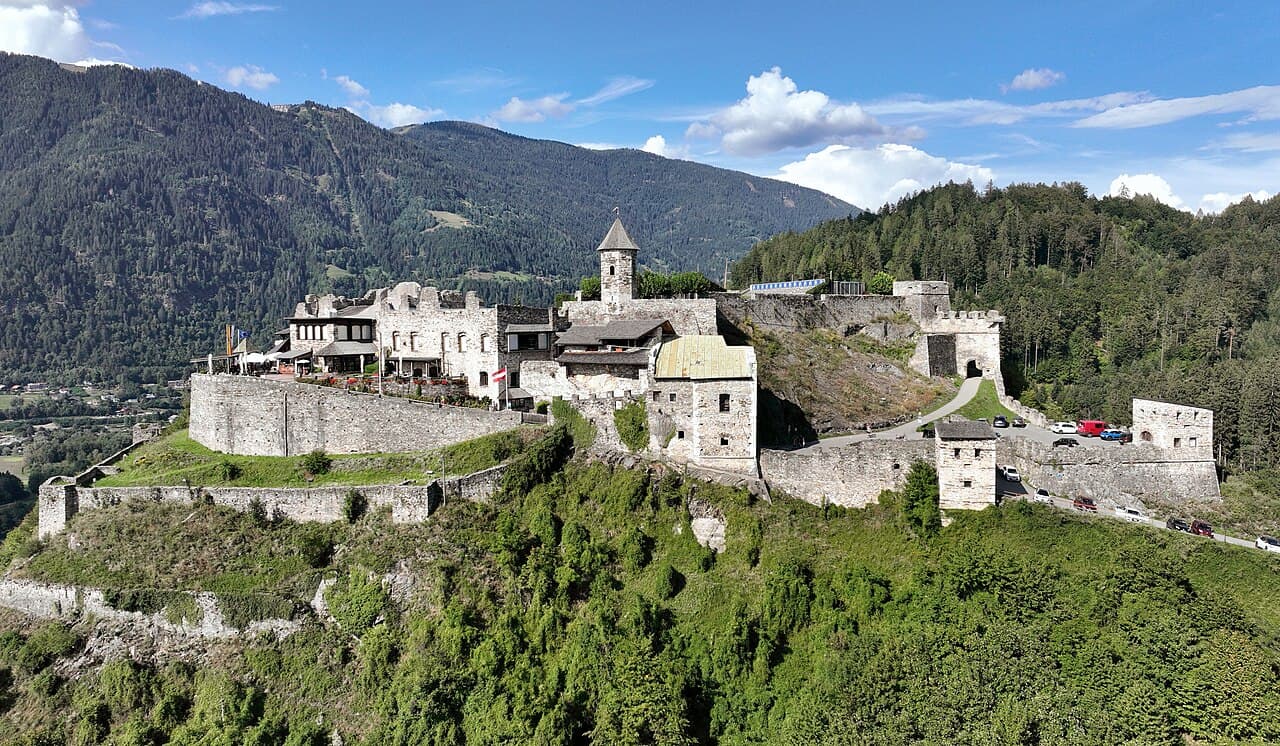
Landskron Castle stands as a remarkable example of a late-medieval hill castle transformed into a Renaissance fortress, located northeast of the city of Villach in the Austrian state of Carinthia. Perched on a rocky plateau between 658 and 676 meters above sea level near Lake Ossiach, it commands a strategic vantage point that has shaped its long and complex history. The castle's ruins today attract visitors not only for their historical significance but also for the unique falconry centre operating within its walls, offering regular flying demonstrations that celebrate medieval hunting traditions.
Early history and strategic importance
The estates surrounding Lake Ossiach were first documented in an 878 deed by King Carloman of Bavaria, who granted them to the monastery of Altötting. By the early 11th century, the lands became part of the possessions of Count Ozi of the Chiemgau, likely a member of the Otakar dynasty, who founded the nearby Ossiach Abbey. While the exact origins of the castle itself are unclear, a fortification existed on the site by the early 14th century, as the castle is first mentioned in documents from 1351. In 1330, the estates were held by the Counts of Ortenburg, who played a significant role in the region's medieval politics.
In 1355, the castle was acquired by the Habsburg Duke Albert II of Austria, who was also Duke of Carinthia. This acquisition underscored the castle's strategic importance within the Carinthian possessions, especially as it was situated near lands controlled by the Bamberg prince-bishops. Over the following decades, ownership shifted among influential noble families, including the Counts of Celje and the Lords of Stubenberg, reflecting the turbulent political landscape of the region during the late medieval period.
Renaissance transformation under the khevenhüllers
The castle's most significant architectural transformation occurred after it was purchased in 1542 by Christoph Khevenhüller, the castellan of Ortenburg Castle. He undertook an extensive rebuilding campaign, converting Landskron into a lavish Renaissance-style fortress. The reconstruction included the addition of seven defensive towers and double curtain walls, enhancing the castle's fortifications and residential comfort. The castle complex featured two long wings at right angles, with four and five stories respectively, complemented by shorter side wings. While much of the original height of the western wing has been lost, the northern wing still retains significant portions of its Renaissance structure.
During this period, the castle also gained cultural significance. In 1552, Emperor Charles V sought refuge at Landskron while fleeing Protestant forces, highlighting the castle's role as a secure imperial stronghold. The castle's chapel, built in the Gothic style and featuring an elongated nave with a semicircular choir and an octagonal bell tower, dates from this era. Some of its stained glass windows from around 1570 have been preserved and are now displayed in the Carinthian State Museum in Klagenfurt.
Water supply and defensive features
Between 1584 and 1594, a remarkable engineering feat was undertaken to secure the castle's water supply: a well was dug to a depth of 150 meters. This well was critical for withstanding sieges and maintaining the castle's self-sufficiency. The castle's fortifications, including its seven towers and double walls, exemplify Renaissance military architecture adapted to the terrain and evolving warfare technologies of the 16th century.
Political upheaval and decline
The Thirty Years' War brought significant upheaval to Landskron Castle. The Khevenhüllers, who were Protestant, were stripped of the castle by order of Emperor Ferdinand II in 1628 as part of the Counter-Reformation efforts. The castle subsequently passed to the comital family of Dietrichstein in 1639, although they did not reside there. Following the Peace of Westphalia in 1648, the Khevenhüllers initiated a prolonged legal battle to reclaim the castle, which ultimately failed.
The castle suffered multiple destructive fires caused by lightning strikes in the early 16th century and later in 1542, 1585, and finally in 1812. The last blaze devastated the structure, and unlike previous incidents, the castle was not rebuilt afterward. This marked the beginning of its gradual decline into ruin.
Preservation and modern use
In 1953, efforts were made to conserve the remaining ruins of Landskron Castle. The site was stabilized to prevent further deterioration, and parts of the castle were adapted for modern use, including the establishment of a restaurant within the castle walls. This adaptive reuse has helped maintain the castle as a cultural landmark and tourist attraction.
Today, Landskron Castle is also renowned for its falconry centre, which conducts regular flying demonstrations. This centre celebrates the medieval tradition of falconry and adds a dynamic cultural experience for visitors. The castle's location amidst mixed forests and mountainous terrain offers scenic views and a connection to Carinthia's natural heritage.
Architectural remains and features
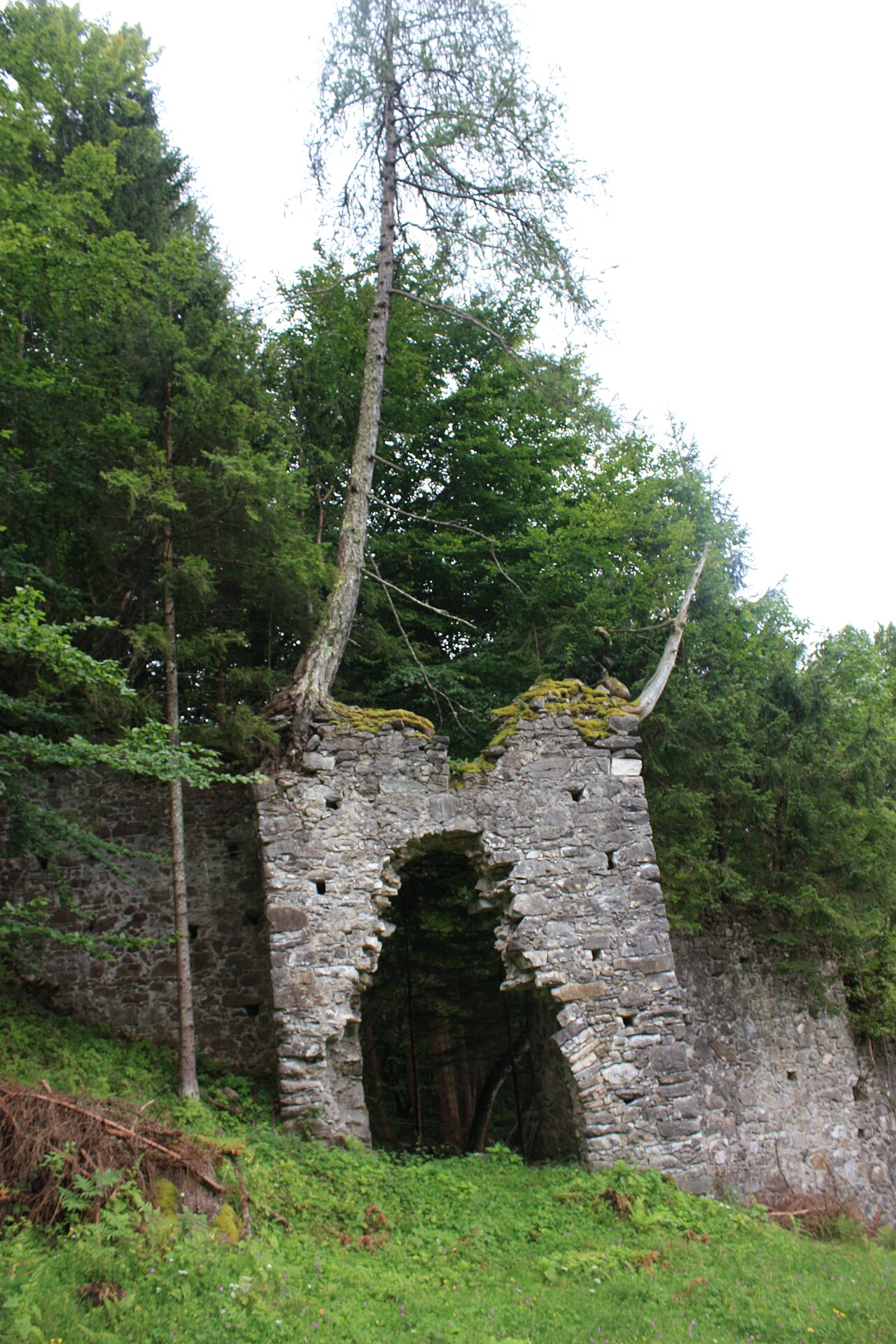
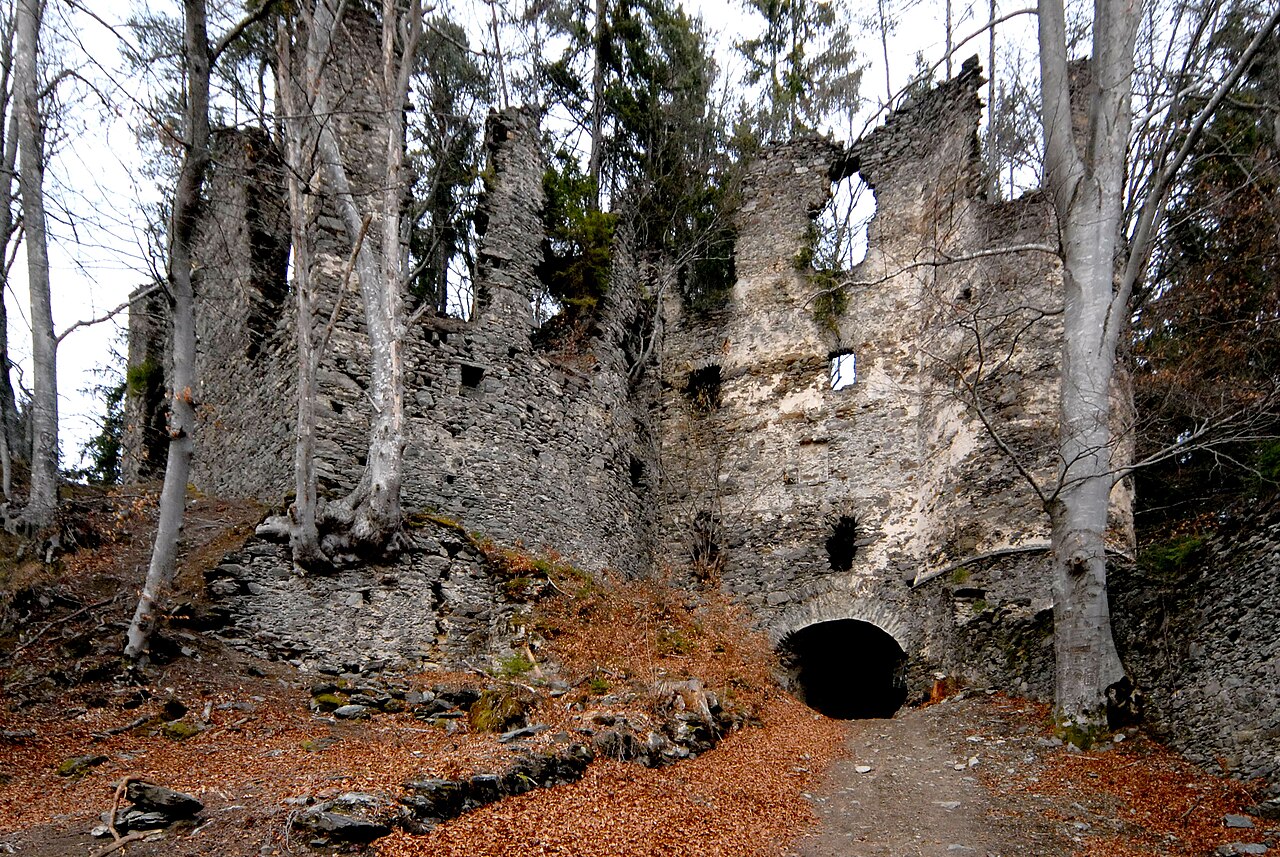
The ruins of Landskron Castle reveal its complex architectural evolution. The large tower in the northern section, rising three stories above adjacent roofs, likely represents the medieval core of the fortress. The Gothic chapel south of the western wing is notable for its preserved walls up to four meters high and its distinctive octagonal bell tower.
Despite the castle's ruinous state, the surviving structures provide valuable insights into Renaissance military architecture and the lifestyle of noble families in Carinthia during the 16th century. The castle's layout, with its angled wings, towers, and defensive walls, reflects the adaptation of medieval fortifications to Renaissance aesthetics and defensive needs.
Cultural and historical significance
Landskron Castle embodies the layered history of Carinthia, from its early medieval roots through its Renaissance transformation and eventual decline. Its association with prominent noble families, imperial figures, and military orders highlights its importance in regional politics and culture. The castle's preservation and contemporary use as a tourist site and falconry centre ensure that this heritage continues to be appreciated and explored by new generations.
Frequently asked questions (FAQ)
- How do I get to Landskron Castle?
- Landskron Castle is easily accessible by car or public transportation from Villach. If you are driving, follow the signs to the castle, which is situated on a hill offering stunning views of the surrounding area.
- What is the historical significance of Landskron Castle?
- Landskron Castle, built in the 11th century, played a crucial role in the region's defense and was a strategic point during various conflicts. Over the centuries, it has witnessed numerous historical events and has become a symbol of Villach's rich heritage.
- When was Landskron Castle last renovated?
- The most significant renovations of Landskron Castle took place in the late 20th century, aiming to restore its original architectural features while making it accessible to visitors. These efforts have helped preserve its historical integrity and enhance visitor experience.
- Can I visit Landskron Castle year-round?
- Yes, Landskron Castle is open to visitors year-round, although the opening hours may vary seasonally. It's advisable to check the official website for the most current information on hours of operation before your visit.
- Why is Landskron Castle a popular tourist attraction?
- Landskron Castle is popular due to its breathtaking panoramic views, fascinating history, and unique architecture. The castle also hosts various events, including falconry shows, which attract visitors of all ages.
- Is it possible to access all areas of Landskron Castle?
- While many areas of Landskron Castle are accessible to visitors, some sections may have restricted access due to preservation efforts. However, guided tours are available, allowing guests to explore the most significant parts of the castle.
- What are the ticket prices for Landskron Castle?
- Ticket prices for Landskron Castle vary depending on age and group size, with discounts available for children and families. It's best to check the official website for the latest pricing information and any special offers.
- What are the best times to visit Landskron Castle?
- The best times to visit Landskron Castle are during the spring and fall when the weather is pleasant, and the surrounding landscape is particularly beautiful. Additionally, visiting during weekdays can help you avoid larger crowds.
- Are there any nearby attractions to Landskron Castle?
- Yes, visitors to Landskron Castle can explore several nearby attractions, including Lake Ossiach and the charming town of Villach. These locations offer additional opportunities for outdoor activities and cultural experiences.
Photo gallery

Information
Website
Visit websiteSources & official resources
Verify the information above using these authoritative references.
Loading map...
Visitor reviews
No reviews yet. Been here? Write the first review and help other travelers!
Write the first reviewVisited this castle? Share your experience
Your review helps other travelers and adds first-hand knowledge to our encyclopedia.