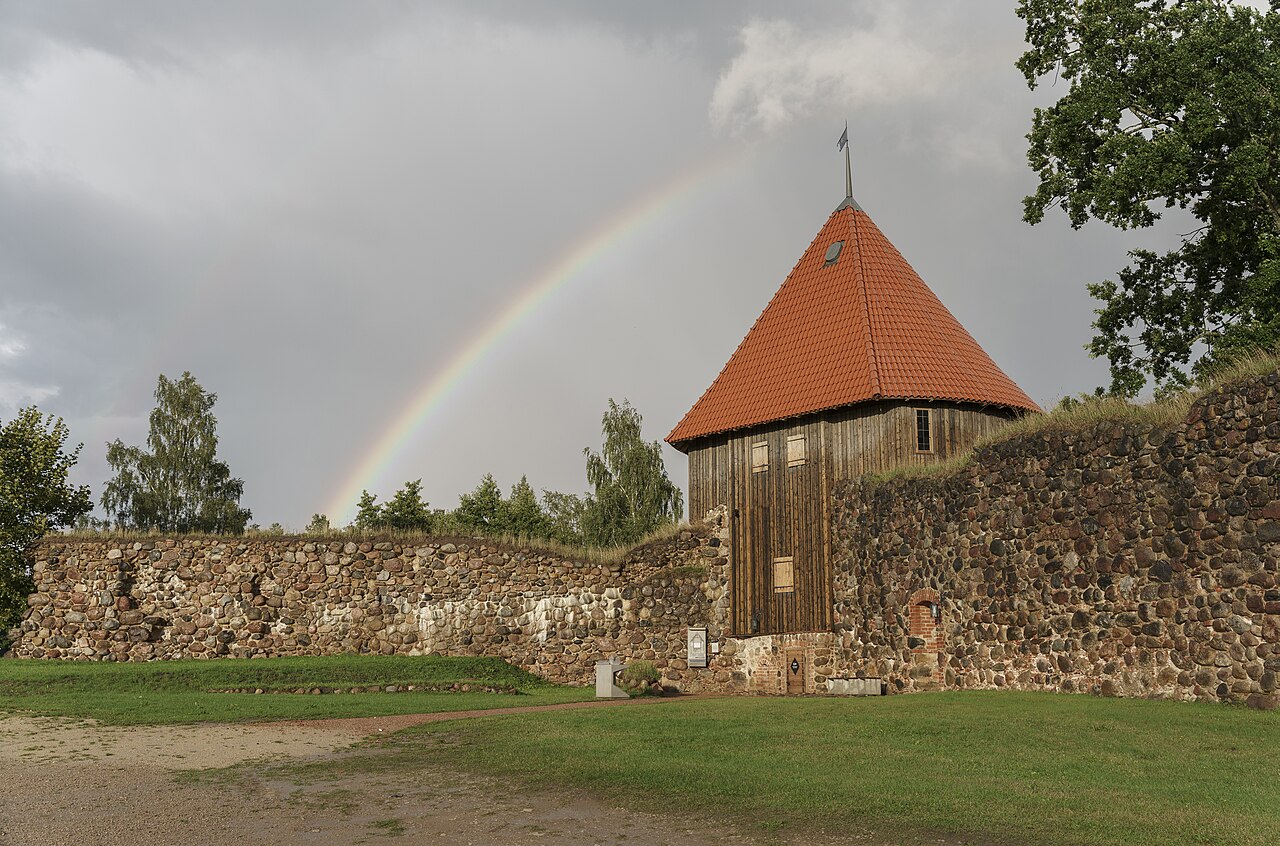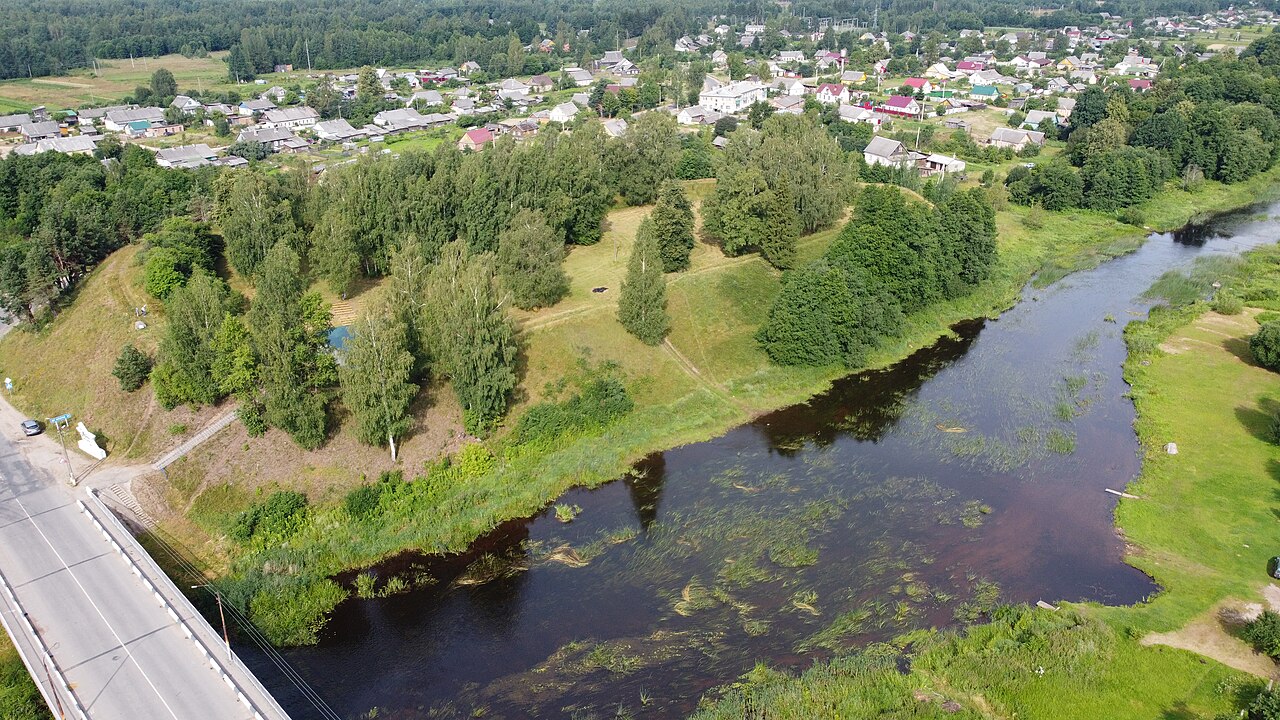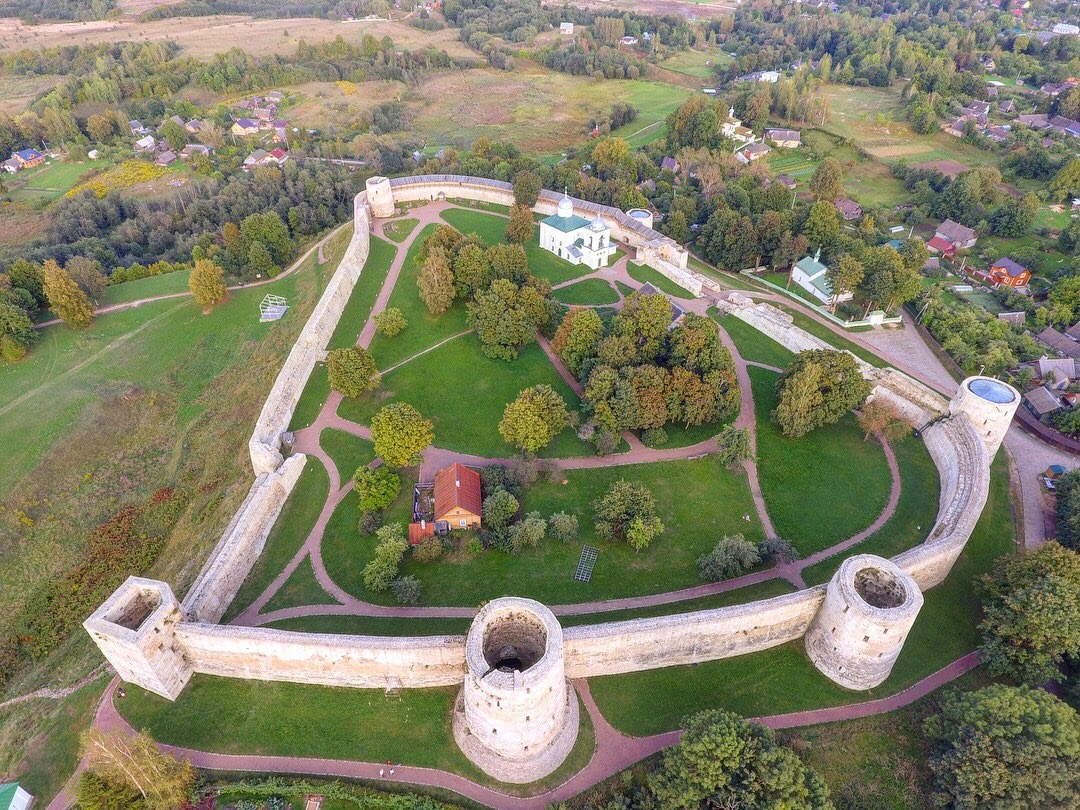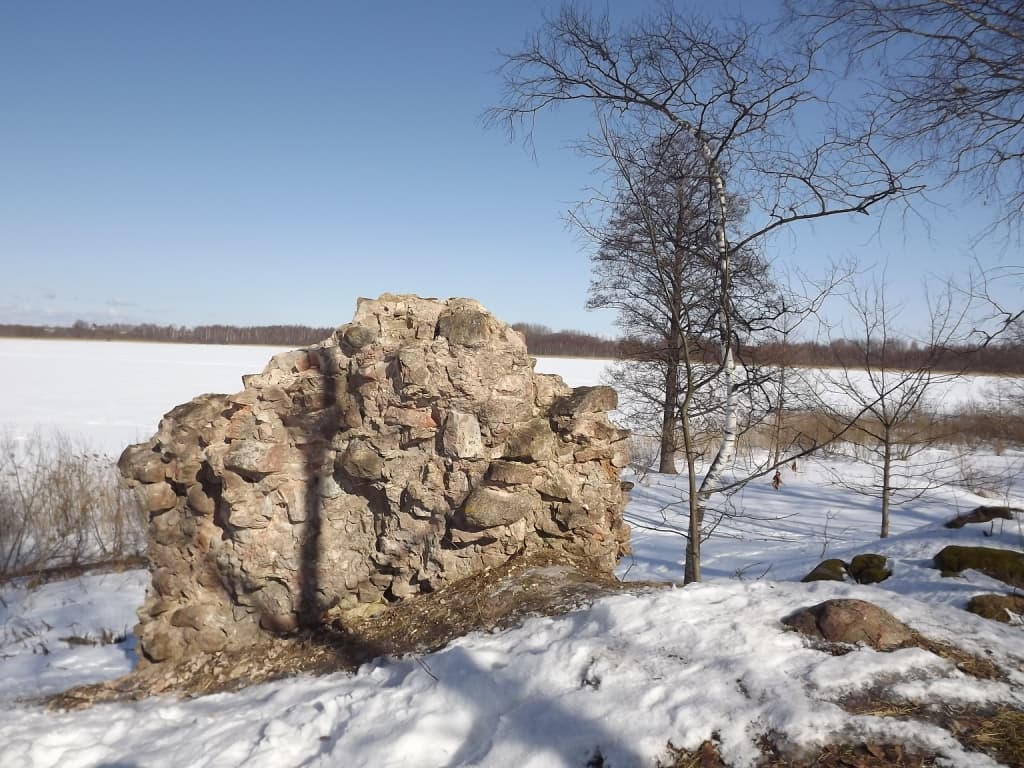
Vilaka Castle ruins stand on a small island in Viļaka Lake, near the town of Viļaka in the Latgale region of Latvia. Originally constructed in 1342 by the Archbishopric of Riga, the castle occupies a historically strategic location far to the east of the main Crusader centers. The island itself was donated in 1293 by Archbishop Johann II von Vecht to the Cistercian monks for the establishment of a monastery named Marienhausen or the "House of Mary." This early phase likely featured predominantly wooden structures, with possible stone elements such as a tower.
From monastery to medieval fortress
Initially a closed monastery, the site evolved significantly over the centuries. The original wooden castle was erected by the Archbishopric in 1342, replacing or supplementing the monastic buildings. Between 1509 and 1516, the castle underwent a major transformation, being rebuilt in stone to serve as a fortified stronghold. This reconstruction reflected the castle's growing military importance during the Late Medieval period, particularly given its isolated position surrounded by swamps and distant from major communication routes.
Architectural features and defensive structures
The castle's defensive walls were notably robust, with outer walls measuring approximately 1.6 meters thick. Surviving fragments of these walls rise up to 2 meters high, offering a glimpse into the scale and strength of the original fortifications. The island setting provided a natural moat-like defense, with the surrounding lake and marshy terrain enhancing the castle's defensibility.
Layout and construction materials
The stone reconstruction likely included a central keep or tower, curtain walls, and possibly additional towers or gatehouses, typical of Late Medieval fortifications in the Baltic region. The use of local stone and traditional masonry techniques would have been employed during the rebuilding phase in the early 16th century.
Historical significance and destruction
Vilaka Castle played a role during the turbulent times of the Livonian War (1558–1583), a conflict involving various regional powers vying for control over the Baltic territories. In 1582, the castle was destroyed amidst the warfare, reflecting the intense military struggles in the region. Although it was affected by these conflicts, the castle was not immediately abandoned.
However, during the Great Northern War in 1702, the castle was finally demolished, leading to its current ruined state. The destruction during this war marked the end of the castle's military and residential use, leaving behind the ruins that remain today.
Modern developments and visitor experience
Today, the Vilaka Castle ruins are a significant archaeological site and a cultural heritage landmark in Latvia. The island is accessible via a pontoon bridge constructed in 2020, connecting it to the mainland and allowing visitors to explore the site on foot. A walking path over 400 meters long guides visitors through the island, offering views of the ruins and the natural surroundings.
Next to the bridge, a scale model of the original castle is displayed, providing insights into its former appearance and layout. For those seeking a more adventurous approach, SUP board rentals are available, enabling visitors to paddle across the lake to the island.
Preservation and archaeological efforts
Ongoing archaeological research continues to reveal more about the castle's construction phases, usage, and historical context. Conservation efforts focus on preserving the remaining walls and preventing further deterioration, ensuring that this Late Medieval archaeological ruin remains a valuable link to Latvia's medieval past.
Frequently asked questions (FAQ)
- How do I get to Vilaka Castle ruins?
- Vilaka Castle ruins are located on an island in Viļaka Lake, accessible via a pontoon bridge built in 2020. Visitors can reach the island on foot using the bridge or by renting a SUP board for a paddle across the lake.
- What is the historical significance of Vilaka Castle?
- Vilaka Castle was originally built in 1342 by the Archbishopric of Riga and served as a monastery and later a fortified castle. It played a role during the Livonian War and was destroyed in 1702 during the Great Northern War.
- Can I explore the ruins of Vilaka Castle?
- Yes, visitors can walk along a 400-meter path on the island to explore the ruins. There is also a scale model on display near the bridge that shows the castle's original appearance.
- When is the best time to visit Vilaka Castle ruins?
- The castle ruins are open daily from 10:00 to 18:00. The best time to visit is during the warmer months when the weather is favorable for walking and outdoor exploration.
- Is there an entrance fee to visit Vilaka Castle ruins?
- No, visiting the Vilaka Castle ruins is free of charge, making it accessible for all visitors interested in Latvia's medieval heritage.
Photo gallery

Information
Opening hours
10:00-18:00, daily
Ticket prices
Free
Current owner
Municipality
Loading map...
Visitor reviews
No reviews yet. Been here? Write the first review and help other travelers!
Write the first reviewVisited this castle? Share your experience
Your review helps other travelers and adds first-hand knowledge to our encyclopedia.