Vijaydurg Fort
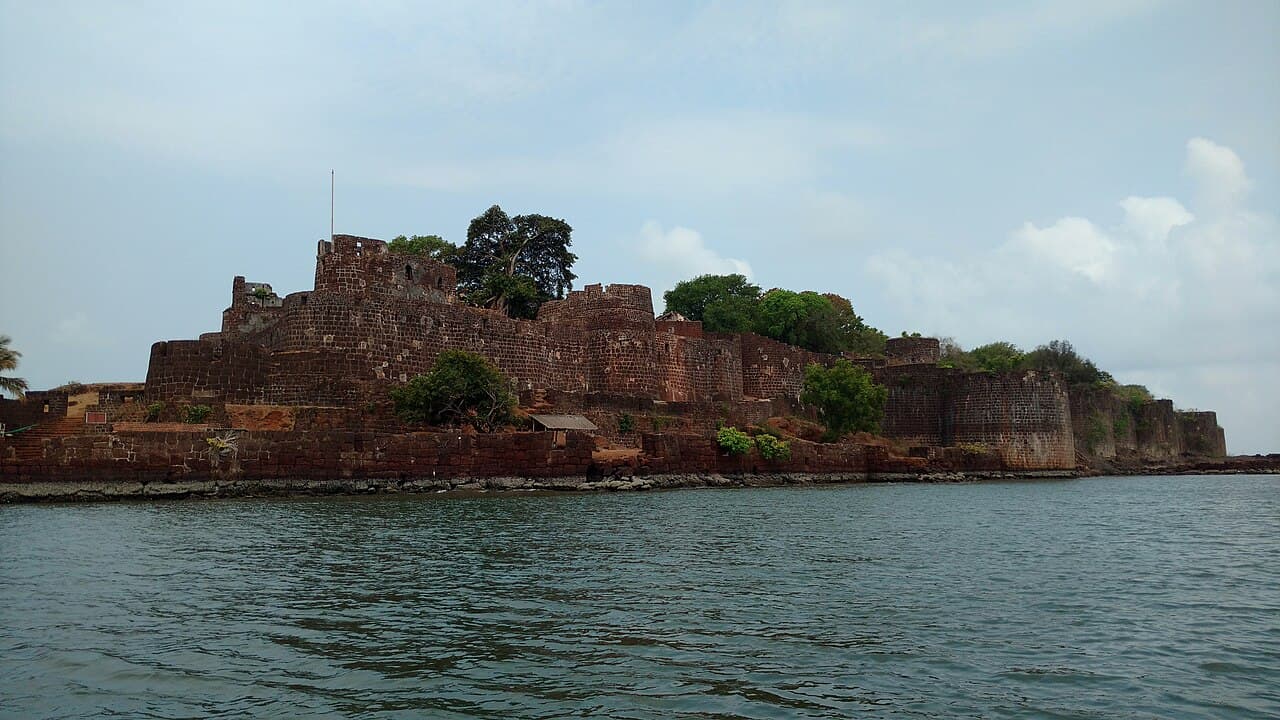
Vijaydurg Fort, located on the Sindhudurg coast of India, is one of the oldest and most strategically significant forts along the Arabian Sea. Constructed initially during the reign of Raja Bhoja II of the Shilahar dynasty between 1193 and 1205, this fort later underwent substantial restructuring and expansion under the Maratha ruler Chhatrapati Shivaji Maharaj. Its coastal position and formidable defenses earned it the nickname "Eastern Gibraltar" due to its near impregnable nature.
Historical background and construction
The origins of Vijaydurg Fort trace back to the late 12th century, when it was built as a maritime defense post by the Shilahar dynasty. The fort's location was chosen for its natural advantages, being surrounded by the Arabian Sea, which provided a natural moat and defense against invaders. The original fort covered an area of about 5 acres (20,000 m²), completely encircled by water.
During the 17th century, the fort was significantly expanded by Shivaji, who recognized its strategic importance for controlling the western coast of India. He extended the fort's area to approximately 17 acres (69,000 m²) by reclaiming some land on the eastern side. This expansion included the construction of three massive walls, each rising to a height of around 36 meters, and the addition of 20 bastions to enhance its defensive capabilities.
Architectural features and fortifications
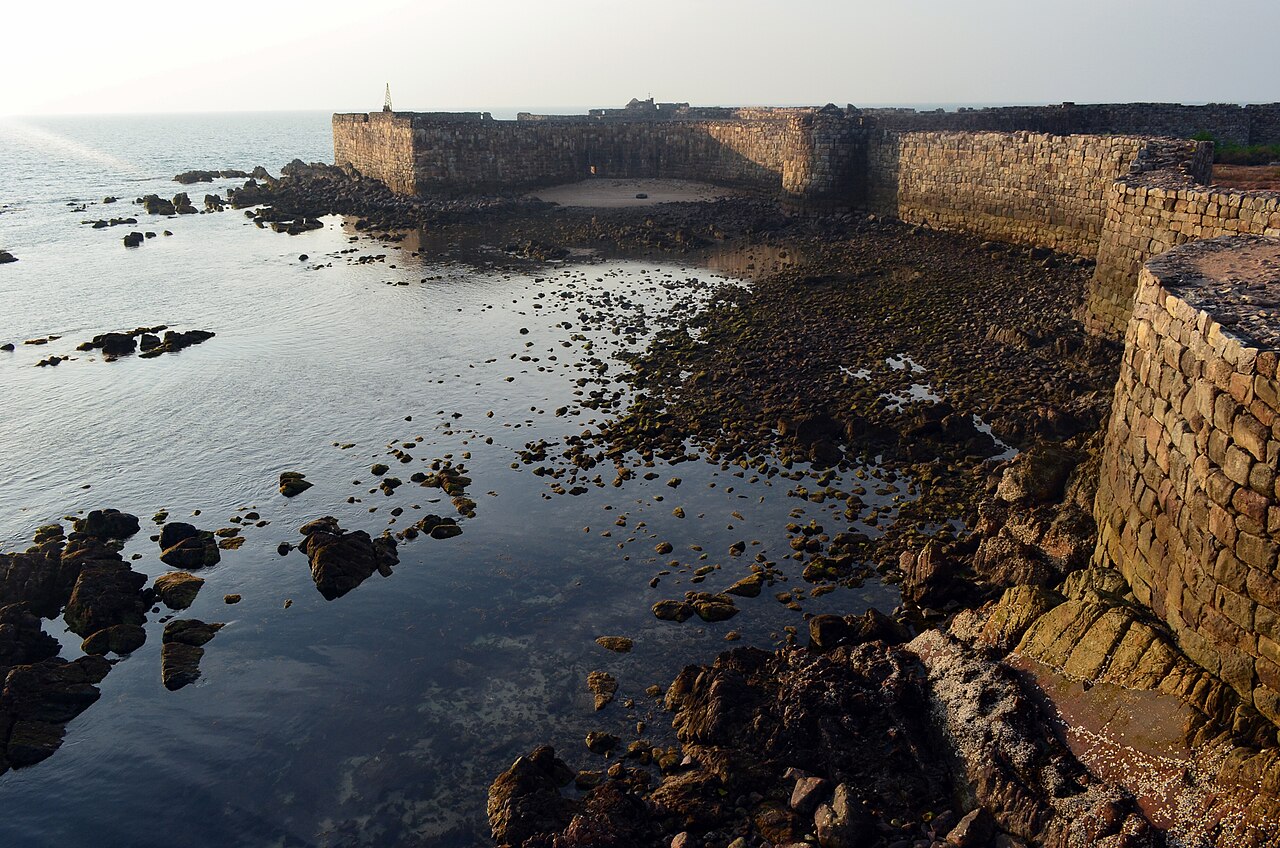
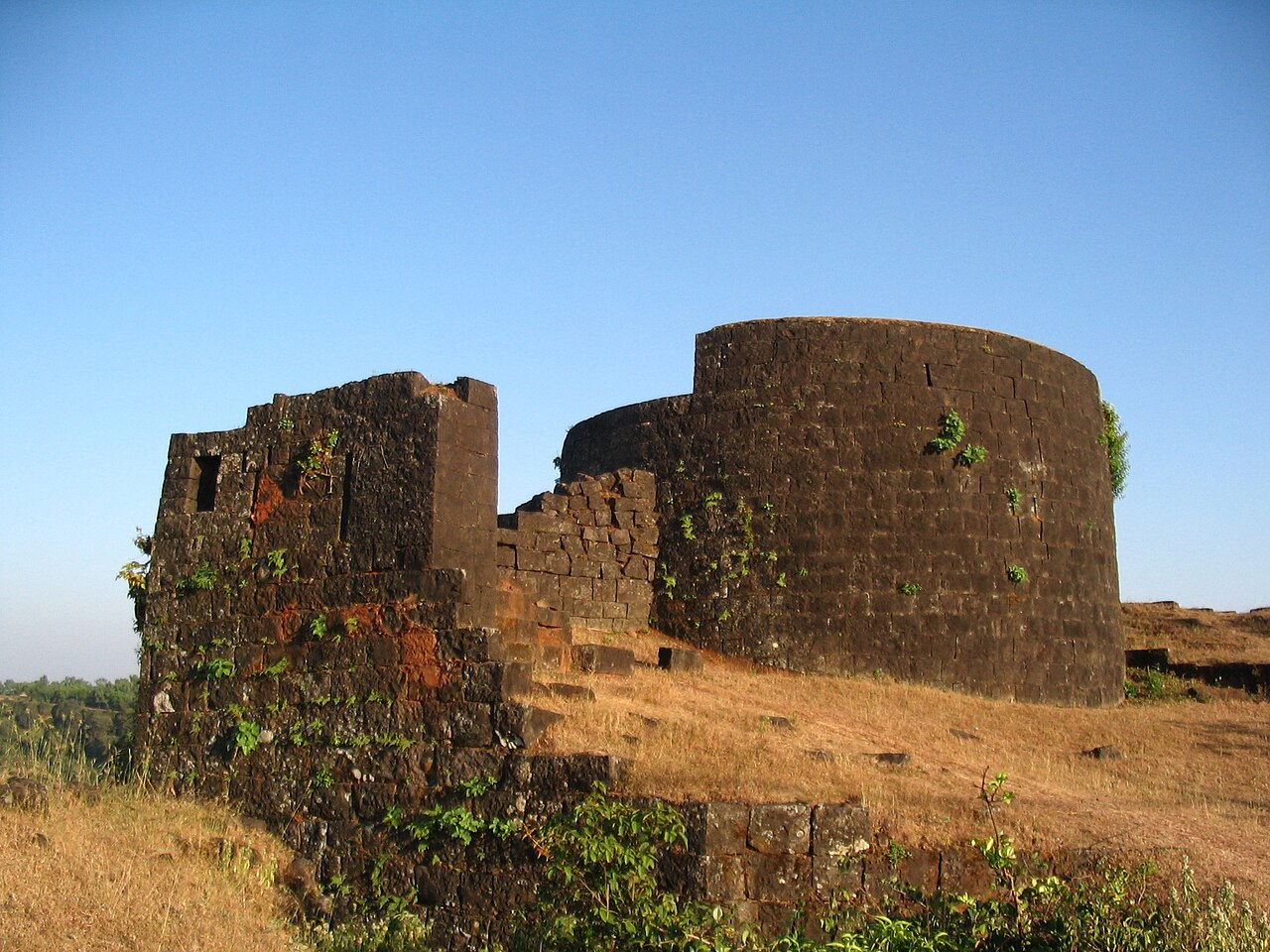
Vijaydurg Fort is classified as a bastioned fortress, characterized by its strong, angular bastions designed to repel cannon fire and provide overlapping fields of defense. The fort's walls are thick and robust, built primarily from laterite stone, which is abundant in the region and known for its durability against the coastal climate.
The fort's location on a peninsula gives it natural protection on three sides by the sea, while the eastern side was fortified with the newly constructed walls and bastions. The eastern trench that once surrounded the fort was later reclaimed to build a road, improving access but slightly reducing the water barrier.
Inside the fort, there are remains of various structures, including residential quarters, granaries, and watchtowers. The fort also housed docks and shipbuilding facilities, reflecting its role as a naval base for the Maratha navy. The proximity to the 40 km long Waghotan/Kharepatan creek was a crucial tactical advantage, allowing Maratha warships to anchor safely and remain hidden from enemy ships at sea due to the creek's shallow waters, which prevented large enemy vessels from entering.
Strategic importance and military history
Vijaydurg Fort's position along the western coast of India made it a vital maritime stronghold for the Maratha Empire. Its natural and man-made defenses made it extremely difficult to capture, earning it the reputation as the "Eastern Gibraltar". The fort played a key role in controlling sea routes and protecting the Maratha coastline from Portuguese, British, and other colonial powers.
The fort's naval facilities supported the Maratha navy, which was instrumental in defending the region and projecting power along the coast. The ability to anchor warships invisibly in the Waghotan creek allowed the Marathas to launch surprise attacks and maintain control over maritime trade routes.
Present condition and preservation
Today, Vijaydurg Fort is a protected monument under the care of the Indian government. While some parts of the fort have suffered from natural erosion and lack of maintenance, many sections remain well preserved, showcasing the impressive scale and strength of its bastioned walls and bastions. The fort is accessible to visitors and serves as an important cultural and historical site, attracting those interested in Maratha history and coastal fortifications.
Efforts have been made to maintain the structural integrity of the fort and to promote it as a heritage tourism destination. The fort's coastal setting and panoramic views of the Arabian Sea add to its appeal for visitors.
Frequently asked questions (FAQ)
- When was Vijaydurg Fort originally constructed?
- Vijaydurg Fort was originally constructed between 1193 and 1205 during the reign of Raja Bhoja II of the Shilahar dynasty.
- What makes Vijaydurg Fort strategically significant?
- The fort's location on the Sindhudurg coast, surrounded by the Arabian Sea on three sides, and its proximity to the Waghotan/Kharepatan creek made it a formidable maritime defense and naval base.
- Who expanded Vijaydurg Fort and what changes were made?
- Chhatrapati Shivaji Maharaj expanded the fort in the 17th century by increasing its area to about 17 acres, building three large walls on the eastern side, and adding 20 bastions.
- Why is Vijaydurg Fort called the 'Eastern Gibraltar'?
- It earned the nickname 'Eastern Gibraltar' due to its near impregnable defenses and strategic location, making it extremely difficult to capture by enemies.
- Can visitors explore Vijaydurg Fort today?
- Yes, Vijaydurg Fort is a protected monument open to visitors who can explore its bastioned walls, bastions, and enjoy views of the Arabian Sea.
Photo gallery

Information
Current owner
Government of India
Loading map...
Visitor reviews
No reviews yet. Been here? Write the first review and help other travelers!
Write the first reviewVisited this castle? Share your experience
Your review helps other travelers and adds first-hand knowledge to our encyclopedia.