Vigolo Castle

Vigolo castle in vigolo vattaro, italy
Vigolo Vattaro, Italy
Late Medieval (14th–15th c.)
Well Preserved

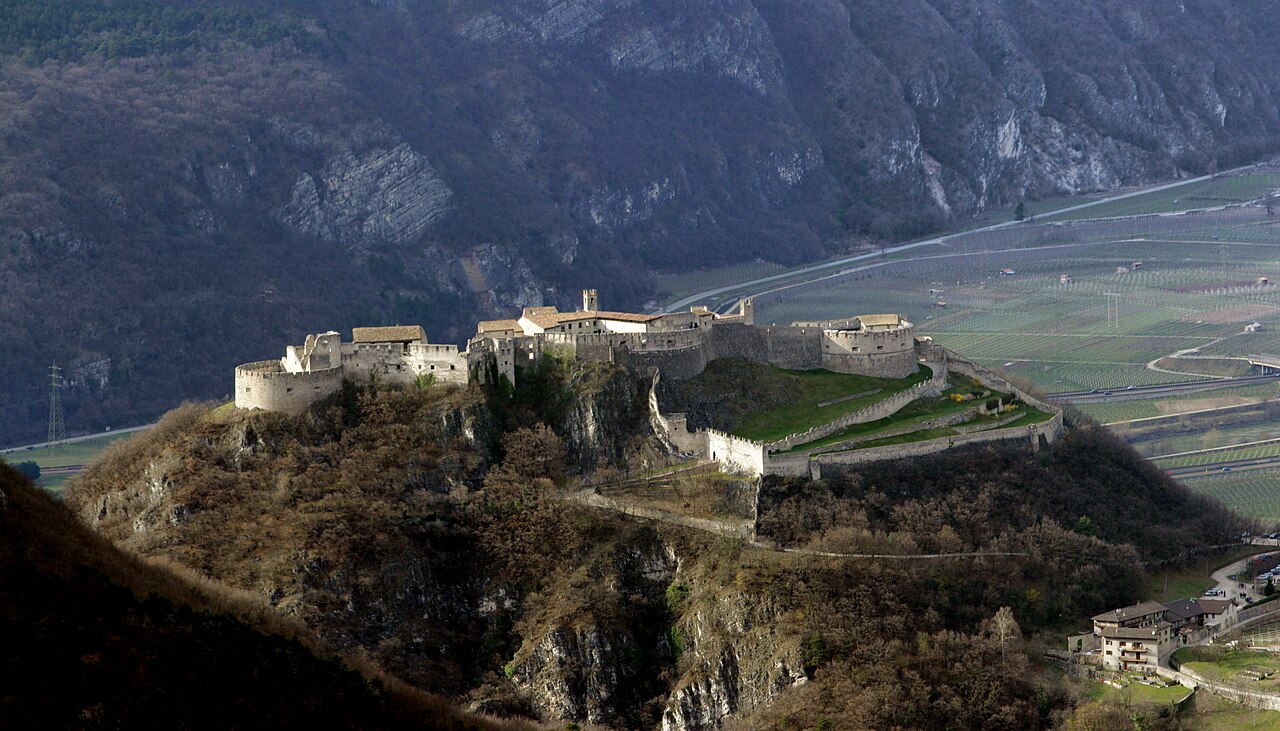
Vigolo Castle, located in Vigolo Vattaro, Italy, is a significant example of a late-medieval fortress that was transformed during the Renaissance period into an aristocratic residence. Its strategic position overlooking the pass between Vigolana and Marzola mountains highlights its original military purpose to defend the town and control this important route.

Early history and medieval origins

The earliest documented mention of Vigolo Castle dates back to 1214, indicating its medieval origins. This initial fortress served a defensive role in the region, guarding the mountain passes and local settlements. However, the castle faced significant conflict in 1254 when it was besieged and destroyed, a common fate for many castles during the turbulent medieval period marked by local feuds and territorial disputes.

Transition to renaissance aristocratic residence

By the 15th century, the castle had fallen into ruins. In 1424, ownership passed to the Murlini family, and later in 1477 to the de Fatis family, who remain the owners to this day. The de Fatis family undertook a major rebuilding project in the 16th century, restoring the castle almost entirely. This reconstruction was carried out in the Renaissance style, reflecting the period's architectural trends and the shift in the castle's function from a purely military fortress to a noble country residence.

Architectural transformation

The Renaissance rebuilding introduced features typical of aristocratic residences of the time, including more refined living quarters and decorative elements, while maintaining some defensive characteristics. The castle's layout was adapted to accommodate the lifestyle of a noble family rather than just soldiers. This transformation is evident in the surviving structures, which showcase Renaissance architectural details such as larger windows, more comfortable interiors, and possibly ornamental facades.

Ownership and current status

The de Fatis family, having acquired the castle in a ruined state, successfully restored it and have preserved it as a private home for centuries. Due to its status as a private residence, Vigolo Castle is not open to the public, limiting direct access to its interiors and grounds. However, its external appearance and historical significance continue to attract interest from historians and architecture enthusiasts.

Strategic location and significance

Situated in the mountainous region of Trentino-Alto Adige/Südtirol, the castle's location was critical in controlling the passage between the Vigolana and Marzola mountain ranges. This position allowed for monitoring and defense against potential invaders or rival factions during the medieval and Renaissance periods. The castle's presence reflects the broader historical context of territorial control and noble power in northern Italy during these centuries.

Architectural features and preservation

While detailed public records of the castle's architectural specifics are limited due to its private ownership, the existing structure retains elements from its Renaissance reconstruction. The castle likely includes a combination of defensive walls, towers, and residential buildings arranged around a courtyard. The preservation of Renaissance stylistic elements provides valuable insight into the adaptation of medieval fortresses into noble residences during this period.

Cultural and historical importance

Vigolo Castle represents an important link between medieval military architecture and Renaissance aristocratic living in northern Italy. Its continuous ownership by the de Fatis family adds to its historical narrative, illustrating the evolution of noble estates over centuries. Although not accessible for public tours, the castle remains a noteworthy subject for studies in castle architecture and regional history.

Frequently asked questions (FAQ)

How do I get to Vigolo Castle?
Vigolo Castle is located in Vigolo Vattaro, Italy, easily accessible by car or public transport. If you're traveling by car, you can follow the A22 motorway and take the exit for Trento. Public buses also connect nearby towns to the castle, making it convenient for visitors.
What is the historical significance of Vigolo Castle?
Vigolo Castle dates back to the medieval period and is an important example of feudal architecture in the region. It served as a defensive stronghold and residence for noble families, reflecting the historical power dynamics of the area. Today, it stands as a testament to the rich history of the Trentino region.
When was Vigolo Castle built?
Vigolo Castle was constructed in the late 12th century, showcasing the architectural style of the time. Over the centuries, it has undergone various restorations and modifications, yet it still retains much of its original charm. Its long history makes it a fascinating site for history enthusiasts.
Can I visit Vigolo Castle year-round?
Yes, Vigolo Castle is open to visitors year-round, though opening hours may vary by season. It’s advisable to check the official website for the most up-to-date information on visiting times and any seasonal events. This allows you to plan your visit for the best experience.
Why is Vigolo Castle popular among tourists?
Vigolo Castle is popular for its stunning architecture, rich history, and panoramic views of the surrounding countryside. Visitors appreciate not only the castle's beauty but also the opportunity to explore the surrounding natural landscapes. The combination of history and scenic beauty makes it a must-visit destination in the region.
Is it possible to take guided tours of Vigolo Castle?
Yes, guided tours are available at Vigolo Castle, providing visitors with an in-depth understanding of its history and architectural features. Tours are typically conducted in multiple languages, making it accessible for international visitors. Reservations are recommended, especially during peak tourist seasons.
What are the ticket prices for Vigolo Castle?
Ticket prices for Vigolo Castle are generally affordable, with discounts available for students and seniors. Children under a certain age may enter for free, making it a family-friendly attraction. Check the official website for current pricing and any special offers that may be available during your visit.
What is the best time to visit Vigolo Castle?
The best time to visit Vigolo Castle is during the spring and early autumn when the weather is pleasant, and the surrounding landscapes are in full bloom. Summer can be busy with tourists, while winter offers a unique, quiet experience if you're interested in a more serene visit. Each season provides a different perspective on the castle's beauty.
Are there any nearby attractions to Vigolo Castle?
Yes, there are several attractions near Vigolo Castle, including the scenic lakes of Caldonazzo and Levico, which are perfect for outdoor activities. Additionally, the charming town of Trento is just a short drive away, offering historical sites, museums, and local cuisine. Exploring these nearby locations can enhance your visit to the castle.

Information

Hill Castle

Loading map...

Visitor reviews

No reviews yet. Been here? Write the first review and help other travelers!

Write the first review

Visited this castle? Share your experience

Your review helps other travelers and adds first-hand knowledge to our encyclopedia.

Write a review

(5/5)

0/2000 characters

Your review will be visible after admin approval

Nearby castles

6.7 km

Pergine Castle

Pergine Valsugana, Italy

Pergine Castle, perched strategically on Colle Tegazzo near the town of Pergine Valsugana in Trentino, Italy, stands as a remarkable example of medieval fortification blending military architecture and later Gothic stylistic modifications. This 13th-century hill castle commands the historic Via Claudia Augusta Altinate, a vital ancient route connecting northern Italy with central Europe, underscoring its long-standing strategic importance.Historians believe the site of Pergine Castle was initially a prehistoric fortress, evolving through Roman settlement phases and later becoming a Longobard stronghold. Documentary evidence first mentions the castle in the early medieval period, specifically in 845 AD, linking it to Lombard rulers who likely established or rebuilt the early fortress. The castle’s position on a hilltop provided natural defenses enhanced by man-made fortifications over centuries.Throughout its history, Pergine Castle has witnessed a succession of noble owners and political powers, including the Dukes of Austria under Margarete Maultasch, the Holy Roman Emperor Maximilian I, and the Prince-Bishop of Trento Bernardo Cles. Its ownership reflects the complex feudal and ecclesiastical dynamics of the region, with the castle serving both military and residential functions.Historical significance and ownership transitionsEarly medieval origins and feudal conflictsThe earliest records associate the castle with the Longobard period, with its strategic location making it a coveted stronghold. In the 12th and 13th centuries, the castle was controlled by the Pergine lords, who were connected to prominent noble families in the region. During this period, it endured violent conflicts, including capture and burning by troops under Ezzelino da Romano, a testament to the turbulent political landscape of northern Italy.Following these conflicts, restoration efforts were led by Prince Enrico II and his son Adriano, reinforcing the castle’s role as a defensive guard post overseeing passage between the Veneto and Trentino regions. Later, the castle became a fief of Mainardo II, Count of Tyrol, further embedding it in the regional power struggles involving bishops and noble families.Bishopric control and gothic renovationsIn the early 14th century, control passed to the Bishopric of Trento, with Bishop Bonaventura Gardelli appointing custodians to defend against external threats. A notable episode involved the betrayal attempt by the bishop’s nephew, Dioniso Gardelli, which was thwarted to maintain ecclesiastical authority.The castle underwent significant architectural transformation during the 15th century, adopting Gothic style elements that remain visible today. This period marked a shift toward enhancing residential comfort alongside military functionality, reflecting broader trends in castle architecture.Architectural features and fortificationsLayout and defensive structuresPergine Castle exhibits a quadrangular layout atop Colle Tegazzo, surrounded by robust curtain walls with multiple watchtowers strategically placed for surveillance and defense. The walls are built from local stone, featuring battlements designed for archers and lookouts.The main entrance is guarded by a square guard tower accessible historically via a drawbridge, now lost. Adjacent stands the imposing "torture tower", a cylindrical structure with narrow loopholes and distinctive cross-shaped windows, combining defensive and symbolic architectural elements.Interior spaces and notable roomsThe castle’s interior connects through large stone spiral staircases that link the ground floor to upper chambers. The ground floor houses the entrance hall, kitchens, and cellars, alongside an enclosed garden visible only from inside the fortress.The first floor features the Sala del trono (Throne Room) and the Chapel of St. Andrew, spaces reflecting the castle’s ceremonial and religious roles. The second floor contains several historically named rooms, including the Sala del Balconcino, Sala del Vescovo, Sala della Stufa Verde, Sala del Principe, and Sala della Dama Bianca, many of which serve as exhibition venues today.Unique architectural highlightsOne of the castle’s most unusual features is the huge octagonal pillar supporting the vaulted ceiling of the entrance hall, an architectural highlight demonstrating advanced medieval construction techniques. The Prigione della goccia (Prison of the Drop) is a small cell used historically for psychological torture, where drops of water would fall continuously on the prisoner’s head.The "Camera del camino" (Fireplace Room) is steeped in local legend, reputedly haunted by a mysterious lady in white, adding a layer of cultural intrigue to the castle’s history.Later history and modern usageIn the early 20th century, the castle was acquired by a German company led by Julius Friedrich Lehmann with plans to convert it into a hotel and restaurant. Although renovations began, authorities halted the project in 1913 to preserve the castle’s artistic and historical integrity.Since 1956, the castle has been privately owned by the Oss family, who have overseen restoration efforts to maintain the structure’s condition. In 2018, stewardship transferred to the Fondazione Castel Pergine ONLUS, a nonprofit organization dedicated to the castle’s preservation and cultural promotion.Today, Pergine Castle is open to the public with guided tours highlighting its rich history, architectural features, and exhibitions related to the region’s heritage. The castle remains a well-preserved example of medieval and Gothic architecture, reflecting centuries of strategic, residential, and cultural significance in northern Italy.

High Medieval (11th–13th c.)
Details
11.4 km
Beseno Castle — Italy castle

Beseno Castle

Besenello, Italy

Beseno Castle stands as the largest fortified complex in the Trentino region of northern Italy, occupying a commanding hilltop location overlooking the Vallagarina valley between Rovereto and Trento. Constructed originally in the 12th century, this high medieval hill castle was built to control key routes including access to the Folgaria Plateau, making it a vital military and administrative stronghold for centuries. The castle's strategic importance is reflected in its extensive fortifications, which evolved significantly over time, particularly in the 16th century when the fortress was adapted to the era of firearms. The imposing lunated bastions that characterize Beseno Castle today date from this period, designed to withstand artillery attacks and provide comprehensive defensive coverage from multiple angles. These bastions, combined with massive stone walls and fortified gates, form a roughly triangular layout enclosing large courtyards and various functional buildings. Architectural features and layout The castle occupies an elliptical limestone hill approximately 250 meters long and 50 meters wide. Its fortifications include three prominent bastions positioned at the corners of the triangular plan, reflecting advanced military architectural principles of the Renaissance adapted to earlier medieval structures. The main entrance was originally protected by a drawbridge and a gatehouse with gunports, some of which remain visible in the first courtyard. Within the walls, visitors can explore extensive courtyards and buildings that historically served as kitchens, bread ovens, wine cellars, and storage warehouses. The walkway along the ramparts offers panoramic views across the valley and towards the Folgaria Plateau, emphasizing the castle’s commanding position. The fortress also includes a clock tower, a hayloft, and the Palace of Marcabruno, a 14th-century residence that now hosts a permanent exhibition on the Battle of Calliano (1487). Historical significance and events Beseno Castle has a rich history marked by numerous military engagements and political shifts. Initially held by the Counts of Appiano and their vassals, the Da Beseno family, the castle’s ownership later fragmented between family branches, leading to internal conflicts and a decline in regional influence. Portions of the castle also came under the control of the Trentino church in the 13th century. The 14th century saw revitalization under Guglielmo II da Castelbarco, who undertook significant restoration efforts. The castle played a critical role during the turbulent 15th century, particularly during the Battle of Calliano on August 10, 1487. This battle saw Tyrolean forces successfully repel an invasion by the Republic of Venice, which sought expansion towards Trento. The Venetian commander, Roberto Sanseverino d’Aragona, was killed during the conflict, marking a decisive moment in regional history. Following a devastating fire in the 16th century, the castle was extensively rebuilt to incorporate modern defensive features suitable for firearm warfare. This reconstruction transformed Beseno from a medieval fortress into a fortified residence, blending military utility with domestic functions. In the late 18th century, the castle endured a prolonged siege by Napoleonic forces. The arrival of Austrian reinforcements forced the French to retreat, highlighting the fortress’s enduring strategic value even in the age of gunpowder. Decline and restoration With the advent of more stable political conditions in the 19th century, Beseno Castle gradually lost its military importance and fell into neglect. Parts of the structure were dismantled, including the demolition of a tower in 1957 for road safety reasons. Additionally, the castle was left uncovered for a period to avoid property taxation. In 1973, the castle was donated to the Autonomous Province of Trento by the Von Trapp family. This transfer initiated extensive restoration projects aimed at preserving and stabilizing the fortress. Since 1988, Beseno Castle has been open to the public as part of the provincial museum network, hosting exhibitions, cultural events, and historical reenactments. The Palace of Marcabruno now features a permanent exhibition dedicated to the Battle of Calliano, including a collection of original and replica weapons. Visitors are encouraged to interact with historical armor and helmets, making the experience engaging for all ages. Visitor experience and cultural events Today, Beseno Castle is not only a monument of military architecture but also a vibrant cultural venue. The large Campo dei Tornei (Tournament Field) has been transformed into a well-maintained garden, serving as a picturesque setting for temporary exhibitions, period costume pageants, and other cultural events. The castle’s evocative atmosphere, combined with its panoramic views and well-preserved structures, makes it a compelling destination for history enthusiasts and tourists alike. Visitors can access the castle from the nearby town of Besenello or via the state road SS350, which traces historical routes once guarded by the fortress. Informational displays and audiovisual presentations in the former gunpowder magazine enhance the educational experience. Architectural and historical legacy Beseno Castle exemplifies the evolution of medieval fortifications adapting to the changing demands of warfare over several centuries. Its blend of high medieval origins with Renaissance military innovations offers valuable insights into the development of defensive architecture. The castle’s preservation and adaptive reuse as a cultural site underscore its importance as a symbol of regional heritage and identity. Its commanding position overlooking the Adige valley continues to captivate visitors, providing a tangible connection to the historical landscape shaped by centuries of conflict and governance. Beseno Castle remains a testament to the strategic ingenuity and architectural skill of its builders, as well as the complex history of Trentino-Alto Adige.

High Medieval (11th–13th c.)
Details
12.5 km
Buonconsiglio Castle — Italy castle

Buonconsiglio Castle

Trento, Italy

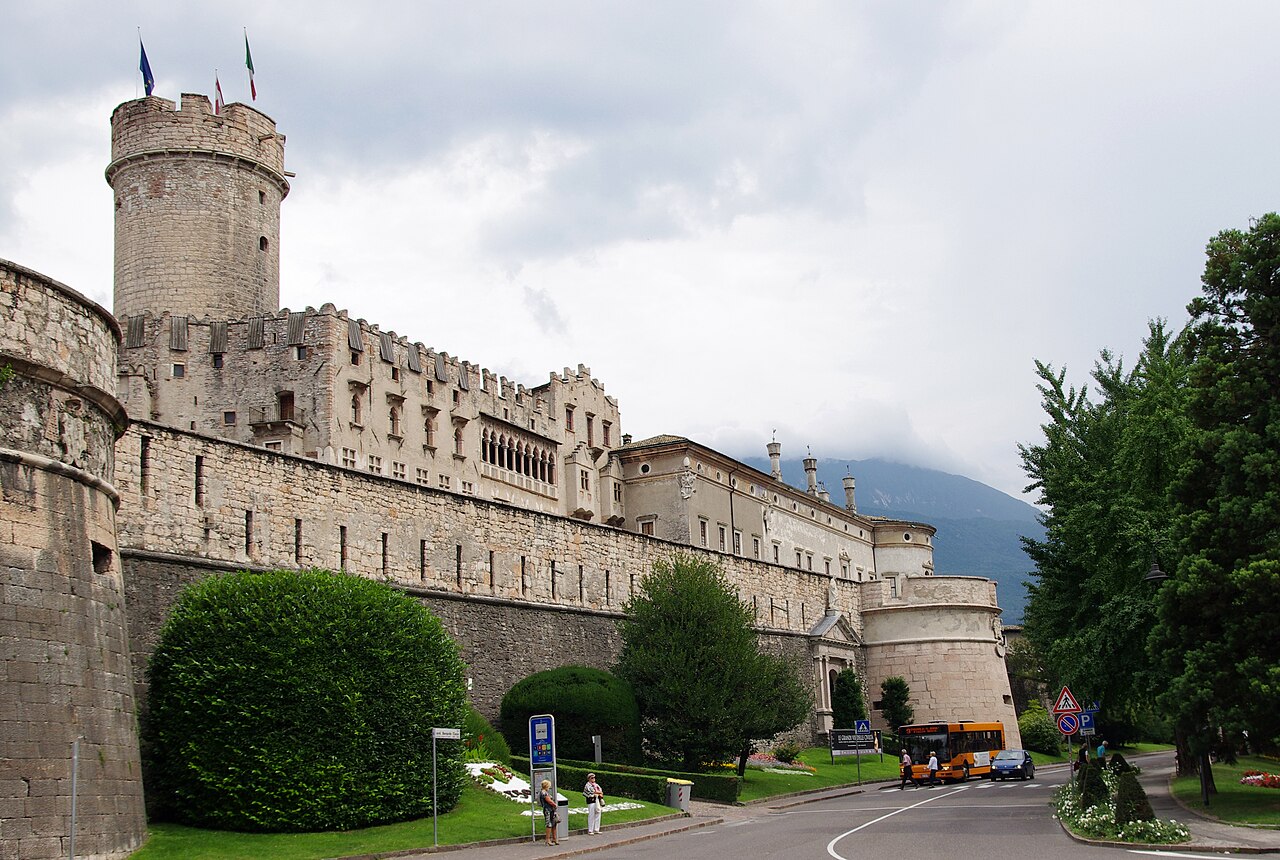
Buonconsiglio Castle stands as a monumental symbol of Trento and the Trentino-Alto Adige region, renowned for its impressive size and complex architectural evolution. Perched on a rocky hill that once hosted a Roman castrum, this hill castle originated in the 13th century as a fortified residence for the Prince-Bishops of Trento, who wielded both spiritual and temporal power. It remains one of the largest and most significant fortified complexes in the Alps, embodying a rich blend of Romanesque, Gothic, and Renaissance styles. The castle complex is composed of multiple interconnected buildings from different periods, enclosed within defensive walls that dominate the cityscape from an elevated vantage point. Its oldest nucleus, the Castelvecchio ("Old Castle"), dates back to the 12th century and features robust Romanesque elements, including the massive cylindrical Augustus Tower built upon Roman military foundations. This tower exemplifies medieval military architecture and serves as a central landmark within the castle. The medieval origins and gothic expansions During the High medieval period, Buonconsiglio Castle evolved from a purely defensive fortress into a refined episcopal residence. Significant expansions were undertaken in the late 14th and early 15th centuries under the rule of Prince-Bishops Giorgio di Liechtenstein and Johannes Hinderbach. These additions included the construction of the Torre Aquila (Eagle Tower), famed for its exceptional late medieval fresco cycle known as the Cycle of the Months. Painted around 1397, these frescoes vividly depict noble court life and rural seasonal activities, offering an invaluable glimpse into 14th-century society and culture. Although one panel was lost to fire, the remaining eleven panels remain a masterpiece of Gothic art. Johannes Hinderbach also commissioned the distinctive double loggia and the Gothic entrance gate, enhancing the castle's aesthetic and defensive features. These elements reflect influences from Venetian Gothic architecture, integrating elegance with fortification. The castle's walls were further fortified with battlements and defensive structures during this period, adapting to the military needs of the time. Renaissance transformation under cardinal bernardo clesio The castle reached its architectural and cultural zenith in the early 16th century during the episcopacy of Cardinal Bernardo Clesio (1485–1539). He commissioned the construction of the Magno Palazzo (Grand Palace), a grand Renaissance wing that dramatically expanded the castle's residential and representative functions. This addition reflects the ideals of the Italian Renaissance, emphasizing symmetry, proportion, and artistic decoration. The Magno Palazzo houses richly frescoed rooms by prominent painters such as Girolamo Romanino, Dosso Dossi, Battista Dossi, and Marcello Fogolino. The frescoes cover a wide range of themes, including mythological, biblical, and historical scenes, and are particularly notable in the loggia and the Sala Grande (Great Hall). The loggia frescoes by Romanino portray allegorical and moralistic themes focusing on virtues, pride, and the seasons, enriching the castle's symbolic narrative. A remarkable architectural feature is the suspended bridge supported by candelabra-shaped columns, connecting the Magno Palazzo to the Castelvecchio, facilitating internal circulation. The palazzo also includes terracotta figures by Zaccaria Zacchi and elaborately decorated chambers such as the Sala degli Specchi (Hall of Mirrors), the Camin Nero, and the Stua della Famea dining hall. Baroque additions and later history In the late 17th century, the castle complex was unified by the Giunta Albertiana, commissioned by Bishop Francesco Alberti Poja (1686). This Baroque addition linked the Castelvecchio and the Magno Palazzo, featuring stuccos and frescoes by Giuseppe Alberti. It improved the castle's internal accessibility and added new decorative richness. After the secularization of the Prince-Bishopric in 1803, Buonconsiglio Castle underwent various military uses, including serving as an Austrian barracks and a jail. It was incorporated into Trento’s defensive system until the early 20th century. During World War I, the castle was the site of the tribunal that condemned Italian irredentists Cesare Battisti, Fabio Filzi, and Damiano Chiesa, who were executed in the castle courtyard in 1916, marking a tragic chapter in its history. Modern restoration and museum function Following World War I and the annexation of Trentino-Alto Adige to Italy, Buonconsiglio Castle was transferred to Italian state ownership. In the 1920s, it was restored and converted into a national museum. Since 1992, it has housed the Provincial Gallery of Art, showcasing an extensive collection of art ranging from archaeology to modern and contemporary works. The castle’s preservation efforts have maintained the Renaissance frescoes in excellent condition, particularly those in the Magno Palazzo. Some medieval frescoes, such as the lunettes in the Stua della Famea, show signs of wear but remain significant cultural treasures. The castle also houses important archaeological artifacts, including the Tabula Clesiana, a 1st-century bronze tablet shedding light on Roman-era regional governance. Architectural features and cultural significance The castle complex exemplifies a rare architectural layering, combining Romanesque solidity, Gothic elegance, and Renaissance refinement. Its defensive walls, towers, and battlements reflect its original military purpose, while the richly decorated palaces and frescoes illustrate its role as a seat of ecclesiastical power and cultural patronage. The Cortile dei Leoni (Lions’ Courtyard) is a notable open space within the castle, featuring a frescoed loggia by Romanino that integrates mythological and historical iconography. The castle’s water conduit, built in 1484, is an example of practical engineering, channeling fresh spring water to the residence. The castle’s garden, established in the 16th century by Cardinal Clesio, remains a characteristic feature, though it has undergone changes over time. Legend speaks of a secret tunnel connecting the castle to Trento’s cathedral, allowing the prince-bishops discreet movement, though this remains unconfirmed. Today, Buonconsiglio Castle stands as a well-preserved monument and museum, attracting visitors with its architectural grandeur, historical depth, and rich artistic heritage. It remains a symbol of Trento’s complex history, from Roman times through medieval ecclesiastical rule to modern cultural stewardship.

High Medieval (11th–13th c.)
Details