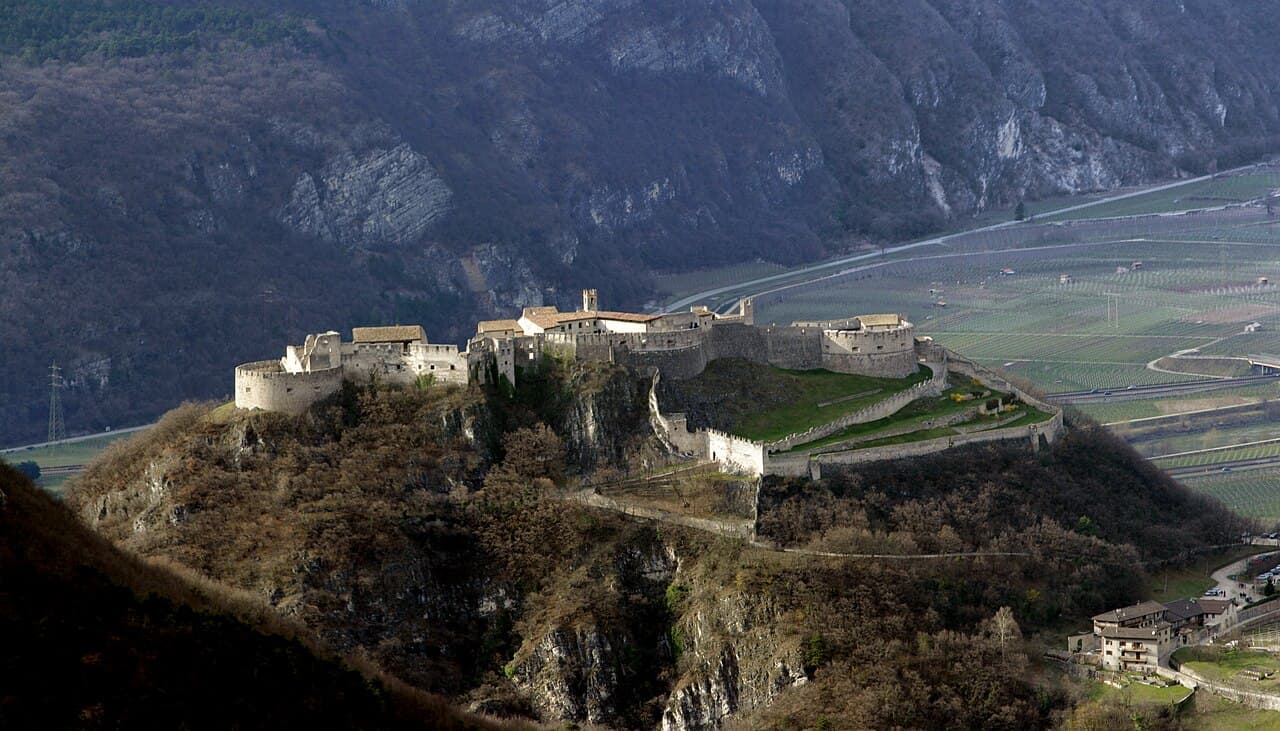
Beseno Castle
Beseno Castle stands as the largest fortified complex in the Trentino region of northern Italy, occupying a commanding hilltop location overlooking the Vallagarina valley between Rovereto and Trento. Constructed originally in the 12th century, this high medieval hill castle was built to control key routes including access to the Folgaria Plateau, making it a vital military and administrative stronghold for centuries.
The castle's strategic importance is reflected in its extensive fortifications, which evolved significantly over time, particularly in the 16th century when the fortress was adapted to the era of firearms. The imposing lunated bastions that characterize Beseno Castle today date from this period, designed to withstand artillery attacks and provide comprehensive defensive coverage from multiple angles. These bastions, combined with massive stone walls and fortified gates, form a roughly triangular layout enclosing large courtyards and various functional buildings.
Architectural features and layout
The castle occupies an elliptical limestone hill approximately 250 meters long and 50 meters wide. Its fortifications include three prominent bastions positioned at the corners of the triangular plan, reflecting advanced military architectural principles of the Renaissance adapted to earlier medieval structures. The main entrance was originally protected by a drawbridge and a gatehouse with gunports, some of which remain visible in the first courtyard.
Within the walls, visitors can explore extensive courtyards and buildings that historically served as kitchens, bread ovens, wine cellars, and storage warehouses. The walkway along the ramparts offers panoramic views across the valley and towards the Folgaria Plateau, emphasizing the castle’s commanding position. The fortress also includes a clock tower, a hayloft, and the Palace of Marcabruno, a 14th-century residence that now hosts a permanent exhibition on the Battle of Calliano (1487).
Historical significance and events
Beseno Castle has a rich history marked by numerous military engagements and political shifts. Initially held by the Counts of Appiano and their vassals, the Da Beseno family, the castle’s ownership later fragmented between family branches, leading to internal conflicts and a decline in regional influence. Portions of the castle also came under the control of the Trentino church in the 13th century.
The 14th century saw revitalization under Guglielmo II da Castelbarco, who undertook significant restoration efforts. The castle played a critical role during the turbulent 15th century, particularly during the Battle of Calliano on August 10, 1487. This battle saw Tyrolean forces successfully repel an invasion by the Republic of Venice, which sought expansion towards Trento. The Venetian commander, Roberto Sanseverino d’Aragona, was killed during the conflict, marking a decisive moment in regional history.
Following a devastating fire in the 16th century, the castle was extensively rebuilt to incorporate modern defensive features suitable for firearm warfare. This reconstruction transformed Beseno from a medieval fortress into a fortified residence, blending military utility with domestic functions.
In the late 18th century, the castle endured a prolonged siege by Napoleonic forces. The arrival of Austrian reinforcements forced the French to retreat, highlighting the fortress’s enduring strategic value even in the age of gunpowder.
Decline and restoration
With the advent of more stable political conditions in the 19th century, Beseno Castle gradually lost its military importance and fell into neglect. Parts of the structure were dismantled, including the demolition of a tower in 1957 for road safety reasons. Additionally, the castle was left uncovered for a period to avoid property taxation.
In 1973, the castle was donated to the Autonomous Province of Trento by the Von Trapp family. This transfer initiated extensive restoration projects aimed at preserving and stabilizing the fortress. Since 1988, Beseno Castle has been open to the public as part of the provincial museum network, hosting exhibitions, cultural events, and historical reenactments.
The Palace of Marcabruno now features a permanent exhibition dedicated to the Battle of Calliano, including a collection of original and replica weapons. Visitors are encouraged to interact with historical armor and helmets, making the experience engaging for all ages.
Visitor experience and cultural events
Today, Beseno Castle is not only a monument of military architecture but also a vibrant cultural venue. The large Campo dei Tornei (Tournament Field) has been transformed into a well-maintained garden, serving as a picturesque setting for temporary exhibitions, period costume pageants, and other cultural events. The castle’s evocative atmosphere, combined with its panoramic views and well-preserved structures, makes it a compelling destination for history enthusiasts and tourists alike.
Visitors can access the castle from the nearby town of Besenello or via the state road SS350, which traces historical routes once guarded by the fortress. Informational displays and audiovisual presentations in the former gunpowder magazine enhance the educational experience.
Architectural and historical legacy
Beseno Castle exemplifies the evolution of medieval fortifications adapting to the changing demands of warfare over several centuries. Its blend of high medieval origins with Renaissance military innovations offers valuable insights into the development of defensive architecture. The castle’s preservation and adaptive reuse as a cultural site underscore its importance as a symbol of regional heritage and identity.
Its commanding position overlooking the Adige valley continues to captivate visitors, providing a tangible connection to the historical landscape shaped by centuries of conflict and governance. Beseno Castle remains a testament to the strategic ingenuity and architectural skill of its builders, as well as the complex history of Trentino-Alto Adige.
Frequently asked questions (FAQ)
- How do I get to Beseno Castle?
- Beseno Castle is located in Besenello, Italy, just a short drive from Trento. The castle is accessible by car and there is parking available nearby. Public transportation options include local buses that connect to Trento and surrounding areas.
- What is the historical significance of Beseno Castle?
- Beseno Castle dates back to the 12th century and played a crucial role in the defense of the region. It was strategically important during various conflicts, including the wars between the Holy Roman Empire and the local princes. The castle is a testament to medieval military architecture and offers insights into the historical power dynamics of northern Italy.
- When was Beseno Castle last renovated?
- The last major renovation of Beseno Castle took place in the late 20th century, aimed at restoring its structural integrity and historical features. This restoration has allowed visitors to enjoy a glimpse into its medieval past while ensuring safety and accessibility. Ongoing maintenance efforts continue to preserve the castle for future generations.
- Can I take guided tours of the castle?
- Yes, guided tours are available at Beseno Castle, providing visitors with an in-depth understanding of its history and architecture. Tours are typically offered in multiple languages, and it's advisable to check the schedule in advance. Self-guided exploration is also an option for those who prefer to explore at their own pace.
- Why is Beseno Castle a popular tourist destination?
- Beseno Castle is popular due to its impressive architecture, stunning panoramic views of the surrounding landscape, and rich history. Visitors are drawn to its well-preserved structures and the opportunity to learn about the medieval era in a picturesque setting. The castle also hosts various cultural events and exhibitions throughout the year.
- Is it possible to host events at Beseno Castle?
- Yes, Beseno Castle is available for hosting special events such as weddings, corporate gatherings, and cultural events. The unique setting provides a magnificent backdrop for any occasion. It's recommended to contact the castle management for specific arrangements and availability.
- What are the opening hours for Beseno Castle?
- Beseno Castle is typically open to visitors from March to November, with varying hours depending on the season. It’s best to check the official website or contact the castle directly for the most current opening hours before planning your visit. Special hours may apply during holidays or events.
- What are the ticket prices for visiting Beseno Castle?
- Ticket prices for Beseno Castle are generally affordable, with discounts available for students, seniors, and families. Children under a certain age may enter for free. Check the official website for the latest pricing details and any special promotions that may be available during your visit.
- What is the best time to visit Beseno Castle?
- The best time to visit Beseno Castle is during the spring and early autumn when the weather is pleasant and the surrounding countryside is in full bloom. Additionally, visiting during these months allows you to enjoy fewer crowds and a more relaxed experience. Summer can be busy, so plan accordingly if you prefer a quieter visit.
- Are there any nearby attractions to visit while at Beseno Castle?
- Yes, there are several nearby attractions, including the charming town of Trento, known for its historical architecture and museums. The scenic landscapes of the Adige River valley and the surrounding mountains also offer excellent hiking opportunities. Visitors can easily spend a day exploring both the castle and the nearby sites.
Photo gallery

Information
Website
Visit websiteSources & official resources
Verify the information above using these authoritative references.
Loading map...
Visitor reviews
No reviews yet. Been here? Write the first review and help other travelers!
Write the first reviewVisited this castle? Share your experience
Your review helps other travelers and adds first-hand knowledge to our encyclopedia.



