Vieste Castle
Vieste Castle is a prominent medieval fortress located in the town of Vieste, on the Gargano promontory along the Adriatic coast of Italy. Constructed in the 11th century during the Norman domination of southern Italy, this hill castle occupies a commanding position atop limestone cliffs that rise sharply above the sea, making it a significant landmark for centuries. Its strategic location allowed it to serve as a vital defensive stronghold controlling maritime routes and protecting the surrounding region.
The castle’s origins trace back to the rule of the Norman Count Robert Drengot, who established it as part of a broader network of fortifications securing the Kingdom of southern Italy. The fortress was designed to dominate the medieval district of Vieste and to guard against both naval and land-based threats. Its distinctive brown stone walls contrast with the local landscape, emphasizing its military purpose and architectural uniqueness.
Architectural features and layout
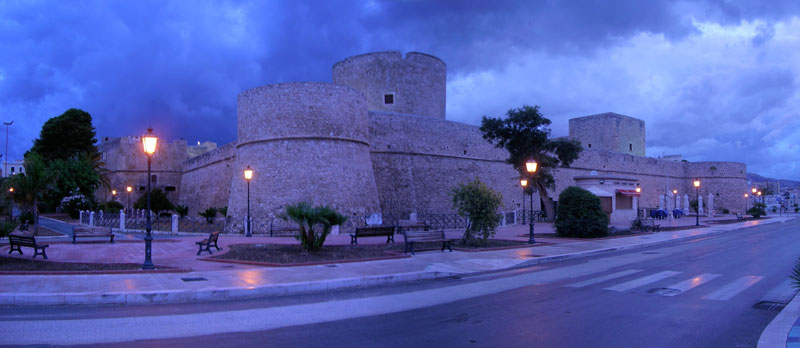
Vieste Castle is built on a triangular plan, a shape that maximizes its defensive capabilities by minimizing blind spots. Each corner of the triangle is fortified with lance-shaped bastions positioned to provide overlapping fields of fire. These bastions incorporate older, circular bases that reveal the castle’s evolutionary construction phases, blending Norman military architecture with later adaptations.
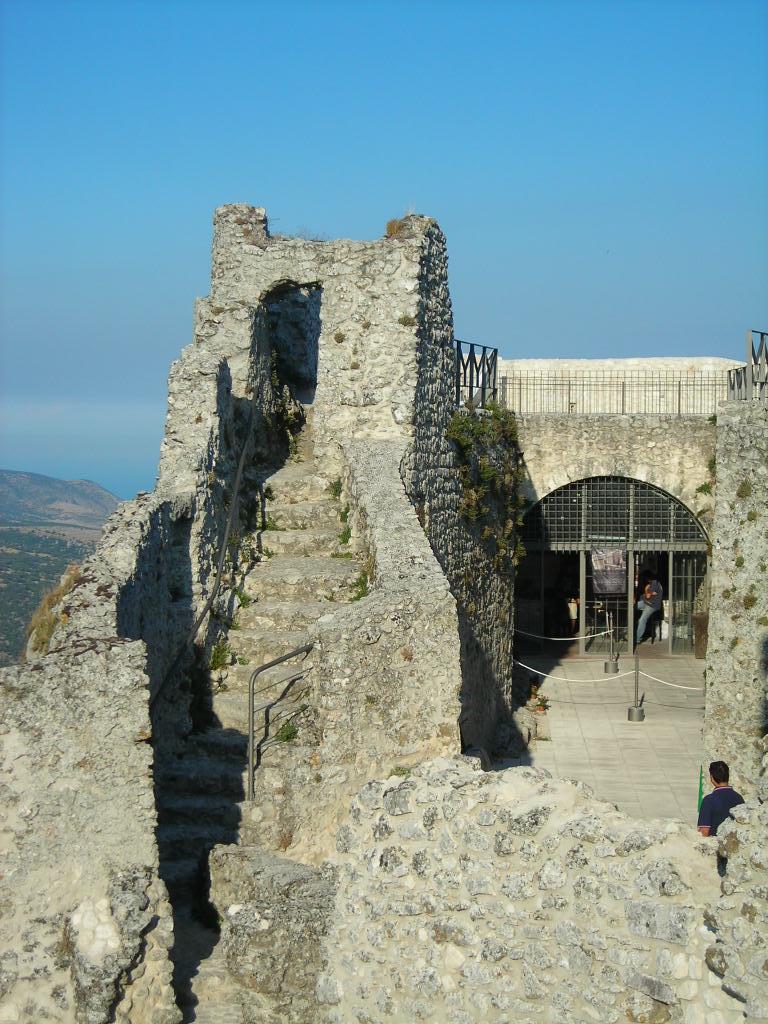
On the southern edge, the castle overlooks a steep cliff dropping to the sea, where a small 16th-century bastion was added to reinforce this vulnerable section. Adjacent to this bastion are remnants of a chapel and several residential buildings, indicating that the fortress was not only a military installation but also housed a small community or garrison. This mix of military and domestic structures reflects the castle’s multifunctional role during the Renaissance period.
Historical significance and events
Throughout its history, Vieste Castle played a central role in the defense of the Gargano coast. In the High Middle Ages, it was a key stronghold for the Normans and subsequent rulers of the Kingdom of southern Italy, including the Hohenstaufen dynasty and later the Bourbons. Its importance is reflected in its designation as a "Piazza d'Armi" until 1846, a term denoting a fortified military position.
In 1240, during the conflict between the Papacy and Emperor Frederick II, the castle and the town suffered significant damage from Venetian attacks. Frederick II personally ordered the restoration and strengthening of the fortress, underscoring its strategic value. The castle’s robust fortifications were tested again during the 15th and 16th centuries, when it successfully repelled several Turkish naval raids, a period marked by frequent maritime conflicts in the Adriatic Sea.
A major natural disaster struck in 1646 when a powerful earthquake caused extensive structural damage, leading to the collapse of parts of the castle. This event altered the fortress’s defensive capabilities and necessitated repairs, although it never fully regained its former strength.
In the 20th century, Vieste Castle briefly re-entered military history during World War I. On May 24, 1915, shortly after Italy’s entry into the war, the Austrian destroyer Lika shelled the castle. This attack triggered a naval engagement nearby, resulting in an Austrian victory and damage to the Italian destroyer Turbine. This episode highlights the castle’s continued strategic relevance even in modern warfare.
Current condition and use
Today, Vieste Castle remains under the control of the Italian Navy (Marina Militare). Its preservation status is considered partially preserved, with significant portions of its walls and bastions still standing. The castle’s distinctive brown stonework and triangular bastions are visible from the town and the sea, making it a notable historical and architectural landmark.
While the castle is not fully accessible to the public due to its military use, its exterior can be admired from various vantage points in Vieste. The site offers valuable insight into medieval military architecture and the layered history of coastal defense in southern Italy.
Architectural evolution and defensive adaptations
The integration of circular bastions within the later lance-shaped bastions demonstrates the castle’s architectural evolution. The original Norman design favored round towers for their ability to deflect projectiles, while later modifications introduced angular bastions to better resist cannon fire and provide improved fields of fire. This blend of styles reflects the transition from medieval to early modern military architecture.
The castle’s location on calcareous cliffs provided natural defenses, limiting approaches from the sea and making direct assaults difficult. The addition of a chapel and residential quarters within the fortress walls indicates the presence of a permanent garrison and the importance of maintaining morale and religious observance among defenders.
Regional role and cultural heritage
Vieste Castle’s long history as a defensive stronghold has made it a symbol of the Gargano region’s maritime heritage. Its presence reflects the geopolitical struggles that shaped southern Italy, including Norman conquest, papal-imperial conflicts, Ottoman incursions, and modern military engagements.
The castle contributes to Vieste’s identity as a historic town and attracts interest from scholars and visitors interested in military history and medieval architecture. Its preservation by the Italian Navy ensures its continued role in national heritage, even as its military function has diminished.
Frequently asked questions (FAQ)
- What is the historical significance of Vieste Castle?
- Vieste Castle served as a key defensive fortress from the 11th century, protecting the Gargano coast through medieval and early modern periods.
- Can visitors tour Vieste Castle today?
- The castle is currently controlled by the Italian Navy and is not generally open to the public, but its exterior can be viewed from various points in Vieste.
- When was Vieste Castle built and by whom?
- Vieste Castle was built in the 11th century by the Normans under Count Robert Drengot as part of their defensive network in southern Italy.
- How did natural disasters affect Vieste Castle?
- A major earthquake in 1646 caused significant damage to the castle, leading to partial collapse and changes in its defensive structure.
- What architectural features distinguish Vieste Castle?
- Its triangular plan with lance-shaped bastions incorporating older circular bases, brown stone walls, and cliffside location are key features.
Information
Sources & official resources
Verify the information above using these authoritative references.
Loading map...
Visitor reviews
No reviews yet. Been here? Write the first review and help other travelers!
Write the first reviewVisited this castle? Share your experience
Your review helps other travelers and adds first-hand knowledge to our encyclopedia.