Vidigueira Castle
Vidigueira Castle, known locally as Castelo da Vidigueira, is a historic hill castle situated in the small town of Vidigueira in the Baixo Alentejo region of Portugal. This castle holds significant historical and architectural value, representing centuries of Portuguese medieval and early modern history.
The origins of Vidigueira Castle trace back to the second half of the 13th century, during the reign of Afonso III of Portugal. It was initially constructed under the direction of Mestre Tomé, the treasurer of the cathedral of Braga, as part of a strategic network of fortifications along the Guadiana River frontier. These castles were designed to defend Portuguese territory against incursions from neighboring Spain and to facilitate the repopulation and control of this border region.
By the early 14th century, the castle reverted to direct control of the Portuguese Crown during the reign of King Denis. Later, in the politically turbulent period following the 1383–1385 Crisis, King John I of Portugal granted Vidigueira Castle as a reward to his loyal constable, Nuno Álvares Pereira, a key military leader instrumental in securing Portuguese independence. Subsequently, through inheritance and marriage alliances, the castle became the possession of the influential House of Braganza, one of Portugal's most powerful noble families.
Architectural evolution and the keep
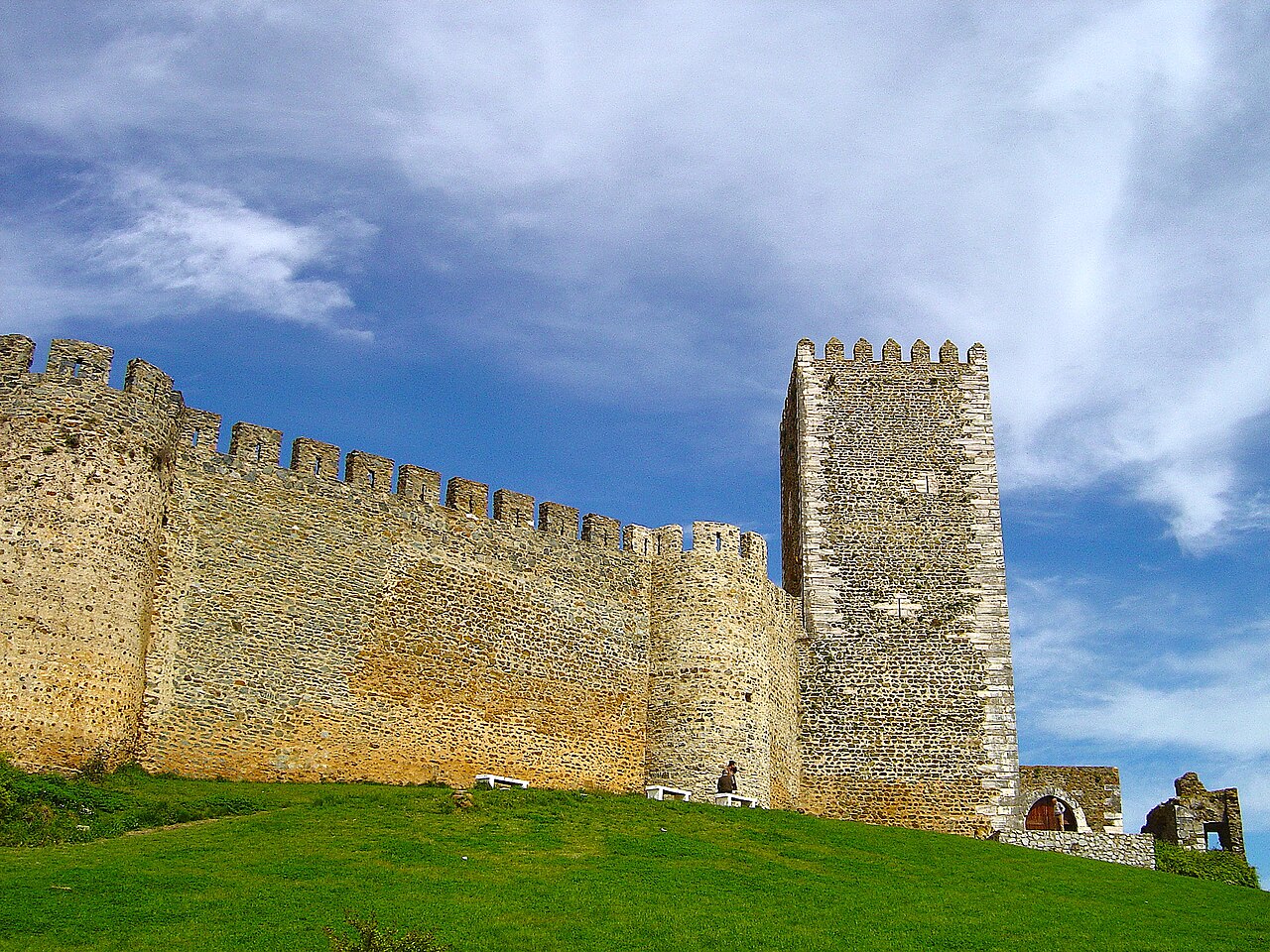
The most prominent surviving feature of Vidigueira Castle is its rectangular keep, known locally as the Atalaia das Vidigueiras. This tall tower was constructed in the first half of the 15th century under the patronage of Fernando I, Duke of Braganza. The tower's robust masonry walls, though built from relatively soft stone, demonstrate the military architectural style of the High Medieval period transitioning into the early Renaissance era.
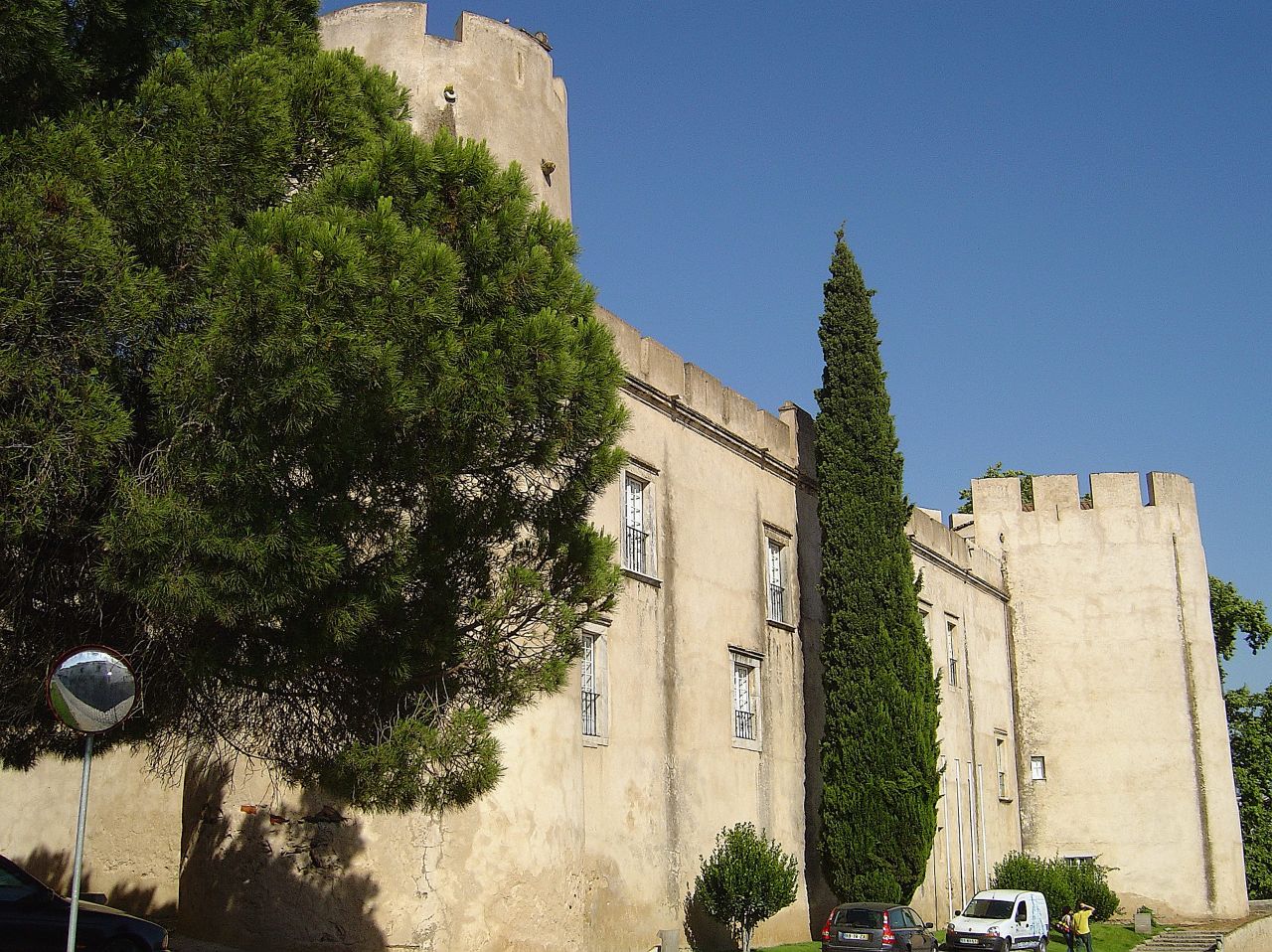
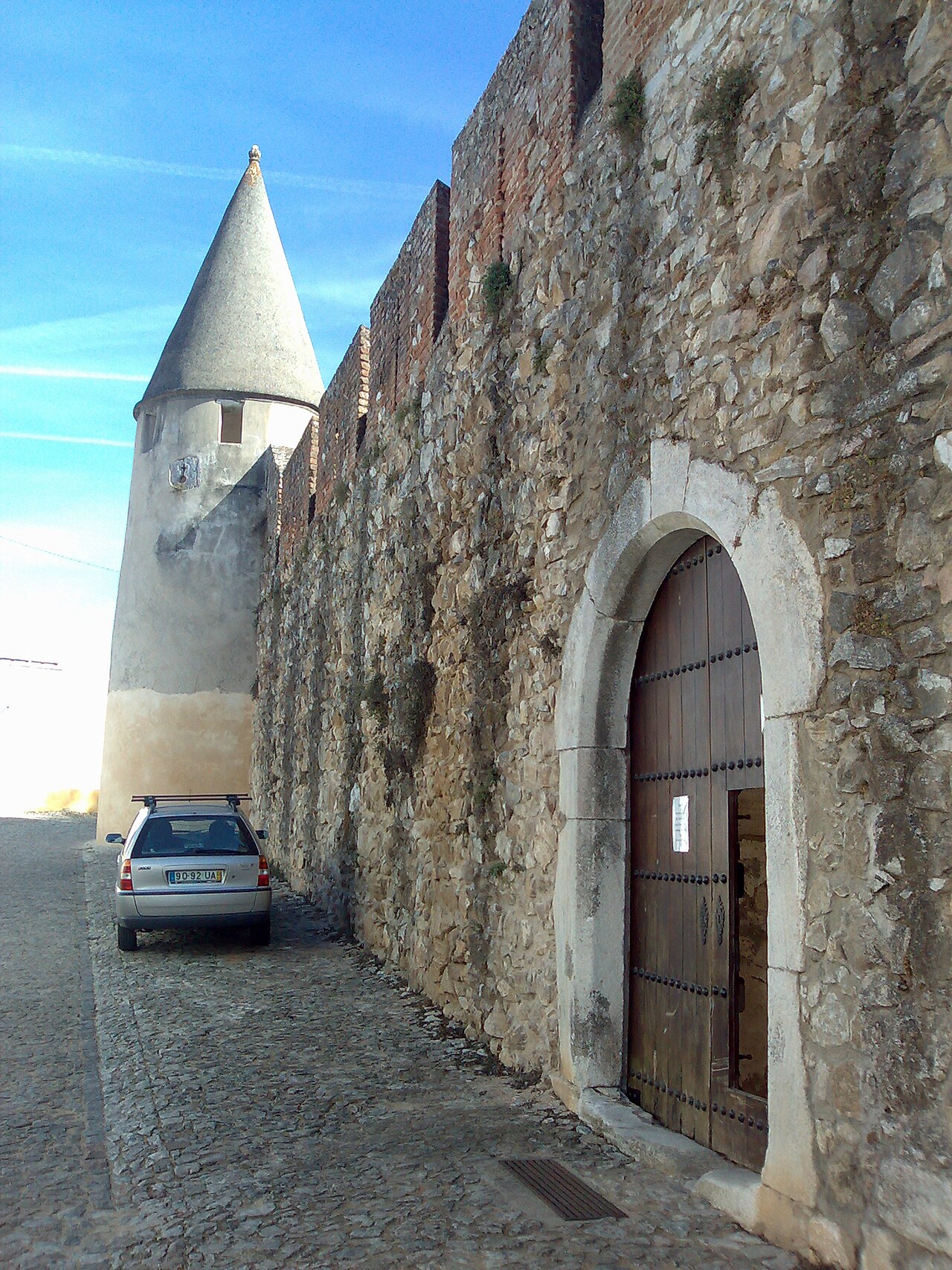
The keep originally formed part of a larger fortified complex, including defensive walls, battlements, and ancillary buildings, which have not survived to the present day. Over time, the castle underwent various modifications reflecting its changing roles from a military fortress to a noble residence.
Structural details and current condition
The tower stands isolated on a plateau at the western edge of Vidigueira, surrounded today by modern urban development. The keep lacks its original roof and defensive merlons, leaving it exposed to weathering. Access to the tower is via a southwestern wall fragment adapted into a staircase. A carved stone bearing the coat of arms of the Counts of Vidigueira adorns the southeastern face, featuring a shield with five smaller shields arranged in a traditional Portuguese heraldic pattern.
Despite its ruinous state, the keep remains a significant example of medieval military architecture in southern Portugal. The castle's preservation status is classified as partially preserved, with ongoing efforts by local authorities to maintain this cultural heritage site.
The Manueline window and noble residence
Adjacent to the keep is a distinctive Manueline-style window, noted for its intricate maritime and botanical motifs characteristic of early 16th-century Portuguese architecture. This window was relocated from the nearby village of Vila de Frades, where the former palace of the Counts of Vidigueira once stood. The palace itself no longer exists, but the window remains as a tangible link to the noble residence that complemented the fortress.
Historical transitions and ownership
After the confiscation of the Braganza estates in 1483, following accusations of treason against the family and the execution of their Duke, Vidigueira Castle reverted to Crown control. However, the Braganzas were pardoned around 1500, and their properties were restored.
In 1519, King Manuel I granted the castle and its associated lands to the famed Portuguese explorer Vasco da Gama, who became the first Count of Vidigueira. Da Gama purchased the castle from the House of Braganza and made it his family seat, relocating from Évora. This transfer marked a significant shift from a noble fortress to a symbol of Portugal's Age of Discovery.
Legacy and cultural significance
Over subsequent centuries, the castle and its associated structures fell into decline, with most buildings disappearing except for the keep and the relocated Manueline window. Recognized for its cultural and historical importance, Vidigueira Castle was declared a Property of Public Interest in 1970. In 1992, stewardship was transferred to the national architectural heritage institute, and since 2021, the local municipality has taken responsibility for its upkeep.
Today, Vidigueira Castle is freely accessible to visitors, although the gate to the top of the tower remains locked. While the site may not offer extensive architectural remains, it provides valuable insights into the region's medieval defensive strategies, noble lineages, and Portugal's maritime heritage.
Visiting Vidigueira castle
Visitors to Vidigueira Castle can explore the exterior of the keep and appreciate the surrounding urban landscape that has grown around this medieval monument. The castle's location on a plateau offers views over the town and the surrounding Alentejo countryside. The site is an important cultural landmark that connects local history with broader Portuguese historical narratives.
Frequently asked questions (FAQ)
- How do I visit Vidigueira Castle?
- Vidigueira Castle is open to the public with free access to the exterior areas. However, the gate to the top of the tower is locked and not accessible to visitors.
- What is the historical significance of Vidigueira Castle?
- Vidigueira Castle played a strategic role in defending the Portuguese border along the Guadiana River during the 13th century and was later associated with notable figures such as Nuno Álvares Pereira, the House of Braganza, and Vasco da Gama.
- When was the castle's keep constructed?
- The prominent rectangular keep of Vidigueira Castle was built in the first half of the 15th century under Fernando I, Duke of Braganza, reflecting medieval military architecture.
- Can I see any original architectural features at Vidigueira Castle?
- Yes, the castle's keep remains as a partially preserved medieval tower, and a distinctive Manueline-style window from the former Counts of Vidigueira palace is displayed adjacent to the keep.
- Is there an admission fee to enter Vidigueira Castle?
- There is no admission fee; visiting the castle grounds is free of charge.
- What is the best time to visit Vidigueira Castle?
- The castle can be visited year-round, but spring and autumn offer pleasant weather and better conditions for exploring the site and the surrounding Alentejo region.
Information
Address
R. do Castelo, Vidigueira, Portugal
Loading map...
Visitor reviews
No reviews yet. Been here? Write the first review and help other travelers!
Write the first reviewVisited this castle? Share your experience
Your review helps other travelers and adds first-hand knowledge to our encyclopedia.