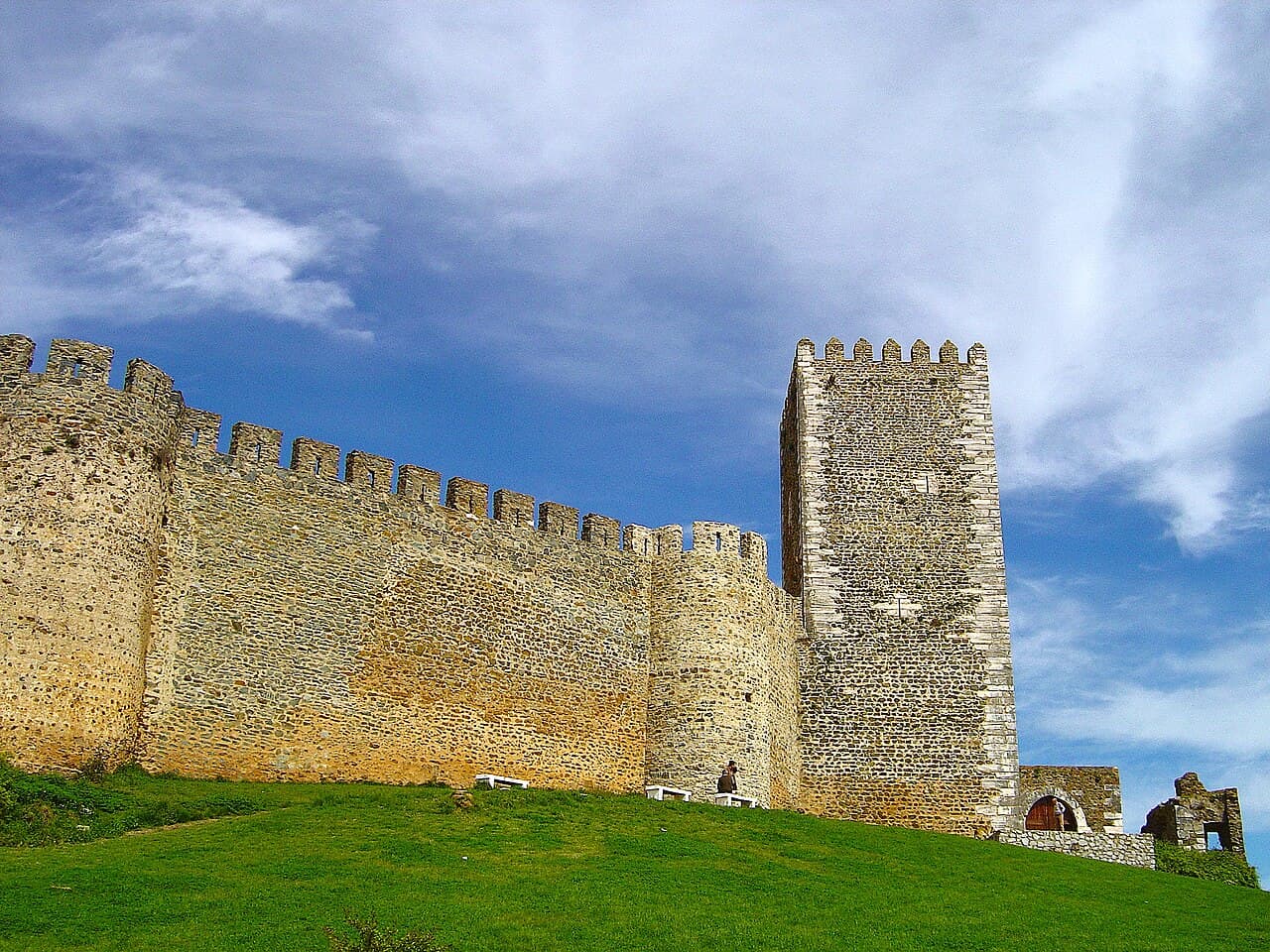
Portel Castle
Portel Castle, also known as Castelo de Portel, is a significant medieval fortress located in the town of Portel, in the Alentejo Central region of Portugal. This hill castle stands prominently on a spur overlooking the town, offering commanding views of the surrounding landscape. Founded in the 13th century, it played an important role in the defense and administration of the region during the Middle Ages.
The origins of Portel Castle date back to 1261, when King Afonso III of Portugal granted the settlement and permission to build the castle to the noble João Peres de Aboim. This reward was given for João's services during the Reconquista and the conquest of the Algarve. Construction likely began shortly thereafter and was still ongoing at the start of the reign of King Denis of Portugal in 1279. By 1289, after João's death and subsequent inheritance disputes, the castle returned to royal ownership.
Historical context and strategic importance
During the 1383-1385 Portuguese interregnum crisis, Portel Castle was caught in the conflict between supporters of Castile and Portugal. The castle's mayor sided with Castile and disarmed the local population by storing their weapons within the fortress. However, in 1384, Portuguese forces led by Nuno Álvares Pereira and aided by a local cleric managed to retake the castle and town. Following the victory at the Battle of Aljubarrota, the castle and its lands were granted to Nuno Álvares Pereira and later became part of the possessions of the influential House of Braganza.
Architectural evolution and features
The castle's plan is distinctive, featuring a seven-sided (heptagonal) layout reinforced by circular towers at each corner, an unusual design in Portuguese medieval military architecture. This layout is believed to have been inspired by the Château d'Angers in France, reflecting Gothic architectural influences. The fortress is dominated by a large, square keep tower rising approximately 25 meters high, which contains two floors supported by ribbed vaulted ceilings with pointed arches typical of the Gothic style. The lower chamber of the keep historically served as a prison.
The castle's main gate on the northern side features a pointed arch entrance, consistent with Gothic design, while the southern gate, known as the Porta de Beja, aligns directly opposite, creating a clear axis within the fortress. Additional gates include the Porta do Relógio and Porta do Outeiro, providing multiple access points to the castle.
Inside the castle courtyard, or praça de armas, visitors can find the remains of a cistern used for water storage, the ruins of the former Chapel of Saint Vincent, and the foundations of a ducal palace erected during the early 16th-century renovations. The castle was extensively remodeled around 1510 by the House of Braganza, including the addition of a barbican—a fortified outer defensive wall—constructed under the direction of Duke Jaime of Braganza and the royal architect Francisco de Arruda.
The barbican features a curtain wall strengthened by square bastions and a Gothic-style gate decorated with royal coats of arms, marking its 16th-century reconstruction. Notably, cornerstones and several Gothic windows are crafted from marble, highlighting the quality of the workmanship. The keep's entrance door also displays the characteristic pointed (ogival) arch of the Gothic period.
Decline and preservation efforts
By the 19th century, Portel Castle had lost its military relevance due to its location away from borders and major trade routes in the Alentejo region. Consequently, it fell into ruin, suffering significant deterioration. Restoration efforts began in 1938 with some consolidation work, but the castle continued to degrade. In 1998, a section of the curtain wall and a cylindrical tower collapsed, prompting further restoration in 1999 using traditional techniques.
Despite the damage and ongoing preservation challenges, the castle remains a dominant feature of the local skyline and an important cultural heritage site. It was declared a National Monument in 1910, recognizing its historical and architectural significance. Visitors today can explore the castle ruins, appreciate the Gothic architectural elements, and enjoy expansive views from the walls.
Visiting portel castle
Portel Castle is accessible to the public, although restoration work has occasionally limited access. The site offers a fascinating glimpse into medieval Portuguese fortification design, with its unusual heptagonal layout and well-preserved Gothic features. The castle's elevated position provides panoramic views of the surrounding Alentejo landscape, making it a rewarding destination for history enthusiasts and tourists alike.
Visitors can explore the castle's courtyard, the remains of the ducal palace, the chapel ruins, and the cistern, gaining insight into the daily life and defensive strategies of its medieval inhabitants. The castle's multiple gates and towers illustrate the complexity of its fortifications and its evolution over several centuries.
Architectural significance and influences
The design of Portel Castle stands out in Portuguese medieval architecture due to its Gothic style and the influence of French military architecture, particularly the Château d'Angers. The combination of a polygonal plan with circular flanking towers and a massive square keep reflects a blend of defensive innovation and residential comfort, especially after the 16th-century renovations that added the ducal palace and barbican.
The use of marble in cornerstones and window frames, along with the ribbed vaulting and pointed arches, demonstrates the high level of craftsmanship and the importance placed on aesthetic as well as functional considerations. These features contribute to the castle's status as a valuable example of medieval fortification adapted over time to changing needs.
Frequently asked questions (FAQ)
- When was Portel Castle originally built?
- Portel Castle was originally built in the 13th century, with construction beginning around 1261 under King Afonso III's reign.
- What architectural style characterizes Portel Castle?
- The castle is characterized by its Gothic architectural style, featuring ribbed vaulted ceilings, pointed arches, and a polygonal plan inspired by French designs.
- Is Portel Castle open to visitors?
- Yes, Portel Castle is open to visitors daily from 10:00 to 18:00, and admission is free of charge.
- What are the main features to see at Portel Castle?
- Visitors can explore the large square keep, the heptagonal layout with circular towers, the ducal palace ruins, the barbican, and enjoy panoramic views from the castle walls.
- Why did Portel Castle lose its strategic importance?
- Portel Castle lost its strategic importance because it is located away from borders and major trade routes, reducing its military relevance by the 19th century.
Photo gallery

Photo by Fotografia de Vitor Oliveira, que faz parte da colecção com o endereço https://www.flickr.com/photos/vitor107/sets/•CC BY-SA 3.0
Information
Opening hours
10:00-18:00, daily
Ticket prices
Free
Current owner
Municipality of Portel
Website
Visit websiteAddress
R. da Villa Velha, Portel, Portugal
Sources & official resources
Verify the information above using these authoritative references.
Loading map...
Visitor reviews
No reviews yet. Been here? Write the first review and help other travelers!
Write the first reviewVisited this castle? Share your experience
Your review helps other travelers and adds first-hand knowledge to our encyclopedia.



