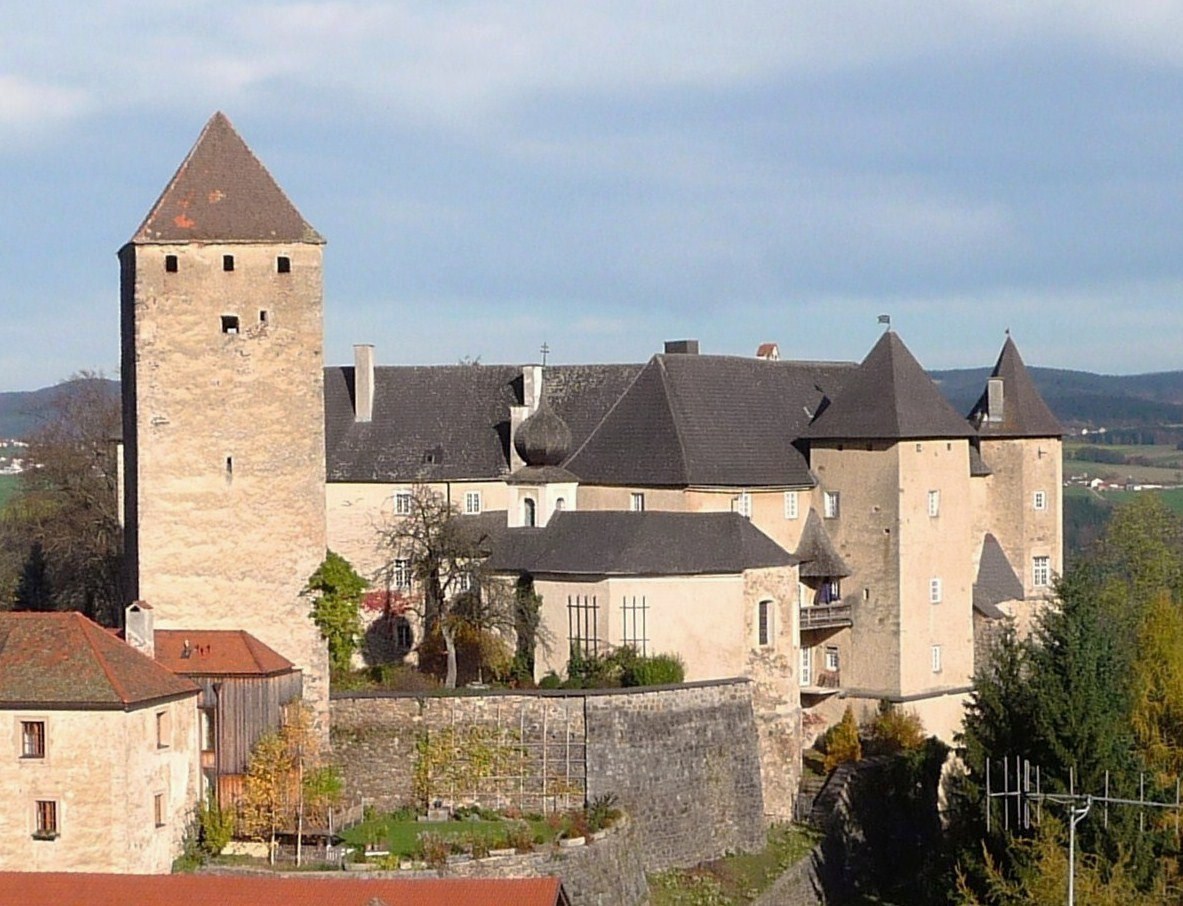
Veste Oberhaus
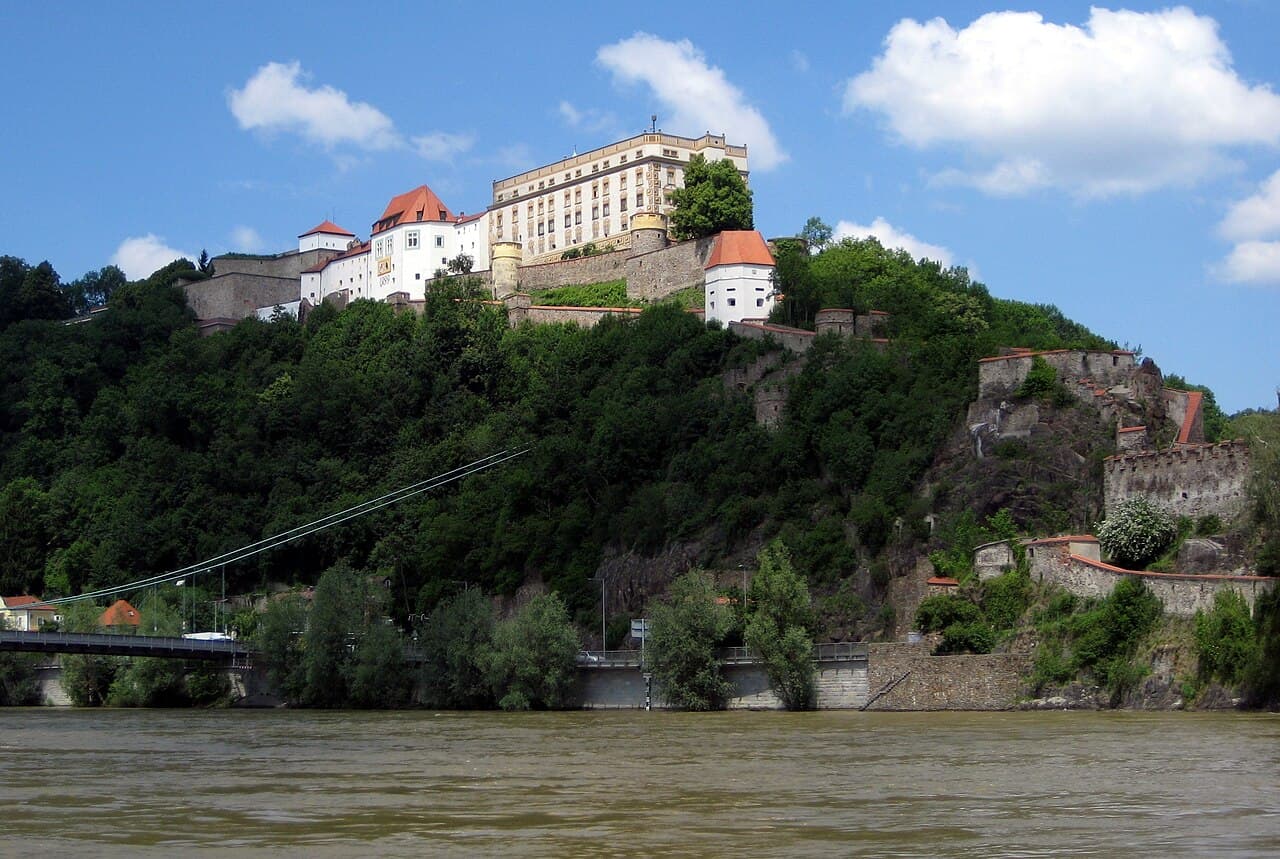
Veste Oberhaus is a prominent high medieval fortress founded in 1219 that has played a crucial role in the history and defense of Passau, Germany. Situated strategically on the St. Georgsberg mountain crest on the left bank of the Danube River, the fortress commands a commanding view over the city of Passau, which lies directly across the river. Its elevated position allowed it to serve as a formidable bastion and symbol of ecclesiastical power for the Bishops of Passau, who used it as their stronghold for centuries.
Historical significance and origins
The construction of Veste Oberhaus began in the early 13th century during a period of territorial consolidation and frequent regional conflicts. Founded by Bishop Ulrich II of Passau, the fortress was intended to protect the bishopric's interests and secure the city against external threats. Over time, it became a seat of administration and military defense, reflecting the dual religious and secular authority wielded by the bishops in the region.
Throughout the Middle Ages, the fortress was expanded and reinforced to adapt to evolving military technology and political challenges. It withstood various sieges and served as a refuge during times of war and unrest, including conflicts during the Thirty Years' War and other regional disputes.
Architectural features and layout
Veste Oberhaus exemplifies typical high medieval fortress architecture with robust defensive elements designed to withstand prolonged sieges. The fortress complex includes massive stone curtain walls, imposing towers, and fortified gatehouses that controlled access to the interior. The walls are built from local stone, providing both strength and durability against artillery and assault.
The fortress is arranged around a central courtyard, which historically housed essential facilities such as barracks, storerooms, and administrative buildings. The elevated position on the St. Georgsberg ridge also allowed for the installation of lookout posts and artillery placements, giving defenders a tactical advantage over attackers approaching from the city or river.
Notable architectural elements include the main keep, which served as the last line of defense and residence for the bishop, and the chapel that reflects the religious function of the fortress. The design balances military utility with the ecclesiastical status of its occupants.
Later uses and modern adaptations
After its military importance declined, Veste Oberhaus transitioned into various civic and cultural roles. Today, it hosts a museum that showcases the history of the fortress, the city of Passau, and the surrounding region. The museum's exhibits include medieval weaponry, historical artifacts, and displays on the fortress's architectural evolution.
The site also features a youth hostel providing unique accommodation within the historic walls, attracting visitors interested in heritage tourism. Additionally, a restaurant operates on the premises, offering panoramic views of Passau and the Danube.
An open-air theatre established in 1934 utilizes the fortress's courtyard and ramparts, hosting cultural events and performances that connect the historic site with contemporary community life.
Visiting Veste Oberhaus
Visitors to Veste Oberhaus can explore the extensive fortress grounds, including the museum's exhibits and the architectural features that reflect centuries of history. The location provides breathtaking views over the confluence of the Danube, Inn, and Ilz rivers, often called the "City of Three Rivers." The fortress is accessible by foot from Passau's old town or via a funicular railway that climbs the steep hillside.
The combination of historical significance, architectural grandeur, and modern cultural offerings makes Veste Oberhaus a must-visit destination for those interested in medieval fortifications, ecclesiastical history, and Bavarian heritage.
Frequently asked questions (FAQ)
- How do I get to Veste Oberhaus?
- Veste Oberhaus is located in Passau, Germany, and can be easily reached by public transportation or car. If you are traveling by train, the castle is a short walk from Passau’s main train station. There is also parking available for those who choose to drive.
- What are the opening hours of Veste Oberhaus?
- Veste Oberhaus is typically open daily from 9 AM to 6 PM, but hours may vary by season. It is advisable to check the official website or call ahead for the most current information before your visit. Special hours may apply on holidays.
- Can I purchase tickets online for Veste Oberhaus?
- Yes, tickets for Veste Oberhaus can be purchased online through their official website. Buying tickets in advance is recommended to avoid long queues, especially during peak tourist seasons. On-site ticket purchases are also available.
- When was Veste Oberhaus built?
- Veste Oberhaus was originally constructed in the 13th century as a fortress to protect the city of Passau. Over the centuries, it has undergone various renovations and expansions, reflecting different architectural styles. Today, it stands as a testament to the region's rich history.
- Is Veste Oberhaus accessible for visitors with disabilities?
- Veste Oberhaus strives to be accessible to all visitors, with facilities in place for those with mobility challenges. While some areas may have limited access due to the castle's historic structure, ramps and elevators are available in certain sections. It is recommended to contact the site in advance for specific accessibility inquiries.
- Why is Veste Oberhaus significant to Passau’s history?
- Veste Oberhaus played a crucial role in the defense of Passau during the Middle Ages and served as a residence for the prince-bishops. Its strategic location allowed for surveillance of the surrounding area, making it an essential part of the city’s fortifications. Today, it houses a museum that showcases the history of Passau and the castle itself.
- What are some nearby attractions to Veste Oberhaus?
- Visitors to Veste Oberhaus can also enjoy nearby attractions such as the St. Stephen's Cathedral, known for its stunning architecture and impressive organ. The Old Town of Passau offers charming streets filled with shops and cafes. Additionally, the Danube River provides opportunities for scenic boat tours.
- What is the best time to visit Veste Oberhaus?
- The best time to visit Veste Oberhaus is during the spring and early autumn months when the weather is mild and the surrounding landscapes are beautiful. Summer can be quite busy with tourists, while winter offers a quieter experience, albeit with colder weather. Regardless of the season, the views from the castle are always breathtaking.
Photo gallery

Information
Website
Visit websiteSources & official resources
Verify the information above using these authoritative references.
Loading map...
Visitor reviews
No reviews yet. Been here? Write the first review and help other travelers!
Write the first reviewVisited this castle? Share your experience
Your review helps other travelers and adds first-hand knowledge to our encyclopedia.