Verkhoturye Kremlin — Russia castle

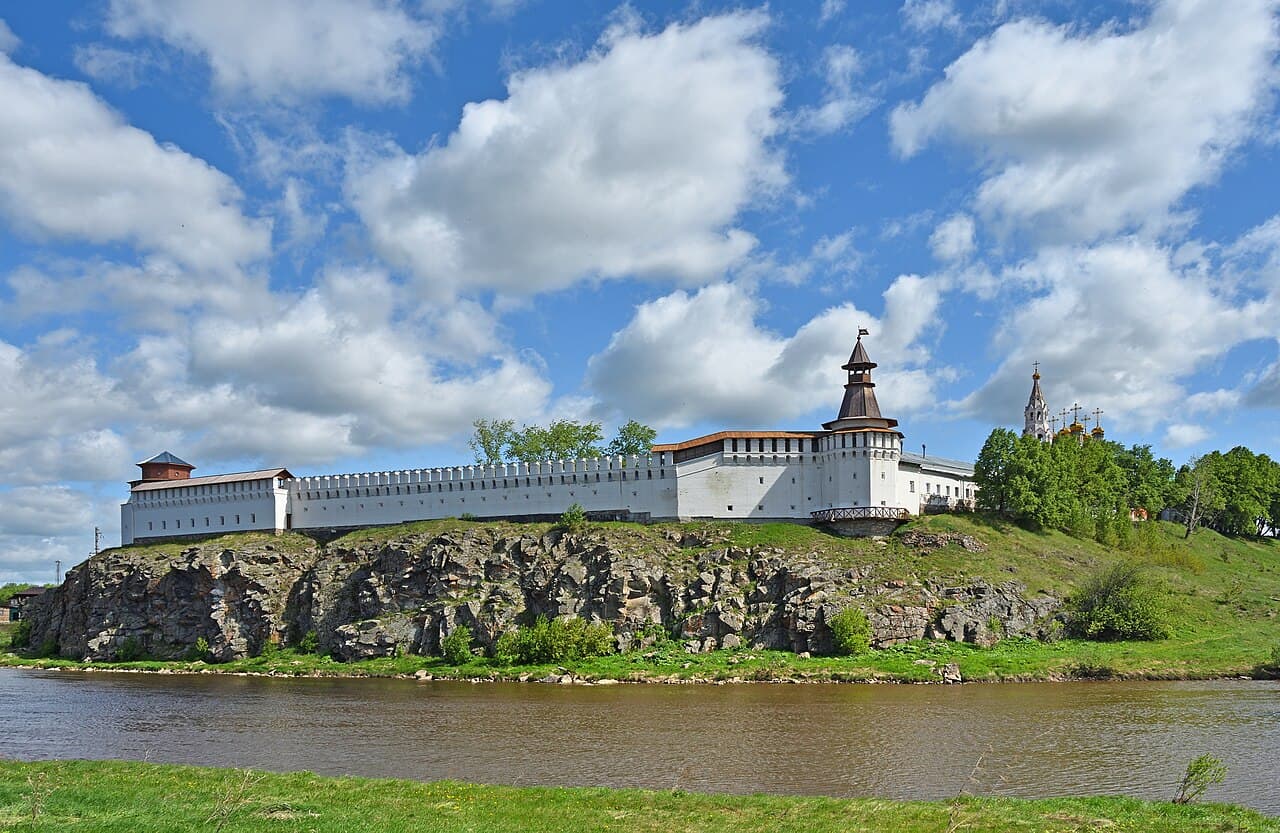
Verkhoturye Kremlin

Verkhoturye Kremlin: historic bastioned fortress in Russia
Renaissance (15th–17th c.)
Well Preserved

The Verkhoturye Kremlin is a significant example of a 17th-century bastioned fortress located in the Russian Federation. This fortress played a crucial role in the defense system of the region during the period of Russian expansion eastward. Constructed primarily in the Renaissance period, the Kremlin reflects the military architectural innovations of its time, adapted to the specific needs of frontier defense.

Historical context and strategic importance

Founded in the early 1600s, the Verkhoturye Kremlin was established as a key stronghold on the eastern border of the Russian state. Its location was strategically chosen to control the trade routes and to serve as a military outpost against potential invasions. The fortress was part of a network of defensive structures designed to protect the expanding Russian territories from nomadic raids and rival powers.

The Kremlin's construction coincided with a period of intensified military and political activity in the region, reflecting the broader Renaissance influence on Russian fortification design. It was built to withstand artillery fire and to provide a secure base for troops stationed in the area.

Architectural features and design

The bastioned fortress design of the Verkhoturye Kremlin is characterized by its angular bastions projecting from the main walls, a feature typical of Renaissance military architecture. These bastions allowed defenders to cover adjacent walls with crossfire, eliminating blind spots and enhancing the fortress's defensive capabilities.

The Kremlin's walls are constructed from local stone and brick, combining durability with the aesthetic sensibilities of the time. The fortress includes multiple towers, gates, and curtain walls, all arranged to maximize defense and control access. The layout reflects a careful balance between military functionality and the administrative needs of the settlement it protected.

Inside the Kremlin, there were various buildings serving administrative, residential, and religious purposes, though many of these structures have undergone changes over the centuries. The preservation of the fortress's main walls and bastions provides valuable insight into the construction techniques and defensive strategies of the 17th century.

Cultural and heritage significance

The Verkhoturye Kremlin holds considerable cultural importance as a symbol of Russian frontier defense and regional governance during the early modern period. It represents the adaptation of Western European military architectural principles within a Russian context, illustrating the cross-cultural exchanges of the Renaissance era.

Today, the Kremlin is recognized as a heritage site, attracting visitors interested in military history, architecture, and Russian cultural development. Its preservation allows for educational opportunities and serves as a tangible connection to the region's past.

Current condition and visitor information

The fortress is well preserved, with substantial portions of its walls and bastions intact. Restoration efforts have helped maintain its structural integrity and historical appearance. The site is accessible to the public, offering guided tours that explain the fortress's history, architecture, and role in regional defense.

Visitors can explore the fortress grounds, view the defensive structures, and learn about the daily life of those who lived and worked within the Kremlin. The site also hosts cultural events that celebrate the local heritage and history.

Frequently asked questions (FAQ)

What is the historical significance of Verkhoturye Kremlin?
Verkhoturye Kremlin was a key defensive fortress in 17th-century Russia, protecting eastern borders and trade routes during the Renaissance period.
Can I visit Verkhoturye Kremlin today?
Yes, the fortress is well preserved and open to the public, offering tours and cultural events that showcase its history and architecture.
What architectural features distinguish the Verkhoturye Kremlin?
The Kremlin features typical Renaissance bastioned fortress design with angular bastions, thick stone walls, multiple towers, and defensive gates.

Photo gallery

Verkhoturye Kremlin
Click to view

Photo by Ludvig14•CC BY-SA 4.0

1 photo • Click any image to view in full screen

Information

Bastioned Fortress

Loading map...

Visitor reviews

No reviews yet. Been here? Write the first review and help other travelers!

Write the first review

Visited this castle? Share your experience

Your review helps other travelers and adds first-hand knowledge to our encyclopedia.
Write a review

(5/5)

0/2000 characters

Your review will be visible after admin approval

Nearby castles

438.2 km
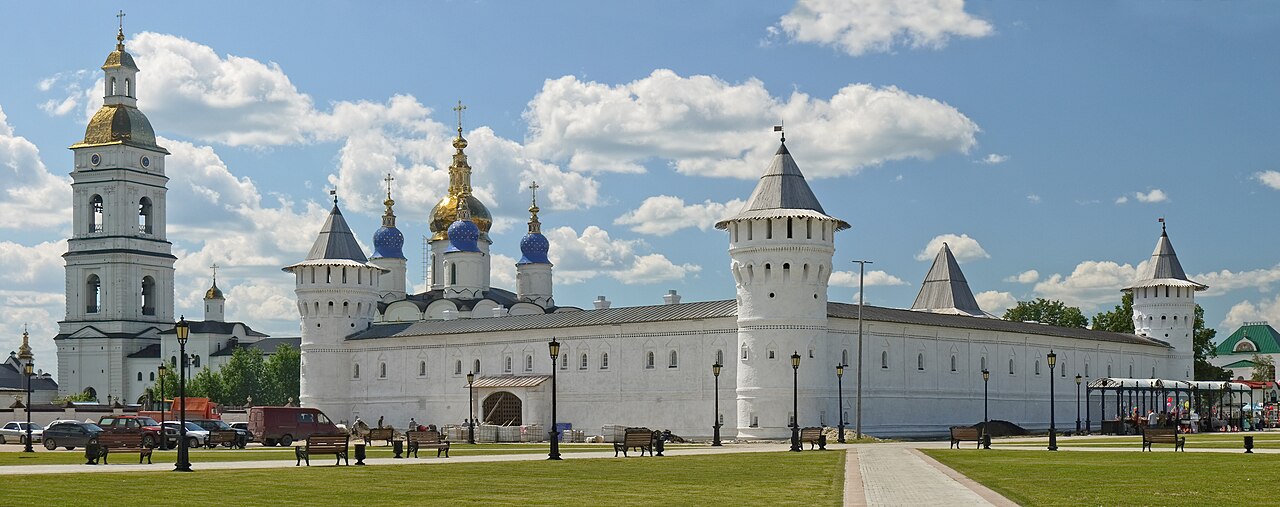
Tobolsk Kremlin — Russia castle

Tobolsk Kremlin

Tobolsk, Russia

The Tobolsk Kremlin stands as a unique example of fortress architecture in Siberia, being the only stone kremlin in this vast region. Situated in the historic city of Tobolsk, within the Tyumen Oblast of the Russian Federation, this fortress represents a significant chapter in the military and administrative history of Siberia. Constructed in the 17th century, the kremlin served as a vital center for Russian expansion into Siberia and as a symbol of imperial authority in the region. Historical context and significance The Tobolsk Kremlin was built during a period when the Russian state was consolidating its control over Siberia following the conquest of the Siberian Khanate in the late 16th century. As the first stone fortress in Siberia, it marked a transition from wooden fortifications to more durable stone constructions, reflecting the strategic importance of Tobolsk as a regional administrative and military hub. The kremlin was designed to protect the city and its inhabitants from potential invasions and uprisings, as Siberia was still a frontier zone with ongoing conflicts involving indigenous peoples and rival powers. Architectural features and layout The Tobolsk Kremlin is classified as a bastioned fortress, a style that was prevalent in European military architecture during the Renaissance and early modern periods. Its design incorporates fortified bastions at the corners, which allowed defenders to cover the walls with flanking fire, improving the fortress's defensive capabilities against artillery and infantry attacks. The fortress walls are constructed of stone, a rarity in Siberia at the time, where wooden fortifications were more common due to the abundance of timber and the challenges of transporting stone. The kremlin's walls enclose a complex of buildings, including administrative offices, religious structures, and military facilities. Key structures within the kremlin Cathedral of St. Sophia: This is the main religious building within the kremlin, built in the traditional Russian Orthodox style with onion domes and richly decorated interiors. It served as the spiritual center for the inhabitants of Tobolsk and the surrounding region. Governor's Palace: A prominent administrative building that housed the regional governor and served as the seat of local government. Its architecture reflects the blend of Russian and European influences typical of the period. Defensive towers and gates: The kremlin features multiple towers and fortified gates that controlled access to the fortress and provided vantage points for surveillance and defense. Construction and materials Construction of the Tobolsk Kremlin began in the early 17th century, utilizing local stone and skilled masons brought from European Russia. The use of stone was a deliberate choice to ensure the fortress's longevity and to symbolize the permanence of Russian authority in Siberia. The bastioned design was influenced by contemporary European military engineering, adapted to the local climate and available resources. The kremlin's role in Siberian history Throughout its history, the Tobolsk Kremlin functioned as a political, military, and religious center. It was the residence of the Siberian governors and a key administrative hub for managing the vast territories of Siberia. The fortress also played a role in the exile system of Imperial Russia, as Tobolsk became a place of banishment for political prisoners and notable figures. Despite various conflicts and changes in political power, the kremlin has remained a well-preserved monument, offering insights into the military architecture and urban development of Siberia during the early modern period. Preservation and current status Today, the Tobolsk Kremlin is recognized as a cultural heritage site and a major tourist attraction. Its well-preserved walls and buildings provide a tangible connection to Siberia's past. Restoration efforts have been undertaken to maintain the structural integrity and historical authenticity of the fortress, allowing visitors to explore its courtyards, cathedral, and defensive structures. The kremlin’s location on a hill overlooking the confluence of the Tobol and Irtysh rivers adds to its strategic and scenic significance, making it a prominent landmark in the region. Visiting the Tobolsk Kremlin The kremlin is accessible to visitors year-round, with guided tours available that detail its history, architecture, and role in Siberian development. The site hosts cultural events and exhibitions, enhancing its function as a center for education and heritage preservation. Visitors can explore the Cathedral of St. Sophia, the Governor's Palace, and the fortress walls, gaining insight into the military and civic life of early modern Siberia.

Renaissance (15th–17th c.)
Details
454.7 km
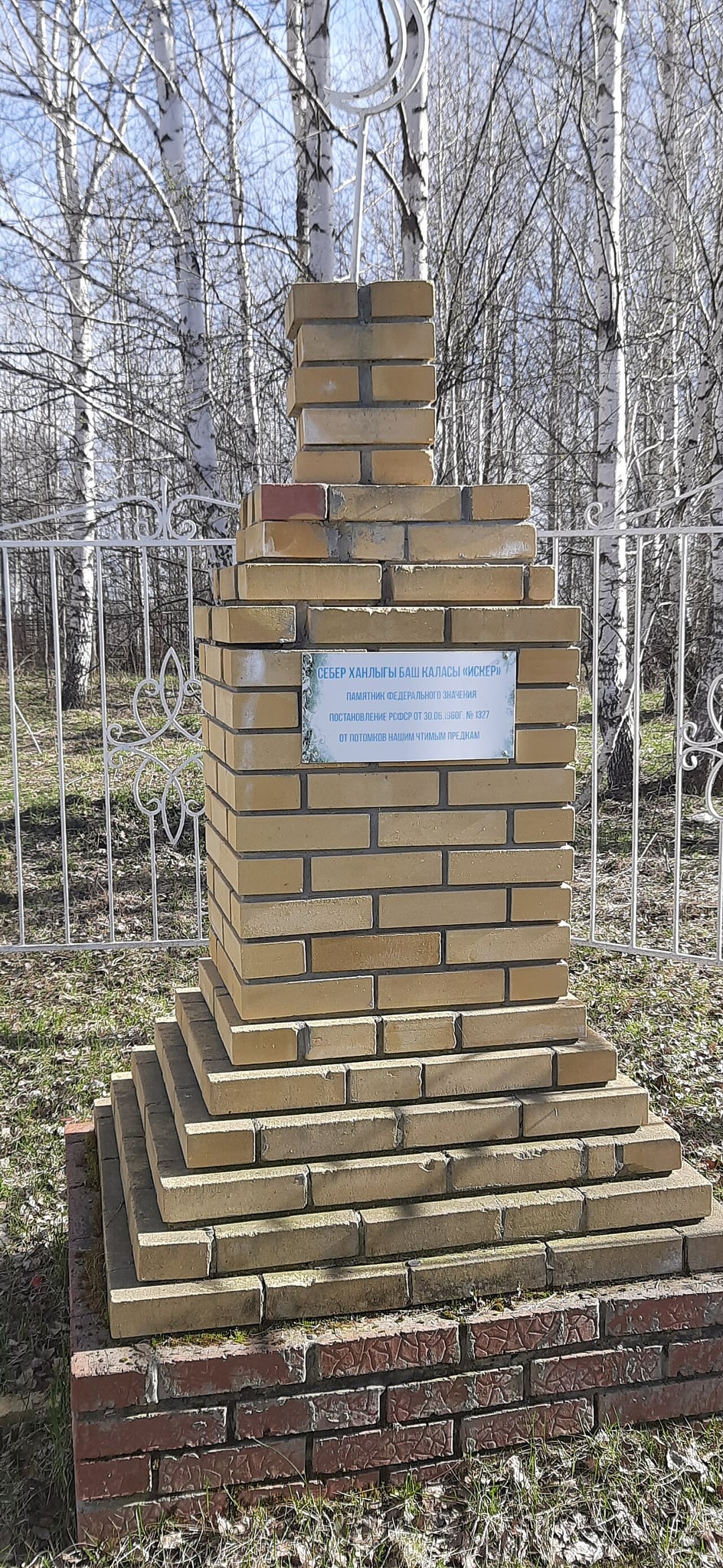
Isker — Russia castle

Isker

, Russia

Qashliq, also known as Isker or Sibir in the Siberian Tatar language, was a significant medieval fortress that served as the capital of the Khanate of Sibir during the 14th to 16th centuries. Located strategically on the right bank of the Irtysh River at its confluence with the Sibirka rivulet, this fortress played a crucial role in the political and military history of western Siberia. Its position approximately 17 kilometers from the modern city of Tobolsk allowed it to control riverine trade routes and regional power dynamics in the vast Siberian landscape. The fortress of Qashliq first appears in Russian chronicles from the 14th century, marking its importance as a fortified settlement of the Siberian Tatars. Over the centuries, it developed into a fortified stronghold with defensive structures adapted to the local geography and the military technologies of the time. While exact architectural details are scarce, it is understood that the fortress featured typical Renaissance-era bastioned fortifications, designed to withstand artillery and siege warfare prevalent in the 16th century. Historical context and significance Qashliq was the political and administrative center of the Khanate of Sibir, a Tatar state that emerged as a successor to the Golden Horde's influence in the region. The fortress's prominence grew in the early 16th century, a period marked by increasing Russian expansion eastwards into Siberia. This expansion culminated in the 1582 conquest of Qashliq by the Cossack forces led by ataman Yermak Timofeyevich, an event that signaled the beginning of Russian dominance in Siberia. Following its capture, Qashliq was severely damaged. The Siberian Tatars briefly retook the fortress in 1584 but lost it permanently in 1586. The fall of Qashliq led to the foundation of the nearby city of Tobolsk in 1587, which became the new administrative center for Russian Siberia and played a pivotal role in further colonization and governance of the region. Location and archaeological remains The precise location of Qashliq has been a subject of some debate among historians and archaeologists. Most sources agree that it lies about 17 to 18 kilometers upriver from Tobolsk, near the modern village of Sibiryak. Some accounts suggest a slightly greater distance of 23 kilometers. Early 19th-century reports mention that the ruins of the fortress were still faintly visible, though the site has since become more obscure. Archaeological efforts have identified remnants consistent with a bastioned fortress, including traces of defensive walls and foundations. These remains provide valuable insights into the military architecture of Siberian Tatars and their adaptation of Renaissance fortification principles in a remote frontier region. Architectural features and military design Although detailed architectural plans of Qashliq do not survive, its classification as a bastioned fortress indicates that it incorporated angled bastions projecting from the main walls, designed to provide overlapping fields of fire and improved defense against artillery. This style was influenced by European military engineering trends of the Renaissance period, reflecting the diffusion of new fortification techniques into Siberia. The fortress likely included a central citadel or keep, surrounded by curtain walls and bastions, with additional outworks to protect against siege tactics. Its riverside location would have provided natural defensive advantages, including a water barrier and control over river traffic. The fortress also served as a political and economic hub, with residential quarters, administrative buildings, and storage facilities within its walls. Legacy and cultural importance Qashliq's role as the capital of the Khanate of Sibir makes it a site of considerable historical importance in Siberian history. It represents the last stronghold of Siberian Tatar sovereignty before Russian conquest reshaped the region's political landscape. The fortress's fall marked a turning point in Siberian history, initiating centuries of Russian presence and influence. Today, the site near Sibiryak is recognized for its archaeological and cultural heritage, although it remains largely an archaeological ruin. Efforts to study and preserve the remains contribute to understanding the complex interactions between indigenous Siberian peoples and expanding Russian power in the late medieval and early modern periods. Visiting and accessibility The site of Qashliq is not developed as a major tourist destination, but it holds interest for historians, archaeologists, and visitors intrigued by Siberian history. Access is generally via the nearby town of Tobolsk, which offers more comprehensive facilities and historical attractions related to Siberia's Russian colonial past. Visitors to the region can explore the natural landscape surrounding the Irtysh River and gain a sense of the strategic importance of this location in medieval times. The fortress's ruins, while faint, are a tangible link to the Siberian Tatars' heritage and the transformative events of the 16th century.

Renaissance (15th–17th c.)
Details
547.3 km
Ufa Kremlin — Russia castle

Ufa Kremlin

Ufa, Russia

The Ufa Kremlin is a significant 16th-century bastioned fortress located in Ufa, the capital city of the Republic of Bashkortostan in the Russian Federation. This fortress represents an important example of Renaissance military architecture adapted to the local geographical and strategic requirements of the time. Constructed during the Renaissance period, the Ufa Kremlin was designed primarily for defense, featuring characteristic bastions that allowed for effective artillery placement and improved fortification against siege warfare.Historical context and constructionThe Ufa Kremlin was erected in the 16th century during a period of territorial consolidation and expansion by the Russian state. It served as a military stronghold and administrative center, helping to secure the region against incursions and to establish Russian influence in the area. The fortress was strategically positioned to control key routes and to oversee the surrounding landscape, which was crucial for both defense and governance.The construction of the Kremlin followed the principles of Renaissance bastioned fortifications, a style that emerged in Europe as a response to the increasing use of gunpowder artillery. The bastions of the Ufa Kremlin were designed to provide overlapping fields of fire, eliminating blind spots and enabling defenders to cover the fortress walls effectively. This design marked a departure from earlier medieval fortresses that relied on high walls and towers without integrated artillery platforms.Architectural features and layoutThe Ufa Kremlin's layout is defined by its bastioned walls, which form a polygonal shape adapted to the terrain. The fortress walls were constructed with thick masonry to withstand artillery bombardment. The bastions themselves are angular projections from the main walls, allowing defenders to fire along the faces of adjacent bastions and curtain walls.Within the fortress, there would have been various structures typical of a military complex of the period, including barracks, armories, and administrative buildings. While much of the original internal architecture has not survived intact, the external bastioned walls remain a prominent feature and a testament to the fortress's defensive purpose.Defensive elementsThe bastions are equipped with embrasures and artillery platforms, which were essential for mounting cannons and other firearms. The fortress also likely featured a moat or other water defenses, common in bastioned fortresses to impede attackers. Gatehouses would have controlled access, incorporating defensive mechanisms such as portcullises and murder holes.Role in regional historyThroughout its history, the Ufa Kremlin played a key role in regional military and political affairs. As a frontier fortress, it was involved in conflicts and power struggles that shaped the development of Bashkortostan and the wider Russian territories. The Kremlin also functioned as a center of administration, reflecting the integration of the region into the Russian state.Over time, as military technology and political borders evolved, the fortress's military significance diminished. However, it remains an important cultural and historical monument, symbolizing the region's past and its strategic importance during the Renaissance era.Current condition and preservationToday, the Ufa Kremlin is classified as a partially preserved bastioned fortress. Some sections of the walls and bastions have survived, though parts may be in ruins or have undergone restoration efforts. The site is valued for its historical and architectural significance and attracts visitors interested in the military history of Russia and Renaissance fortifications.Visitor informationThe Kremlin is accessible to the public, offering opportunities to explore the surviving fortifications and learn about the site's history through guided tours and informational displays. Its location in Ufa makes it a prominent landmark and a focal point for cultural heritage in the region.

Renaissance (15th–17th c.)
Details