Isker
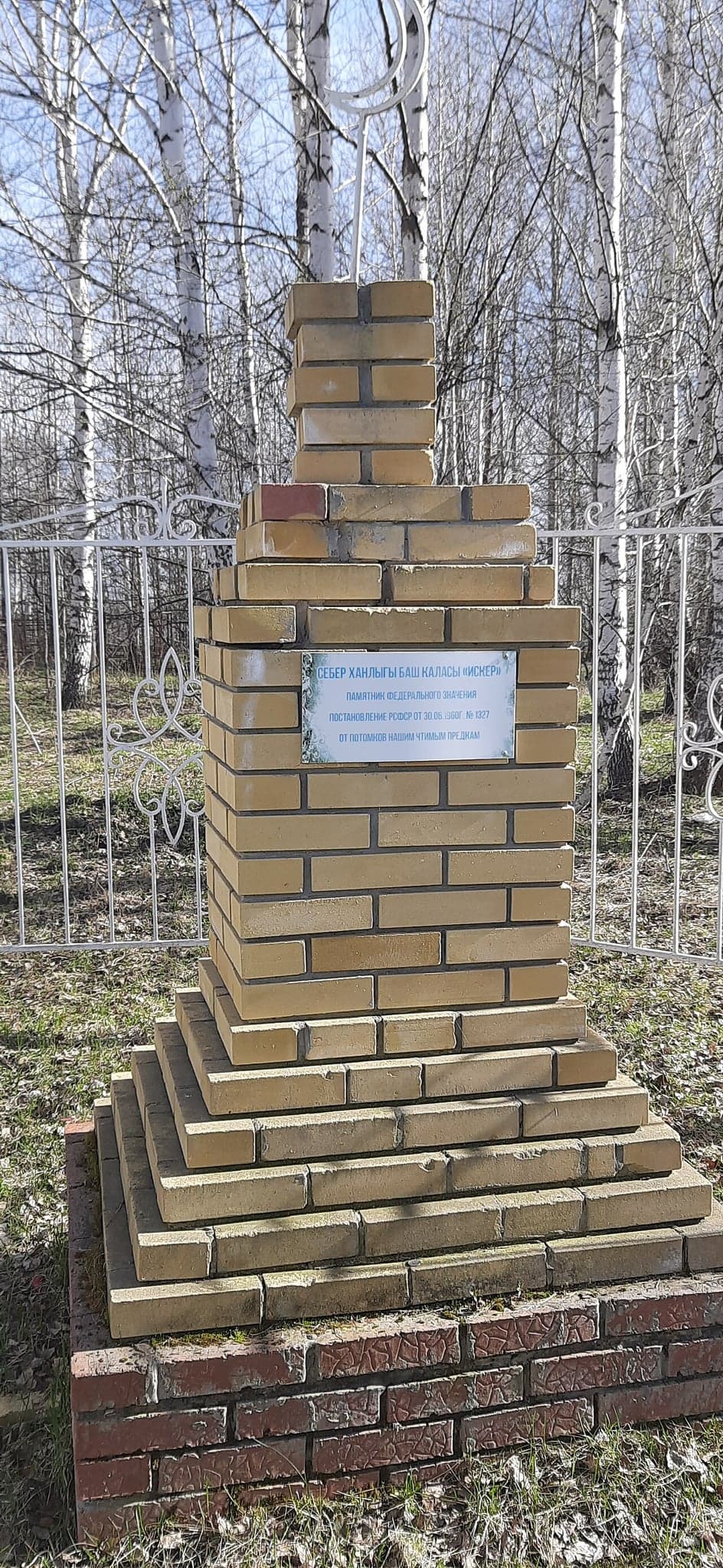
Qashliq, also known as Isker or Sibir in the Siberian Tatar language, was a significant medieval fortress that served as the capital of the Khanate of Sibir during the 14th to 16th centuries. Located strategically on the right bank of the Irtysh River at its confluence with the Sibirka rivulet, this fortress played a crucial role in the political and military history of western Siberia. Its position approximately 17 kilometers from the modern city of Tobolsk allowed it to control riverine trade routes and regional power dynamics in the vast Siberian landscape.
The fortress of Qashliq first appears in Russian chronicles from the 14th century, marking its importance as a fortified settlement of the Siberian Tatars. Over the centuries, it developed into a fortified stronghold with defensive structures adapted to the local geography and the military technologies of the time. While exact architectural details are scarce, it is understood that the fortress featured typical Renaissance-era bastioned fortifications, designed to withstand artillery and siege warfare prevalent in the 16th century.
Historical context and significance
Qashliq was the political and administrative center of the Khanate of Sibir, a Tatar state that emerged as a successor to the Golden Horde's influence in the region. The fortress's prominence grew in the early 16th century, a period marked by increasing Russian expansion eastwards into Siberia. This expansion culminated in the 1582 conquest of Qashliq by the Cossack forces led by ataman Yermak Timofeyevich, an event that signaled the beginning of Russian dominance in Siberia.
Following its capture, Qashliq was severely damaged. The Siberian Tatars briefly retook the fortress in 1584 but lost it permanently in 1586. The fall of Qashliq led to the foundation of the nearby city of Tobolsk in 1587, which became the new administrative center for Russian Siberia and played a pivotal role in further colonization and governance of the region.
Location and archaeological remains
The precise location of Qashliq has been a subject of some debate among historians and archaeologists. Most sources agree that it lies about 17 to 18 kilometers upriver from Tobolsk, near the modern village of Sibiryak. Some accounts suggest a slightly greater distance of 23 kilometers. Early 19th-century reports mention that the ruins of the fortress were still faintly visible, though the site has since become more obscure.
Archaeological efforts have identified remnants consistent with a bastioned fortress, including traces of defensive walls and foundations. These remains provide valuable insights into the military architecture of Siberian Tatars and their adaptation of Renaissance fortification principles in a remote frontier region.
Architectural features and military design
Although detailed architectural plans of Qashliq do not survive, its classification as a bastioned fortress indicates that it incorporated angled bastions projecting from the main walls, designed to provide overlapping fields of fire and improved defense against artillery. This style was influenced by European military engineering trends of the Renaissance period, reflecting the diffusion of new fortification techniques into Siberia.
The fortress likely included a central citadel or keep, surrounded by curtain walls and bastions, with additional outworks to protect against siege tactics. Its riverside location would have provided natural defensive advantages, including a water barrier and control over river traffic. The fortress also served as a political and economic hub, with residential quarters, administrative buildings, and storage facilities within its walls.
Legacy and cultural importance
Qashliq's role as the capital of the Khanate of Sibir makes it a site of considerable historical importance in Siberian history. It represents the last stronghold of Siberian Tatar sovereignty before Russian conquest reshaped the region's political landscape. The fortress's fall marked a turning point in Siberian history, initiating centuries of Russian presence and influence.
Today, the site near Sibiryak is recognized for its archaeological and cultural heritage, although it remains largely an archaeological ruin. Efforts to study and preserve the remains contribute to understanding the complex interactions between indigenous Siberian peoples and expanding Russian power in the late medieval and early modern periods.
Visiting and accessibility
The site of Qashliq is not developed as a major tourist destination, but it holds interest for historians, archaeologists, and visitors intrigued by Siberian history. Access is generally via the nearby town of Tobolsk, which offers more comprehensive facilities and historical attractions related to Siberia's Russian colonial past.
Visitors to the region can explore the natural landscape surrounding the Irtysh River and gain a sense of the strategic importance of this location in medieval times. The fortress's ruins, while faint, are a tangible link to the Siberian Tatars' heritage and the transformative events of the 16th century.
Frequently asked questions (FAQ)
- What is the historical significance of Isker Castle?
- Isker Castle is a remarkable example of medieval architecture in Russia, showcasing the strategic military importance of the region during its time. Built in the 15th century, it played a crucial role in defending against invasions and has witnessed numerous historical events that shaped the area.
- When was Isker Castle built?
- Isker Castle was constructed in the late 15th century, specifically between 1470 and 1480. Its design reflects the defensive needs of the period, making it an important landmark in Russian history.
- Can I visit Isker Castle year-round?
- Yes, Isker Castle is open to visitors throughout the year, although specific areas may have seasonal restrictions. It's advisable to check the local weather conditions before planning your visit, as winter months can bring challenging weather.
- What are the opening hours for Isker Castle?
- Isker Castle typically opens at 9 AM and closes at 6 PM from Tuesday to Sunday, with Monday being a day of rest. However, hours may vary during holidays, so it's best to confirm before your visit.
- Is it possible to take guided tours of Isker Castle?
- Yes, guided tours are available at Isker Castle, providing visitors with in-depth knowledge about its history and architecture. These tours can enhance your experience and offer insights that you might not get from exploring on your own.
- What are the ticket prices for Isker Castle?
- The ticket prices for Isker Castle are quite reasonable, with adult tickets typically costing around 300 rubles. Discounts are often available for students and seniors, so be sure to inquire about any applicable rates when purchasing your ticket.
- When is the best time to visit Isker Castle?
- The best time to visit Isker Castle is during the late spring and early autumn months, specifically from May to September, when the weather is generally mild and pleasant. This season allows visitors to enjoy the surrounding landscapes and outdoor areas of the castle.
- Is Isker Castle accessible for visitors with disabilities?
- Isker Castle has made efforts to improve accessibility for visitors with disabilities, including ramps and modified pathways. However, some areas may still pose challenges, so it's recommended to contact the castle administration in advance for specific accessibility information.
- What nearby attractions can I visit while at Isker Castle?
- While visiting Isker Castle, you can explore nearby attractions such as the historic town center, local museums, and scenic parks. These locations complement your castle experience and provide a deeper understanding of the region's culture and history.
Photo gallery

Information
Loading map...
Visitor reviews
No reviews yet. Been here? Write the first review and help other travelers!
Write the first reviewVisited this castle? Share your experience
Your review helps other travelers and adds first-hand knowledge to our encyclopedia.