Tobolsk Kremlin
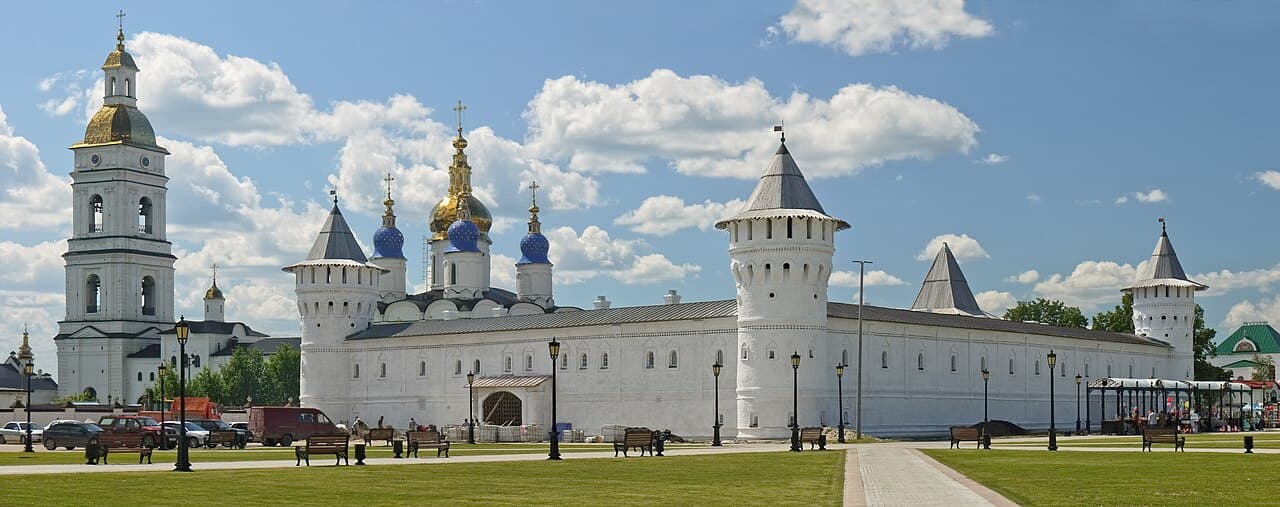
The Tobolsk Kremlin stands as a unique example of fortress architecture in Siberia, being the only stone kremlin in this vast region. Situated in the historic city of Tobolsk, within the Tyumen Oblast of the Russian Federation, this fortress represents a significant chapter in the military and administrative history of Siberia. Constructed in the 17th century, the kremlin served as a vital center for Russian expansion into Siberia and as a symbol of imperial authority in the region.
Historical context and significance
The Tobolsk Kremlin was built during a period when the Russian state was consolidating its control over Siberia following the conquest of the Siberian Khanate in the late 16th century. As the first stone fortress in Siberia, it marked a transition from wooden fortifications to more durable stone constructions, reflecting the strategic importance of Tobolsk as a regional administrative and military hub. The kremlin was designed to protect the city and its inhabitants from potential invasions and uprisings, as Siberia was still a frontier zone with ongoing conflicts involving indigenous peoples and rival powers.
Architectural features and layout
The Tobolsk Kremlin is classified as a bastioned fortress, a style that was prevalent in European military architecture during the Renaissance and early modern periods. Its design incorporates fortified bastions at the corners, which allowed defenders to cover the walls with flanking fire, improving the fortress's defensive capabilities against artillery and infantry attacks.
The fortress walls are constructed of stone, a rarity in Siberia at the time, where wooden fortifications were more common due to the abundance of timber and the challenges of transporting stone. The kremlin's walls enclose a complex of buildings, including administrative offices, religious structures, and military facilities.
Key structures within the kremlin
- Cathedral of St. Sophia: This is the main religious building within the kremlin, built in the traditional Russian Orthodox style with onion domes and richly decorated interiors. It served as the spiritual center for the inhabitants of Tobolsk and the surrounding region.
- Governor's Palace: A prominent administrative building that housed the regional governor and served as the seat of local government. Its architecture reflects the blend of Russian and European influences typical of the period.
- Defensive towers and gates: The kremlin features multiple towers and fortified gates that controlled access to the fortress and provided vantage points for surveillance and defense.
Construction and materials
Construction of the Tobolsk Kremlin began in the early 17th century, utilizing local stone and skilled masons brought from European Russia. The use of stone was a deliberate choice to ensure the fortress's longevity and to symbolize the permanence of Russian authority in Siberia. The bastioned design was influenced by contemporary European military engineering, adapted to the local climate and available resources.
The kremlin's role in Siberian history
Throughout its history, the Tobolsk Kremlin functioned as a political, military, and religious center. It was the residence of the Siberian governors and a key administrative hub for managing the vast territories of Siberia. The fortress also played a role in the exile system of Imperial Russia, as Tobolsk became a place of banishment for political prisoners and notable figures.
Despite various conflicts and changes in political power, the kremlin has remained a well-preserved monument, offering insights into the military architecture and urban development of Siberia during the early modern period.
Preservation and current status
Today, the Tobolsk Kremlin is recognized as a cultural heritage site and a major tourist attraction. Its well-preserved walls and buildings provide a tangible connection to Siberia's past. Restoration efforts have been undertaken to maintain the structural integrity and historical authenticity of the fortress, allowing visitors to explore its courtyards, cathedral, and defensive structures.
The kremlin’s location on a hill overlooking the confluence of the Tobol and Irtysh rivers adds to its strategic and scenic significance, making it a prominent landmark in the region.
Visiting the Tobolsk Kremlin
The kremlin is accessible to visitors year-round, with guided tours available that detail its history, architecture, and role in Siberian development. The site hosts cultural events and exhibitions, enhancing its function as a center for education and heritage preservation.
Visitors can explore the Cathedral of St. Sophia, the Governor's Palace, and the fortress walls, gaining insight into the military and civic life of early modern Siberia.
Frequently asked questions (FAQ)
- When was the Tobolsk Kremlin built?
- The Tobolsk Kremlin was constructed in the 17th century, marking the transition to stone fortifications in Siberia.
- What architectural style characterizes the Tobolsk Kremlin?
- The kremlin reflects the bastioned fortress style common in Renaissance military architecture, adapted for Siberian conditions.
- Can visitors tour the Tobolsk Kremlin?
- Yes, the Tobolsk Kremlin is open to visitors year-round, offering guided tours that explain its history and architecture.
- What are the key structures inside the Tobolsk Kremlin?
- Key structures include the Cathedral of St. Sophia, the Governor's Palace, and various defensive towers and gates.
- Why is the Tobolsk Kremlin historically significant?
- It is the only stone kremlin in Siberia and served as a political, military, and religious center during Russian expansion.
Photo gallery

Information
Loading map...
Visitor reviews
No reviews yet. Been here? Write the first review and help other travelers!
Write the first reviewVisited this castle? Share your experience
Your review helps other travelers and adds first-hand knowledge to our encyclopedia.