Venosa Castle
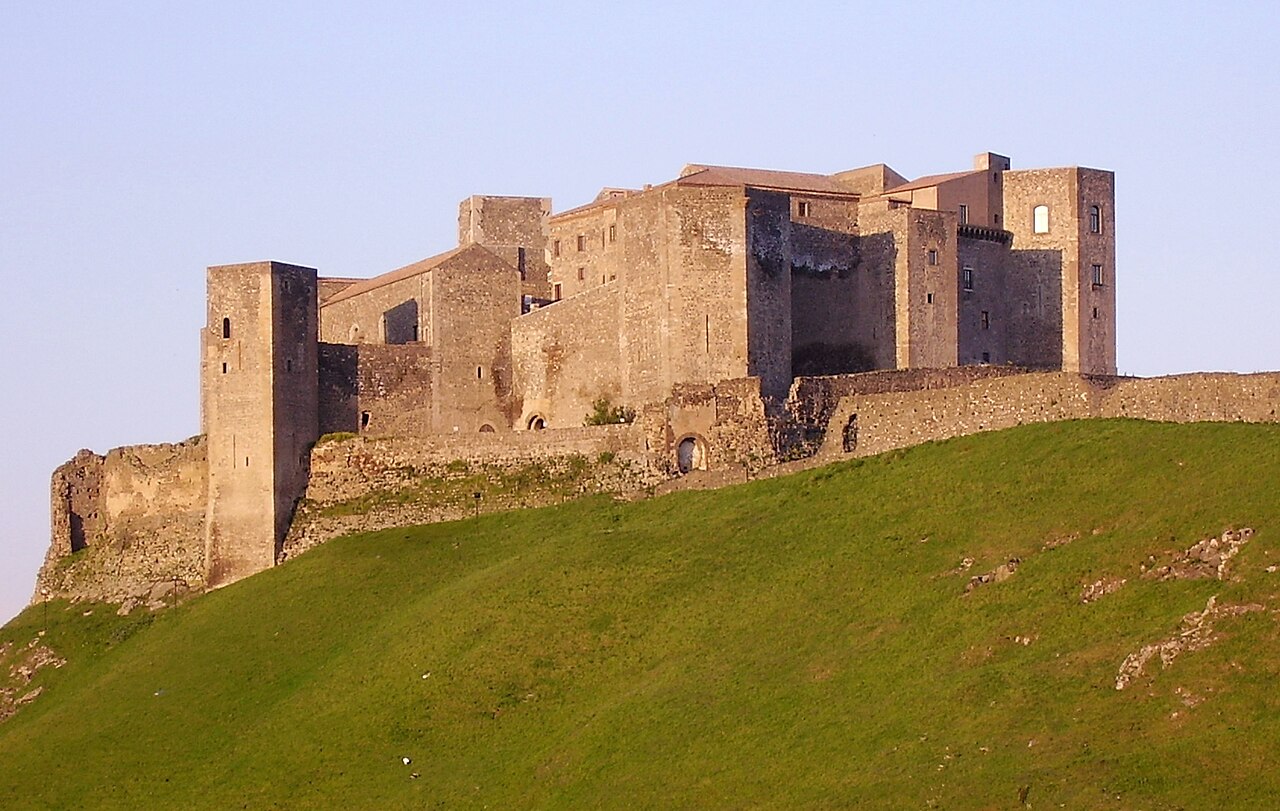
Venosa Castle, also known as the Aragonese Castle, stands as a prominent historic fortress in the town of Venosa, located in the Basilicata region of southern Italy. This imposing structure, dating back to 1470, was commissioned by Duke Pirro del Balzo during the reign of the House of Aragon over the Kingdom of Naples. Strategically positioned on the southern edge of the plateau that hosts the urban settlement, the castle was part of a larger fortification project aimed at modernizing the defensive capabilities of the town in accordance with the evolving military architecture of the late medieval period.
Architectural design and fortification features
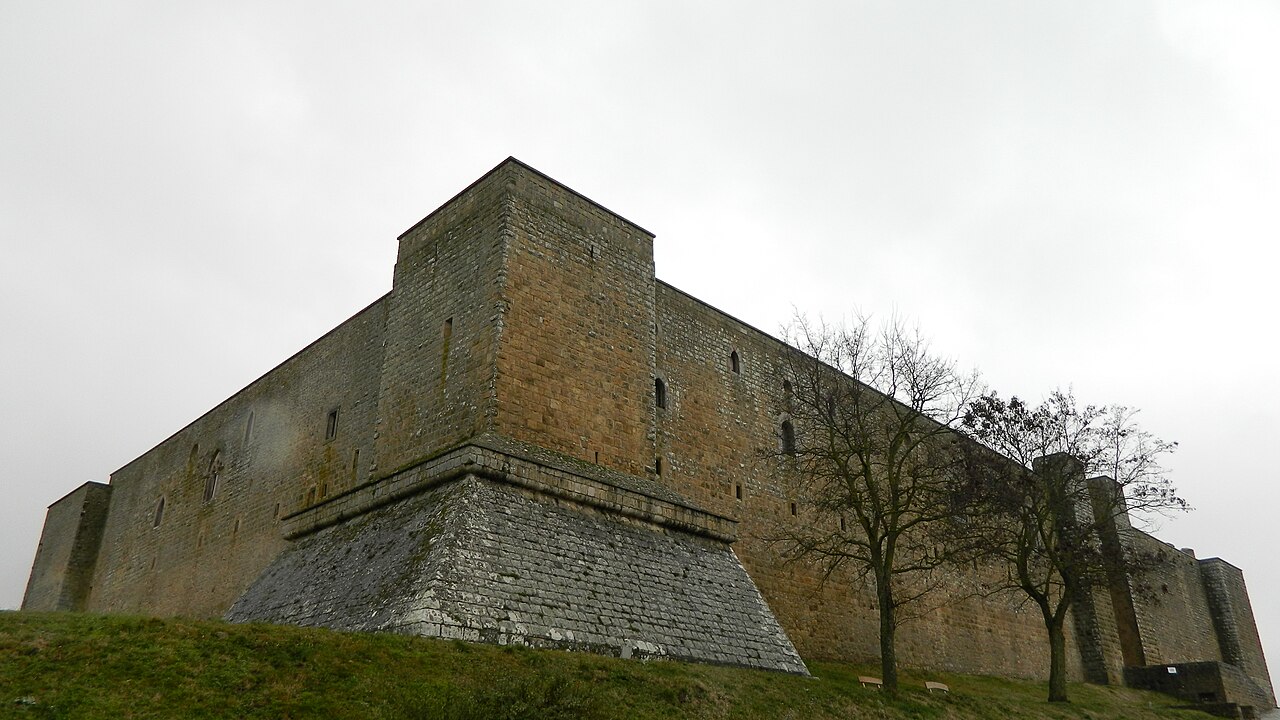
The castle exhibits a robust square plan fortified by four cylindrical corner towers, a design reflecting the military architectural innovations of the late medieval period. The towers originally featured battlements and likely conical roofs, which enhanced their defensive capabilities. Each tower is supported by redoubts that form the sloped walls of the surrounding deep moat, which was excavated as part of the castle's construction. These redoubts also functioned as prison spaces, integrating penal functions within the fortress's military design. The castle's entrance is accessed via a drawbridge, emphasizing its defensive purpose.
One of the castle's distinctive heraldic features is the Del Balzo coat of arms, depicting a radiant sun, prominently displayed on the western tower. This emblem signifies the patronage and authority of the Del Balzo family over the fortress and the region.
Historical context and transformation
The construction of Venosa Castle necessitated significant urban changes, including the demolition of the existing Romanesque cathedral and its surrounding district to accommodate the fortress and its moat. Consequently, a new cathedral was built in an expanded area at the base of the plateau, marking a shift in the town's religious and urban geography.
In the early 17th century, the castle underwent a transformation from a purely military fortress into a noble residence under the ownership of Carlo and Emanuele Gesualdo. They added an internal Renaissance loggia, a north-east wing, and fortified the base of the towers with additional redoubts. These modifications reflect the Renaissance architectural influences and the changing function of the castle from defense to residential and representational purposes.
Since 1612, the castle has been home to the Accademia dei Rinascenti, an institution that contributed to the cultural and intellectual life of the region, further enhancing the castle's significance beyond its military origins.
Interior and cultural heritage
The castle's interior features a large courtyard surrounded by the Renaissance loggia, providing an elegant and functional space within the fortress walls. The castle overlooks a porticoed square and a monumental fountain in front, which was a gift from Charles V to the town of Venosa, symbolizing royal favor and the town's importance.
Today, Venosa Castle houses the National Archaeological Museum of Venosa within the basement rooms of its towers. The museum preserves and exhibits rich archaeological finds from the ancient Roman colony of Venusia, offering visitors a unique glimpse into the area's extensive historical layers spanning from antiquity through the medieval and Renaissance periods.
Significance and preservation
Venosa Castle is a remarkable example of late medieval military architecture adapted to Renaissance residential needs. Its strategic location, architectural features, and historical transformations provide valuable insights into the region's political, military, and cultural history. The castle remains well preserved, allowing visitors to appreciate its imposing structure, defensive innovations, and artistic elements. Its role as a cultural center and museum continues to make it a vital landmark in Basilicata, attracting scholars, tourists, and history enthusiasts alike.
Frequently asked questions (FAQ)
- What is the historical significance of Venosa Castle?
- Venosa Castle, built in the 15th century, is a significant example of military architecture in Italy. It played a crucial role in the defense of the region and reflects the strategic importance of Venosa during the medieval period.
- When was Venosa Castle built?
- Construction of Venosa Castle began in 1470 and was completed in the late 15th century. Its design and structure were influenced by the needs of the time, focusing on both defense and residence.
- What are the opening hours for Venosa Castle?
- Venosa Castle is typically open to visitors from 9:00 AM to 7:00 PM during the summer months, with reduced hours in the winter. It's advisable to check the official website for any changes in schedule or special events.
- Can I purchase tickets in advance for Venosa Castle?
- Yes, tickets for Venosa Castle can be purchased in advance through the official website or at local tourist information centers. This is recommended, especially during peak tourist seasons to ensure your entry.
- Is Venosa Castle accessible for visitors with mobility challenges?
- Venosa Castle has made efforts to accommodate visitors with mobility challenges, including access to main areas. However, some parts of the castle may have limited accessibility due to its historical structure.
- When is the best time to visit Venosa Castle?
- The best time to visit Venosa Castle is during the spring and early autumn when the weather is mild and pleasant. This allows for an enjoyable exploration of the castle and its surroundings.
- What nearby attractions can I explore after visiting Venosa Castle?
- After visiting Venosa Castle, you can explore the nearby Romanesque church of Santa Trinità and the archaeological site of Venosa. Both offer rich historical contexts and enhance the cultural experience of your visit.
- What are the ticket prices for Venosa Castle?
- Ticket prices for Venosa Castle typically range from €5 to €10, with discounted rates for students and seniors. It's best to check for any special offers or family packages available during your visit.
Information
Loading map...
Visitor reviews
No reviews yet. Been here? Write the first review and help other travelers!
Write the first reviewVisited this castle? Share your experience
Your review helps other travelers and adds first-hand knowledge to our encyclopedia.