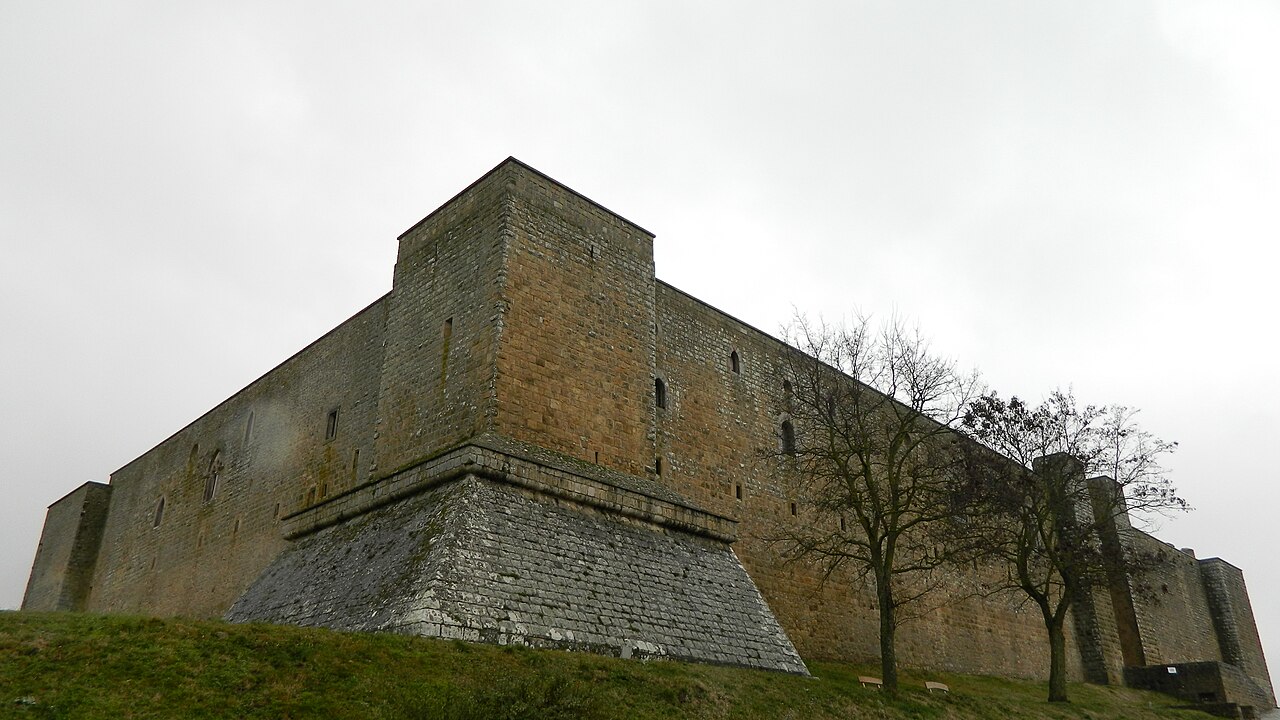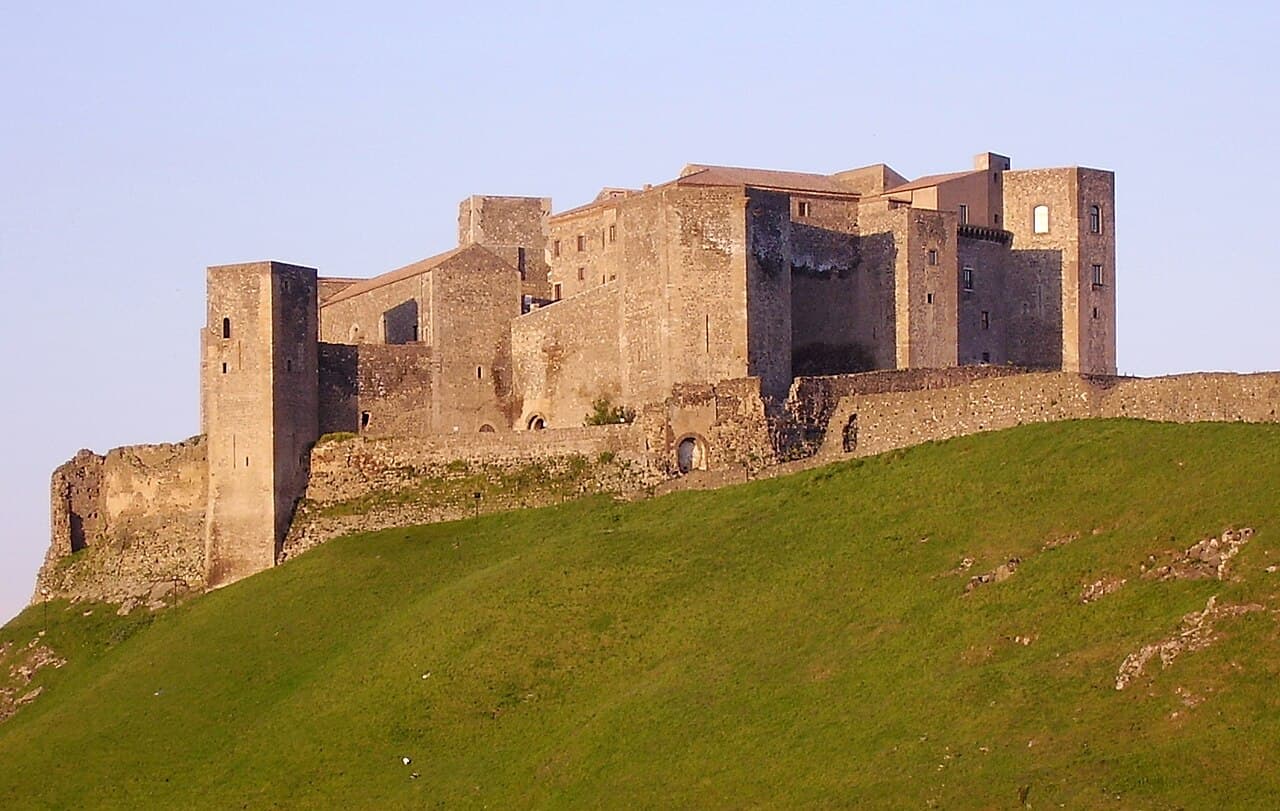
The Castle of Melfi is a monumental fortress located in Melfi, in the Basilicata region of southern Italy. It stands as one of the most significant medieval castles in Southern Italy, renowned for its rich history and architectural grandeur. Originally constructed during the Norman conquest in the late 11th century, the castle has witnessed numerous modifications and expansions through the centuries, especially under the reigns of the House of Anjou and the Crown of Aragon. Today, it serves as the home of the National Archaeological Museum of Melfi, which opened in 1976, preserving and showcasing the region's cultural heritage.
Historical significance and early construction
The Castle of Melfi was strategically erected atop a lava hill near the extinct Mount Vulture volcano, commanding the vital route between Campania and Apulia. This location made it a crucial military and administrative hub during the medieval period. Its origins trace back to the late 11th century, when the Normans built the fortress on the remains of a Byzantine structure, marking it as likely the first Norman fortress in Italy.
Robert Guiscard, the Norman count, was instrumental in the castle's foundation and early development. He also established the nearby cathedral and designated Melfi as the capital of the Duchy of Apulia and Calabria. Between 1059 and 1137, the castle hosted five significant church councils attended by popes such as Nicholas II and Urban II, underscoring its religious and political importance.
Medieval transformations and political role
In 1133, following rebellions against royal authority, Roger II of Sicily ordered the partial destruction of the castle’s citadel to suppress further uprisings and consolidate control. During the 12th century, the castle came under the rule of the Hohenstaufen dynasty. The emperor Frederick II undertook extensive restorations and expansions, including the construction of a new masonry wall and the iconic Emperor’s Tower (Torre dell’Imperatore).
In 1231, Frederick II promulgated the "Liber Augustalis", a comprehensive legal code for the Kingdom of Sicily, within the castle’s walls, marking a pivotal moment in medieval governance. The castle also served as a political meeting place and residence for Frederick’s consort, Bianca Lancia, mother of Manfred I of Sicily. Additionally, it functioned as a tax storage site and prison, highlighting its multifaceted role in administration and defense.
Angevin and aragonese expansions
The Capetian House of Anjou took control of the castle in the 13th century, undertaking significant enlargements. Between 1227 and 1284, three pentagonal towers were constructed to enhance the castle’s defenses, particularly to protect the surrounding moat. In 1284, Maria of Hungary, wife of Charles II of Anjou, made the castle her official residence, further elevating its status.
Subsequently, the fortress passed to the Aragonese and later to noble families including the Acciaiuoli, Marzano, Caracciolo, and Doria, who maintained ownership until the mid-20th century. Despite suffering damage from major earthquakes in 1851 and 1930, the castle remained largely intact, a testament to its robust construction.
Architectural features and layout
The castle is characterized by a blend of medieval architectural styles but retains a distinct Norman-Romanesque character. Its defensive system includes a large fortified wall and a surrounding moat, with a total of ten towers: seven rectangular and three pentagonal. Notable towers include the Entrance Tower, Flag or Cypress Tower, Secretary or Terrace Tower, Lion’s Bulwark Tower, the Emperor’s Tower, Northeast Tower (Torrita Parvula), Prison Tower (Marcangione), Church Tower, and the Clock Tower. One tower remains in ruins and is unnamed.
The curtain wall is constructed from rectangular bricks measuring approximately 4.5–5 cm by 15 cm by 29–30 cm. The three pentagonal towers were heightened during the Angevin period to improve coverage over the moat. Originally, the castle featured four gates; today, only one remains in use. This main entrance, opened by the Doria family, is accessed via a bridge that was once a drawbridge. The other gates near the moat and towers have been sealed.
Inside the castle, visitors can explore courtyards and stables from the Angevin era, built between 1278 and 1281, including the "Stallaggio" and "Mortorio" courtyards. The northern section houses the Angevin "Throne Room," now part of the museum, and the "Armigers’ Hall" beneath it. The "Sala delle Scodelle," where the Constitutions of Melfi were proclaimed, is also preserved.
Near the bridge, an 18th-century portal bears an inscription honoring Emperor Charles V and Admiral Andrea Doria. The castle's resilient construction has allowed it to survive several earthquakes, including the devastating 1851 Vulture earthquake, which destroyed the nearby cathedral but left the fortress mostly undamaged.
Cultural and heritage importance
The Castle of Melfi is not only a symbol of military and political power but also a cultural landmark. Its long history reflects the complex interplay of Norman, Hohenstaufen, Angevin, and Aragonese influences in southern Italy. The castle’s role in hosting church councils and the promulgation of the "Liber Augustalis" underscores its importance in medieval European history.
Today, as the site of the National Archaeological Museum of Melfi, the castle continues to educate visitors about the rich heritage of the region. It stands as a testament to the architectural ingenuity and historical significance of medieval fortifications in Italy.
Frequently asked questions (FAQ)
- What is the historical significance of the Castle of Melfi?
- The Castle of Melfi is a symbol of the Norman conquest of southern Italy, built in the 11th century. It served as a royal residence and the site of important political meetings, including the historic assemblies that shaped the region's governance.
- When was the Castle of Melfi constructed?
- The construction of the Castle of Melfi began in 1040 and continued over the following centuries with various renovations. It stands as a testament to the architectural styles and military needs of the time.
- What are the opening hours for the Castle of Melfi?
- The Castle of Melfi is typically open to visitors from 9 AM to 7 PM during the summer months and from 9 AM to 5 PM in the winter. It is advisable to check the official website for any changes or special closures.
- Can I buy tickets in advance for the Castle of Melfi?
- Yes, tickets can be purchased in advance through the official website or at selected local ticket offices. Buying tickets ahead of time is recommended, especially during peak tourist seasons to avoid long queues.
- Is the Castle of Melfi accessible for visitors with disabilities?
- The Castle of Melfi strives to be accessible to all visitors, with ramps and designated pathways for those with mobility challenges. However, due to its historic nature, some areas may have limitations, so it is best to contact the staff for specific accessibility inquiries.
- When is the best time to visit the Castle of Melfi?
- The best time to visit the Castle of Melfi is during the spring (April to June) and fall (September to October) when the weather is mild and the crowds are smaller. These seasons offer a pleasant experience to explore the castle and its surroundings.
- What nearby attractions can I visit when at the Castle of Melfi?
- Nearby attractions include the charming old town of Melfi, the Cathedral of Santa Maria Assunta, and the stunning landscapes of the Vulture region. Visitors can enjoy local cuisine and wines, making for a delightful day trip.
- How do I get to the Castle of Melfi?
- The Castle of Melfi is easily accessible by car and public transport, located about 20 kilometers from Potenza. There are local buses that connect Melfi to nearby cities, and ample parking is available for those driving.
- What are the ticket prices for the Castle of Melfi?
- Ticket prices for the Castle of Melfi are generally affordable, with discounts available for students and seniors. Children under a certain age may enter for free, making it a great family destination.
Photo gallery

Photo by No machine-readable author provided. Mikils assumed (based on copyright claims).•CC BY-SA 3.0
Information
Website
Visit websiteSources & official resources
Verify the information above using these authoritative references.
Loading map...
Visitor reviews
No reviews yet. Been here? Write the first review and help other travelers!
Write the first reviewVisited this castle? Share your experience
Your review helps other travelers and adds first-hand knowledge to our encyclopedia.