Melfi Castle
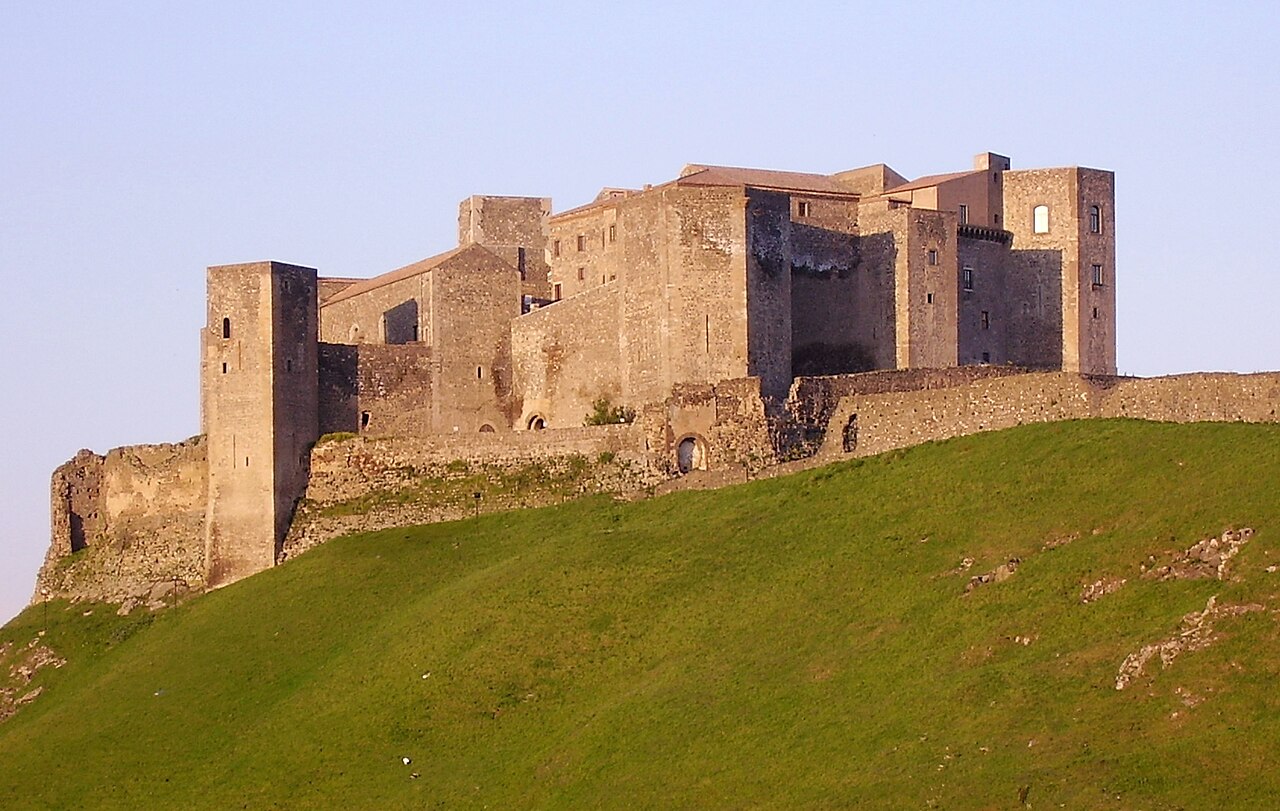
Melfi Castle stands as one of the most significant medieval castles in Southern Italy, prominently located in the town of Melfi within the Basilicata region. Constructed in the 11th century by the Norman ruler William of Altavilla, the castle was built atop the ruins of an earlier fortification, asserting its strategic importance as a gateway between Campania and Apulia. Its commanding presence dominates the town’s skyline, reflecting its historical role as a military stronghold, administrative center, and noble residence.
The origins and Norman foundation
The initial construction of Melfi Castle in the late 11th century marked the Normans’ consolidation of power in Southern Italy. William of Altavilla established the castle to secure control over a key route and to serve as a defensive bastion against external threats. The original structure was characterized by a central keep surrounded by a fortified wall, typical of Norman military architecture of the period. Over time, the castle's design evolved to incorporate additional defensive and residential features.
Frederick II and the height of medieval prominence
In the early 13th century, the castle gained renewed importance under the rule of Emperor Frederick II of the Hohenstaufen dynasty, who undertook significant remodeling and expansion efforts. Frederick II used Melfi Castle not only as a military fortress but also as a political and legal center. In 1231, he promulgated the Constitutions of Melfi (Liber Augustalis) within its walls, a pioneering legal code that combined civil and criminal law and represented one of the first comprehensive medieval legislative texts. This event cemented the castle’s place in legal and political history.
Architectural features under Frederick II
The castle’s architectural form from this period reflects the medieval military style with a polygonal layout featuring eight towers. Among these, three towers are polygonal, while five have a square plan. Notably, the west tower, known as the "bulwark of the lion", includes a distinctive nest-shaped projection. According to legend, this feature symbolized the imperial eagle’s nest, a reference to Frederick II’s emblem and authority. The castle’s walls and towers were constructed for both defense and symbolic power.
Later medieval and Renaissance transformations
Following the decline of the Hohenstaufen dynasty, the castle came under the control of the Angevin rulers in the late 13th century. The Angevins initiated extensive renovations and expansions, adapting the fortress to the evolving needs of residence and defense. In 1284, it became the official residence of Mary of Hungary, wife of Charles II of Anjou, further enhancing its status as a noble seat.
Angevin architectural contributions
The Angevin period saw the addition of several significant structures within the castle complex, including the stables and the yards known as "lairage" and "Mortorio" built between 1278 and 1281. The Throne Room, constructed on the north side, also dates from this era and now serves as part of the museum space. The castle’s entrance portal features an 18th-century inscription honoring Emperor Charles V and his admiral Andrea Doria, reflecting the castle’s continued importance through the Renaissance.
Ownership and modifications through the centuries
From the 16th century onwards, the castle became the residence of the Doria family, a prominent noble lineage. Over the centuries, it also passed through the hands of other noble families such as the Acciaioli, Marzano, and Caracciolo. Each ownership phase brought alterations and restorations that contributed to the castle’s layered architectural character.
Resilience through natural disasters
The castle endured two significant earthquakes in 1851 and 1930. Remarkably, it sustained minimal damage compared to other historic structures in Melfi, a testament to the robustness of its medieval construction and subsequent restorations.
Architectural layout and features
Melfi Castle exhibits a complex architectural form resulting from its multi-phase construction history. Its polygonal plan is fortified by ten towers of varying shapes, including polygonal and square designs. The castle is accessed by a bridge leading to a main portal inscribed with historical dedications. The courtyard provides access to various functional spaces such as the stables and service yards, reflecting its role as a self-sufficient fortress and noble residence.
Defensive and symbolic elements
The castle’s battlements, thick walls, and towers were designed for defense, while features like the "bulwark of the lion" tower symbolized imperial power. The combination of military and residential architecture illustrates the castle’s dual function as a fortress and a seat of governance.
Current status and cultural significance
Today, Melfi Castle is restored and serves as a cultural landmark in Basilicata. Since 1976, it has housed the National Archaeological Museum of Melfi, exhibiting artifacts that illuminate the region’s rich history. The castle attracts visitors interested in medieval architecture, Norman and Hohenstaufen history, and the legacy of the Constitutions of Melfi.
Visiting and educational opportunities
The castle offers an immersive experience into medieval life and law, with museum exhibits located in historically significant rooms like the Throne Room. Its well-preserved fortifications and towers provide insights into medieval military engineering and noble residence design.
Frequently asked questions (FAQ)
- What is the historical significance of Melfi Castle?
- Melfi Castle, originally built in the 10th century, served as a crucial stronghold during the Norman conquest of Southern Italy. It was historically significant as the site where the first assembly of the Kingdom of Sicily took place, impacting the region’s governance and culture.
- When was Melfi Castle constructed?
- Melfi Castle was constructed in the early 10th century and has undergone numerous renovations over the centuries. Its strategic importance led to various modifications, particularly during the Norman and Swabian periods, reflecting the architectural styles of those times.
- What are the opening hours for Melfi Castle?
- Melfi Castle is typically open to visitors from 9:00 AM to 7:00 PM during the summer months and from 9:00 AM to 5:00 PM in the winter. It is advisable to check the official website for any seasonal changes or special closures.
- Can I take a guided tour of Melfi Castle?
- Yes, guided tours of Melfi Castle are available and provide a comprehensive insight into its rich history and architecture. These tours often include access to areas not available to general visitors, offering a more immersive experience.
- Is Melfi Castle accessible for visitors with disabilities?
- Melfi Castle has made efforts to ensure accessibility for all visitors, including those with disabilities. However, due to the castle's historical nature, some areas may present challenges; it is best to contact the site in advance for specific accessibility information.
- When is the best time to visit Melfi Castle?
- The best time to visit Melfi Castle is during the spring and early fall when the weather is pleasant and the surrounding landscape is vibrant. These seasons tend to attract fewer tourists, allowing for a more enjoyable experience.
- What are the ticket prices for Melfi Castle?
- Ticket prices for Melfi Castle are generally affordable, with discounts available for students and seniors. Children under a certain age may enter for free, making it an excellent destination for families.
- Are there any nearby attractions to Melfi Castle?
- Yes, nearby attractions include the charming town of Melfi itself, with its picturesque streets and local eateries, as well as other historical sites like the Cathedral of Santa Maria Assunta. Additionally, the surrounding region is known for its natural beauty and hiking opportunities.
Information
Loading map...
Visitor reviews
No reviews yet. Been here? Write the first review and help other travelers!
Write the first reviewVisited this castle? Share your experience
Your review helps other travelers and adds first-hand knowledge to our encyclopedia.