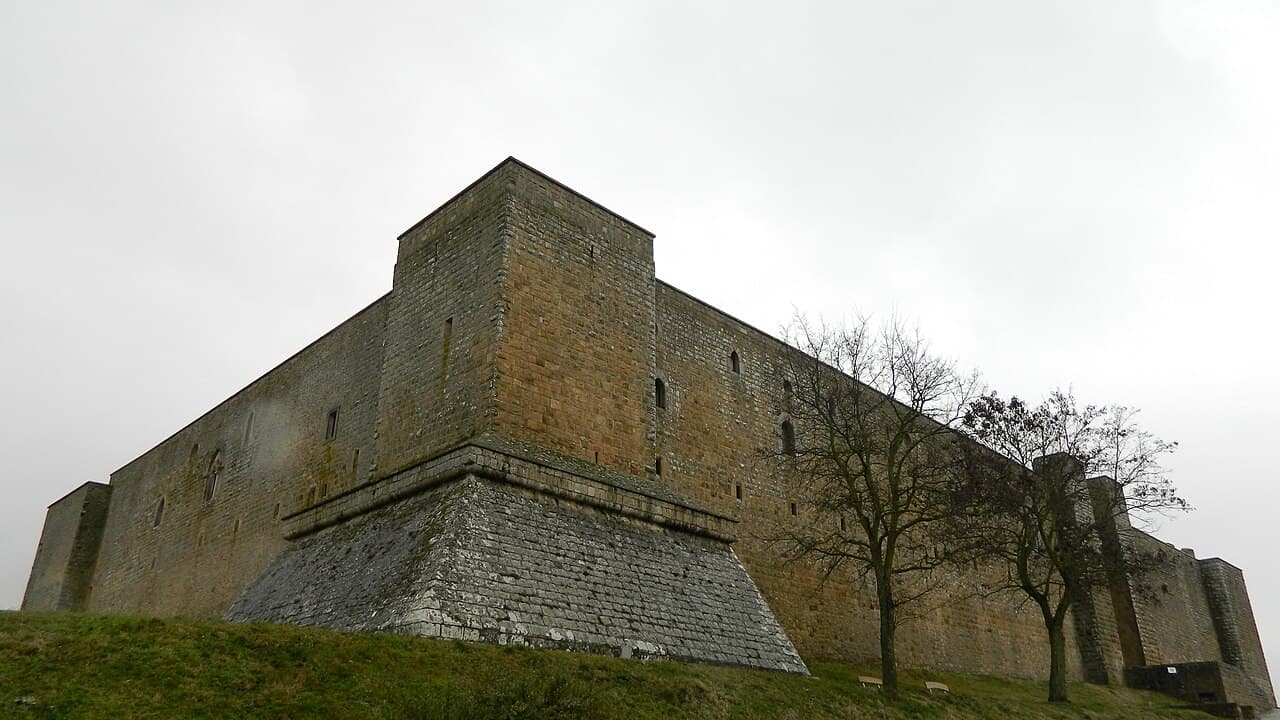
Lagopesole Castle
Lagopesole Castle stands as a remarkable example of high medieval military architecture in the Basilicata region of Italy. Constructed primarily between 1242 and 1250, it was commissioned by Emperor Frederick II of Swabia, a ruler renowned for his cultural patronage and strategic acumen. The castle occupies a commanding position atop a hill overlooking the Vitalba valley, built upon the foundations of an earlier Norman stronghold, which Frederick II significantly expanded and fortified.
Historical significance and imperial patronage
The castle’s origins trace back to Norman times, but its most substantial development occurred under Frederick II, who sought to reinforce his southern Italian territories. The discovery of the Statute Officiorum of the Kingdom of Sicily confirms that the emperor initiated extensive enlargement works in 1242, making Lagopesole the last and largest of his castle projects in the region. This expansion reflected Frederick II’s dual interests in military defense and leisure, as the site also served as a favored residence for the emperor, who was passionate about hunting and nature.
Lagopesole’s strategic importance is underscored by its role in several historic events. Notably, it hosted a significant meeting between Pope Innocent II and Abbot Rinaldo of Montecassino during the reign of Emperor Lothair II of Saxony, in the context of conflict with Roger the Norman. Later, the castle accommodated Charles I of Anjou during his stays in 1268 and 1294, illustrating its continued use by ruling powers.
Architectural features and style
The castle’s construction prominently features sandstone blocks, which have preserved much of the original structure despite subsequent modifications. Its layout is a vast rectangular plan divided by a southern curtain wall that internally connects the residential quarters through a matroneo overlooking the castle chapel. This chapel is a unique and defining characteristic of Lagopesole, distinguished by its austere Romanesque style and status as a full church rather than a mere chapel, setting it apart from other castles built by Frederick II.
The castle’s halls are notable for their sculptural shelves supporting pointed arches, along with decorative mullioned windows and single lancet windows. The original portal of the chapel is believed to be crafted by Mele di Stigliano, an artisan associated with Frederick II’s Sicilian shipyards, further linking the castle to imperial craftsmanship traditions.
Defensive and residential elements
Lagopesole Castle combines military and residential functions. Its curtain walls and battlements provided formidable defense, while the large halls and residential areas reflect the comfort expected by a ruler of Frederick II’s stature. The presence of a wide tank within the main courtyard suggests provisions for water storage, essential during sieges.
Later history and transformations
Following the Swabian period, the castle passed through several hands, including the Angevins and later the Doria-Pamphili family. In 1416, the Caracciolo family acquired Lagopesole alongside the nearby Melfi castle, and in 1531, Emperor Charles V granted it to the Doria family. These transitions brought various alterations, reflecting the changing architectural tastes and military needs of different eras.
In the 19th century, the castle gained notoriety as a refuge for brigands led by Carmine 'Donatelli' Crocco. On April 7, 1861, Crocco and approximately 400 followers occupied Lagopesole, highlighting the castle’s continued strategic and symbolic importance even in more modern times.
Restoration and current use
Today, Lagopesole Castle is owned by the State Property Office and is part of the "Coste Castello" National Anthropological Reserve, managed by the State Forestry Corps. It has undergone comprehensive restoration, preserving both its medieval fabric and later modifications.
The castle serves as a prestigious cultural venue, hosting events that celebrate its rich history. Visitors can explore the castle’s museum, which includes an innovative multimedia experience titled "World of Frederick II", offering an immersive journey into the life and times of the emperor. This blend of historical authenticity and modern interpretation makes Lagopesole a significant attraction for those interested in medieval history, architecture, and the legacy of Frederick II.
Architectural uniqueness of the chapel
The Romanesque chapel within Lagopesole Castle is particularly noteworthy. Unlike other castles of the imperial period, which typically include only small chapels, this castle features a full church, an architectural rarity. Its austere style and preserved original portal exemplify the high craftsmanship and religious significance attributed to the site.
Visitor experience and cultural significance
Lagopesole Castle offers visitors a comprehensive historical experience through its well-preserved structures and interpretive exhibits. The museum’s multimedia presentations illuminate the castle’s role in medieval politics and culture, while the physical architecture allows guests to appreciate the strategic and aesthetic considerations of its builders. As a result, the castle stands as a testament to the enduring legacy of Frederick II and the complex history of southern Italy’s medieval period.
Frequently asked questions (FAQ)
- What is the historical significance of Lagopesole Castle?
- Lagopesole Castle, built in the 13th century, is a testament to the medieval architecture of southern Italy. It served as a fortress and royal residence and played a crucial role in the defense of the region during various conflicts.
- When was Lagopesole Castle constructed?
- The construction of Lagopesole Castle began in 1240 under the orders of Emperor Frederick II. Over the centuries, it was expanded and modified, reflecting various architectural styles and historical events.
- What are the opening hours for Lagopesole Castle?
- Lagopesole Castle is typically open to visitors from 9:00 AM to 7:00 PM, with extended hours during the summer months. It is advisable to check the official website for any seasonal changes or special events that may affect hours of operation.
- Can I purchase tickets in advance for Lagopesole Castle?
- Yes, it is possible to purchase tickets in advance online to avoid long lines at the entrance. This option is particularly recommended during peak tourist seasons when visitor numbers can be high.
- Is Lagopesole Castle accessible for visitors with disabilities?
- Lagopesole Castle has made efforts to improve accessibility for visitors with disabilities. However, the castle's historical nature means that some areas may still pose challenges, so it's best to inquire about specific accessibility features before your visit.
- What is the best time to visit Lagopesole Castle?
- The best time to visit Lagopesole Castle is during the spring and early autumn when the weather is pleasant, and the surrounding landscape is vibrant. Visiting during these seasons allows for a more enjoyable exploration of the castle and its grounds.
- Are there any nearby attractions to visit when at Lagopesole Castle?
- Yes, nearby attractions include the charming town of Avigliano and the beautiful natural landscapes of the Lucanian Apennines. Additionally, there are several hiking trails and other historical sites in the region that make for a full day of exploration.
- What are the ticket prices for Lagopesole Castle?
- Ticket prices for Lagopesole Castle are generally affordable, with discounts available for students, seniors, and groups. It's best to check the official website for the most current pricing and any special offers that may be available during your visit.
Photo gallery

Information
Current owner
State Property Office
Loading map...
Visitor reviews
No reviews yet. Been here? Write the first review and help other travelers!
Write the first reviewVisited this castle? Share your experience
Your review helps other travelers and adds first-hand knowledge to our encyclopedia.



