Venetian Triangular Castle
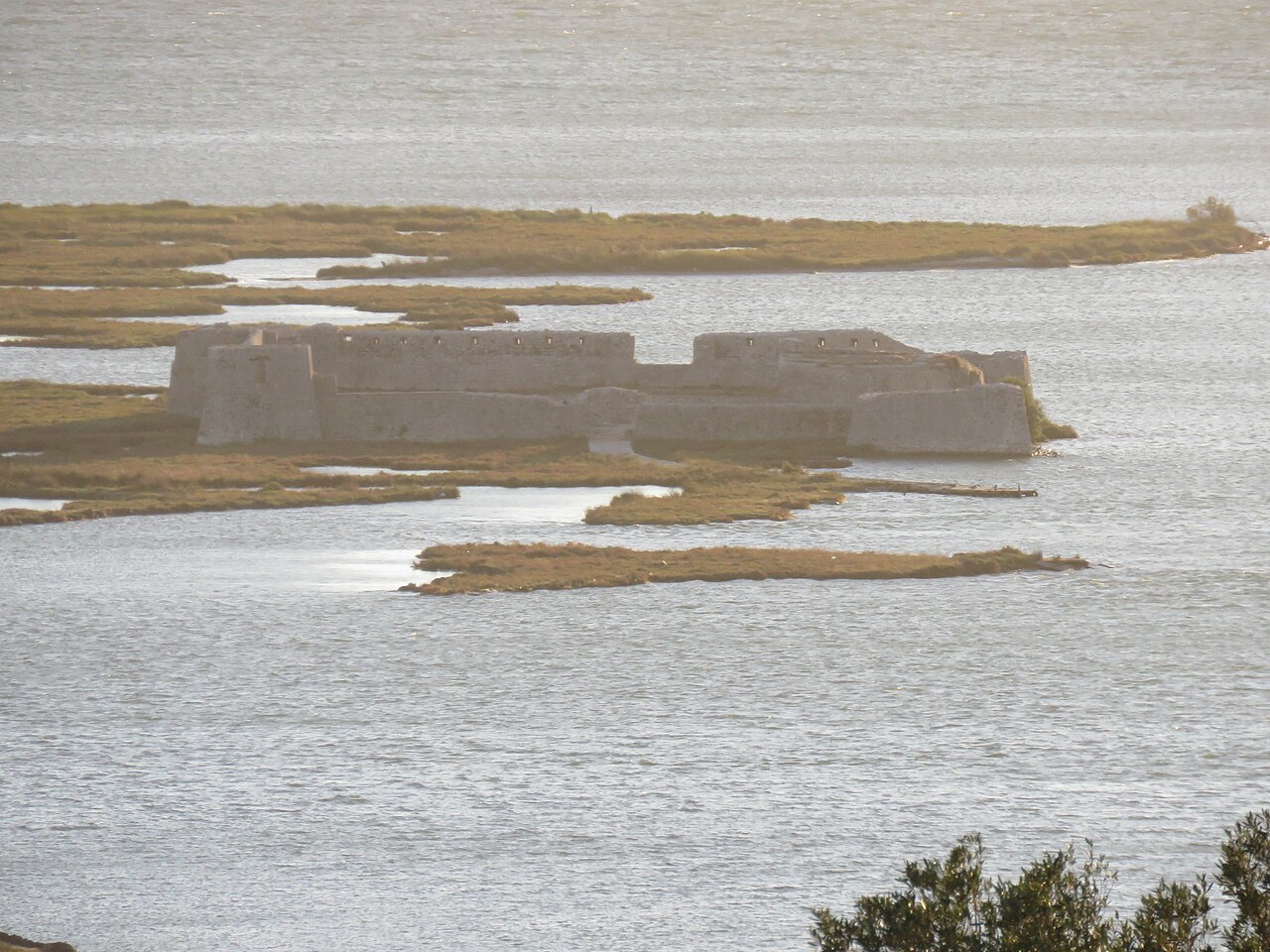
Venetian Triangular Castle, locally known as Kalaja Trekëndore Venedikase, is a distinctive late medieval fortress located south of the town of Ksamil in the county of Vlorë, Albania. This 15th-century castle is also referred to as Vivari Castle (Kalaja e Vivarit), named after the Vivari Channel on whose left bank it stands. The castle is part of the Butrint National Park, a region rich in historical and natural significance, adjacent to the ancient city of Buthrotum, an archaeological site protected as a UNESCO World Heritage Site.
The castle occupies a strategic position on the left bank of the natural channel connecting Lake Butrint to the Ionian Sea. This channel, officially called the Vivari Channel but commonly known as the Butrint Channel, separates the Albanian mainland from the Greek island of Corfu, which lies opposite the channel's mouth. The location was crucial for controlling maritime access and protecting the local fishery, which was a significant economic resource during the castle's active period.
Historical background and strategic importance
The Venetian Republic acquired the town of Butrint and the island of Corfu in 1386, primarily focusing their interest on Corfu. Consequently, Butrint experienced a period of decline until the late 15th century when the Venetians began fortifying the area to secure their maritime interests. The Venetian Triangular Castle was constructed during this time, designed mainly to protect the fish industry in the lake and channel rather than serving as a major military stronghold.
By 1572, ongoing conflicts between Venice and the Ottoman Empire had devastated Butrint, leaving the town largely in ruins. The Venetians relocated their local administration to the castle, which then became the focal point of settlement in the area. Despite its modest size, the fortress played a role in the turbulent regional power struggles, changing hands several times during the 17th and 18th centuries.
The castle was seized by the Ottoman Turks in 1655 and again in 1718 but was recaptured by the Venetians each time. In the late 18th century, the region briefly came under French control during the Napoleonic Wars. In 1798, the retreating French forces deliberately destroyed the fortress to prevent it from falling into the hands of Ali Pasha of Ioannina, a powerful Albanian Ottoman ruler who subsequently took control of the area in 1799. Ali Pasha used the castle as a secondary residence until around 1820, after which the site was abandoned and gradually fell into ruin.
Architectural features and layout
The Venetian Triangular Castle is named for its distinctive irregular triangular shape, with a tower positioned at each corner. Originally, it was built on an island in a pre-canalised river mouth, surrounded by natural water defenses. The castle was further protected by an outer siege work or ravelin, a crescent-shaped defensive wall designed to absorb and deflect attacks.
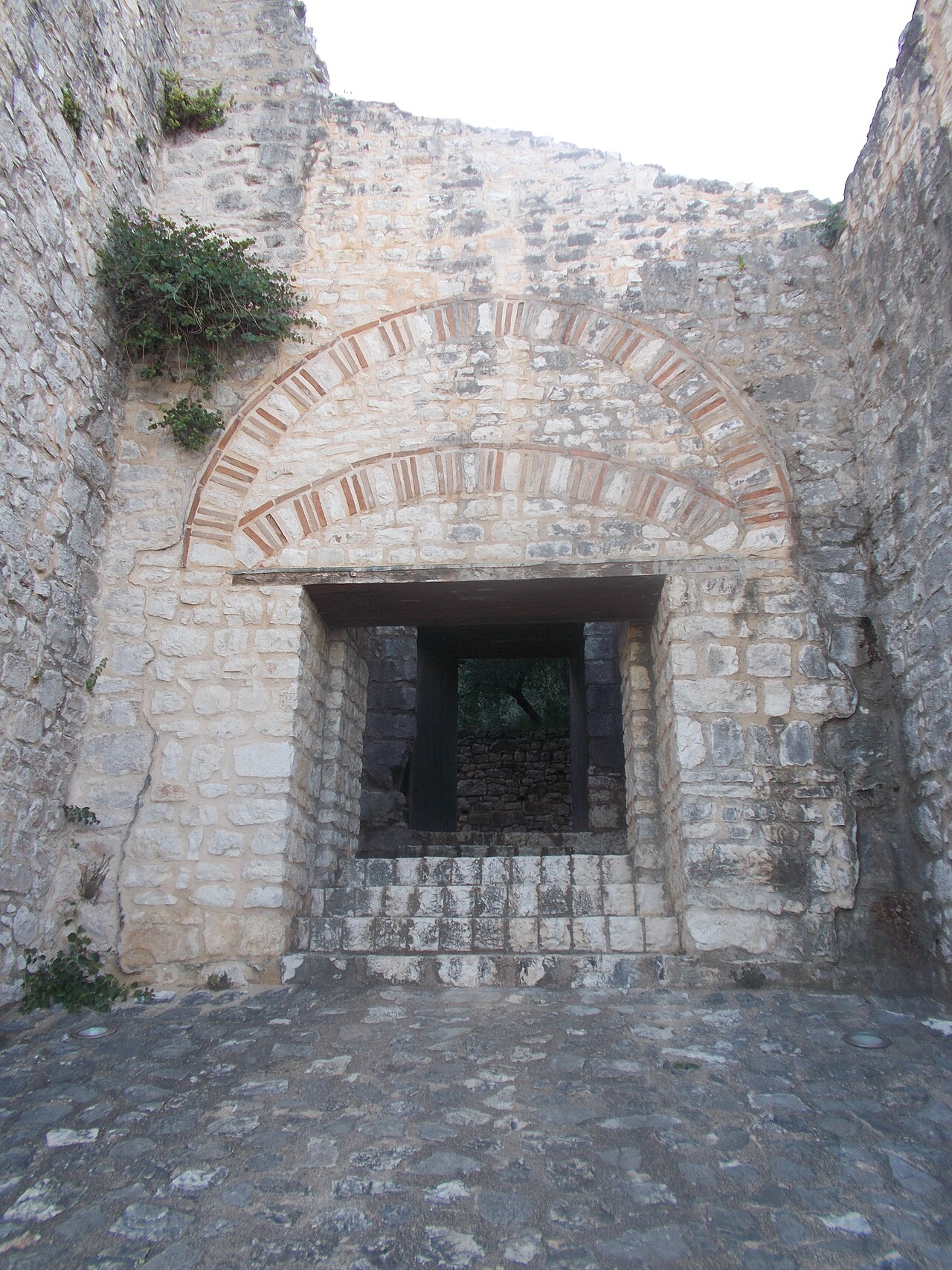
The fortress incorporates musket ports at ground level and along the parapet walk, reflecting adaptations for firearms in the late medieval period. Inside, vaulted storerooms supported artillery platforms above, allowing cannons to be trained on approaching vessels navigating the Vivari Channel. One notable decorative element is a keystone bearing the relief of the Lion of St. Mark, the emblem of the Republic of Venice, symbolizing Venetian authority and presence.
Defensive structures and strategic design
The triangular form was a practical design choice, maximizing defensive coverage with minimal walls. Each tower served as both a lookout and a strongpoint for artillery placement. The castle's position on an island within the channel provided natural moat-like protection, complicating any direct assault. The adjacent ravelin added a further layer of defense, a common feature in Venetian military architecture aimed at delaying and disrupting enemy advances.
Relationship with the surrounding heritage sites
The castle's proximity to the ancient city of Buthrotum and its archaeological park enhances its historical significance. The park contains remains from Greek, Roman, Byzantine, and Venetian periods, reflecting the area's long and varied history. Within the park, visitors can also find other Venetian fortifications, including the Venetian Tower and the Venetian Acropolis Castle, which together with the Triangular Castle illustrate the Venetian defensive network in the region.
At the mouth of the Butrint Channel lies another important fortress, Ali Pasha Castle, situated on a small islet. This castle, linked to the same historical figure who once controlled the Triangular Castle, complements the defensive system guarding the channel and the surrounding waters.
Current status and visitor information
Today, the Venetian Triangular Castle stands as a partially preserved ruin freely accessible to visitors. Its scenic location within the Butrint National Park makes it a popular site for tourists interested in history, architecture, and natural beauty. The castle offers insight into Venetian military architecture and the complex history of the region during the late medieval and early modern periods.
Visitors to the castle often combine their trip with a visit to the nearby archaeological park of Butrint, which provides a comprehensive view of the area's ancient civilizations and successive rulers. The combination of natural landscapes, historical ruins, and cultural heritage makes this region a significant destination in southern Albania.
Frequently asked questions (FAQ)
- How do I get to Venetian Triangular Castle?
- The castle is located south of Ksamil in Vlorë county, Albania, within Butrint National Park. Visitors can reach it by car or local transport from nearby towns such as Saranda and Ksamil.
- What is the historical significance of Venetian Triangular Castle?
- Built in the late 15th century by the Venetians, the castle protected the fish industry and controlled access to the Vivari Channel, playing a role in regional conflicts involving Venice, the Ottoman Empire, and Ali Pasha.
- Can I visit Venetian Triangular Castle for free?
- Yes, the castle is freely accessible to visitors as part of Butrint National Park, allowing exploration of its ruins and surrounding natural environment.
- What architectural features does the castle have?
- The castle has an irregular triangular shape with a tower at each corner, musket ports, vaulted storerooms, artillery platforms, and a ravelin for defense, reflecting late medieval Venetian military design.
- Is Venetian Triangular Castle part of a larger historical complex?
- Yes, it is near the ancient city of Buthrotum and other Venetian fortifications like the Venetian Tower and Venetian Acropolis Castle, all within the UNESCO-listed Butrint archaeological park.
Information
Loading map...
Visitor reviews
No reviews yet. Been here? Write the first review and help other travelers!
Write the first reviewVisited this castle? Share your experience
Your review helps other travelers and adds first-hand knowledge to our encyclopedia.