Kassiopi Castle
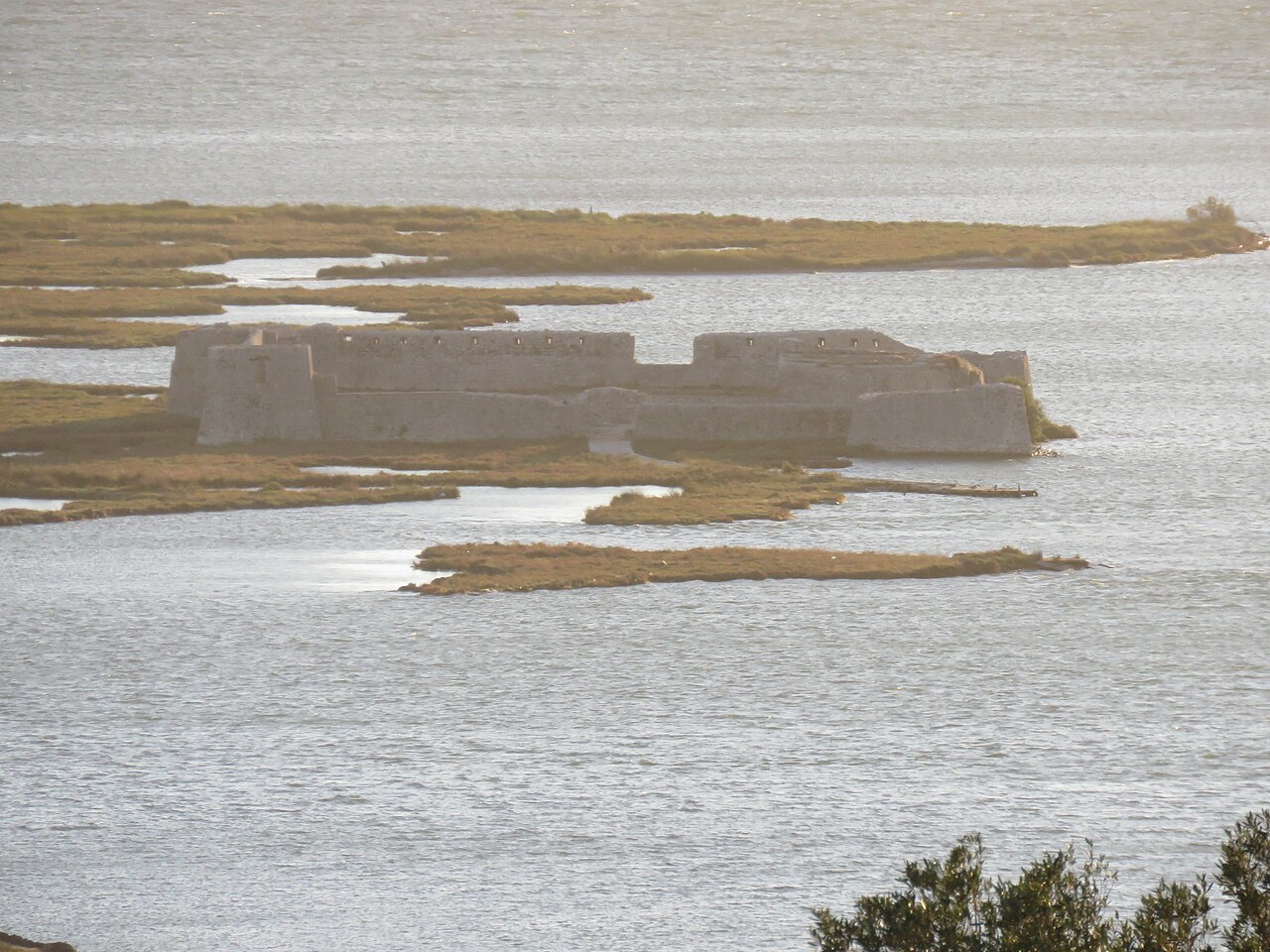
Kassiopi Castle stands prominently on the northeastern coast of Corfu, Greece, overlooking the fishing village of Kassiopi and the strategic Corfu Channel that separates the island from the mainland. This hill castle is one of the three main Byzantine fortifications that protected Corfu before the Venetian period (1386–1797), forming a defensive triangle with Gardiki Castle to the south and Angelokastro to the northwest. Its elevated position gave it significant military importance, controlling maritime routes and coastal access in the region.
The origins of Kassiopi Castle trace back to the early Byzantine period, with archaeological evidence suggesting a fortress existed here as early as the 6th century AD. Excavations near the main gate uncovered bronze coins from the reigns of emperors Maurice (582–602 AD) and Basil II (976–1025 AD), alongside ceramic ostraca dating from the 4th to 7th centuries, confirming the site's long-standing military use. This early construction predates the currently visible remains, indicating a complex layering of fortifications over centuries.
Historical significance and changing control
Throughout its history, Kassiopi Castle witnessed numerous conflicts and changes in control reflective of the turbulent medieval Mediterranean. In 1081, the castle was captured by Count Bohemund of Taranto during the first Norman invasion of Greece. However, by 1084, Byzantine Emperor Alexios I Komnenos had reclaimed it following decisive naval battles in the Corfu Channel.
The castle later passed to the Angevins in 1267, before falling to the Venetians in 1386 after some resistance. Unlike other Corfiot fortresses, the Venetians ordered the partial dismantling of Kassiopi Castle shortly after their conquest. This was a strategic move to prevent the castle from being used against them by enemies or rebellious locals. Stones from Kassiopi were repurposed for strengthening Corfu's main fortress in the 16th century, under architects like Michele Sanmicheli and his son Giangerolamo.
Despite recommendations in 1671 by Venetian officials to reinforce Kassiopi as a defense against Ottoman threats, these plans were abandoned. It was only after the Ottoman siege of Corfu in 1716 that the Venetians undertook partial restoration efforts. By that time, the local population had largely relocated to mountain villages such as those on Mount Pantokrator, diminishing the castle's strategic and residential importance.
Architectural features and layout
The castle encloses an area of approximately 35,177 square meters within a roughly 1.07-kilometer quadrilateral perimeter. The walls are guarded by 19 towers arranged in an alternating pattern of cylindrical and rectangular shapes, extending from the southwest to the northeast. This combination reflects different construction phases, with rectangular towers representing earlier Byzantine techniques and cylindrical towers indicating later adaptations to evolving military architecture.
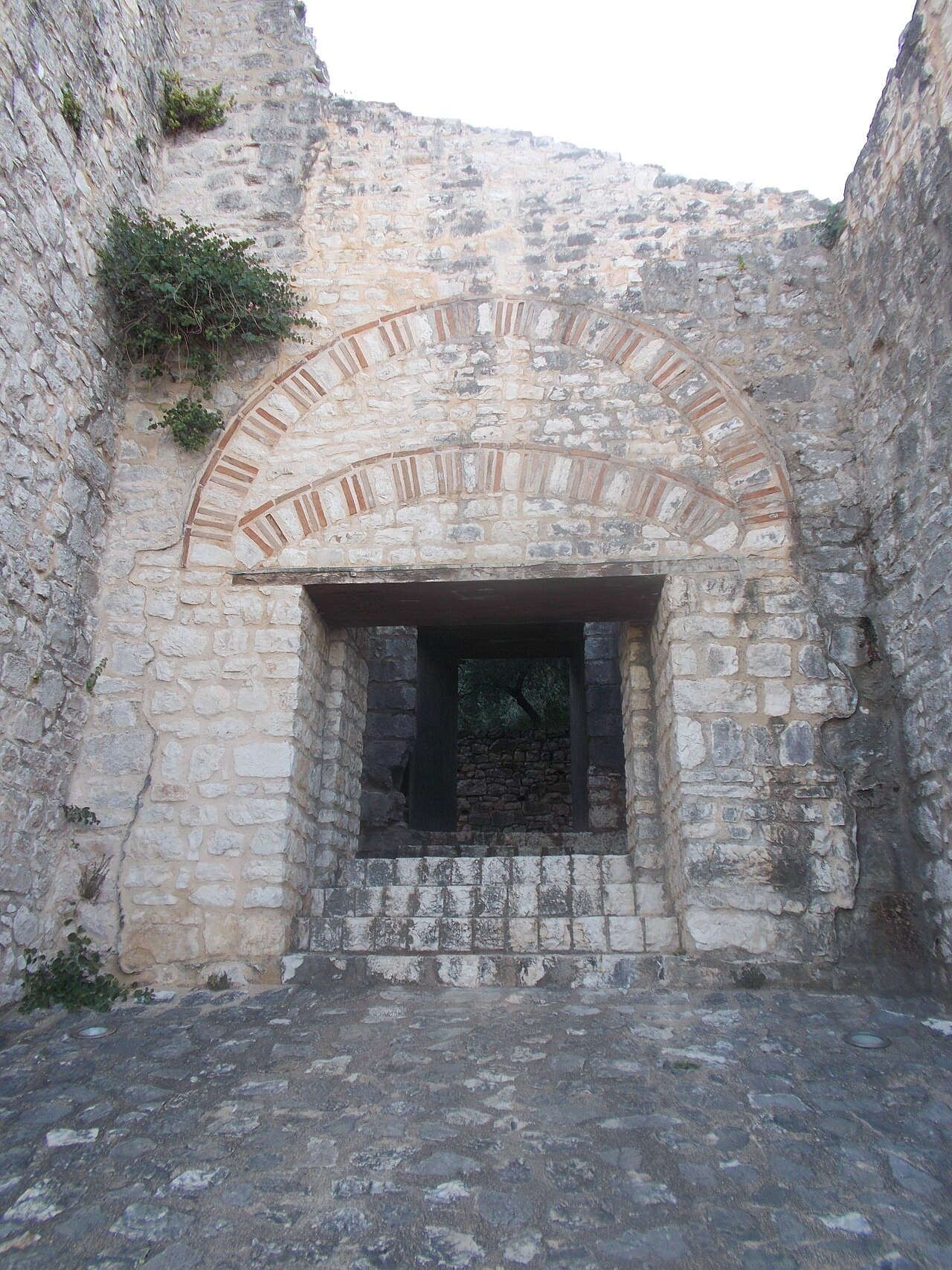
The main entrance remains well preserved, flanked by two robust two-story towers. The gate is approached via a steep, narrow path designed to slow attackers, with protective wall extensions on either side to prevent ambushes from hidden assailants. The gate walls are nearly 1.9 meters thick, emphasizing the importance of this access point. Remnants of a forewall suggest the former presence of a large iron gate, with mechanisms likely housed in the adjacent towers to raise and lower this barrier.
Defensive strategies relied heavily on battlements, though none survive today. Artistic depictions suggest an M-shaped battlement design, but the exact form remains uncertain. The castle walls rise vertically rather than being inclined, a design suited to resist pre-artillery siege engines such as ladders, battering rams, and siege towers. This vertical construction is characteristic of Byzantine military architecture before the widespread use of cannon fire.
Structural condition and later use
Kassiopi Castle fell into disuse and ruin over the centuries, especially after Venetian dismantling and neglect. The eastern walls have largely disappeared, with stones repurposed in local buildings. The interior of the castle is now empty, covered mainly by olive trees, reflecting its abandonment as a military site and settlement.
Access to the castle today is primarily from the southeast through a narrow walkway that passes through residential areas of the modern village of Kassiopi. Despite its ruined state, partial restoration funded by the European Union has stabilized some structures, preserving the site as an important archaeological and cultural landmark.
Cultural and military context
Kassiopi Castle was integral to Corfu's defense system, forming a strategic triangle with Gardiki and Angelokastro castles. Its location allowed control over the northeastern coast and the maritime routes through the Corfu Channel. This positioning was crucial during periods of Byzantine, Norman, Angevin, and Venetian rule, as well as during Ottoman sieges.
The castle's modest design reflects its provincial origins, with later architectural updates responding to changing military technology. Its history of conquest, dismantling, and partial restoration illustrates the shifting priorities of Corfu's rulers in response to regional threats.
Local folklore around the castle developed after its decline, with tales of dragons destroying the fortress and poisoning villagers. These stories likely stem from the community's unfamiliarity with the sounds of gunpowder explosions during early modern warfare.
Importance among Ionian fortifications
Kassiopi Castle is recognized as one of the most imposing medieval fortifications in the Ionian Islands, alongside Angelokastro, Gardiki Castle, and the Venetian fortresses of Corfu City, including the Citadel and the New Fort. Its remains provide valuable insights into Byzantine and Venetian military architecture and the island's layered history.
Today, the castle is a significant archaeological site attracting visitors interested in medieval fortifications and the history of Corfu. Its ruins, combined with the scenic coastal setting, offer a tangible connection to the island's strategic past and cultural heritage.
Frequently asked questions (FAQ)
- How do I get to Kassiopi Castle?
- Kassiopi Castle is accessible via a narrow path from the southeast side of the village of Kassiopi on Corfu. Visitors should be prepared for some walking through residential areas to reach the entrance.
- What is the historical significance of Kassiopi Castle?
- Kassiopi Castle was a key Byzantine fortress that guarded Corfu's northeastern coast and played a strategic role during Byzantine, Norman, Angevin, and Venetian periods.
- Can I explore the interior of Kassiopi Castle?
- The interior of Kassiopi Castle is largely empty and overgrown with olive trees. Visitors can walk along the walls and explore the towers, but there are no standing buildings inside.
- When was Kassiopi Castle built?
- Archaeological evidence suggests the original fortress at Kassiopi dates back to the 6th century AD during the early Byzantine period.
- Is there an entrance fee to visit Kassiopi Castle?
- Visiting Kassiopi Castle is generally free of charge, making it accessible to all visitors interested in exploring its ruins and historical setting.

Information
Current owner
Municipality
Loading map...
Visitor reviews
No reviews yet. Been here? Write the first review and help other travelers!
Write the first reviewVisited this castle? Share your experience
Your review helps other travelers and adds first-hand knowledge to our encyclopedia.