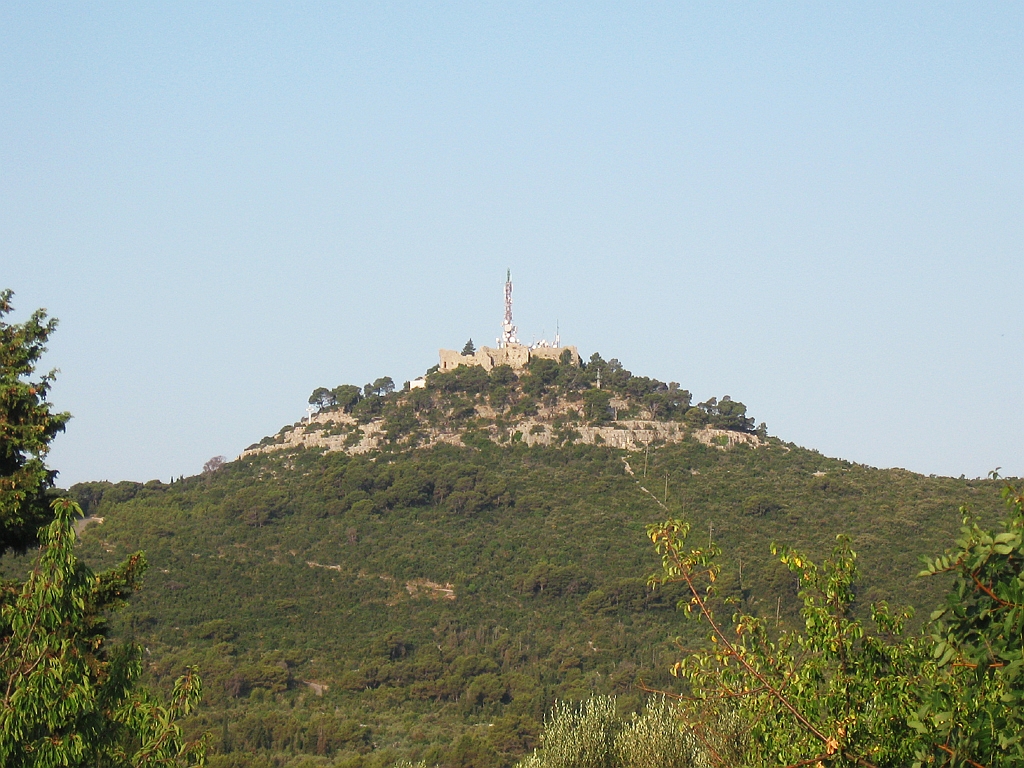
Venetian Fortress
The Venetian Forte Fortress in Zadar, Croatia, is a prime example of Renaissance military architecture constructed in 1567 under the direction of the Venetian military commander Sforza Pallavicino. Positioned strategically east of the monumental Land Gate, the fortress was designed to strengthen the city's defenses against land-based and naval threats during a period of frequent conflict in the Adriatic region.
Architectural design and defensive features
The fortress was originally separated from the city and the surrounding land by extensive defensive moats, which added a significant layer of protection by creating physical barriers to enemy forces. The design reflects the Renaissance emphasis on geometry and functionality, incorporating thick walls and bastions capable of withstanding cannon fire, a hallmark of military engineering advancements of the time. The fortress's layout was adapted to the terrain and included angled bastions to cover blind spots and provide interlocking fields of fire.
Strategic location and relationship to the city
Located just outside the city walls, the Forte Fortress served as a forward defensive position controlling access to Zadar from the land side. Its proximity to the Land Gate made it a critical part of the city's fortification system, complementing the existing medieval walls and gates. The fortress's placement also allowed it to oversee the adjacent shoreline, providing protection against naval incursions.
Water supply and naval support structures
Following the shoreline near the fortress, visitors can find the area of Kolovare, where a notable convex well with a sculpted head was constructed in 1546. This well was an essential infrastructure element, supplying fresh water to Venetian ships anchored in the harbor. Its existence highlights the importance of logistical support in sustaining naval operations and the fortress's role in securing maritime routes.
Historical context and significance
The construction of the Forte Fortress occurred during a period when the Venetian Republic was consolidating its control over Dalmatian territories, including Zadar. The fortress was part of a broader network of fortifications aimed at defending Venetian interests against the Ottoman Empire and other regional powers. Its robust design and strategic placement underscore the military and political challenges faced by Venice in maintaining its maritime empire.
Over the centuries, the fortress witnessed various military engagements and adaptations to evolving warfare technologies. While its original defensive purpose has diminished, the site remains a significant cultural landmark reflecting the Renaissance period's military architecture and the Venetian Republic's influence in the Adriatic.
Current status and cultural importance
Today, the area once occupied by the fortress is home to Vladimir Nazor Park, a public green space that preserves the historical footprint of the fortress. Although the original defensive structures have been altered or removed, the site retains its historical resonance and is a point of interest for visitors exploring Zadar's rich heritage.
The fortress's legacy is integral to understanding the city's development and its role in the broader geopolitical landscape of the Adriatic Sea during the Renaissance. It stands as a testament to the military ingenuity of the Venetian Republic and its efforts to protect its territories through advanced fortification techniques.
Information
Loading map...
Visitor reviews
No reviews yet. Been here? Write the first review and help other travelers!
Write the first reviewVisited this castle? Share your experience
Your review helps other travelers and adds first-hand knowledge to our encyclopedia.