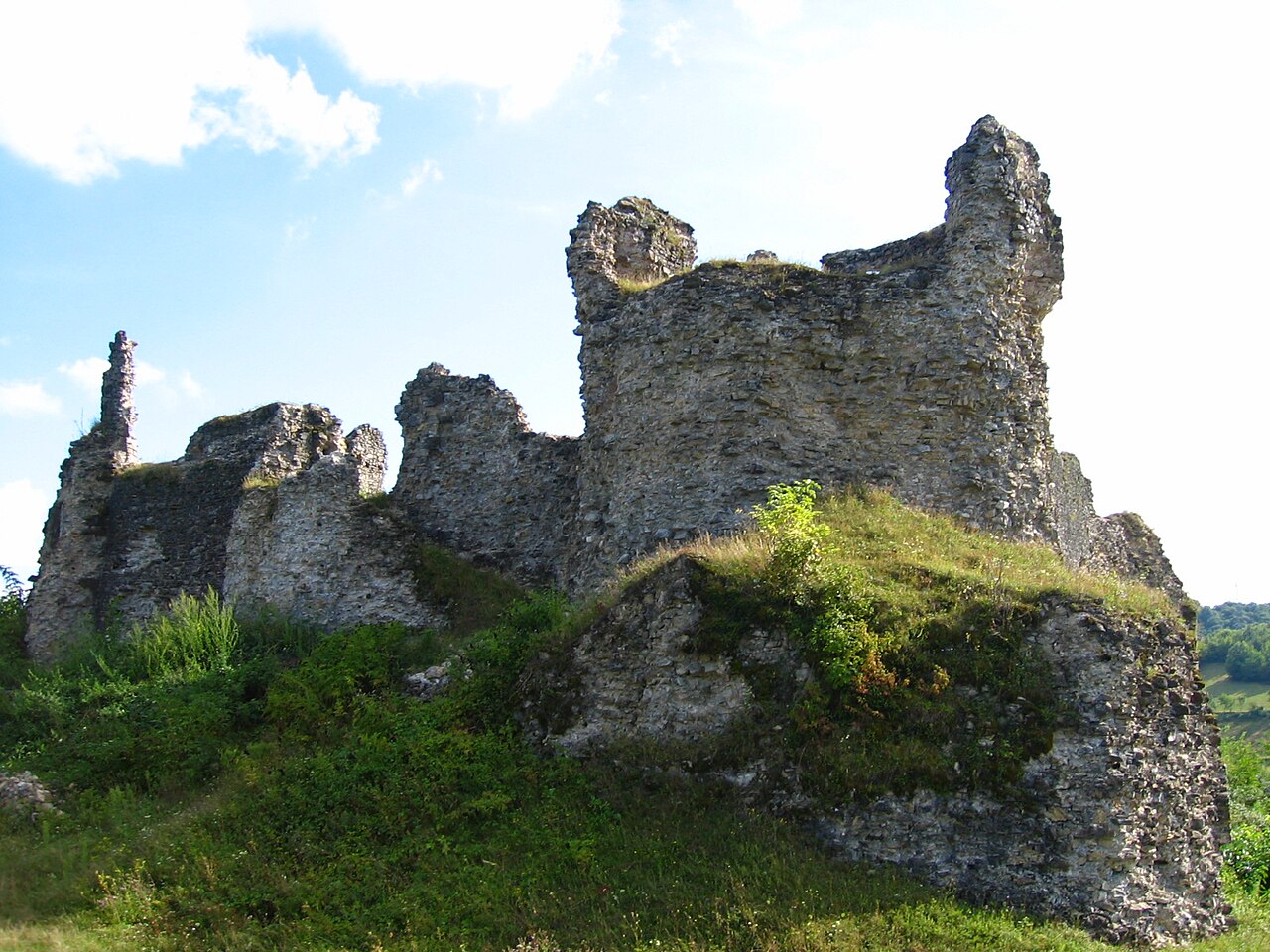
Velika Kladuša Castle

Velika Kladuša Castle: historic Ottoman hill fortress in Bosnia and Herzegovina
Velika Kladuša, Bosnia and Herzegovina
Renaissance (15th–17th c.)
Partially Preserved

Velika Kladuša Castle stands as a significant historic fortress located in the municipality of Velika Kladuša, Bosnia and Herzegovina. Though the settlement of Velika Kladuša was first mentioned in 1280, the castle itself was constructed by the Ottoman Empire after their conquest of the area in 1633. This hill castle has played a pivotal role in the military and political history of the region, evolving through medieval feudal control to become a fortified Ottoman stronghold.

Medieval origins and early history

The earliest written record of the castle dates back to 1280 during the reign of King Ladislaus IV of Hungary. At that time, the fortress was held by the noble Babonići family, known also as the Blagajski lineage. Subsequently, ownership passed to the Dukes of Kladuša, placing the castle within the sphere of influence of Croatian and Bosnian local nobility. In 1465, the powerful Frankopan family from Cetin took control of the stronghold, maintaining their hold amid the shifting political landscape of the area.

Ottoman conquest and military significance

In 1633, the Ottoman Empire captured Velika Kladuša Castle recognizing its strategic position as a military gateway toward Croatian territories. Following the conquest, the Ottomans reinforced the fortress by erecting additional defensive walls known locally as bedem, significantly strengthening its protective capabilities. The castle was administered by a dizdar (castle captain), and Janissary troops, elite Ottoman soldiers, were stationed there to secure the position. This military presence underscored the castle’s role in Ottoman campaigns and regional control.

Administration and local resistance

During the early 18th century, tensions arose when the Ottoman central government sought to replace the local dizdar with direct appointees from Istanbul. The local dizdar resisted these changes, prompting Ottoman forces, including Janissaries from the capital, to intervene and seize control of the castle. This episode highlights the complex dynamics between local authority and central Ottoman administration.

Military garrison and armament

Until 1790, the castle’s garrison comprised around 120 men, a number that increased by 72 soldiers following the fall of the nearby stronghold of Cetina. The last known dizdar was Husein Alagić, whose family administered the fortress for more than 150 years, reflecting a long-standing local administrative tradition. Historical accounts from 1641 mention notable local figures such as Mujo Hrnjica, a harambaša (bandit chief), and his brothers residing in the castle, alongside Mustafa Kozličić. By 1833, the fortress was armed with four operational cannons and one broken cannon, demonstrating its continued military relevance.

Siege and decline in the late 19th century

In October 1878, Velika Kladuša Castle was besieged by an Austro-Hungarian battalion in a notable battle lasting ten days. The defenders, reduced to only eight men due to casualties and lack of ammunition, eventually abandoned the fortress. This event marked the end of armed resistance in Bosnia against Austro-Hungarian occupation during that period, signaling a significant shift in regional power.

Architectural features and remains

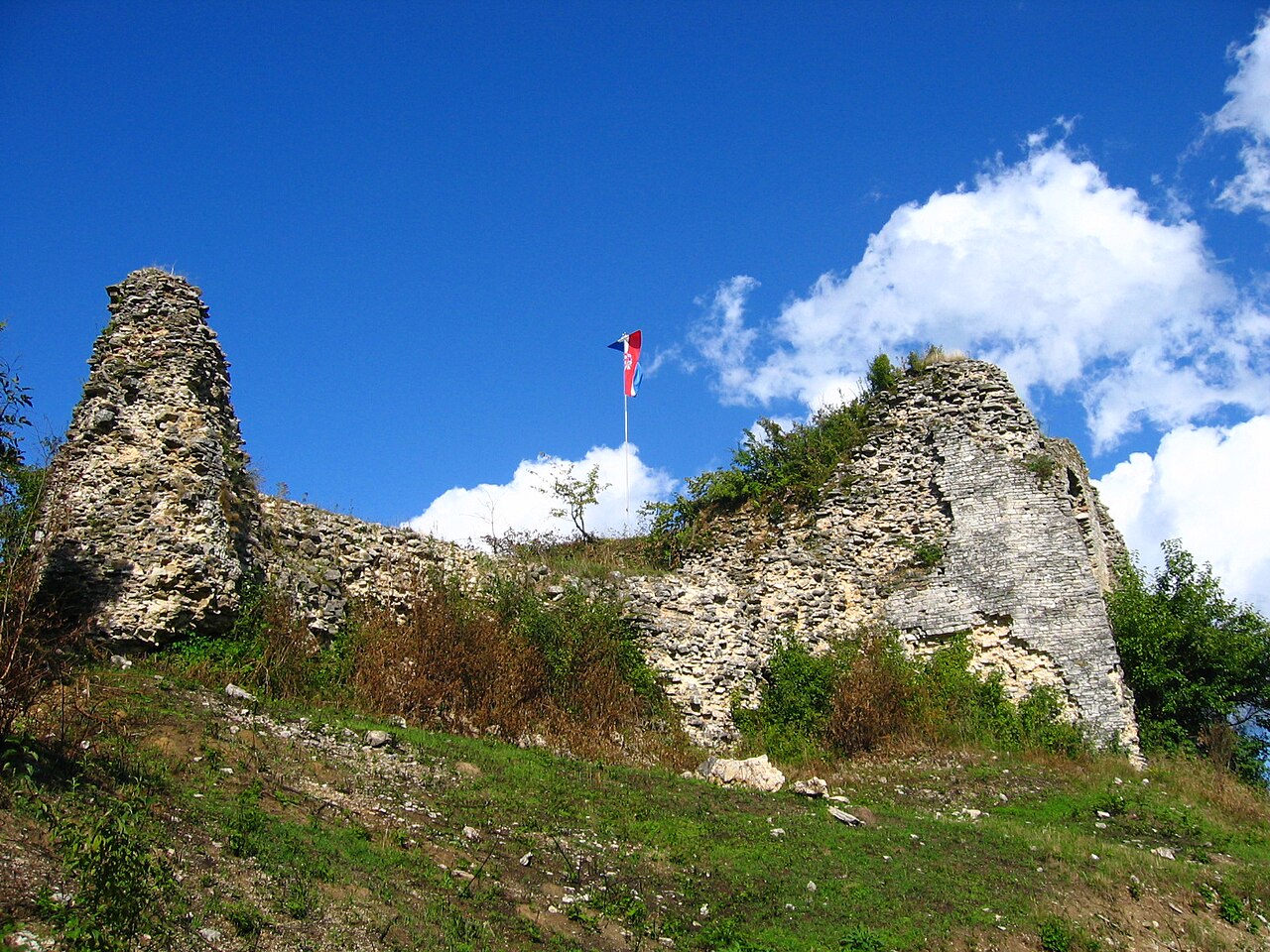
The castle occupies a commanding position on a hill overlooking the right bank of the Grabarska River, a tributary of the Kladušnica River. Its elevated location provided a natural advantage for monitoring and controlling the surrounding landscape. The fortress features robust defensive walls constructed during the Ottoman period using local stone materials, assembled to create a strong defensive perimeter. These walls reveal evidence of reinforcement work from the 17th and 18th centuries, highlighting the castle’s evolving role in military defense.

The castle’s armament in 1833 included four serviceable cannons and one cannon that had fallen out of use, integrated into the fortress’s defenses reflecting both medieval and early modern military needs. The main tower, a key architectural feature, suffered damage from an electrical fire in recent history, which destroyed part of the structure. Despite preservation efforts, much of the castle’s fabric and adjacent historic buildings have deteriorated over time, leaving key architectural elements in a fragile state. However, the core layout and foundational walls remain in their original places, offering valuable insight into the fortress’s construction and defensive strategy.

Modern use and cultural significance

Today, Velika Kladuša Castle has been repurposed for tourism and hospitality, with parts converted into a restaurant and travel facility. This adaptive reuse allows visitors to engage with the castle’s rich history while enjoying modern amenities. The site remains a tangible connection to the region’s layered history, illustrating shifts in control, military strategy, and local administration spanning several centuries.

The castle’s enduring presence and historical importance make it a notable cultural landmark in Bosnia and Herzegovina. It reflects the complex history of the area, from medieval feudal powers through Ottoman military dominance to modern-day heritage preservation.

Frequently asked questions (FAQ)

How do I get to Velika Kladuša Castle?
Velika Kladuša Castle is located in the town of Velika Kladuša in Una-Sana Canton, Bosnia and Herzegovina. It is accessible by car and local transportation, with signage directing visitors from the town center to the hilltop fortress.
What is the historical significance of Velika Kladuša Castle?
Velika Kladuša Castle played a crucial role as a military stronghold during the Ottoman period, controlling strategic routes toward Croatian territories and witnessing significant historical events such as the 1878 Austro-Hungarian siege.
Can I visit the interior of the castle?
Yes, parts of Velika Kladuša Castle have been converted into a restaurant and travel facility, allowing visitors to explore some interior areas while enjoying modern amenities.
When is the best time to visit Velika Kladuša Castle?
The castle is open daily from 10:00 to 18:00. Spring and early autumn offer pleasant weather and fewer crowds, making these seasons ideal for visiting.
Is the castle accessible for people with mobility issues?
Due to its hilltop location and historic structure, some areas of Velika Kladuša Castle may be challenging for visitors with mobility issues. However, efforts have been made to improve accessibility in the main visitor areas.

Information

Hill Castle

Opening hours

10:00-18:00, daily

Ticket prices

Free

Current owner

Municipality of Velika Kladuša

Loading map...

Visitor reviews

No reviews yet. Been here? Write the first review and help other travelers!

Write the first review

Visited this castle? Share your experience

Your review helps other travelers and adds first-hand knowledge to our encyclopedia.
Write a review

(5/5)

0/2000 characters

Your review will be visible after admin approval

Nearby castles

7.2 km
Cetin Castle — Croatia castle

Cetin Castle

Cetingrad, Croatia

Cetin Castle stands as a significant late-medieval fortress located approximately 5 kilometres south of Cetingrad, Croatia, perched above the village of Podcetin. Though the exact date of its founding remains unknown, archaeological and historical evidence suggest that the site may have been inhabited since the time of the Roman Empire. The castle's strategic position atop a hill provided a commanding view of the surrounding region, a typical feature of hill castles designed for defense and control. Historical background and early significance The earliest documented mention of the area comes from 1334, referencing the Parish of All Saints, which included the fortress. By 1387, the fortress had entered the possession of the prominent Frankopan family when King Sigismund, the Holy Roman Emperor, granted it to Ivan Krčki. This transfer marked the beginning of Cetin's golden era during the late medieval period, when it became a center of noble power and religious activity. The vicinity hosted a Franciscan monastery and several churches, underscoring its cultural and spiritual importance. The Frankopan family and the cetinski branch In the 15th century, the Cetinski branch of the Frankopan family emerged, maintaining control of the fortress for about a century. Notable members included Ivan Frankopan Cetinski, who died in the Battle of Krbava Field, a significant conflict in Croatian history. His brother Grgur and son Franjo Frankopan held high ecclesiastical positions as archbishops of Kalocsa. The lineage ended with Franjo Frankopan, after which the fortress passed to the Frankopan Slunjski family. Cetin castle and its role in croatian statehood Cetin Castle holds a pivotal place in Croatian national history due to the events following the Battle of Mohács in 1526. After the defeat of Hungarian and Croatian forces by the Ottoman Empire, Croatian nobility convened at the Parliament of Cetin (Cetinski sabor). On 1 January 1527, they elected Ferdinand I of Habsburg, the Archduke of Austria, as the king of Croatia. This election was a defining moment, aligning Croatia with the Habsburg Monarchy for centuries to come. The charter signed by Croatian nobles and representatives of Ferdinand I is a crucial document of Croatian statehood and is preserved in the Austrian State Archives in Vienna. This event marked the beginning of a long political and military alliance that shaped the region's history. Military frontier and conflicts with the ottoman empire Following the election of Ferdinand I, Cetin became part of the Military Frontier, a borderland zone between the Habsburg Monarchy and the Ottoman Empire. The fortress saw multiple sieges and changes of control during this turbulent period. Ottoman forces captured Cetin several times, leading to repeated damage and subsequent repairs. Evidence of these reconstructions includes two stone plates with Arabic inscriptions, now housed in the Croatian History Museum. These inscriptions attest to the Ottoman architectural and military presence in the fortress during their occupation. The 1790 siege and later military events In 1790, Austrian troops under General Walisch conducted a month-long siege to recapture Cetin from the Ottomans. The victory was significant, resulting in several officers receiving honors, including Johann I Josef, Prince of Liechtenstein. The fortress's status was formally recognized during the peace conference in Svishtov. Despite this, the Ottomans briefly reoccupied Cetin in 1809 during the Napoleonic Wars but withdrew in 1810 under pressure from Marshal Marmont, governor-general of the Illyrian Provinces. After the Ottoman threat diminished, the fortress was abandoned and eventually quarried for building materials. Architectural features and current condition Today, Cetin Castle exists as ruins, classified as an archaeological site. Its remains include foundational walls and fragments of defensive structures typical of late-medieval hill castles. The fortress's layout reflects its strategic military purpose, with fortifications adapted over centuries to withstand sieges and artillery advancements. Although much of the castle has deteriorated, the site remains a valuable cultural heritage monument. Its ruins offer insight into medieval Croatian fortification techniques and the region's complex history of conflict and governance. Legacy and cultural significance Cetin Castle symbolizes a critical juncture in Croatian history—the election of a Habsburg monarch that influenced the nation's political trajectory for centuries. The site attracts historians, archaeologists, and visitors interested in Croatia's medieval past and its role in European power struggles. The nearby village of Cetingrad grew in importance as administrative functions shifted away from the fortress following its abandonment. Today, Cetin Castle stands as a testament to the resilience and strategic importance of medieval fortresses in Croatia's national narrative.

Late Medieval (14th–15th c.)
Details
18.1 km

Slunj Castle

Slunj, Croatia

Slunj Castle, located in the town of Slunj, Croatia, is a historic medieval fortress with origins tracing back to the 12th century. Initially mentioned under the name Slovin, this stronghold was constructed during the turbulent period of the High Medieval era, a time marked by frequent conflicts and territorial struggles in the region. The castle's strategic position made it a significant defensive site throughout its history. The origins and early history of Slunj Castle The earliest records of the castle date back to the 12th century, when it was known as Slovin. It was originally built as a fortification to control and defend the surrounding territory during the complex medieval power dynamics of Croatia. By the 15th century, the castle came under the ownership of the influential Frankopan family, one of the most prominent noble families in Croatian history. The Frankopans played a crucial role in the defense of the Croatian lands, particularly during the increasing threat from the Ottoman Empire. Alongside the castle, an old Franciscan monastery was established in the same period, reflecting the intertwined nature of religious and military presence in medieval fortifications. This monastery contributed to the cultural and spiritual life of the settlement that gradually developed around the castle. Architectural features and development Originally a medieval fortress, Slunj Castle was constructed with typical defensive features of the period, including thick stone walls, battlements, and a keep or donjon serving as a last refuge during sieges. Its location was chosen for natural defensive advantages, likely on elevated ground or near water sources, common to hill castles or water castles in the region, although specific terrain details are not fully documented. Throughout the 16th century, the castle underwent significant modifications due to the ongoing Ottoman wars. The military pressure necessitated strengthening the fortress to withstand sieges and raids. During this period, the castle became part of the Croatian Military Frontier, a borderland defense system established by the Habsburg monarchy to protect against Ottoman incursions. The castle was further developed into a fortress that served as a headquarters for the commanding general of the area, highlighting its strategic military importance. This transformation included the reinforcement of walls, addition of artillery bastions, and adaptation to new military technologies of the late medieval and early modern period. The impact of Ottoman wars and later reconstruction The 16th century brought devastation to Slunj and its castle due to repeated Ottoman attacks. The town was ravaged, and the castle's military role intensified as it became a frontline outpost. Despite destruction, the fortress was resilient and remained a crucial part of the region's defense network. By the end of the 17th century, following the retreat of Ottoman forces, the settlement was rebuilt and expanded into the modern town of Slunj. The castle's military function diminished as the region stabilized, but its historical significance as a symbol of resistance and defense endured. Slunj Castle today Today, Slunj Castle stands as a testament to the medieval and early modern military architecture of Croatia. Although some parts may be in varying states of preservation, the castle retains key architectural elements that reflect its layered history. It is an important cultural landmark in the Karlovac County region and attracts visitors interested in Croatian history, medieval fortifications, and the legacy of the Frankopan family. The castle's proximity to the town of Slunj, known for its natural beauty and waterfalls, adds to its appeal as a tourist destination. Efforts to preserve and promote the castle contribute to understanding the complex history of border defense in this part of Europe.

High Medieval (11th–13th c.)
Details
23.4 km
Buzim Castle — Bosnia and Herzegovina castle

Buzim Castle

Bužim, Bosnia and Herzegovina

Bužim Castle, perched at 325 meters above sea level, is a prominent medieval hill fortress located in the municipality of Bužim, Bosnia and Herzegovina. Constructed in the 12th century, it ranks as the second-largest medieval castle in the Cazinska krajina region, surpassed only by the fortress of Bihać. This castle exemplifies the military and residential architecture of the High Medieval period, later adapted with Renaissance elements and Ottoman modifications, reflecting the complex historical transformations of the region. Historical significance and ownership The first recorded mention of Bužim Castle dates back to 1334, where it was referred to as Čava or Čavski grad, with the adjacent settlement known as Čave or Bužim. The castle's earliest known lord was Grgur Galles, who was granted control by King Ludovik of the Hungarian-Croatian kingdom in 1336. Over the subsequent centuries, Bužim Castle changed hands among several noble families, including the Blagajski, the Counts of Celje, the Frankopan family, the Mikuličić lineage, and ultimately the Keglević family around 1495. The Keglević family maintained dominion over the castle for nearly four centuries. One of the most notable figures was Petar Keglević (1478–1554), who served as Ban of Croatia and captain of the strategic fortress of Bihać. His tenure underscored the castle's military and political importance during a period marked by increasing Ottoman incursions into the region. Military role and conflicts Bužim Castle played a critical role as a frontier fortress during the turbulent centuries of Ottoman expansion. It briefly fell to Ottoman forces in 1521 and again in 1564, illustrating the ongoing conflict between Christian kingdoms and the Ottoman Empire. The final and permanent Ottoman conquest occurred in 1576 under the command of Ferhad-Pasha Sokolović. Following this, the castle was garrisoned with approximately 50 horsemen and 130 infantry soldiers, serving as a vital military post within the Ottoman defensive network. Despite repeated attempts by Christian forces to reclaim the fortress during the Great Turkish War (1685–1688) and other conflicts, Bužim remained under Ottoman control until the political reorganization of Bosnia and Herzegovina in 1878, when Austro-Hungarian administration was established. Architectural features and fortifications Medieval core and outer defenses The castle’s structure covers approximately 7,267 square meters and comprises two primary sections reflecting different construction phases. The inner core is a compact square fortress fortified by tall, circular towers at each corner. These towers, built with traditional medieval stone masonry, provided elevated vantage points for surveillance and defense. In response to the evolving nature of warfare, particularly the advent of artillery, a trapezoidal outer defensive wall was constructed in the late 15th century. Positioned 15 to 20 meters from the inner walls, this outer fortification measures roughly two meters in thickness, with remaining wall heights varying between five and eight meters. The northern and western sections of this outer wall remain nearly intact, while the southern and eastern walls are partially preserved or removed. The outer defenses feature polygonal towers at their corners, which are lower than the inner towers, designed to accommodate cannon and firearm use. Both the walls and towers include embrasures or artillery ports, enabling defenders to mount cannons and firearms to protect the castle perimeter and inner fortress effectively. The inner towers were strategically arranged to create overlapping fields of fire, maximizing defensive coverage between the two lines of fortification. Ottoman modifications and mosque Following the Ottoman conquest, the castle's interior was adapted to serve new cultural and administrative functions. A prominent feature added within the older inner fortress was a large stone mosque, constructed with fine craftsmanship. This mosque symbolized the castle’s transformation into a center of Islamic worship and Ottoman governance. Restoration efforts under Ottoman rule occurred notably in 1626 and 1833. The latter renovation upgraded the fortress's artillery to include 18 cannons and integrated Bužim Castle into the Bosanskokrupska Captaincy's military framework. Although the castle remained maintained into the early 19th century, it was eventually abandoned as an active military fortress by 1851. Present condition and cultural heritage Today, Bužim Castle stands as a national monument of Bosnia and Herzegovina, recognized for its layered historical significance and architectural heritage. The remains of the inner fortress with its distinctive square plan and rounded corner towers remain clearly visible, while the outer defensive walls and polygonal towers exhibit considerable preservation, especially on the northern and western flanks. The castle's location near the confluence of the Bužimkovac and Pomojdan streams adds to its strategic and scenic value. Its preservation offers valuable insights into medieval military architecture, Renaissance-era adaptations, and Ottoman-era cultural transformations. Alongside the nearby old mosque, Bužim Castle continues to attract historians, architects, and visitors interested in the rich history of the Bosnian frontier. Architectural significance in the region Bužim Castle exemplifies the evolution of fortress design in the Balkans, demonstrating a transition from medieval stone fortifications to Renaissance artillery defenses and Ottoman cultural influences. The castle’s dual defensive lines reflect strategic responses to changing military technologies, particularly the introduction of gunpowder weaponry. The integration of a mosque within the medieval fortress is a distinctive feature illustrating the Ottoman approach to re-purposing conquered sites for religious and administrative uses. This blend of architectural styles and functions makes Bužim Castle a unique monument representing centuries of cultural interplay and military history in Bosnia and Herzegovina. Visitor information and accessibility While Bužim Castle is primarily a historical ruin, it is accessible to visitors interested in exploring medieval fortifications and Ottoman heritage. The site offers panoramic views of the surrounding landscape and provides an educational experience about the region's complex past. Visitors are encouraged to explore the castle remains carefully, respecting the preservation efforts that protect this important cultural landmark. Nearby attractions include the old mosque adjacent to the castle, which further enriches the historical context of the site. The municipality of Bužim provides additional cultural and natural points of interest, making the castle a worthwhile destination for history enthusiasts and tourists alike.

High Medieval (11th–13th c.)
Details