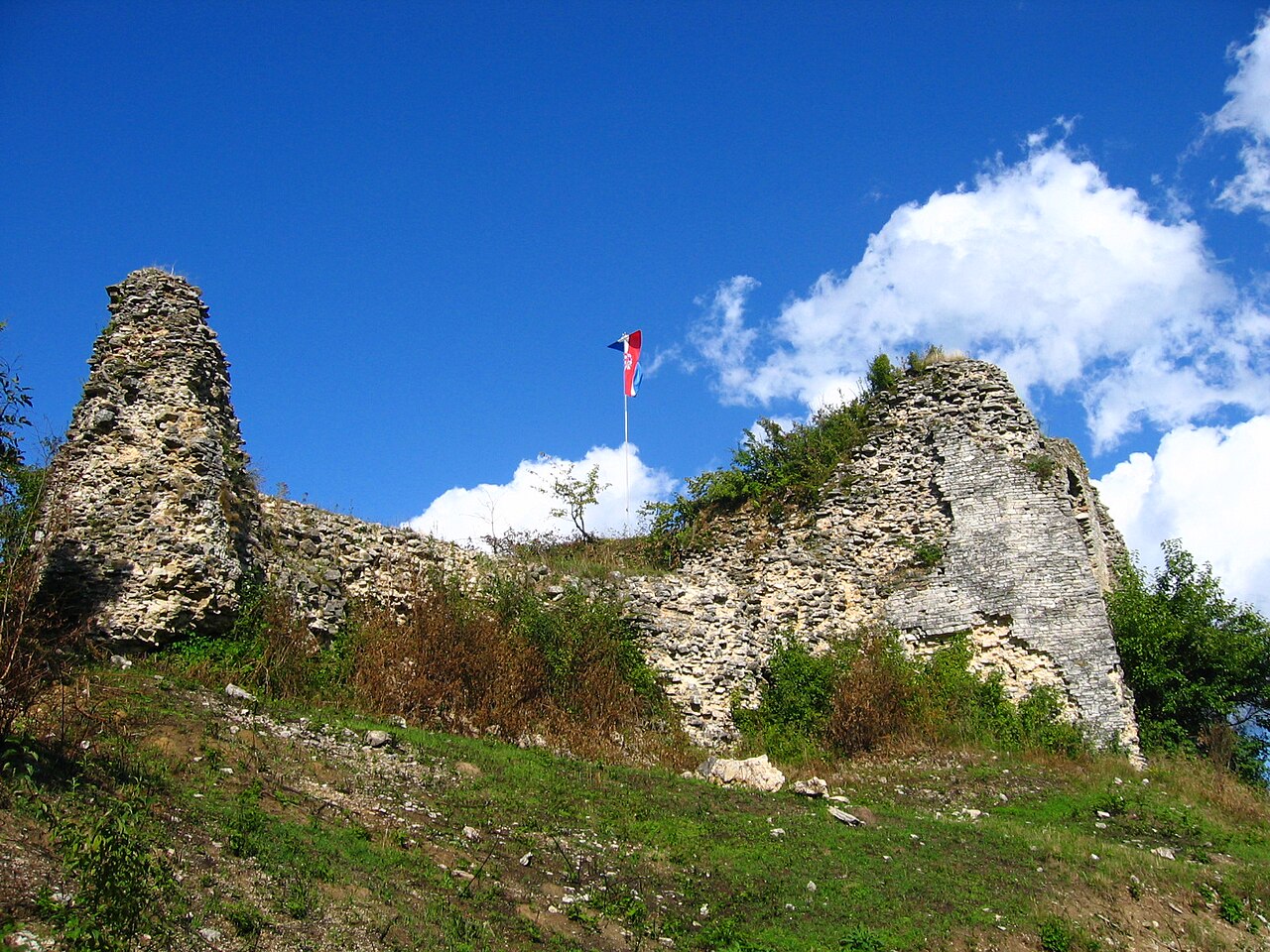
Slunj Castle
Slunj Castle, located in the town of Slunj, Croatia, is a historic medieval fortress with origins tracing back to the 12th century. Initially mentioned under the name Slovin, this stronghold was constructed during the turbulent period of the High Medieval era, a time marked by frequent conflicts and territorial struggles in the region. The castle's strategic position made it a significant defensive site throughout its history.
The origins and early history of Slunj Castle
The earliest records of the castle date back to the 12th century, when it was known as Slovin. It was originally built as a fortification to control and defend the surrounding territory during the complex medieval power dynamics of Croatia. By the 15th century, the castle came under the ownership of the influential Frankopan family, one of the most prominent noble families in Croatian history. The Frankopans played a crucial role in the defense of the Croatian lands, particularly during the increasing threat from the Ottoman Empire.
Alongside the castle, an old Franciscan monastery was established in the same period, reflecting the intertwined nature of religious and military presence in medieval fortifications. This monastery contributed to the cultural and spiritual life of the settlement that gradually developed around the castle.
Architectural features and development
Originally a medieval fortress, Slunj Castle was constructed with typical defensive features of the period, including thick stone walls, battlements, and a keep or donjon serving as a last refuge during sieges. Its location was chosen for natural defensive advantages, likely on elevated ground or near water sources, common to hill castles or water castles in the region, although specific terrain details are not fully documented.
Throughout the 16th century, the castle underwent significant modifications due to the ongoing Ottoman wars. The military pressure necessitated strengthening the fortress to withstand sieges and raids. During this period, the castle became part of the Croatian Military Frontier, a borderland defense system established by the Habsburg monarchy to protect against Ottoman incursions.
The castle was further developed into a fortress that served as a headquarters for the commanding general of the area, highlighting its strategic military importance. This transformation included the reinforcement of walls, addition of artillery bastions, and adaptation to new military technologies of the late medieval and early modern period.
The impact of Ottoman wars and later reconstruction
The 16th century brought devastation to Slunj and its castle due to repeated Ottoman attacks. The town was ravaged, and the castle's military role intensified as it became a frontline outpost. Despite destruction, the fortress was resilient and remained a crucial part of the region's defense network.
By the end of the 17th century, following the retreat of Ottoman forces, the settlement was rebuilt and expanded into the modern town of Slunj. The castle's military function diminished as the region stabilized, but its historical significance as a symbol of resistance and defense endured.
Slunj Castle today
Today, Slunj Castle stands as a testament to the medieval and early modern military architecture of Croatia. Although some parts may be in varying states of preservation, the castle retains key architectural elements that reflect its layered history. It is an important cultural landmark in the Karlovac County region and attracts visitors interested in Croatian history, medieval fortifications, and the legacy of the Frankopan family.
The castle's proximity to the town of Slunj, known for its natural beauty and waterfalls, adds to its appeal as a tourist destination. Efforts to preserve and promote the castle contribute to understanding the complex history of border defense in this part of Europe.
Frequently asked questions (FAQ)
- When was Slunj Castle originally built?
- Slunj Castle was originally built in the 12th century during the High Medieval period as a defensive fortress.
- What role did the Frankopan family have in Slunj Castle's history?
- The Frankopan family owned Slunj Castle from the 15th century and used it as a strategic fortification during conflicts with the Ottoman Empire.
- How did the Ottoman wars affect Slunj Castle?
- The Ottoman wars in the 16th century led to repeated attacks on Slunj Castle, causing damage but also prompting its development into a stronger fortress within the Croatian Military Frontier.
- Is Slunj Castle open to visitors today?
- Yes, Slunj Castle is open to visitors, offering insights into medieval military architecture and the history of the region.
- What architectural features characterize Slunj Castle?
- Slunj Castle features thick stone walls, battlements, and a keep, typical of Gothic military architecture from the High Medieval period.
Information
Current owner
Municipality
Loading map...
Visitor reviews
No reviews yet. Been here? Write the first review and help other travelers!
Write the first reviewVisited this castle? Share your experience
Your review helps other travelers and adds first-hand knowledge to our encyclopedia.