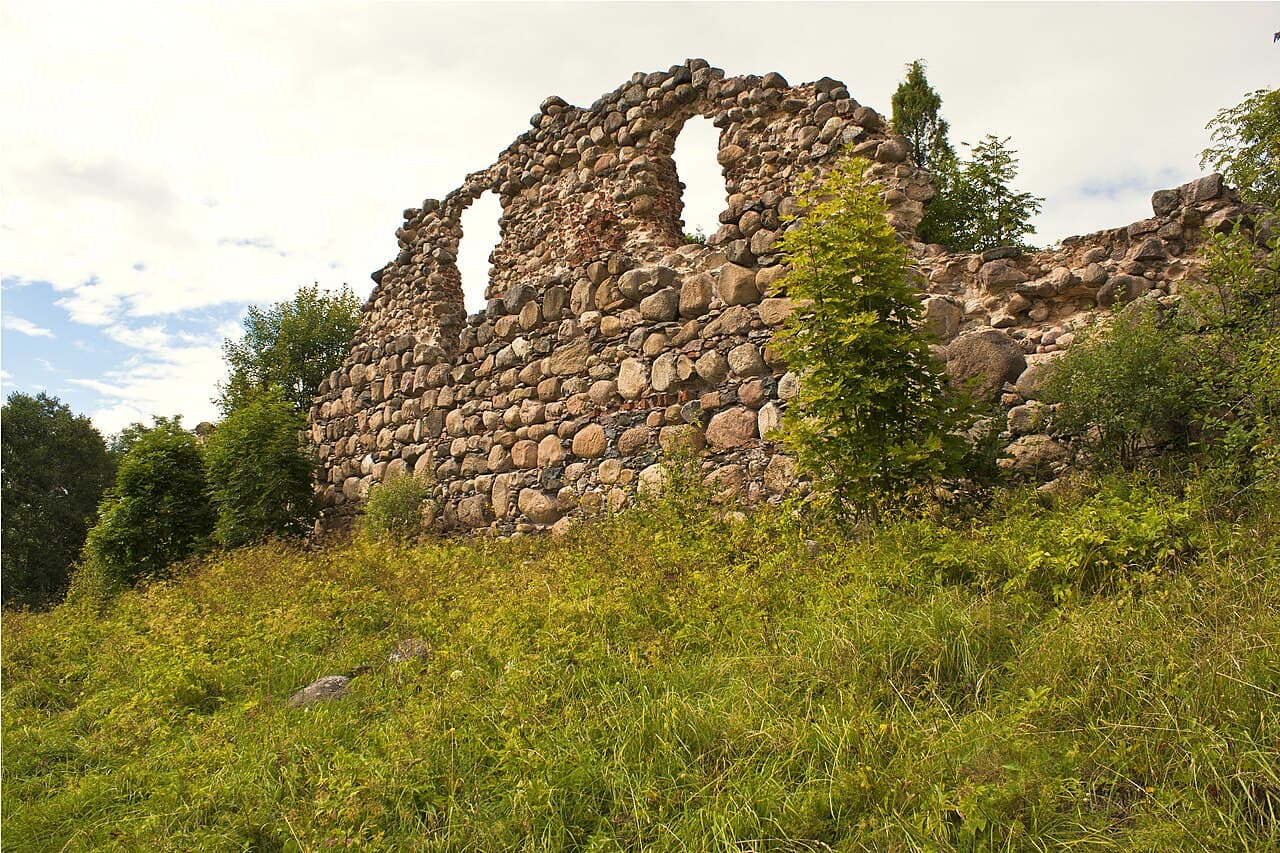
Vecpiebalga Castle
Vecpiebalga Castle, also known as Piebalga Castle, is a historic hill castle located in Vecpiebalga, within the Vidzeme region of Latvia. Originally constructed in the 14th century during the late medieval period, this castle served as a bishop's stronghold and is notable for its transformation over centuries from a fortified medieval residence to a manor complex reflecting classicist architectural principles.
Medieval origins and layout
The initial design of Vecpiebalga Castle was a regularly planned quadrangular building featuring a household part and a dwelling wing. This layout was typical for bishop's castles in the region during the 14th century, combining defensive and residential functions. The castle's strategic position on a hill provided natural defense advantages, characteristic of hill castles constructed in the late medieval period.
Throughout the 14th and 15th centuries, the castle suffered damage from various conflicts, reflecting the turbulent political and military landscape of the Baltic region during that era. Despite these damages, the castle remained a significant fortification for the bishops of the area.
Decline and transformation in the early modern period
By the 17th century, the original medieval castle had become unsuitable for habitation. Its defensive role diminished, and the structure fell into disuse as a fortress. Instead, several wooden household buildings were constructed on the site, indicating a shift from military to agricultural and residential use.
During the 18th century, the castle was largely abandoned and fell into ruin. The remnants of the medieval structure gradually deteriorated, leaving only ruins that testify to its former prominence.
Development of the manor complex
In the second half of the 17th century, a new manor complex began to develop on the site of the former castle. This complex evolved into a united classicism style architectural ensemble by the early 19th century, centered around a front yard that served as a representation space.
The original access to the manor complex was through two gates located at the corners of the front yard. This layout emphasized symmetry and formal entrance, consistent with classicist design principles.
Additional household buildings were constructed along the road opposite the manor house, including a granary and a cowshed. On the other side of the road, other buildings such as a water tower were arranged symmetrically, enhancing the overall harmony of the estate.
In the second half of the 19th century, new entrance gates were erected between the granary and the cowshed, further defining the approach to the manor complex and integrating the agricultural buildings into the estate's formal layout.
Architectural significance and heritage
Vecpiebalga Castle represents a layered historical site where medieval fortification architecture intersects with later classicist manor architecture. The castle's initial quadrangular plan and hilltop location are characteristic of late medieval hill castles in the Baltic region, designed for both defense and residence.
The transition from a fortified castle to a manor complex reflects broader regional trends where military structures were repurposed as centers of agricultural estates in the early modern period. The classicist ensemble that developed on the site demonstrates the influence of 18th and 19th-century architectural movements in Latvia, emphasizing symmetry, order, and the integration of functional buildings into a cohesive aesthetic whole.
Current condition and preservation
Today, Vecpiebalga Castle exists primarily as ruins, with remnants of the medieval structure still visible. The manor complex buildings that evolved on the site retain elements of their classicist style, although the overall ensemble has undergone changes over the centuries.
The site is an important cultural heritage monument in Latvia, reflecting the historical evolution from medieval ecclesiastical fortress to early modern manor estate. It offers valuable insights into the architectural and social history of the region.
Location and visitor information
The castle ruins and manor complex are located in the village of Vecpiebalga in the Cēsis Municipality. The site is accessible to visitors interested in medieval architecture, Latvian history, and classicist manor estates. While the ruins require careful exploration, the surrounding landscape and remaining buildings provide a tangible connection to the region's past.
Frequently asked questions (FAQ)
- How do I get to Vecpiebalga Castle?
- Vecpiebalga Castle is located in Vecpiebalga village within Cēsis Municipality. Visitors can reach it by car or local transport from the city of Cēsis, following regional roads leading to the site.
- What remains of Vecpiebalga Castle can I see today?
- Today, visitors can explore the ruins of the medieval castle, including parts of the quadrangular layout. The later classicist manor buildings are also visible, showcasing the site's architectural evolution.
- When was Vecpiebalga Castle built and by whom?
- Vecpiebalga Castle was built in the 14th century as a bishop's castle. It was constructed to serve as a fortified residence for ecclesiastical authorities in the region.
- Is Vecpiebalga Castle open to the public?
- Yes, the site is accessible to the public. Visitors can explore the ruins and surrounding manor complex grounds, although some areas may have limited access due to preservation efforts.
- What architectural styles are represented at Vecpiebalga Castle?
- The site features <strong>late medieval</strong> fortress architecture in the original castle ruins, alongside a <strong>classicist manor complex</strong> developed in the 17th and 18th centuries.
Photo gallery

Information
Loading map...
Visitor reviews
No reviews yet. Been here? Write the first review and help other travelers!
Write the first reviewVisited this castle? Share your experience
Your review helps other travelers and adds first-hand knowledge to our encyclopedia.



