Vastseliina Castle Ruins
Vastseliina Castle ruins stand as a testament to the turbulent medieval history of Estonia and the broader Baltic region. Constructed in 1342 by Burkhard von Dreileben, then Landmeister of the Livonian Order, this fortress was strategically positioned on a hilltop at the confluence of the Piusa River and the Meeksi stream to serve as a defensive bulwark for the Bishopric of Dorpat against the eastern principalities of Novgorod, Pskov, and later Moscow. The castle's location on elevated terrain surrounded by water on three sides and protected by a moat exemplifies the hill castle typology common for border fortresses in the late medieval period.
Beyond its military role, Vastseliina Castle gained renown in the Catholic world as a pilgrimage site due to its chapel housing a holy cross believed to grant indulgences. This religious significance was officially recognized by Pope Innocent VI in 1354, who granted pilgrims visiting the chapel a remission of penance for 40 days. This dual function as a fortress and spiritual center contributed to the castle's prominence in medieval Livonia.
Historical context and construction
The castle was originally named Neuhausen by its German builders and later known as Novõi gorodok in Russian sources. Its foundation on March 25, 1342, marked the beginning of a significant fortification project under the Livonian Order, which had succeeded the Sword Brothers in controlling the region. Despite being built on lands belonging to the bishopric, the Order took charge of its construction to secure the volatile eastern frontier.
The initial structure was a large rectangular main tower, measuring approximately 14.5 by 19 meters, with walls between 3 and 4.5 meters thick. This tower featured three vaulted floors housing a cellar, a chapel, and an armory, with three additional defensive levels above. This design reflects typical medieval military architecture focused on both defense and habitation.
Expansion and fortification enhancements
Over the late 14th and early 15th centuries, Vastseliina Castle expanded from its original tower into a more complex fortress. A three-winged main building was constructed around a rectangular inner courtyard, and an outer bailey was added with its own defensive wall. The southern side, less naturally protected by water, was fortified with an earth rampart and moat, enhancing the castle's defensive capabilities.
Further modifications in the late 15th and early 16th centuries included the addition of a north tower in Danish style, a rounded southeast tower adapted for artillery defense, and a unique northeast tower adorned with Latin crosses, an unusual decorative motif in the region. The moat was deepened and widened, and the original wooden palisade was replaced by a stone outer wall called a zwinger, featuring small towers for improved protection. An artillery tower was also constructed in front of the southeast tower, reflecting the adaptation to gunpowder weaponry.
Military history and sieges
Vastseliina Castle played a key role in the military conflicts of the Baltic region throughout the late medieval and early modern periods. It successfully withstood a siege in 1501 led by the Russian voivode Daniil Shchenya, demonstrating its defensive strength. However, during the Livonian War on July 1, 1558, the fortress fell to Russian forces under Prince Pjotr Shuyski, following an internal betrayal.
The castle changed hands multiple times in the following century, passing from Russian to Polish and then Swedish control, mirroring the shifting political landscape of Livonia. In 1655, Swedish King Charles X ordered partial restoration to bolster defenses during renewed conflicts, but the fortress was captured again by Russian forces in 1656 during the Russo-Swedish War. Returned to Sweden in 1661, Vastseliina's military importance waned with the advent of modern artillery and fortress designs, leading to its abandonment after the Great Northern War when Russian troops demolished it in 1702.
Archaeological discoveries and cultural significance
Archaeological excavations have revealed much about Vastseliina's layered history. Initial investigations in the late 19th century by Reinhold Guleke and more recent digs led by Heiki Valk uncovered no evidence of earlier settlements beneath the castle, confirming its foundation in the 14th century. Excavations revealed a 16th–17th century cemetery with 144 skeletons, including a mass grave of six individuals with sharp-force trauma, indicating violent deaths likely related to warfare.
Numerous 17th-century Swedish and Russian coins were found in the outer bailey, suggesting continued activity and trade during the castle's later years. The site also holds a place in natural history as the location of Estonia's first recorded white stork nest in 1841, adding ecological interest to its cultural heritage.
Architectural features and current state
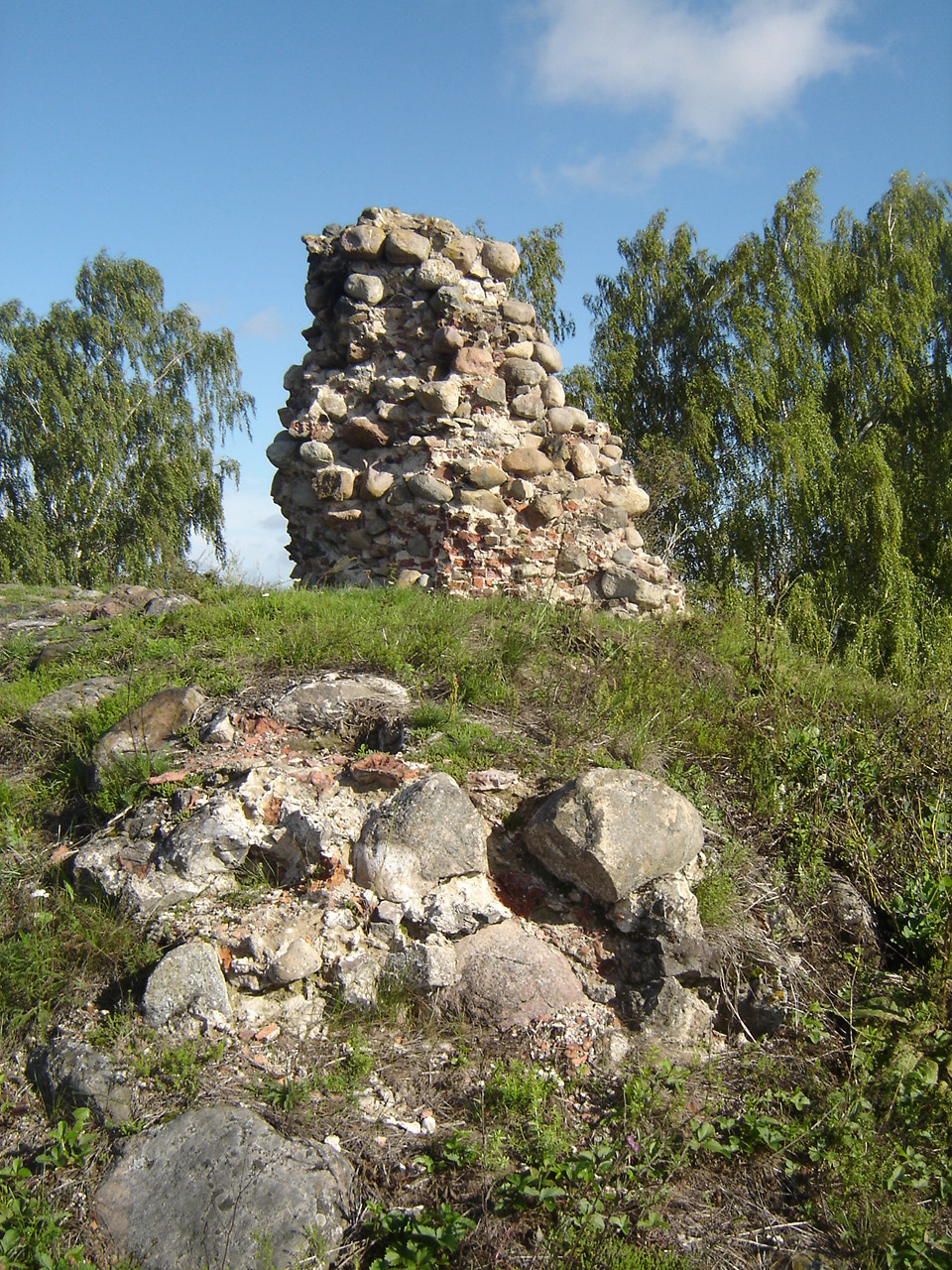
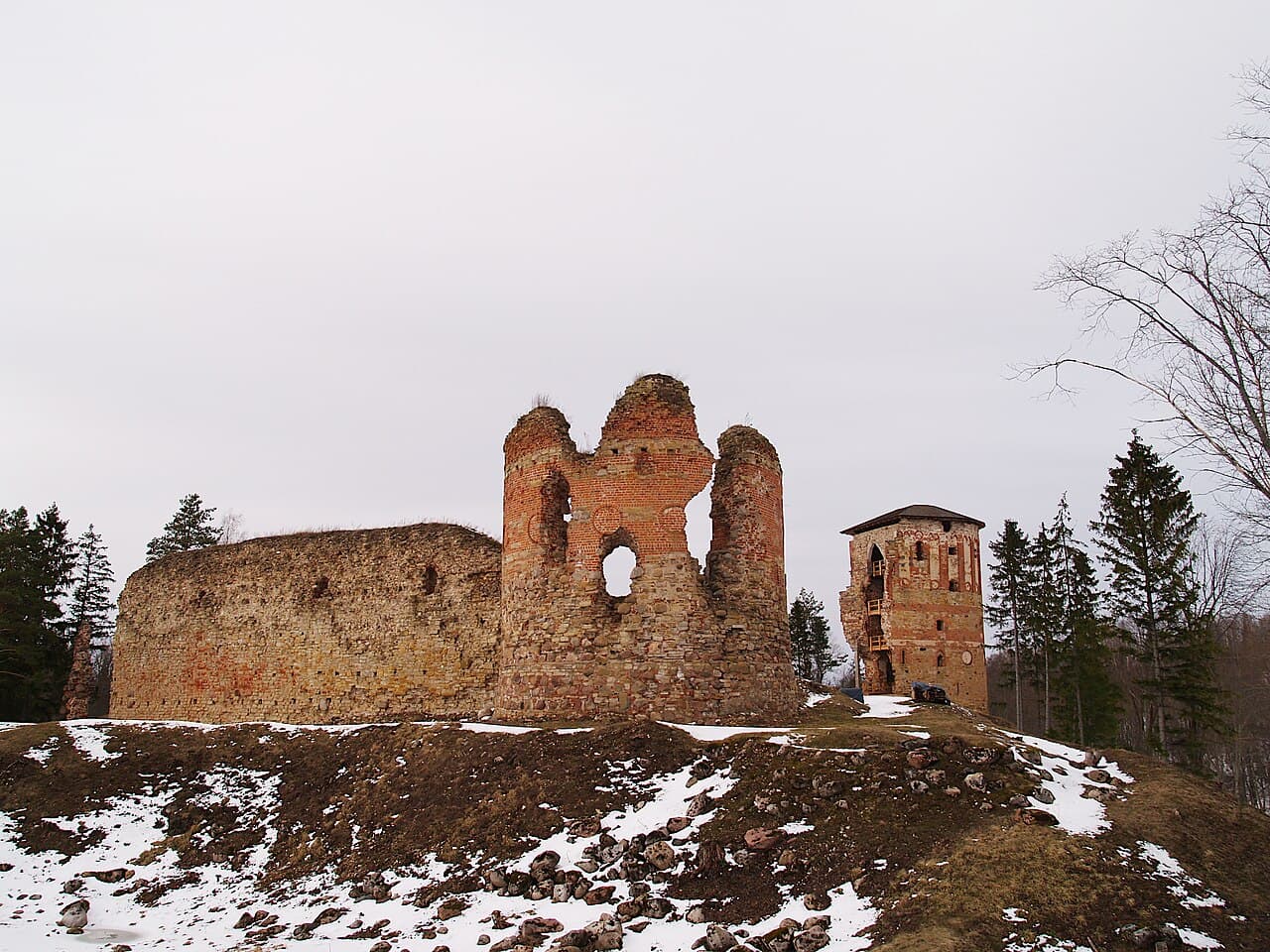
The surviving ruins of Vastseliina Castle include foundational walls and bases of towers that outline the complex medieval fortress layout. The massive main tower remains a prominent feature, illustrating the castle's original defensive design with thick stone walls and vaulted interiors. The outer bailey and zwinger walls, though fragmentary, reveal the layered defensive systems employed over centuries.
Today, the site is open to the public, with remnants marked by a large cross and seating areas. At the former chapel within the main tower, visitors can experience a sound installation featuring ecclesiastical music, creating a contemplative atmosphere that connects modern audiences with the castle's spiritual past.
Despite its ruinous condition, Vastseliina Castle remains a significant historical landmark that encapsulates the military, religious, and cultural evolution of medieval Livonia. Its strategic location, architectural adaptations to changing warfare technologies, and role as a pilgrimage destination contribute to its enduring legacy in Estonia's heritage.
Frequently asked questions (FAQ)
- How do I get to Vastseliina Castle Ruins?
- Vastseliina Castle Ruins are located in Vastseliina, Estonia, and can be reached by car or public transportation. The castle is situated near the town center, making it easily accessible for visitors.
- What is the historical significance of Vastseliina Castle?
- Vastseliina Castle dates back to the 14th century and played a crucial role in the defense against invasions. It is a significant landmark that reflects the architectural style and medieval history of Estonia.
- When was Vastseliina Castle built?
- Construction of Vastseliina Castle began in 1342, and it was completed in the following decades. The castle has witnessed many historical events and changes over the centuries.
- Can I explore the castle ruins on my own?
- Yes, visitors can explore the castle ruins independently. There are informational signs throughout the site that provide insights into its history and architecture.
- Why is Vastseliina Castle a popular tourist attraction?
- Vastseliina Castle attracts visitors due to its rich history, stunning views, and unique architectural features. The ruins offer a glimpse into Estonia's medieval past and are a great spot for photography.
- Is it possible to visit Vastseliina Castle year-round?
- Yes, the castle ruins are open to visitors year-round, although accessibility may vary during winter months due to weather conditions. It’s advisable to check local information before planning your visit.
- What are the opening hours for Vastseliina Castle Ruins?
- The castle ruins are typically open from dawn until dusk. However, it’s a good idea to verify the exact hours before your visit, especially during holidays or special events.
- Are there any nearby attractions to visit?
- Yes, nearby attractions include the Vastseliina Museum and the scenic landscapes of the surrounding area. Visitors can enjoy a full day of exploration by combining multiple sites in the region.
- What are the ticket prices for visiting the castle?
- Admission to Vastseliina Castle Ruins is generally free, making it an accessible destination for all visitors. However, special guided tours or events may have associated fees.
Photo gallery

Information
Website
Visit websiteSources & official resources
Verify the information above using these authoritative references.
Loading map...
Visitor reviews
No reviews yet. Been here? Write the first review and help other travelers!
Write the first reviewVisited this castle? Share your experience
Your review helps other travelers and adds first-hand knowledge to our encyclopedia.