Kirumpää Castle Ruins
Kirumpää Castle, located in Võru, Estonia, stands as a significant late medieval hill castle with a rich history tied to the Bishopric of Dorpat. First recorded in 1322, the castle served as a strategic stronghold and residence for the bishopric along the eastern frontier. Positioned on a small scenic hill overlooking the Võhandu River, Kirumpää Castle played a crucial role in controlling a vital trade and military route between Tartu and Pskov.
The castle's origins likely date back to the mid-13th century, based on archaeological excavations, aligning with the period of territorial expansion by the Livonian Church authorities. Initially constructed as a modest fortified tower-house, its primary function was to oversee and secure the river crossing. Over the centuries, Kirumpää evolved into a more complex fortification, reflecting advances in military architecture and the shifting political landscape of the region.
Historical context and significance
Kirumpää Castle was a key defensive and administrative center for the Bishopric of Dorpat, a religious and political entity that governed parts of present-day Estonia during the medieval period. The castle's location was strategic, guarding the eastern boundary of the bishopric and serving as a bulwark against incursions from neighboring powers.
The earliest written record from 1322 notes the castle's destruction by Lithuanian forces led by Prince Gediminas. This event underscores the castle's role as a contested frontier fortress. Throughout its history, Kirumpää was involved in several significant conflicts, including the Estonian Peasant’s War (1343–1345), where it functioned as a command post for forces under Dietrich von Rambow.
During the Livonian War in the mid-16th century, the castle endured sieges by Ivan IV’s Russian forces in 1558 and later by Lithuanian troops in 1579. The 17th century brought further turmoil during the Russo-Swedish War of 1658 and the Great Northern War starting in 1701, leading to the castle's decline in military importance and eventual ruin.
Architectural development and features
Initial construction and layout
Archaeological findings suggest Kirumpää Castle began as a small fortified tower-house built primarily of fieldstone and brick. The original structure was designed to control the nearby river crossing and consisted of a compact square plan measuring approximately 42 by 45 meters. The castle was situated on a low oval hill, providing natural elevation and defensive advantage.
The oldest surviving section is a residential wing measuring roughly 14 by 10 meters, notable for its thick walls and inclusion of a chapel space, highlighting the castle's dual religious and military functions.
15th and 16th century expansions
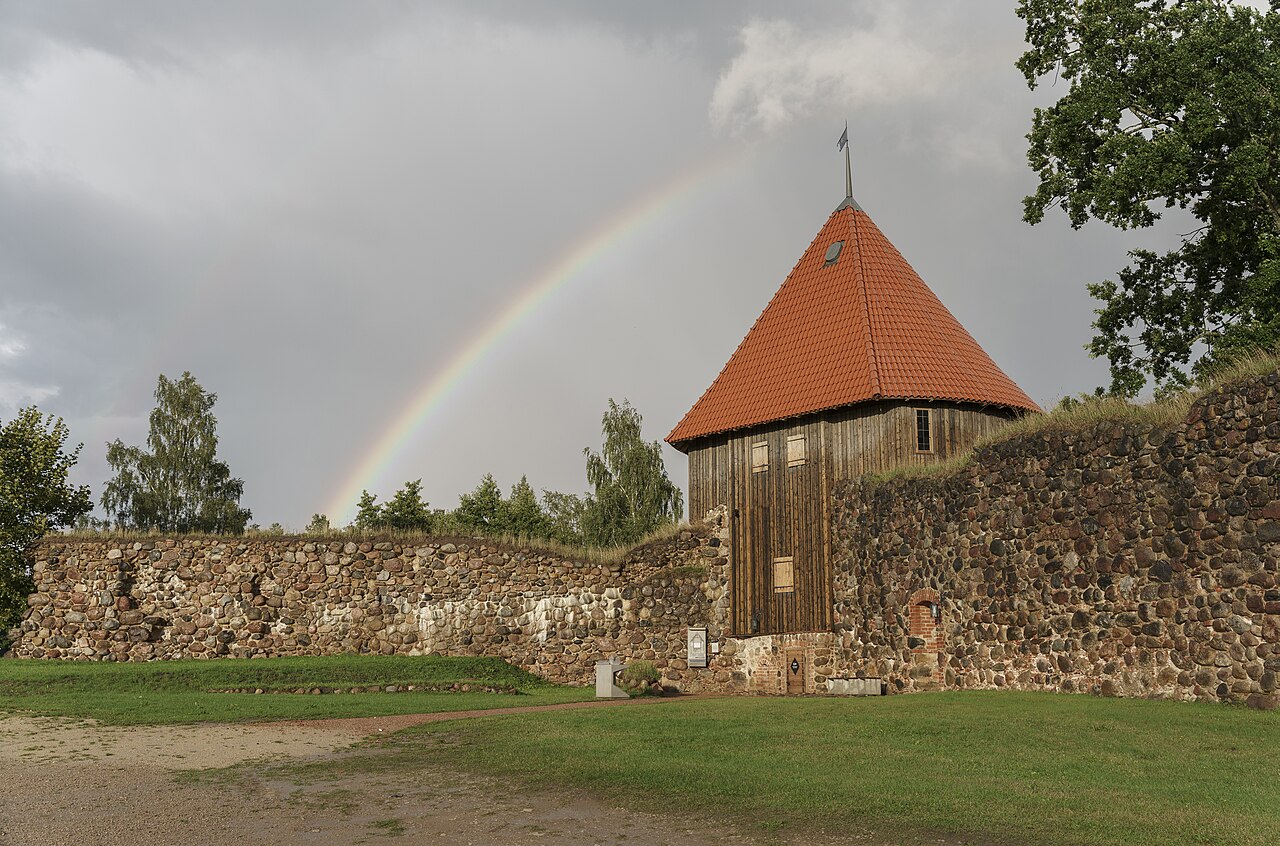
By the 15th century, Kirumpää Castle underwent significant enlargement and fortification. A round cannon tower was added in the southwestern corner to accommodate emerging artillery technology. The addition of an outer bailey expanded the defensive perimeter, while smaller four-sided towers at the northeast and southeast corners served as watch posts and defensive bastions.
The main entrance was fortified with a gatehouse on the western wall, protected by a pentagonal bastion designed to defend against direct assault. Surrounding the castle was a moat, fed by a natural spring that has since dried up, which enhanced the fortress's defenses.
Military role and conflicts
Throughout its active use, Kirumpää Castle was a focal point in regional military conflicts. It played a strategic role in the Estonian Peasant’s War, serving as a command post and defensive refuge. The castle's fortifications were tested during the Livonian War, when it faced multiple sieges and attacks by Russian and Lithuanian forces.
In the 17th century, the castle was further damaged during the Russo-Swedish War and the Great Northern War. The adjacent settlement, which had developed under the castle's protection, was destroyed during the Russo-Swedish conflict and was never rebuilt, signaling the decline of Kirumpää's regional prominence.
Decline and preservation
Following its military obsolescence in the mid-1600s, Kirumpää Castle gradually fell into ruin. Much of the stone from the castle was repurposed in the construction of the nearby town of Võru during the 18th and 19th centuries. Despite this, local efforts helped preserve the remaining ruins from total destruction, particularly after a fire during the Livonian War.
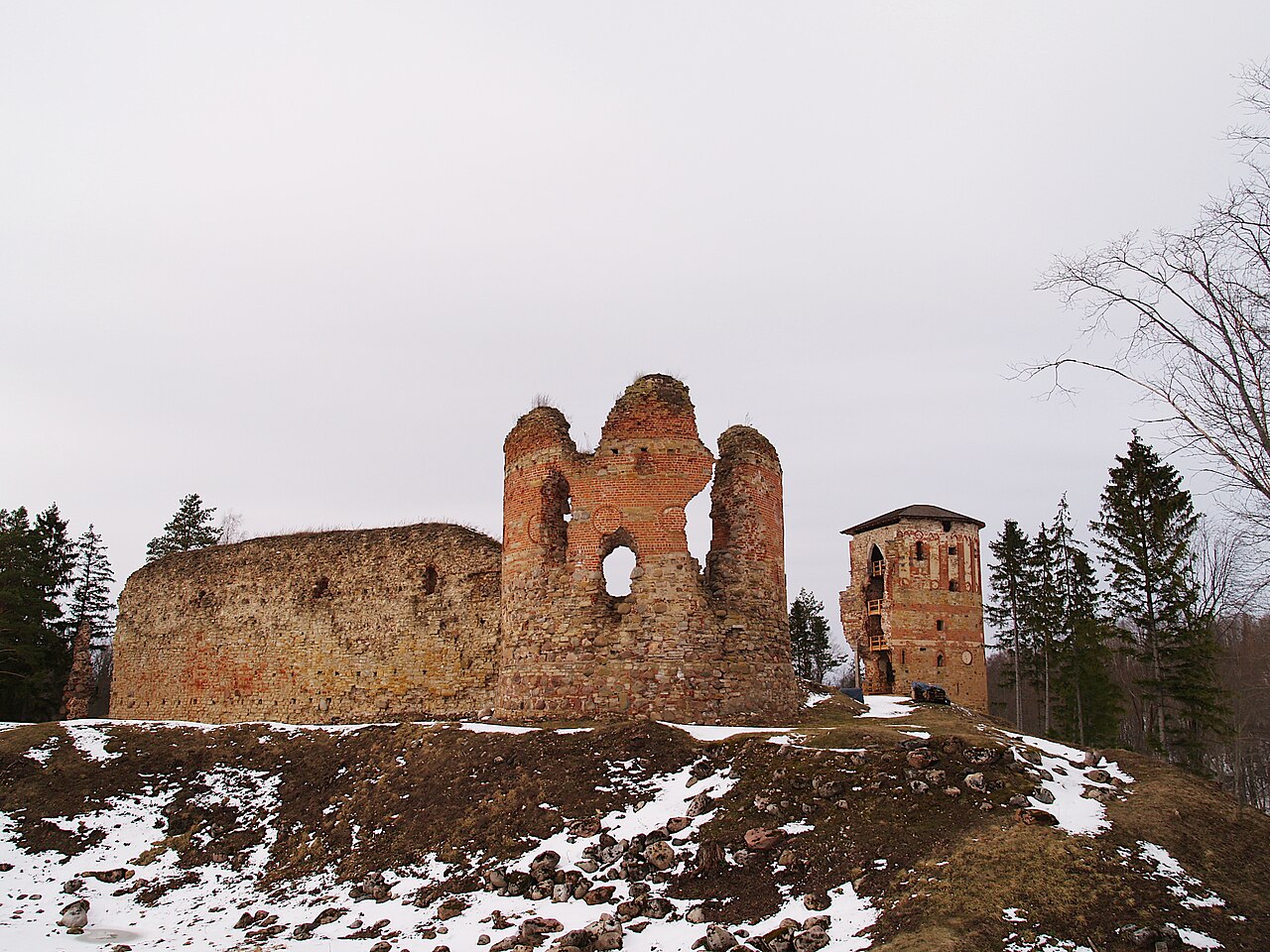
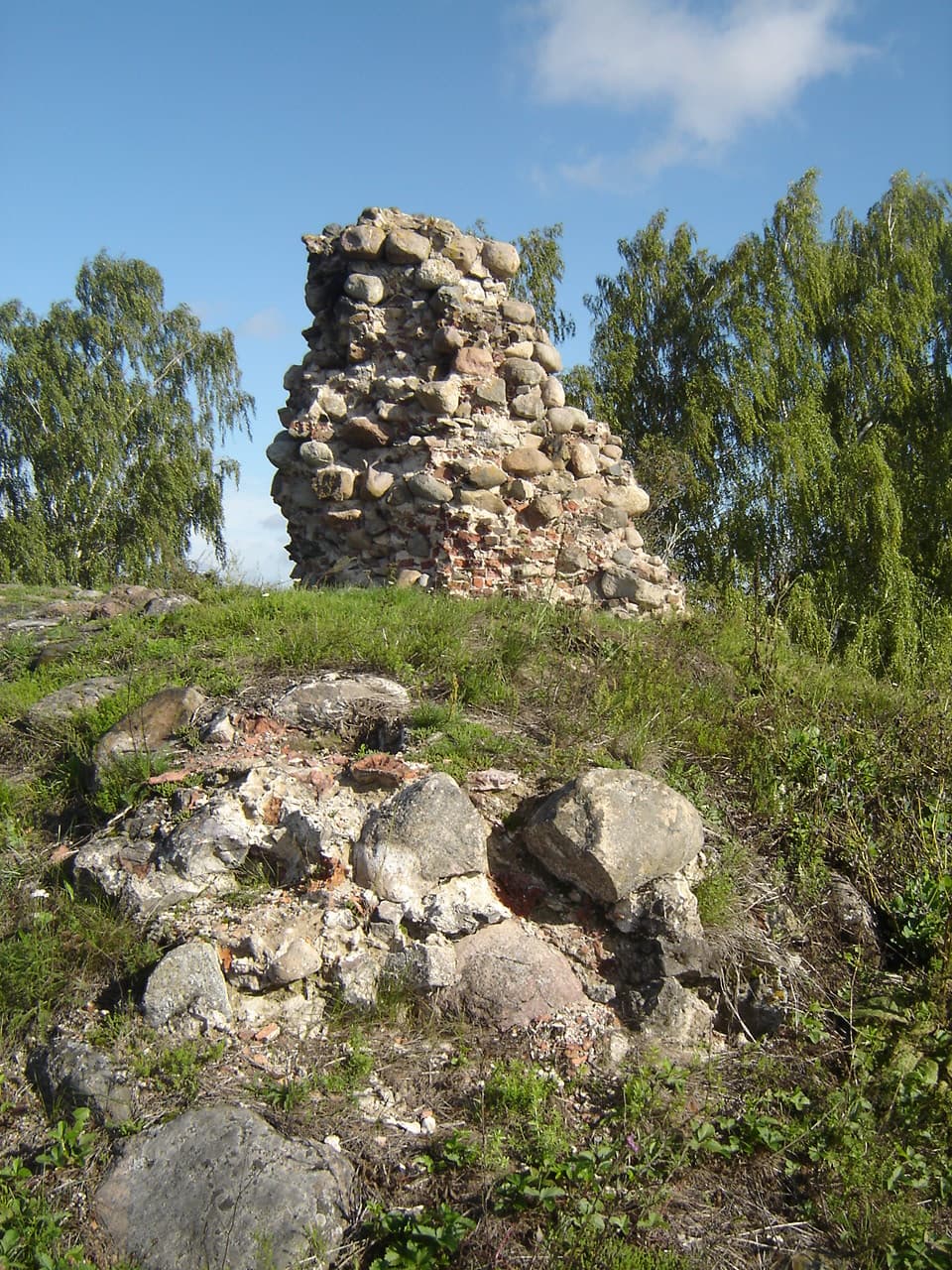
Today, the ruins consist of partial walls, tall masonry pillars, and remnants of towers and defensive structures. The site is protected as a cultural monument under the stewardship of the Võru rural municipality. Visitors can observe the ruins from the nearby Võru ring road, especially during leafless seasons when the structure is more visible.
Architectural remains and site features
The castle's remains reveal a complex layout with a trapezoidal courtyard adjacent to the main square building complex. The northern wing likely housed a large hall used for official functions or gatherings. The surviving structures include the gatehouse, cannon tower, bastions, and sections of the curtain walls.
Vegetation such as small-leaved lime trees planted in 1940 now grow amidst the ruins, symbolizing the enduring legacy of Kirumpää Castle. The site offers a tangible connection to Estonia's medieval past and the turbulent history of the Baltic region.
Frequently asked questions (FAQ)
- What is the historical significance of Kirumpää Castle Ruins?
- Kirumpää Castle Ruins, located in Võru, Estonia, are a testament to medieval architecture and the region's turbulent history. Built in the 14th century, it served as a defensive structure against invasions and played a crucial role in local governance. Today, it stands as a symbol of Estonia's rich cultural heritage.
- When was Kirumpää Castle originally constructed?
- Kirumpää Castle was constructed in the 14th century, specifically around the year 1374. It was established during a period of significant territorial conflict in Northern Europe, reflecting the strategic importance of the site. The ruins today provide insight into the architectural styles and military needs of the time.
- What are the opening hours for visiting Kirumpää Castle Ruins?
- Kirumpää Castle Ruins are open to visitors year-round, with the best times to explore being during daylight hours. However, it is advisable to check local listings for any seasonal variations in access or guided tours. Early mornings or late afternoons often offer a quieter experience.
- Can I access Kirumpää Castle Ruins with a wheelchair?
- The accessibility of Kirumpää Castle Ruins can be challenging due to the uneven terrain and the nature of the ruins. While some areas may be accessible, it is recommended to contact local authorities or visitor centers for specific information about wheelchair access. Plan ahead to ensure a comfortable visit.
- Is it possible to take guided tours of Kirumpää Castle Ruins?
- Yes, guided tours are often available at Kirumpää Castle Ruins, providing visitors with deeper insights into the history and architecture of the site. These tours are typically conducted by knowledgeable local historians or guides. It is advisable to book in advance, especially during peak tourist seasons.
- When is the best time to visit Kirumpää Castle Ruins?
- The best time to visit Kirumpää Castle Ruins is during the late spring and early autumn months when the weather is mild and the surrounding nature is in full bloom. Summer can also be pleasant, but it may attract larger crowds. Visiting during these times enhances the experience with vibrant scenery and a more relaxed atmosphere.
- What are some nearby attractions to Kirumpää Castle Ruins?
- Nearby attractions include the Võru County Museum, which offers insights into the local culture, and the picturesque Lake Tamula, perfect for nature walks and picnics. Additionally, the charming town of Võru features local shops and cafes, allowing visitors to immerse themselves in Estonian hospitality. Exploring these sites can enrich your visit to the castle ruins.
- How much do tickets cost to visit Kirumpää Castle Ruins?
- Entry to Kirumpää Castle Ruins is generally free, allowing visitors to explore the site without any charge. However, some guided tours or special events may require a fee. It's recommended to check with local tourist information for any updates on pricing or special activities.
Photo gallery

Information
Loading map...
Visitor reviews
No reviews yet. Been here? Write the first review and help other travelers!
Write the first reviewVisited this castle? Share your experience
Your review helps other travelers and adds first-hand knowledge to our encyclopedia.