Várgesztes Castle — Hungary castle

Várgesztes Castle

Várgesztes Castle: medieval hilltop fortress in Hungary
Hungary, Hungary

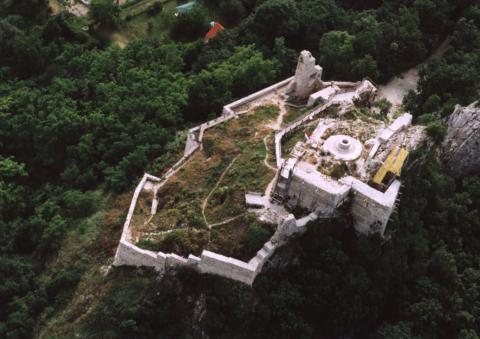
Várgesztes Castle stands prominently on a flattened hilltop within the Vértes Mountains near the village of Várgesztes in Hungary. This hill castle was originally constructed in the late 13th century by the powerful Csák noble family as a fortified stronghold to secure their estates and assert control over the surrounding lands. The castle’s location on a plateau provided a natural defensive advantage, overseeing key routes and the dense forested region.

The earliest written record of the castle dates to 1332, situating it firmly in the High medieval period. The castle’s original stone structure was part of a network of fortifications built by Hungarian nobility during a time of internal conflict and territorial consolidation. The Csák family supported Charles Robert during civil wars, but in 1326, the crown took control of the castle to curb noble power and reinforce royal authority in this strategic region.

Medieval origins and royal transformation

Following the royal acquisition, King Louis the Great ordered the demolition of the initial Csák fortress around the mid-14th century. The intent was to replace the purely military stronghold with a more comfortable royal hunting lodge. This transformation reflected the castle’s evolving role from a defensive fortress to a residence suited for royal leisure activities, particularly hunting in the nearby Vértes forest, a favored pastime among Hungarian kings.

The castle’s layout was adapted to accommodate this change, balancing residential comfort with defensive features. The inner castle was built on an elongated rectangular plan with a distinctive three-room layout. The main entrance faced north and was accessed by a drawbridge supported by pillars, a typical medieval defensive mechanism. A nearby gate tower guarded the entrance, overseeing the approach and serving as an early warning point against attackers.

Ownership changes and political significance in the 15th century

During the 15th century, Várgesztes Castle changed hands multiple times, reflecting its ongoing strategic and political importance. King Sigismund used the castle as a pledge to Frederick of Brandenburg, illustrating its value in diplomatic and military negotiations. Subsequently, it passed to prominent Hungarian noble families, including the Rozgonyi and Újlaki clans, who maintained and adapted the fortress to suit their needs during a period marked by regional power struggles.

Defensive upgrades during the Ottoman wars

With the rise of the Ottoman Empire and their expansion into Central Europe in the 16th century, Várgesztes Castle resumed a critical military role. Positioned on routes leading towards Vienna, the fortress was part of the defensive line against Ottoman incursions. The castle successfully repelled a raiding force in 1529, but was eventually surrendered to the Ottomans in 1543.

During the Ottoman occupation, the castle underwent significant modifications to enhance its defensive capabilities. Two "wolf pits"—deep traps designed to hinder enemy advances—were installed near the drawbridge. The entrance was heavily fortified to resist sieges. A covered casemate corridor was constructed between the inner gate and the western tower, allowing protected movement within the fortress walls. Additional ovens were built into the outer walls to support the garrison’s needs, and a new tower was erected on the southern facade, enhancing surveillance and defense.

Ottoman census records from 1577 indicate the garrison consisted mainly of Serbian infantry serving under Ottoman command, highlighting the castle’s role as an Ottoman military outpost. The fortress remained under Ottoman control until the decisive defeat of Ottoman forces near Vienna in 1683, after which the castle was peacefully evacuated in the autumn of that year.

Decline and preservation efforts

Following its military abandonment, Várgesztes Castle gradually fell into ruin. Local inhabitants dismantled parts of the structure, repurposing stones for nearby construction projects such as the Majk Camaldolese monastery. This reuse was officially sanctioned by Count Joseph Esterházy. By the late 18th century, the castle was recorded as a ruin, a silent marker of the region’s turbulent history.

Interest in the site revived in the late 19th century, with the first detailed surveys conducted in 1877 by Floris Rómer. Archaeological excavations during the Second World War led by Géza Lux and Károly Csányi further explored the castle’s remains. In 1932, a hostel was established near the castle to accommodate visitors, reflecting growing cultural and historical interest.

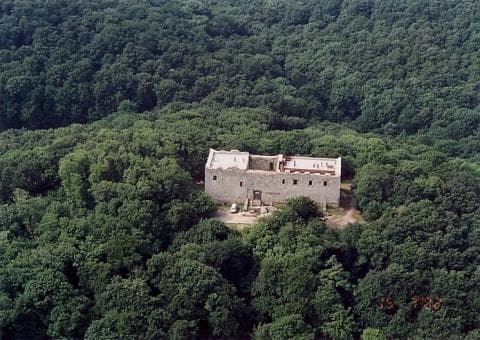
Preservation and partial restoration began in the 1960s, focusing on the inner castle. This area was adapted to house a restaurant and guest accommodations, blending heritage conservation with tourism. Ownership of the ruins has shifted between state and local authorities. Due to safety concerns, the castle was closed in 2013, with planned repairs initiated in 2014 to stabilize and conserve the site.

Architectural features and phases of construction

Original structure and layout

The castle’s original design featured a two-part structure comprising an outer defensive circuit with a high wall and a square tower guarding the approaches. This outer ward was separated from the inner castle by a courtyard, creating multiple layers of defense.

The inner castle was built on an elongated rectangular plan with three main rooms. The northern main entrance was protected by a drawbridge and a gate tower, combining residential and defensive functions. This design reflects typical medieval fortification principles while accommodating the castle’s later role as a royal hunting lodge.

Construction phases and modifications

Archaeological research has identified four major phases in the castle’s development. Initially, the site functioned as a fortified hunting lodge emphasizing comfort alongside defense. Under King Sigismund in the 14th century, the inner castle was raised with a second floor, enhancing both its residential space and defensive capabilities.

In response to increasing Ottoman threats in the mid-16th century, the castle’s defenses were significantly reinforced. The installation of wolf pits and fortification of the entrance aimed to delay or prevent enemy sieges. The Ottoman period saw further adaptations, including the addition of the casemate corridor and new defensive towers.

Current condition and visitor experience

Today, Várgesztes Castle remains a partially preserved ruin. The outer walls have mostly crumbled to their foundations due to centuries of stone removal and natural decay. However, significant portions of the inner castle still stand, providing valuable insights into its varied history and architectural evolution.

The site offers visitors a glimpse into medieval Hungarian castle architecture, royal hunting traditions, and Ottoman military adaptations. Preservation efforts continue to focus on stabilizing the ruins and enhancing visitor safety. The castle’s dramatic hilltop setting within the Vértes Mountains adds to its appeal for tourists and history enthusiasts alike.

Frequently asked questions (FAQ)

How do I get to Várgesztes Castle?
Várgesztes Castle is located in Hungary, easily accessible by car or public transportation. If you're traveling from Budapest, you can take a train to Székesfehérvár and then a bus to Várgesztes. Make sure to check local transport schedules for the most convenient options.
What is the historical significance of Várgesztes Castle?
Várgesztes Castle dates back to the 14th century and played a crucial role in the defense of the region during various conflicts. It reflects the architectural styles of its time and serves as a reminder of Hungary's rich medieval history. Today, it stands as a symbol of heritage and attracts history enthusiasts from all over.
When was Várgesztes Castle built?
Várgesztes Castle was originally constructed in the late 14th century, with significant renovations occurring in the following centuries. The castle has undergone various changes over time, which have contributed to its unique architectural style. Its long history makes it an interesting place to explore for visitors.
Can I visit Várgesztes Castle year-round?
Yes, Várgesztes Castle is open to visitors throughout the year, though specific opening hours may vary by season. It is advisable to check the official website or contact local tourism for the most up-to-date information before planning your visit. Guided tours are available to enhance your experience.
Why is Várgesztes Castle a popular tourist destination?
Várgesztes Castle attracts visitors due to its fascinating history, stunning architecture, and picturesque surroundings. The castle offers a glimpse into Hungary's past and is a great spot for photography and leisurely walks. Its accessibility and proximity to other attractions further enhance its appeal.
Is it possible to explore the interiors of Várgesztes Castle?
Yes, visitors can explore the interiors of Várgesztes Castle during guided tours. These tours provide insights into the castle's history, architecture, and the stories of those who once lived there. Be sure to check the tour schedule in advance to secure your spot.
What are the ticket prices for Várgesztes Castle?
Ticket prices for Várgesztes Castle are generally affordable, with discounts available for students and seniors. It's best to check the official website for the latest pricing information and any special offers. Purchasing tickets in advance may also help you avoid long lines during peak tourist seasons.
What are the opening hours of Várgesztes Castle?
Várgesztes Castle typically opens at 10 AM and closes at 6 PM during the tourist season, but hours may vary in the off-season. It's recommended to verify the opening hours before your visit to ensure a smooth experience. Guided tours may have specific time slots, so plan accordingly.
What are some nearby attractions to Várgesztes Castle?
Nearby attractions include the picturesque village of Várgesztes, known for its beautiful landscapes and hiking trails. Additionally, the city of Székesfehérvár, with its rich history and cultural sites, is just a short drive away. Visitors can enjoy a full day of exploring both the castle and its surrounding area.

Photo gallery

Várgesztes Castle
Click to view

Photo by Civertan•CC BY-SA 3.0

1 photo • Click any image to view in full screen

Information

Hill Castle

Loading map...

Visitor reviews

No reviews yet. Been here? Write the first review and help other travelers!

Write the first review

Visited this castle? Share your experience

Your review helps other travelers and adds first-hand knowledge to our encyclopedia.
Write a review

(5/5)

0/2000 characters

Your review will be visible after admin approval

Nearby castles

9.2 km
Esterházy Mansion in Csákvár — Hungary castle

Esterházy Mansion in Csákvár

Csákvár, Hungary

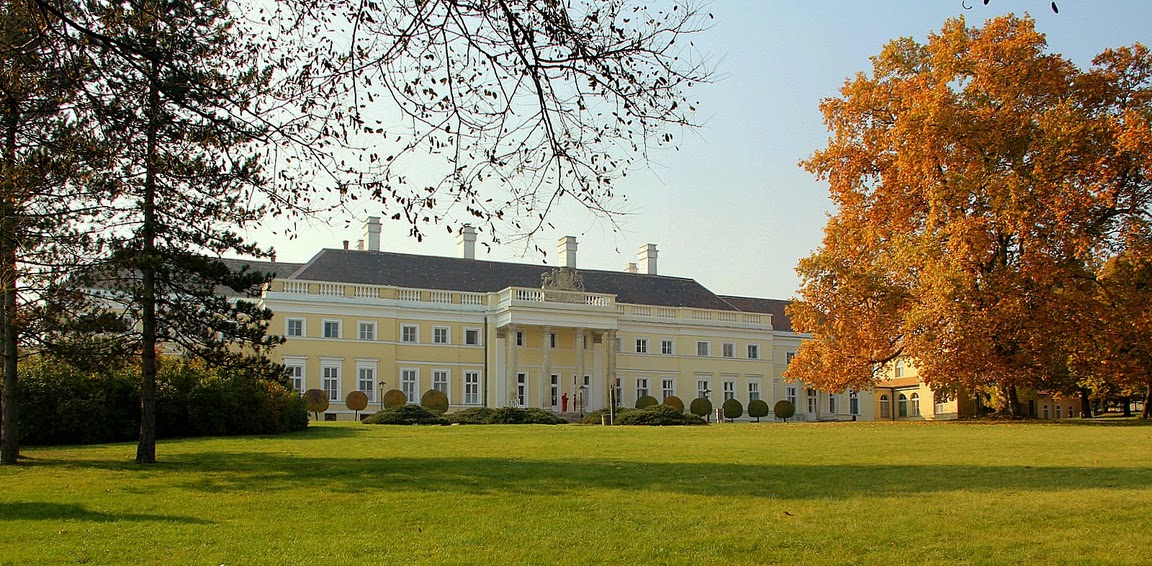
The Esterházy Mansion in Csákvár is a notable example of aristocratic residence architecture located in Hungary. While often referred to as a mansion, its classification as a hill castle reflects its strategic placement on elevated terrain, a common feature for defensive purposes in historic Hungarian estates. Historical background and significance The mansion was built by the Esterházy family, one of Hungary's most influential noble families, whose prominence spanned several centuries. The family's wealth and status allowed them to construct numerous estates and castles across the region, with the Csákvár mansion serving as a key residence. The exact construction date is not precisely documented, but the mansion likely dates from the 18th century, a period when the Esterházys expanded their holdings and embraced architectural styles that reflected their status. Architectural features and style The Esterházy Mansion in Csákvár exhibits characteristics typical of aristocratic residences of its era, including a symmetrical façade, large windows, and ornate detailing. The architectural style blends elements of Baroque and early Classical influences, common in Hungarian noble estates of the time. The mansion's structure includes multiple wings arranged around a central courtyard, designed to provide both aesthetic appeal and functional living space. Distinctive architectural features include decorative cornices, pilasters, and a grand entrance that emphasizes the family's prestige. The building's elevated position on a hill enhances its visibility and prominence in the landscape, serving both symbolic and practical defensive roles. Surrounding grounds and estate The mansion is set within extensive grounds that historically included formal gardens, parkland, and auxiliary buildings such as stables and servant quarters. These grounds contributed to the estate's self-sufficiency and reflected the lifestyle of the Hungarian aristocracy. The landscaping typically followed the trends of the period, with geometric garden layouts and tree-lined avenues. Current condition and preservation Today, the Esterházy Mansion in Csákvár is partially preserved, retaining much of its original structure and architectural details. Efforts have been made to maintain the mansion's historical integrity, though some areas may require restoration to fully recover their former appearance. The mansion remains a significant cultural heritage site, representing the architectural and social history of Hungary's noble class. Visiting and cultural importance The mansion is accessible to visitors interested in Hungarian history and architecture, offering insights into the lifestyle of the Esterházy family and the broader aristocratic traditions of the region. The site occasionally hosts cultural events and exhibitions that highlight its historical context and architectural features. Its location in Csákvár places it within a region rich in history, where visitors can explore other historic sites and natural attractions, making it a valuable destination for cultural tourism.

Post-Renaissance (17th–18th c.)
Details
9.3 km

Gerencsérvár

Oroszlány, Hungary

Gerencsérvár, located in Oroszlány, Hungary, stands as a significant relic of medieval Hungarian fortification efforts in the Vértes region. Constructed in the aftermath of the devastating Mongol invasion of the 13th century, this castle was part of a broader royal initiative to strengthen the kingdom's defenses. Its origins trace back to a period when Hungarian nobility sought to establish fortified residences that balanced military defense with noble habitation. Early history and strategic importance The earliest documented mention of Gerencsérvár dates to 1231, under the name Wdvorhel (later Udvarhely), referenced in the will of Miklós Csák, brother to the influential Archbishop Ugrin. Over time, the site’s name evolved to Gerencsér, possibly influenced by the settlers known as "göröncsérek." Initially, the site functioned primarily as a noble residential tower rather than a full-scale castle, designed to shelter the lord and his family while maintaining a military presence for regional defense. Throughout the 14th century, Gerencsérvár retained its strategic relevance. By 1330, documents refer to it as Gerencher, indicating a divided ownership between royal stablemen and Pál, son of Györke from the prominent Csák clan. This period underscores the castle's role within the feudal power structures of medieval Hungary. A notable historical event occurred on December 6, 1366, when King Louis the Great convened at Gerencsérvár with representatives of the Venetian Republic to discuss military campaigns against the advancing Ottoman Turks. This meeting highlights the castle’s diplomatic and military significance during a critical period of regional conflict. Royal hunting grounds and political intrigue For approximately two centuries, the area surrounding Gerencsérvár served as a favored royal hunting ground, particularly under King Louis I. The abundant fish in nearby streams such as Szépvíz and Fekete-víz contributed to the site's appeal as a leisure retreat linked to royal resource management and recreation. In 1440, during the minority of King Ladislaus V, Gerencsérvár played a role in a secretive episode involving the transfer of the Hungarian Crown. The queen’s trusted aide, Kottaner Jánosné, passed the crown through this site under difficult conditions, highlighting the castle’s continued strategic and symbolic importance during times of political crisis. Architecture and physical remains Gerencsérvár was constructed as a modest hill castle, primarily serving as a fortified noble residence. The central feature was a stone tower measuring approximately 13 meters long by 8.7 meters wide. This tower likely rose two or three stories, providing layered protection and living space for its inhabitants. The castle’s thick stone walls incorporated multiple staircases, each separately lockable on different floors. This architectural feature enabled controlled internal movement and enhanced defensive capabilities against attackers. The tower faced eastward, overlooking the Szépvíz stream and nestled within the wooded plains of the Vértes region, west of the nearby Oroszlánkő castle. This positioning leveraged natural landscape features for defense and surveillance. Today, only heavily deteriorated fragments of the tower remain. These ruins lack decorative elements, inscriptions, or associated artifacts such as tools or religious items. Despite its ruinous state, the remnants faithfully mark the site’s historical role as a fortified noble residence dating back to post-Mongol invasion Hungary. Historical context and legacy Gerencsérvár's history reflects broader themes in Hungarian medieval history, particularly the kingdom's response to external threats and internal political dynamics. The castle was part of a network of fortifications established to protect the kingdom from invasions, especially following the Mongol devastation. Its use as a noble residence with defensive features illustrates the dual nature of many medieval Hungarian castles, serving both as homes and military strongholds. The castle's involvement in diplomatic and political events, such as the 1366 meeting with Venetian representatives and the 1440 crown transfer, underscores its significance beyond mere military function. The integration of royal leisure activities, including hunting and resource management, further highlights the multifaceted role of such sites in medieval Hungarian society. Although the castle ultimately fell into ruin during the Ottoman occupation, the site remains an important cultural and historical landmark. It offers insights into medieval Hungarian nobility, defensive architecture, and the kingdom's turbulent history during the Middle Ages. Visiting gerencsérvár today Presently, Gerencsérvár exists as an archaeological site with partial ruins accessible to visitors interested in medieval Hungarian history and architecture. While the remains are heavily deteriorated, the location provides a tangible connection to Hungary's medieval past and the strategic importance of the Vértes region. Visitors can explore the site’s natural surroundings, including the Szépvíz stream and the wooded plains, gaining a sense of the castle's original defensive advantages. The proximity to Oroszlánkő castle enriches the historical experience, offering a broader understanding of regional fortifications.

High Medieval (11th–13th c.)
Details
15 km
Csókakő Castle — Hungary castle

Csókakő Castle

Csókakő, Hungary

Csókakő Castle stands as a remarkable example of a medieval hill castle situated in the municipality of Csókakő, Hungary. Its strategic position atop a rocky plateau on the slopes of Csóka Hill at 479 meters elevation provided commanding views over a historic military route and natural defensive advantages. Constructed in the late 13th century, the castle was originally established by Hungarian nobility during the Kingdom of Hungary era, serving both as a military stronghold and noble residence. The earliest surviving written record of Csókakő Castle dates to 1299, when it was owned by István, son of Márk, a loyal supporter of King Charles I of Anjou. This early connection illustrates the castle's role in the power struggles that helped solidify Anjou rule in Hungary. In 1326, King Charles I himself acquired the castle to prevent it from becoming a base for local magnates who might challenge royal authority. Subsequently, the castle was administered by the royal ispán (county head) of Fejér County, who also served as the castellan, overseeing both the fortress and the surrounding population. Historical significance and ownership through the centuries During the 15th century, the castle came under the stewardship of István Rozgonyi, a distinguished nobleman and castellan renowned for saving the king’s life at the 1428 Battle of Galambóc against Ottoman forces. The Rozgonyi family’s tenure marked a period of expansion and fortification, reflecting the castle's ongoing military importance amid rising Ottoman threats. Following the extinction of the Rozgonyi lineage, ownership passed through several notable hands, including János Corvinus, the illegitimate son of King Matthias Corvinus, and Tamás Bakócz, a prominent church figure and statesman. These transitions illustrate the castle's continued relevance as a noble residence and administrative center during the late medieval period. However, the rise of the Ottoman Empire in the 16th century diminished the castle’s military significance. Its relatively small size and outdated fortifications were inadequate against the evolving artillery technology and the expanding Ottoman military presence. After the fall of the strategic city of Székesfehérvár to the Ottomans in 1543, Csókakő Castle was surrendered without resistance in 1544. Under Ottoman control, the castle served as a forward observation post and garrison, housing 33 janissaries, as documented in a 1552 payroll. The castle remained under Ottoman rule until the autumn of 1687, when it was liberated during the Habsburg-led campaign to expel the Turks from Hungary. Following its liberation, Csókakő Castle ceased to fulfill any significant military role, marking the end of its active defensive history. Architectural features and layout Csókakő Castle is perched on a rocky plateau surrounded on three sides by steep natural rock cliffs, which provided formidable natural defenses. These were supplemented by artificial moats carved directly into the rock, enhancing the castle’s protection against attackers. The oldest part of the castle, known as the upper castle, dates back to the 13th century and occupies a roughly rectangular area measuring approximately 28 by 15 meters. This core fortress included a distinctive three-story trapezoidal tower at the northeastern corner, which was connected to a palace wing. This wing served dual purposes as a fortified lookout and residential quarters for the noble occupants. South of the tower lay the castle courtyard, featuring a centrally located cistern house designed to collect and store rainwater, an essential resource for sustaining the castle’s inhabitants during prolonged sieges. In the 15th century, the castle was expanded by the Rozgonyi family through the construction of a larger outer enclosure known as the lower castle. This expansion nearly tripled the castle’s footprint and included the addition of a gate tower that served as the main entrance during that period. The increased size reflected evolving defensive needs and the desire for more extensive residential and administrative spaces. Between the upper and lower castles, on a terrace, a chapel was established in the 15th century. Although only the sanctuary’s pillars survive today, the chapel’s presence highlights the importance of religious life within the castle walls. Ottoman period adaptations During the Ottoman occupation, historical sources such as a 1690 sketch and the travel diary of Evliya Çelebi, a renowned Ottoman traveler, mention the existence of a mosque within the castle. While formal archaeological excavations have yet to confirm the mosque’s remains, these accounts suggest the castle was adapted to accommodate the religious and administrative needs of its Ottoman garrison. Archaeological research and conservation efforts Interest in the cultural and historical value of Csókakő Castle reemerged in the mid-19th century, led by archaeologist Flóris Rómer, who recognized its significance as a heritage monument. The first official archaeological survey was conducted in 1885 by József Könyöki, followed by further studies by Géza Csernó in 1897. These early investigations laid the groundwork for understanding the castle’s complex history and architecture. In 1953, the castle was officially designated as a protected monument, reflecting its importance in Hungarian cultural heritage. Partial excavation and restoration efforts took place from 1960 to 1963 but were interrupted before full completion. Renewed conservation initiatives began in 1995, spearheaded by the Csókakő Castle Friends Society. This group organized further archaeological excavations and restoration projects, supported by significant funding that enabled ongoing preservation work into the 21st century. Since 2017, the castle’s renovation has been incorporated into Hungary’s National Castle Program, ensuring sustained efforts to protect and showcase this historic fortress. Visitor experience and cultural significance Today, the ruins of Csókakő Castle offer visitors a vivid glimpse into Hungary’s medieval and Ottoman past. The site’s dramatic setting atop a rocky hill, combined with the remnants of its fortified walls, towers, and chapel pillars, provides an evocative atmosphere for exploration and education. The castle’s layered history—from its origins as a noble stronghold through its Ottoman occupation and eventual liberation—makes it a valuable cultural landmark. Visitors can appreciate the architectural evolution of a hill castle adapted to changing military and residential needs over several centuries. Ongoing archaeological research continues to reveal new insights into the castle’s past, contributing to a deeper understanding of Hungary’s regional history and the broader dynamics of medieval and early modern Central Europe. Csókakő Castle remains a testament to the resilience and strategic importance of hill castles in Hungary’s historical landscape, embodying centuries of military, political, and cultural transformations.

High Medieval (11th–13th c.)
Details