Gerencsérvár
Gerencsérvár, located in Oroszlány, Hungary, stands as a significant relic of medieval Hungarian fortification efforts in the Vértes region. Constructed in the aftermath of the devastating Mongol invasion of the 13th century, this castle was part of a broader royal initiative to strengthen the kingdom's defenses. Its origins trace back to a period when Hungarian nobility sought to establish fortified residences that balanced military defense with noble habitation.
Early history and strategic importance
The earliest documented mention of Gerencsérvár dates to 1231, under the name Wdvorhel (later Udvarhely), referenced in the will of Miklós Csák, brother to the influential Archbishop Ugrin. Over time, the site’s name evolved to Gerencsér, possibly influenced by the settlers known as "göröncsérek." Initially, the site functioned primarily as a noble residential tower rather than a full-scale castle, designed to shelter the lord and his family while maintaining a military presence for regional defense.
Throughout the 14th century, Gerencsérvár retained its strategic relevance. By 1330, documents refer to it as Gerencher, indicating a divided ownership between royal stablemen and Pál, son of Györke from the prominent Csák clan. This period underscores the castle's role within the feudal power structures of medieval Hungary.
A notable historical event occurred on December 6, 1366, when King Louis the Great convened at Gerencsérvár with representatives of the Venetian Republic to discuss military campaigns against the advancing Ottoman Turks. This meeting highlights the castle’s diplomatic and military significance during a critical period of regional conflict.
Royal hunting grounds and political intrigue
For approximately two centuries, the area surrounding Gerencsérvár served as a favored royal hunting ground, particularly under King Louis I. The abundant fish in nearby streams such as Szépvíz and Fekete-víz contributed to the site's appeal as a leisure retreat linked to royal resource management and recreation.
In 1440, during the minority of King Ladislaus V, Gerencsérvár played a role in a secretive episode involving the transfer of the Hungarian Crown. The queen’s trusted aide, Kottaner Jánosné, passed the crown through this site under difficult conditions, highlighting the castle’s continued strategic and symbolic importance during times of political crisis.
Architecture and physical remains
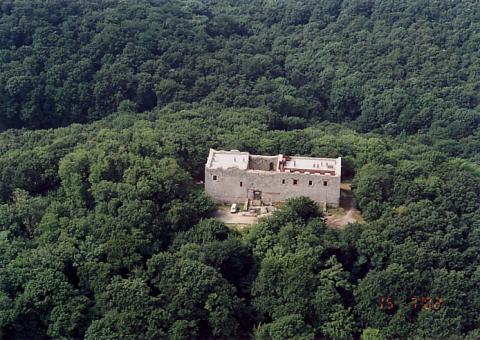
Gerencsérvár was constructed as a modest hill castle, primarily serving as a fortified noble residence. The central feature was a stone tower measuring approximately 13 meters long by 8.7 meters wide. This tower likely rose two or three stories, providing layered protection and living space for its inhabitants.
The castle’s thick stone walls incorporated multiple staircases, each separately lockable on different floors. This architectural feature enabled controlled internal movement and enhanced defensive capabilities against attackers. The tower faced eastward, overlooking the Szépvíz stream and nestled within the wooded plains of the Vértes region, west of the nearby Oroszlánkő castle. This positioning leveraged natural landscape features for defense and surveillance.
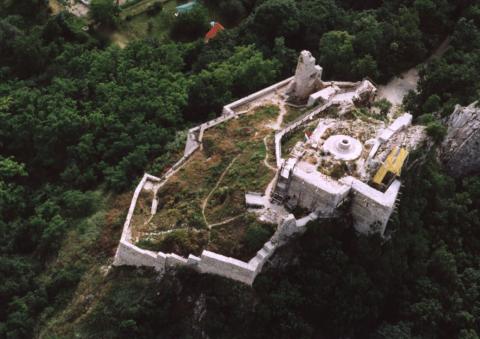
Today, only heavily deteriorated fragments of the tower remain. These ruins lack decorative elements, inscriptions, or associated artifacts such as tools or religious items. Despite its ruinous state, the remnants faithfully mark the site’s historical role as a fortified noble residence dating back to post-Mongol invasion Hungary.
Historical context and legacy
Gerencsérvár's history reflects broader themes in Hungarian medieval history, particularly the kingdom's response to external threats and internal political dynamics. The castle was part of a network of fortifications established to protect the kingdom from invasions, especially following the Mongol devastation. Its use as a noble residence with defensive features illustrates the dual nature of many medieval Hungarian castles, serving both as homes and military strongholds.
The castle's involvement in diplomatic and political events, such as the 1366 meeting with Venetian representatives and the 1440 crown transfer, underscores its significance beyond mere military function. The integration of royal leisure activities, including hunting and resource management, further highlights the multifaceted role of such sites in medieval Hungarian society.
Although the castle ultimately fell into ruin during the Ottoman occupation, the site remains an important cultural and historical landmark. It offers insights into medieval Hungarian nobility, defensive architecture, and the kingdom's turbulent history during the Middle Ages.
Visiting gerencsérvár today
Presently, Gerencsérvár exists as an archaeological site with partial ruins accessible to visitors interested in medieval Hungarian history and architecture. While the remains are heavily deteriorated, the location provides a tangible connection to Hungary's medieval past and the strategic importance of the Vértes region.
Visitors can explore the site’s natural surroundings, including the Szépvíz stream and the wooded plains, gaining a sense of the castle's original defensive advantages. The proximity to Oroszlánkő castle enriches the historical experience, offering a broader understanding of regional fortifications.
Frequently asked questions (FAQ)
- When was Gerencsérvár built and by whom?
- Gerencsérvár was constructed in the 13th century by medieval Hungarian nobility as part of a defensive network following the Mongol invasion.
- What is the historical significance of Gerencsérvár?
- The castle played a strategic role in medieval Hungary, hosting important meetings such as King Louis the Great's 1366 conference with Venetian representatives and serving as a royal hunting ground.
- What remains of Gerencsérvár can visitors see today?
- Today, visitors can see heavily deteriorated fragments of the stone tower, which mark the site of the former fortified noble residence.
- Is Gerencsérvár accessible to the public?
- Gerencsérvár is an archaeological ruin site accessible for visitors interested in medieval history, though facilities may be limited due to its ruinous condition.
- Where is Gerencsérvár located?
- Gerencsérvár is located near Oroszlány in the Komárom-Esztergom region of Hungary, situated on a wooded hill overlooking the Szépvíz stream.
Information
Website
Visit websiteSources & official resources
Verify the information above using these authoritative references.
Loading map...
Visitor reviews
No reviews yet. Been here? Write the first review and help other travelers!
Write the first reviewVisited this castle? Share your experience
Your review helps other travelers and adds first-hand knowledge to our encyclopedia.