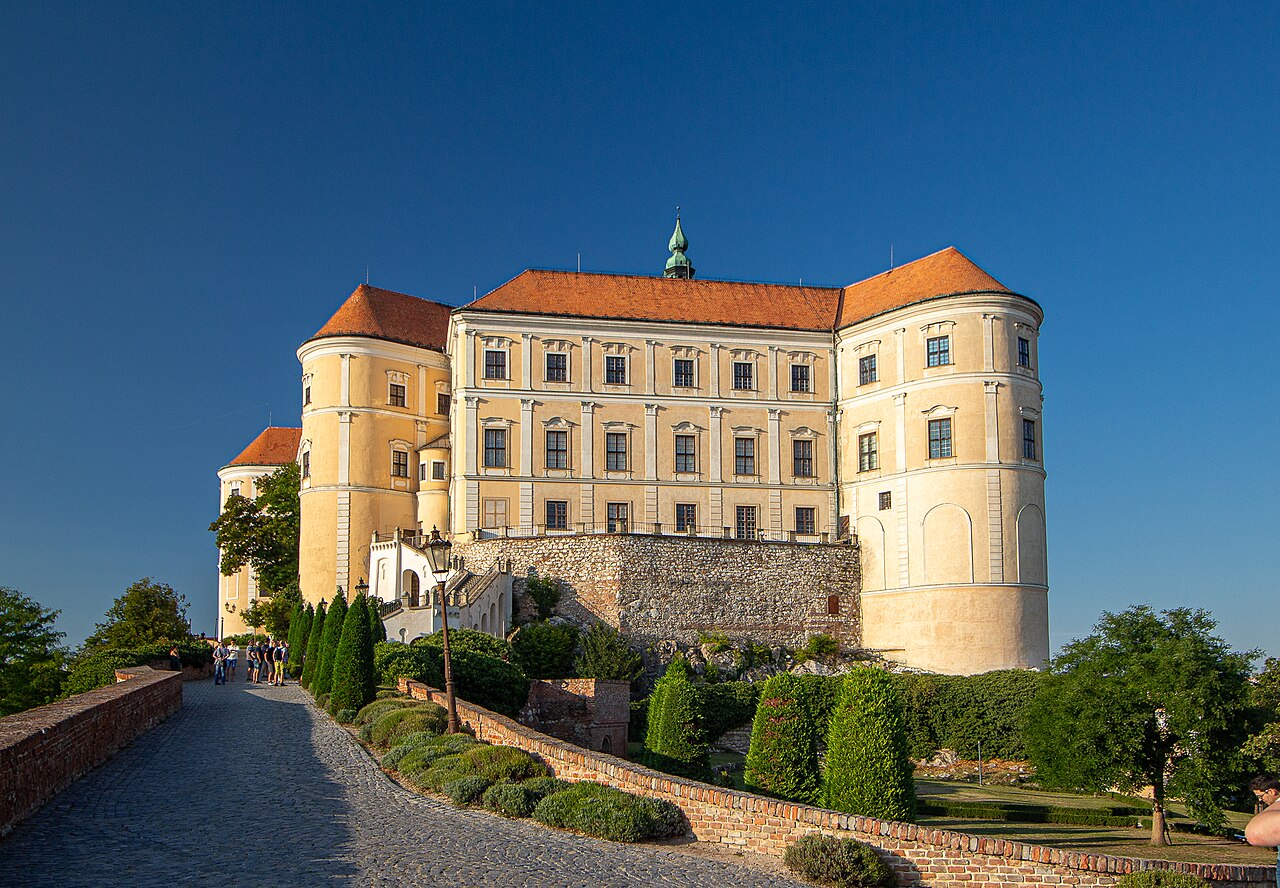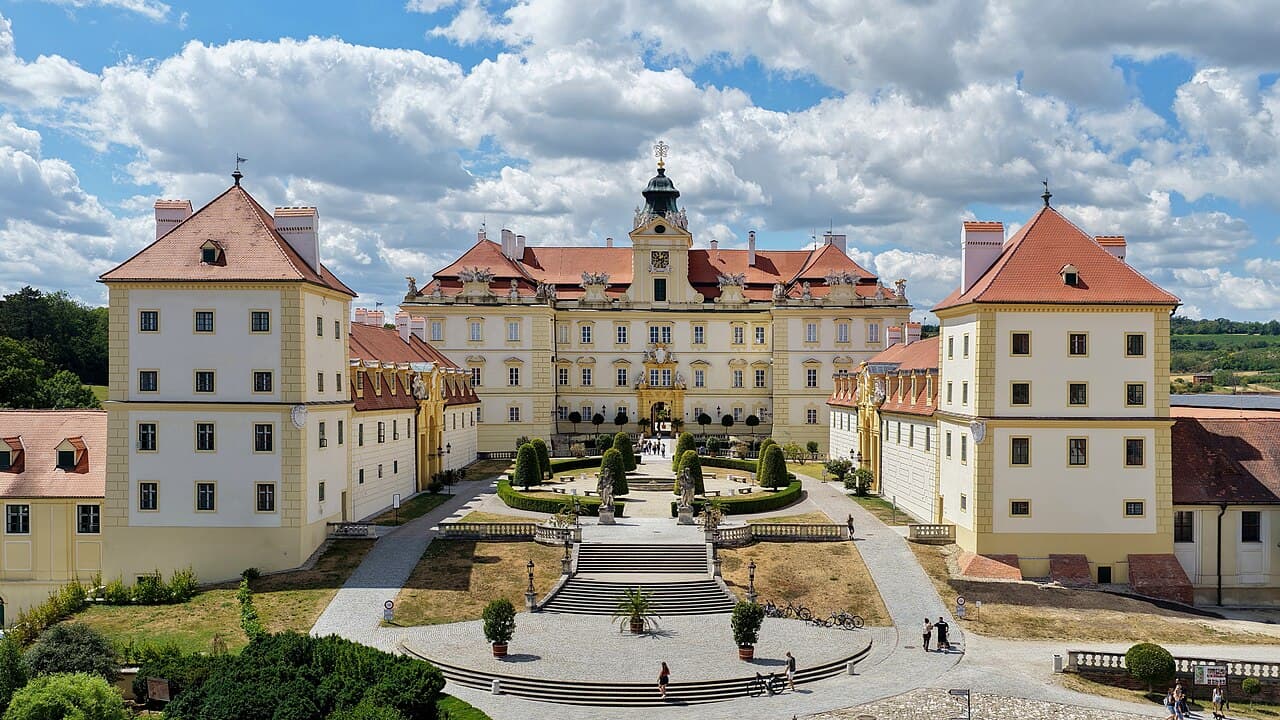
Valtice Castle — Czech Republic castle

Valtice Castle

Valtice Castle: baroque chateau of the Liechtenstein family
Renaissance (15th–17th c.)
Well Preserved

Valtice Castle, located in the town of Valtice in Czechia, is a notable example of a Baroque chateau with a rich historical legacy tied to the Liechtenstein family. The castle stands on the site of an earlier medieval fortress and has undergone significant architectural transformations, particularly during the 17th and 18th centuries, reflecting the tastes and wealth of its noble owners.

Historical background and ownership

The origins of the site trace back to a medieval castle whose ownership changed multiple times over the centuries. In the late 14th century, the estate was fragmented through inheritance, notably among the six daughters of a nobleman. One of these daughters, Elizabeth, the third wife of John I of Liechtenstein, inherited a one-sixth share of the property. Through her, the Liechtenstein family acquired the estate in 1387, which subsequently became the core of their extensive holdings.

Over the following centuries, the Liechtensteins expanded and enhanced the estate, which grew to encompass approximately 30,000 hectares. The family maintained control of the property until the end of World War II in 1945, when significant political and social changes led to the confiscation of noble estates in the region.

Architectural evolution and features

The current form of Valtice Castle is primarily the result of extensive Baroque reconstruction during the 17th century. The castle is a large four-winged building enclosing a central courtyard, containing approximately one hundred rooms. The design reflects the grandeur and functionality typical of aristocratic residences of the period, combining residential, administrative, and representational purposes.

The interiors are richly decorated with Baroque and Rococo furnishings, which provide insight into the lifestyle of the nobility during the 17th and 18th centuries. Visitors can explore seventeen of these rooms during guided tours, which showcase the elaborate decoration, period furniture, and artworks that illustrate the cultural and social history of the era.

Notable architectural elements

  • Four-wing layout: The castle’s wings form a closed quadrangle around a central courtyard, a common feature in Baroque chateaux designed for both defense and ceremonial functions.
  • Baroque interiors: Lavish stucco work, frescoes, and ornamental details characterize the rooms accessible to visitors, highlighting the artistic trends of the time.
  • Surrounding park: The castle is complemented by a landscaped park, which was designed to enhance the aesthetic appeal and provide leisure space for the noble family.
  • Wine bar: Reflecting the region’s viticultural tradition, a wine bar near the castle offers visitors an opportunity to experience local wines, linking the cultural heritage of the estate with contemporary tourism.

The cultural and historical significance of Valtice Castle

Valtice Castle serves as a significant cultural monument in the South Moravian region of Czechia. It represents the historical power and influence of the Liechtenstein family, who played a crucial role in the political, economic, and cultural development of the area. The castle’s extensive estate was a center of agricultural production, including vineyards, which remain an important aspect of the local economy.

The preservation of the castle and its interiors offers valuable insights into the aristocratic lifestyle and architectural trends of the Baroque period. It also forms part of the Lednice-Valtice Cultural Landscape, a UNESCO World Heritage Site, recognized for its harmonious integration of natural and man-made elements.

Visiting Valtice Castle today

Today, Valtice Castle is open to the public for tours that focus on its historical rooms, art collections, and the surrounding park. The guided tours typically last several hours and provide detailed narratives about the castle’s history, architecture, and the Liechtenstein family's influence.

The castle also hosts cultural events and exhibitions, enhancing its role as a vibrant heritage site. Visitors are encouraged to explore the nearby wine bar and the extensive parklands, which offer a comprehensive experience of the estate’s historical and contemporary significance.

Frequently asked questions (FAQ)

What is the best time to visit Valtice Castle?
The best time to visit Valtice Castle is during the spring and summer months when the park is in full bloom and outdoor events are held. The castle is open year-round, but warmer seasons offer a more pleasant experience.
How many rooms can visitors tour in Valtice Castle?
Visitors can tour seventeen rooms within Valtice Castle, which are furnished in Baroque and Rococo styles, showcasing noble life in the 17th and 18th centuries.
Is there a wine bar at Valtice Castle?
Yes, there is a wine bar near Valtice Castle where visitors can taste local wines, reflecting the region's rich viticultural tradition.
Can I visit the surrounding park of Valtice Castle?
The landscaped park surrounding Valtice Castle is open to visitors and offers walking paths, gardens, and scenic views, enhancing the overall visit experience.
What architectural style is Valtice Castle?
Valtice Castle is primarily built in the Baroque style, with interiors featuring Baroque and Rococo furnishings that highlight the artistic trends of the 17th and 18th centuries.

Photo gallery

Valtice Castle
Click to view

Photo by C.Stadler/Bwag•CC BY-SA 4.0

1 photo • Click any image to view in full screen

Information

Hill Castle

Current owner

State

Loading map...

Visitor reviews

No reviews yet. Been here? Write the first review and help other travelers!

Write the first review

Visited this castle? Share your experience

Your review helps other travelers and adds first-hand knowledge to our encyclopedia.

Write a review

(5/5)

0/2000 characters

Your review will be visible after admin approval

Nearby castles

7.8 km

Lednice Castle

Lednice, Czech Republic

Lednice Castle is a remarkable example of neo-Gothic architecture situated in the South Moravian region of Czechia. The site’s history dates back to the early 13th century, with the first documented mention in 1222. Originally, a Gothic fort with a courtyard stood here, which was lent in 1249 by Czech King Václav I to the Austrian nobleman Sigfried Sirotek. The castle’s long history is closely tied to the influential Liechtenstein family, who acquired the estate in the late 13th century and shaped its development over several centuries. Historical background and ownership The Liechtensteins, originally from Styria, became the owners of Lednice and the nearby town of Mikulov at the end of the 13th century. Their presence in the region extended across both sides of the Moravian-Austrian border. Members of the family gained prominence primarily through military service and expanded their estates during the Renaissance through economic ventures. By the mid-15th century, the Liechtensteins held some of the highest offices in Moravia, but their influence grew substantially under brothers Karel, Maximilian, and Gundakar of Liechtenstein. Through strategic marriage alliances, Karel and Maximilian inherited the wealth of the Černohorskýs of Boskovice, an old Moravian dynasty. Originally Lutherans, the brothers converted to Catholicism, aligning themselves with the Habsburgs and paving the way for their political ascent. Karel served at the court of Emperor Rudolf II and became the hetman of Moravia in 1608. Later, King Matyas II elevated him to princely status and granted him the Duchy of Opava. During the Czech nobility revolt, Karel sided with the Habsburgs and participated in the Battle of White Mountain in 1620. Following the defeat of the uprising, the Liechtensteins acquired confiscated rebel properties, becoming the wealthiest family in Moravia and surpassing the Žerotíns in status. Architectural evolution of Lednice Castle From medieval fort to Renaissance chateau The original medieval water castle was likely demolished in the 16th century by Hartmann II of Liechtenstein, who replaced it with a Renaissance chateau. This transition marked a shift from purely defensive architecture to a more residential and representational style, reflecting the changing needs and tastes of the nobility. Baroque transformation and additions At the end of the 17th century, the Renaissance chateau was torn down and replaced by a grand Baroque palace. This new construction included extensive formal gardens and a massive riding hall designed by the renowned architect Johann Bernard Fischer von Erlach. The riding hall remains one of the best-preserved Baroque structures on the estate, showcasing Fischer von Erlach’s mastery of spatial design and grandeur. 19th-century neo-Gothic reconstruction In the mid-18th century, the palace underwent renovations, but it was between 1846 and 1858 that the most significant transformation occurred. Prince Alois II of Liechtenstein chose to rebuild Lednice Castle as a summer palace in the English neo-Gothic style. This architectural style was part of a broader 19th-century romantic revival that idealized medieval forms and craftsmanship. The reconstruction involved removing the front tracts from the earlier Baroque palace (which had been altered in 1815) and creating a design that emphasized decorative Gothic elements such as pointed arches, ornate tracery, and steeply pitched roofs. The ground floor hall was designed for entertaining European aristocracy with sumptuous banquets. It featured intricately carved wood ceilings, wooden paneling, and select furniture, making it one of the most lavish interiors of its kind in Europe. Architectural features and estate layout Lednice Castle is set within an extensive landscape park that complements its architectural grandeur. The estate includes formal gardens, water features, and a network of paths designed for leisure and display. The castle itself combines elements typical of a palace castle with the stylistic flourishes of the neo-Gothic movement. The castle’s façade is characterized by its ornate stonework, pointed windows, and decorative battlements. Towers and turrets punctuate the silhouette, enhancing the romantic medieval appearance. Inside, the rooms are arranged to facilitate both private residence and public functions, with richly decorated reception halls, private chambers, and service areas. Significance and preservation Lednice Castle remains one of the most important cultural landmarks in Czechia. It represents the architectural and historical legacy of the Liechtenstein family and their influence in Central Europe. The castle’s neo-Gothic design is a prime example of 19th-century historicism and reflects the aristocratic lifestyle of the period. Today, the castle is well preserved and serves as a major tourist attraction. Its interiors and grounds are maintained to reflect the grandeur of its heyday, offering visitors a glimpse into aristocratic life and architectural trends of the 19th century. The estate is part of the Lednice-Valtice Cultural Landscape, a UNESCO World Heritage site, recognized for its harmonious integration of architecture and landscape design. Visiting lednice castle Visitors to Lednice Castle can explore its richly decorated interiors, including the grand banquet hall and private chambers. The surrounding parkland offers scenic walks, water features, and additional architectural follies such as the Minaret and the Temple of Apollo. Guided tours provide detailed insights into the castle’s history, architecture, and the Liechtenstein family’s role in the region.

Modern (19th–20th c.)
Details
11.5 km
Mikulov Castle — Czech Republic castle

Mikulov Castle

Czech Republic, Czech Republic

Mikulov Castle stands prominently on a rocky hill known as Zámecký vrch, overlooking the town of Mikulov in the Czech Republic. This hill castle has been a dominant feature of the region for centuries, serving as a defensive fortress, noble residence, and cultural landmark. Its location near the Austrian border made it a strategic stronghold throughout its history, contributing to its layered architectural evolution from medieval fortification to Renaissance and Baroque chateau. The castle's origins trace back to the early medieval period, with archaeological evidence suggesting defensive use of the site as early as the 10th century. Initially, a wooden stronghold likely occupied the hill during the 11th or 12th century, replaced by a substantial stone castle in the early 13th century. This early stone construction, probably commissioned by King Přemysl Otakar I or his brother Vladislav Jindřich, was designed in the late Romanesque style. The first written record dates to 1249, when King Přemysl Otakar II granted the castle and town to Henry I of Liechtenstein, marking the beginning of the Liechtenstein family's ownership. Medieval foundations and liechtenstein era During the Liechtenstein tenure, which lasted until 1560, the castle was a key defensive and residential site. The family expanded the fortress, adding a cylindrical defensive tower and bastions to strengthen its military capabilities. The castle's layout was elongated from east to west, with a main entrance approached from the town square. Its northern courtyard served ceremonial purposes and featured a Gothic well dating from the 13th century. A passage cut into the rock connects this courtyard with the forecourt, dominated by a stone tower with battlements guarding the entrance. The castle's core included a stone donjon palace with thick walls up to two meters, measuring roughly 11 by 16.5 meters. By the late 13th century, a cylindrical tower with a pointed roof was added, designed to deflect cannon fire, a rare defensive innovation for its time. A slender circular tower incorporating an octagonal chapel dedicated to the Virgin Mary and John the Evangelist was built in 1380, adding religious significance to the fortress. Renaissance transformation under the dietrichstein family In 1560, financial difficulties forced the Liechtensteins to sell the castle to Ladislav Kereczenyi, who began transforming it into a Renaissance chateau. After his death and the extinction of his family line, Emperor Rudolf II granted the castle to Adam of Dietrichstein in 1575. The Dietrichstein family would own Mikulov Castle until 1945, overseeing significant architectural and cultural developments. Cardinal Franz von Dietrichstein (1570–1636) was instrumental in Renaissance renovations, including the creation of the Hall of Ancestors, adorned with portraits celebrating the family's lineage. He also added a theater and extensive wine cellars, reflecting the castle's role as a noble residence and cultural center. Around 1640, an enormous wine barrel with a capacity exceeding one thousand hectoliters was installed in the cellar, showcasing advanced woodworking craftsmanship and the region's viticultural heritage. Impact of the thirty years' war and baroque remodeling The castle suffered during the Thirty Years’ War when Swedish forces captured and looted it in 1645, resulting in the loss of much of its library and damage to its collections. In the late 17th century, Prince Ferdinand Dietrichstein remodeled the castle in the Baroque style, adding a terrace pavilion and stables. These Baroque additions enhanced the castle's grandeur but were later dismantled in the 19th century. 18th-century fire and reconstruction A devastating fire in 1719 severely damaged Mikulov Castle. The reconstruction, led by architect Christian Alexander Oedtl, lowered the number of floors from three to two while maintaining the original wall heights. This restoration unified the interior floor levels and added new terraces and stables. Stone statues were placed along the access road, and a wrought iron gate was installed leading into the castle garden, enhancing the castle's aesthetic appeal. Historical events and modern restoration Mikulov Castle has been the site of several important historical events. In 1753, the Moravian estates paid homage to Empress Maria Theresa in its throne hall. The castle also hosted peace negotiations led by Napoleon Bonaparte in 1805 and was the venue for the signing of the Mikulov Armistice between Austria and Prussia in 1866. In April 1945, the castle was again damaged by fire during World War II battles. Restoration efforts in the 1950s, led by Otakar Oplatek and supported by the Association for the Reconstruction of Mikulov Castle, carefully repaired the damage. The castle now serves as the seat of the Regional Museum in Mikulov, hosting permanent exhibitions on regional history and viticulture. In 2007, a cave was discovered beneath the castle’s courtyard, adding to the archaeological interest of the site. The castle's preservation allows visitors to explore its richly layered history, architectural evolution, and cultural significance. Architectural features and layout The castle complex is divided into two main courtyards connected by a corridor between the western and eastern wings. The northern courtyard, once a ceremonial space, contains remnants of sculptural decoration and the Gothic well. The forecourt features the distinctive cylindrical tower with the octagonal chapel and the battlemented stone tower guarding the entrance. Adjacent to the forecourt is a secondary forecourt with a wine cellar, former economic buildings, and a riding hall. The giant wine barrel in the cellar remains one of the castle's most remarkable artifacts, reflecting the region's long-standing wine production tradition. Mikulov Castle's architectural styles span late Romanesque, Renaissance, and Baroque periods, illustrating its continuous adaptation to changing tastes and functional needs. The castle's preservation and museum function make it a vital cultural and historical landmark in the South Moravian region.

Details
13 km

Falkenstein Castle

Above Wieden, Austria

Falkenstein Castle, locally known as Burg Falkenstein, is a striking historic fortress perched above the village of Falkenstein in the Weinviertel region of Lower Austria. Founded around 1050 AD under the reign of Holy Roman Emperor Henry III, the castle was strategically built on an 80-meter-high limestone cliff to serve as a frontier stronghold protecting the lands of the House of Babenberg against northern incursions. This location was previously the site of an older earthen fortification, underscoring the site's long-standing military significance. Early history and medieval significance The castle's earliest known lords were ministerials and vassals to the Babenberg dynasty. The first documented lord, Ulrich von Falkenstein, appears in records dating from 1118. By 1177, the last true lord of the Falkenstein line, Wernhart II von Falkenstein, was mentioned. After his death, the castle's ownership passed through marriage to the Streun von Schwarzenau family, who adopted the Falkenstein name. This transition illustrates the feudal practices of inheritance and alliance through marriage prevalent in the High Medieval period. In 1296, the castle came under the control of Friedrich II von Liechtenstein, who was forced to flee following his support of a failed rebellion against Duke Albrecht I of Austria. Subsequently, the castle was confiscated and became a pledge property, marking a shift from hereditary lordship to more complex feudal arrangements. Between 1369 and 1395, Falkenstein Castle underwent significant enlargement and fortification, enhancing its defensive capabilities in response to the turbulent political climate of the late Middle Ages. Renaissance transformation and later military history In the 16th century, Falkenstein Castle played a darker role in European religious conflicts. In 1538, approximately 150 Hutterites were imprisoned in its dungeons before being sold as galley slaves in Trieste, reflecting the harsh persecution faced by religious minorities during the period. The castle's ownership changed hands in 1572 when Emperor Maximilian II sold it to Hans III, Baron of Trautson. His son, Paul Sixtus III, elevated to Imperial Count in 1598, initiated a major reconstruction that transformed Falkenstein into a Renaissance fortress. This renovation included the addition of bastions and modern defensive structures suited to withstand artillery, marking a significant architectural evolution from its medieval origins. During the Thirty Years' War, the castle was besieged and captured in 1645 by Swedish forces under Field Marshal Lennart Torstensson. Though occupied for 15 months, the castle was not destroyed. It was later retaken by the Habsburg Imperial Army after a siege. Post-war, the castle served as a refuge against marauding Turkish and Kuruc troops during the latter half of the 17th century, although its military importance gradually declined. Decline, restoration, and present-day status Following its diminished strategic value, the castle was partly dismantled by its owners who allowed locals to quarry its stone, accelerating its decay until around 1830. Ownership changed multiple times until the current owning family acquired it in the mid-19th century. In 1990, Falkenstein Castle was opened to the public, offering visitors a glimpse into its layered history. The castle is currently a partially preserved Renaissance fortress with notable ruins including towers, defensive walls, and the remnants of its Renaissance bastions. It is accessible to visitors during the summer months for a fee, and the site hosts medieval feasts and theatrical performances, enhancing its cultural significance. Falkenstein and oberfalkenstein castles: a regional heritage Near Falkenstein lies Oberfalkenstein Castle, now a ruin, which was first mentioned in 1307. It functioned as a fortified outpost and later became a separate fief. Both castles are connected by hiking trails from nearby villages, offering scenic views over the Möll valley and serving as important landmarks of the region's medieval heritage. In 1693, Falkenstein came into the possession of Freiherr Wenzel von Sternbach, whose family retained it until 1883. The lordship of Falkenstein was dissolved in 1848. In 1905, Hofrat Ferdinand Kaltenegger von Riehorst acquired the castle and undertook renovations to restore the tower in a Romanesque style, aiming to impress Emperor Franz Josef I during the opening of the Tauern Railway in 1909. Despite suffering fire damage in 1968, the castle's main tower, Unterfalkenstein, was restored, replacing its original drawbridge with a formidable door. This restoration preserved important architectural elements and maintained the castle's imposing silhouette on the landscape. Architectural features and cultural importance Falkenstein Castle exemplifies a Renaissance fortress built upon medieval foundations, featuring defensive walls, towers, and bastions adapted for early modern warfare. The castle's position on a limestone cliff provided natural defense, augmented by man-made fortifications. Its dungeons, halls, and courtyards reflect the layered history of feudal lordship, military conflict, and noble residence. Today, Falkenstein Castle stands as a testament to Austria's medieval and Renaissance heritage. It attracts visitors interested in history, architecture, and scenic hiking. The castle's use for cultural events during summer months enriches its role as a living monument, connecting past and present.

Renaissance (15th–17th c.)
Details