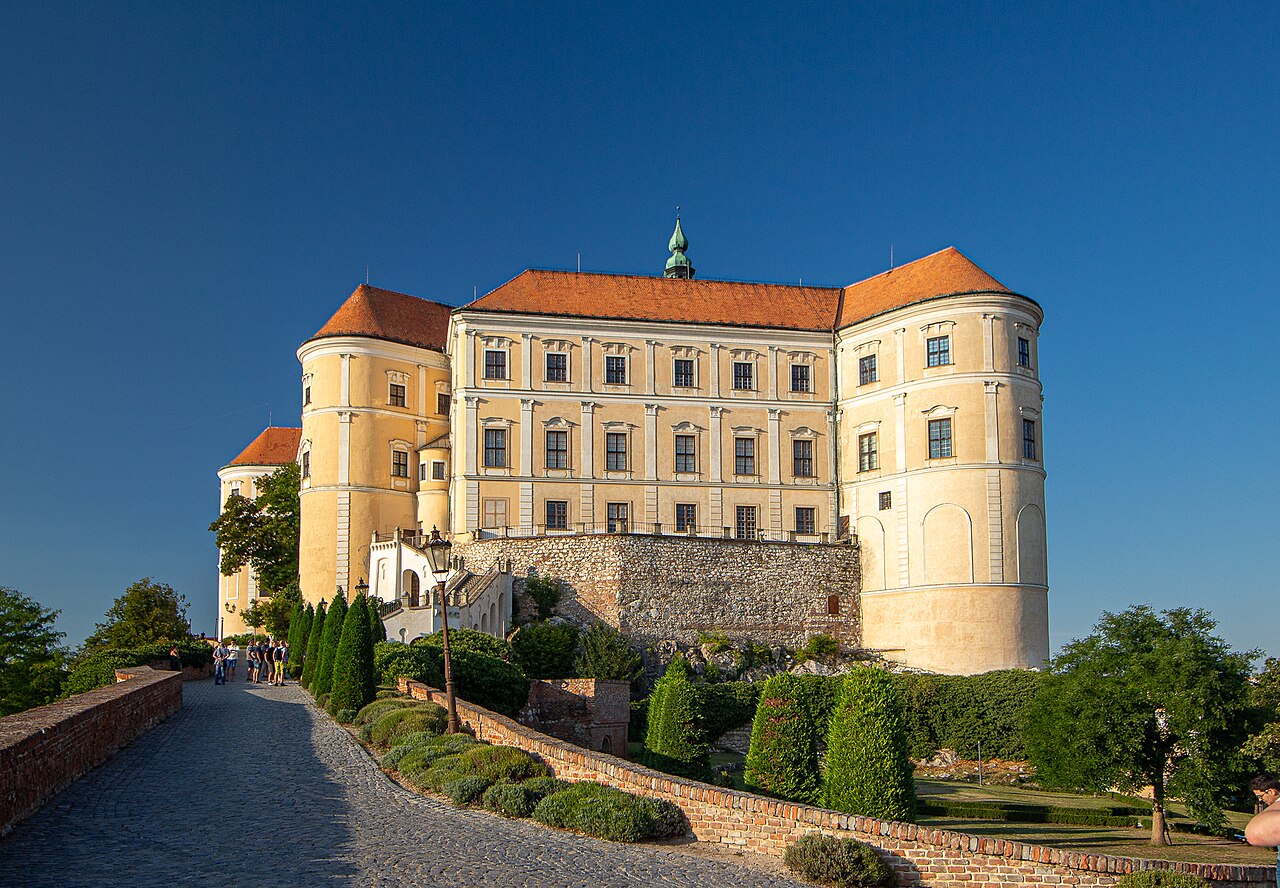
Falkenstein Castle
Falkenstein Castle, locally known as Burg Falkenstein, is a striking historic fortress perched above the village of Falkenstein in the Weinviertel region of Lower Austria. Founded around 1050 AD under the reign of Holy Roman Emperor Henry III, the castle was strategically built on an 80-meter-high limestone cliff to serve as a frontier stronghold protecting the lands of the House of Babenberg against northern incursions. This location was previously the site of an older earthen fortification, underscoring the site's long-standing military significance.
Early history and medieval significance
The castle's earliest known lords were ministerials and vassals to the Babenberg dynasty. The first documented lord, Ulrich von Falkenstein, appears in records dating from 1118. By 1177, the last true lord of the Falkenstein line, Wernhart II von Falkenstein, was mentioned. After his death, the castle's ownership passed through marriage to the Streun von Schwarzenau family, who adopted the Falkenstein name. This transition illustrates the feudal practices of inheritance and alliance through marriage prevalent in the High Medieval period.
In 1296, the castle came under the control of Friedrich II von Liechtenstein, who was forced to flee following his support of a failed rebellion against Duke Albrecht I of Austria. Subsequently, the castle was confiscated and became a pledge property, marking a shift from hereditary lordship to more complex feudal arrangements. Between 1369 and 1395, Falkenstein Castle underwent significant enlargement and fortification, enhancing its defensive capabilities in response to the turbulent political climate of the late Middle Ages.
Renaissance transformation and later military history
In the 16th century, Falkenstein Castle played a darker role in European religious conflicts. In 1538, approximately 150 Hutterites were imprisoned in its dungeons before being sold as galley slaves in Trieste, reflecting the harsh persecution faced by religious minorities during the period.
The castle's ownership changed hands in 1572 when Emperor Maximilian II sold it to Hans III, Baron of Trautson. His son, Paul Sixtus III, elevated to Imperial Count in 1598, initiated a major reconstruction that transformed Falkenstein into a Renaissance fortress. This renovation included the addition of bastions and modern defensive structures suited to withstand artillery, marking a significant architectural evolution from its medieval origins.
During the Thirty Years' War, the castle was besieged and captured in 1645 by Swedish forces under Field Marshal Lennart Torstensson. Though occupied for 15 months, the castle was not destroyed. It was later retaken by the Habsburg Imperial Army after a siege. Post-war, the castle served as a refuge against marauding Turkish and Kuruc troops during the latter half of the 17th century, although its military importance gradually declined.
Decline, restoration, and present-day status
Following its diminished strategic value, the castle was partly dismantled by its owners who allowed locals to quarry its stone, accelerating its decay until around 1830. Ownership changed multiple times until the current owning family acquired it in the mid-19th century. In 1990, Falkenstein Castle was opened to the public, offering visitors a glimpse into its layered history.
The castle is currently a partially preserved Renaissance fortress with notable ruins including towers, defensive walls, and the remnants of its Renaissance bastions. It is accessible to visitors during the summer months for a fee, and the site hosts medieval feasts and theatrical performances, enhancing its cultural significance.
Falkenstein and oberfalkenstein castles: a regional heritage
Near Falkenstein lies Oberfalkenstein Castle, now a ruin, which was first mentioned in 1307. It functioned as a fortified outpost and later became a separate fief. Both castles are connected by hiking trails from nearby villages, offering scenic views over the Möll valley and serving as important landmarks of the region's medieval heritage.
In 1693, Falkenstein came into the possession of Freiherr Wenzel von Sternbach, whose family retained it until 1883. The lordship of Falkenstein was dissolved in 1848. In 1905, Hofrat Ferdinand Kaltenegger von Riehorst acquired the castle and undertook renovations to restore the tower in a Romanesque style, aiming to impress Emperor Franz Josef I during the opening of the Tauern Railway in 1909.
Despite suffering fire damage in 1968, the castle's main tower, Unterfalkenstein, was restored, replacing its original drawbridge with a formidable door. This restoration preserved important architectural elements and maintained the castle's imposing silhouette on the landscape.
Architectural features and cultural importance
Falkenstein Castle exemplifies a Renaissance fortress built upon medieval foundations, featuring defensive walls, towers, and bastions adapted for early modern warfare. The castle's position on a limestone cliff provided natural defense, augmented by man-made fortifications. Its dungeons, halls, and courtyards reflect the layered history of feudal lordship, military conflict, and noble residence.
Today, Falkenstein Castle stands as a testament to Austria's medieval and Renaissance heritage. It attracts visitors interested in history, architecture, and scenic hiking. The castle's use for cultural events during summer months enriches its role as a living monument, connecting past and present.
Frequently asked questions (FAQ)
- How do I get to Falkenstein Castle?
- Falkenstein Castle is located above the village of Falkenstein in Lower Austria. It can be reached by hiking trails from nearby villages such as Obervellach and Gratschach, which offer scenic routes suitable for most visitors.
- What is the historical significance of Falkenstein Castle?
- Falkenstein Castle was founded in 1050 as a frontier fortress protecting the Babenberg lands. It played important roles during medieval times, the Renaissance transformation, and the Thirty Years' War, reflecting Austria's feudal and military history.
- Can I visit Falkenstein Castle year-round?
- No, Falkenstein Castle is open to visitors during the summer months only. This seasonal opening allows for preservation and offers cultural events like medieval feasts and theatre performances.
- What architectural styles are present in Falkenstein Castle?
- The castle features a mix of architectural styles, including medieval fortifications and Renaissance fortress elements, with later Romanesque-style restorations to parts of the tower.
- Is Falkenstein Castle suitable for family visits?
- Yes, the castle and surrounding hiking trails are suitable for families. The site offers educational and cultural activities during summer, making it an engaging destination for visitors of all ages.
Information
Opening hours
Summer months
Ticket prices
Fee required
Loading map...
Visitor reviews
No reviews yet. Been here? Write the first review and help other travelers!
Write the first reviewVisited this castle? Share your experience
Your review helps other travelers and adds first-hand knowledge to our encyclopedia.