Valkenburg Castle
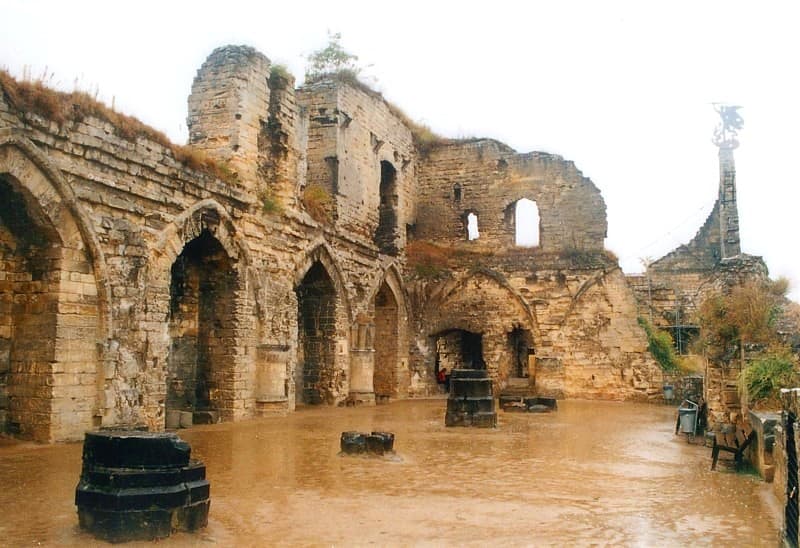
Valkenburg Castle, known locally as Kasteel van Valkenburg, is a remarkable medieval fortress ruin perched on the Heunsberg hill in the town of Valkenburg, Limburg, Netherlands. It is unique in the Dutch landscape as the only hill castle in the country, offering commanding views over the Geul valley. The castle’s strategic location and complex history of construction, siege, destruction, and rebuilding span nearly six centuries, reflecting the turbulent medieval and early modern periods of the region.
The origins of Valkenburg Castle date back to around 1115, when Gosewijn I, Lord of Valkenburg, established the first fortifications. This earliest structure consisted of a rectangular keep made from durable local stones, surrounded by wooden defenses. However, this initial castle was destroyed in 1122 during a siege led by Emperor Henry V. The castle was rebuilt multiple times over the centuries, with significant expansions and architectural evolutions occurring especially in the 13th and 14th centuries. The surviving ruins predominantly date from these later medieval phases.
Medieval origins and architectural evolution
The first castle constructed by Gosewijn I was a square residential tower built of flint and marlstone, materials quarried locally. After its destruction in 1122, Gosewijn II erected a new castle featuring a distinctive sixteen-sided marlstone tower with walls approximately two meters thick, surrounded by a wooden palisade. This tower was an early example of using marlstone, a soft limestone abundant in the region, as a primary building material.
In the early 13th century, under Gosewijn III, the castle underwent major improvements. The wooden palisade was replaced by a robust stone shield wall, and the sixteen-sided tower was substituted with a smaller ten-sided tower. Additional buildings were added, including a chapel first documented in 1226, a well chamber, and a knight’s hall precursor. These developments reflect the castle’s growing importance as a noble residence and defensive stronghold.
During the 14th century, the castle was expanded again, with the ten-sided tower replaced by a large residential building composed of two wings. The complex was enclosed within a wide shield wall fortified by two massive round towers. The southern approach was defended by a unique feature called the dwingel, a sunken path flanked by high walls and natural rock, designed to trap and expose attackers. This layout exemplifies advanced medieval defensive architecture.
Sieges, destruction, and political significance
Throughout its history, Valkenburg Castle was repeatedly besieged and damaged due to its strategic location near important political borders. In 1122, it was destroyed by Emperor Henry V’s forces. Again in 1329, during conflicts involving the Duke of Brabant, the castle suffered extensive damage. The 14th century saw reconstruction efforts that gave the castle much of its Gothic architectural character.
The castle’s ownership passed to the Duchy of Brabant in 1378 after the extinction of the Valkenburg noble line. It remained a key administrative and military center, managed by castellans appointed by the dukes. During the Eighty Years’ War (1568–1648), the castle changed hands multiple times, reflecting the broader conflict between the Dutch Republic and Spanish Habsburg forces.
In 1644, Dutch troops captured Valkenburg Castle and deliberately dismantled its fortifications to prevent Spanish use. The castle’s final destruction occurred in 1672, at the start of the Franco-Dutch War. To prevent the castle from falling into French hands, the army of King-Stadtholder William III blew it up, leaving it in ruins ever since.
The velvet cave and underground passages
One of the most fascinating aspects of Valkenburg Castle is the network of underground tunnels and caves beneath the ruins, known as the Fluweelengrot or Velvet Cave. These passages were originally marl quarries, where soft limestone was mined for building materials. Over centuries, masons and miners expanded these tunnels, which were later adapted as secret escape routes and hiding places during sieges.
The Velvet Cave labyrinth connects to various parts of the castle and extends beneath the town of Valkenburg. The caves contain a hewn chapel used during the French occupation and served as a refuge for local citizens during World War II in 1944, when American forces fought to liberate the area from German occupation. Visitors today can see charcoal drawings and inscriptions left by soldiers and civilians, providing a vivid historical record.
Post-medieval decline and preservation efforts
After the castle’s destruction in 1672, it fell into decay and was gradually scavenged for building materials by local residents. The extensive stone quarrying removed significant portions of the castle walls, including a nearly 30-meter-long north wall. A major city fire in 1773 accelerated this process, as stones from the castle ruins were reused for rebuilding homes.
Ownership of the ruins changed multiple times in the 18th and 19th centuries. In 1797, the ruins were sold to Maximilian, Count of Hoen. Later, the de Villers-Masbourg family fenced the site in 1863 to protect it. The renowned architect Pierre Cuypers drafted restoration plans in the 1890s, though these were never realized.
In the 20th century, stewardship passed to the Katacomben-Stichting foundation in 1919, which undertook consolidation and restoration work from the 1920s onward. The Stichting Kasteel van Valkenburg has managed the site since 1924, focusing on preservation and public access. Modern visitor facilities, including a glass entrance building with accessibility features and a hospitality pavilion, were completed in 2013.
Architectural remains and visitor experience
Today, visitors to Valkenburg Castle can explore the impressive ruins that showcase multiple phases of medieval architecture. Surviving features include sections of the marlstone city walls, a large round tower, a square tower on Kerkstraat, and the Halder defense tower. Three of the original six city gates—Berkelpoort, Grendelpoort, and Geulpoort—also remain, with the Geulpoort carefully rebuilt on its original foundations in 2014.
The castle’s underground Velvet Cave can be toured, revealing the extensive marl quarry network with its historical carvings and wartime graffiti. Plans are underway to reconstruct the Wolfstoren, a tower originally 30 to 35 meters high, which would further enhance the site’s historical interpretation.
Valkenburg Castle stands as a unique cultural and historical landmark in the Netherlands, blending medieval military architecture with an extraordinary subterranean heritage. Its preservation allows visitors to experience a rare example of a Dutch hill castle and to explore the fascinating stories embedded in its stone walls and hidden caves.
Frequently asked questions (FAQ)
- How do I get to Valkenburg Castle?
- Valkenburg Castle is located at Daalhemerweg 27 in the Netherlands. You can reach the castle by taking public transport to Valkenburg station and then a short walk or local bus to the site. Parking is also available nearby for those traveling by car.
- What is the historical significance of Valkenburg Castle?
- Valkenburg Castle is one of the oldest castles in the Netherlands, dating back to the 11th century. It played a crucial role in the region's medieval history, serving as a stronghold for various noble families. The castle's ruins are a testament to its strategic importance and rich past.
- When was Valkenburg Castle built?
- Construction of Valkenburg Castle began around 1050, making it a significant historical site in the region. Over the centuries, it underwent several modifications and expansions, reflecting the architectural trends of different eras. Today, visitors can explore the remains that showcase its evolving design.
- Can I visit Valkenburg Castle year-round?
- Yes, Valkenburg Castle is open to visitors throughout the year, although opening hours may vary depending on the season. It's best to check the official website for the most current visiting times before your trip. This allows you to plan your visit effectively and enjoy the site at your convenience.
- Why is Valkenburg Castle a popular tourist attraction?
- Valkenburg Castle attracts tourists for its stunning views, fascinating history, and impressive architecture. The ruins offer a glimpse into the past, while the surrounding area provides scenic landscapes perfect for hiking and exploration. Additionally, its proximity to the charming town of Valkenburg enhances the overall visitor experience.
- Is it possible to have guided tours at Valkenburg Castle?
- Yes, guided tours are available at Valkenburg Castle, providing visitors with in-depth knowledge of its history and architecture. These tours are led by knowledgeable guides who can answer questions and share fascinating stories about the castle. It's recommended to book in advance during peak tourist seasons for a guaranteed spot.
- What are the ticket prices for Valkenburg Castle?
- Ticket prices for Valkenburg Castle are generally affordable, with discounts available for children, students, and seniors. Family tickets may also be offered, making it a budget-friendly attraction for visitors. Check the official website for the latest pricing information and any special promotions.
- What are the best times to visit Valkenburg Castle?
- The best times to visit Valkenburg Castle are during the spring and early autumn when the weather is typically pleasant, and the surrounding gardens are in full bloom. Visiting during weekdays can also help you avoid the crowds, allowing for a more enjoyable experience. Additionally, special events often take place during these seasons, enhancing your visit.
- Is Valkenburg Castle accessible for visitors with disabilities?
- Valkenburg Castle strives to be accessible, with certain pathways and areas designed to accommodate visitors with disabilities. However, due to the nature of the castle's ruins, some sections may be challenging to navigate. It's advisable to contact the site in advance to confirm accessibility options and any assistance you may need.
Photo gallery

Information
Website
Visit websiteSources & official resources
Verify the information above using these authoritative references.
Loading map...
Visitor reviews
No reviews yet. Been here? Write the first review and help other travelers!
Write the first reviewVisited this castle? Share your experience
Your review helps other travelers and adds first-hand knowledge to our encyclopedia.