Sibberhuuske
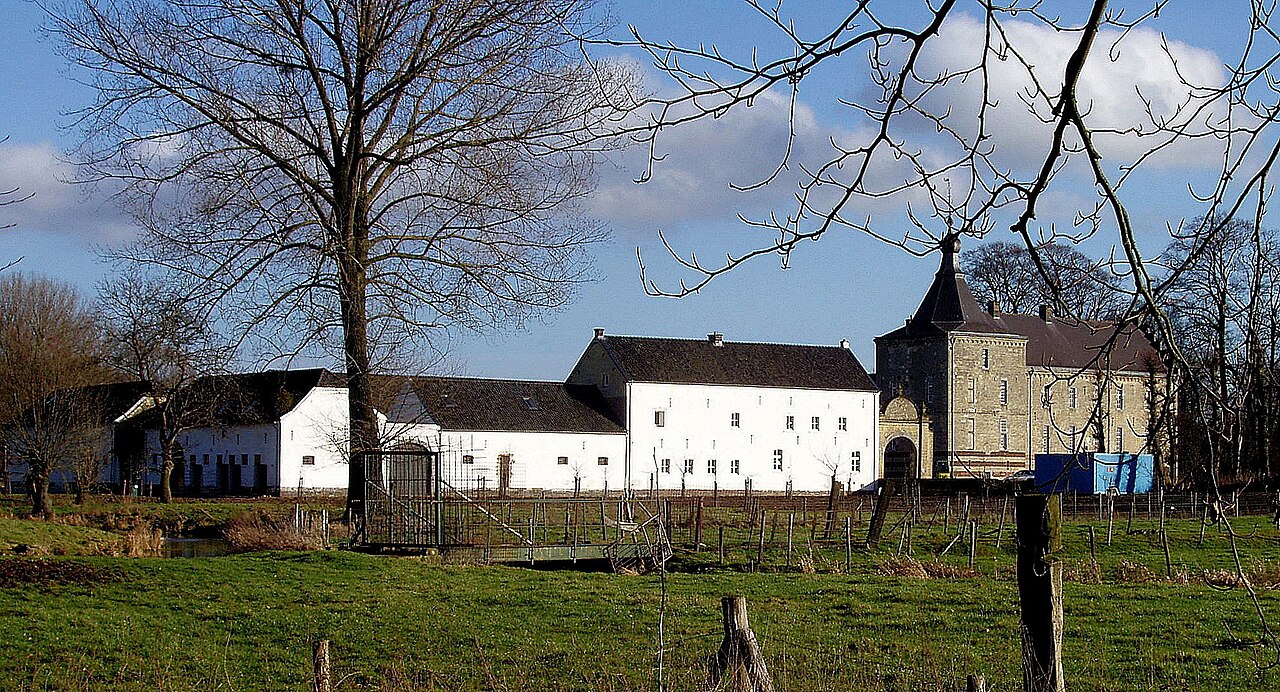
Sibberhuuske is a notable castle farm situated near the village of Sibbe in the municipality of Valkenburg aan de Geul, Netherlands. This estate's origins date back to the Middle Ages, reflecting a deep historical lineage connected to the medieval nobility and local governance of Limburg. Over the centuries, Sibberhuuske evolved from a medieval fiefdom to a residence of significant noble families, bearing witness to the turbulent political and military history of the region.
Medieval origins and noble ownership
The earliest recorded mention of Sibberhuuske dates to 1381, when it was recognized as an important fief under the lordship of Oud-Valkenburg, held by Willem van Hercke. Its history is closely intertwined with nearby fortifications such as Hartelstein castle. In the 15th century, the estate was controlled by the Horion-Van Tzevel family, and subsequently passed to the Van Ghoor family, who also managed the Hartelstein farm and Veljaeren castle. The latter connection gave rise to the alternative name Villartshof for Sibberhuuske. During this period, the estate served as a sheriff's residence, indicating its role in local administration and justice.
Political upheaval during the eighty years' war
The early Eighty Years’ War brought significant challenges to Sibberhuuske's owners. Maria van Ghoor and her husband Jacques van Oijenbrugge supported the Protestant cause led by William of Orange against Spanish rule under Isabella of Spain. Their Calvinist sympathies led to their exile and the confiscation of the estate in 1570 by order of the Duke of Alva, the Spanish governor. Subsequently, the estate was granted to Charles, Baron of Billehé, a figure connected to the Archbishop of Cologne and the Prince-Bishopric of Liège, reflecting the complex political allegiances in the region.
Military and noble connections in the 17th and 18th centuries
By the late 17th century, Sibberhuuske came under the ownership of Jan Bernard van Volckershoven, a major general in the Dutch States Army. His family ties linked the estate to prominent military and noble figures, including his sister Catharina Maria, who married Daniel Wolff, a commander and governor of Maastricht. Another sister, Odilia, married Jacques de Chalmot du Portal, a Huguenot officer who later inherited the estate. These connections underscore Sibberhuuske's role within the military aristocracy of the Dutch Republic.
Architectural features and estate layout
Sibberhuuske exemplifies a traditional castle farm arranged around a central courtyard. The construction prominently features Limburg marlstone, a local limestone, combined with brickwork. Marlstone is used in structural elements such as cornerstones and window frames, contributing to the estate's distinctive regional character. The roofs are steeply pitched with gable ends, covered with characteristic roof tiles.
Oldest sections and Renaissance influences
The southeastern section facing the street is the oldest part of the complex, featuring a robust corner tower dating from the 16th century. This tower is capped with a narrow slate-clad spire, indicative of the estate's early defensive function. Adjacent to the tower are two residential wings built in the 17th century in the Maasland Renaissance style. These wings display marlstone layering and include a single-story wing and a two-story wing overlooking the courtyard. A decorative console frieze beneath the eaves of the main residence exemplifies period stylistic details.
Farm buildings and later modifications
The farm buildings suffered extensive damage in a 1935 fire but were reconstructed using the same marlstone blocks, preserving the traditional materials. The northwest wing, housing the main entrance gate, dates from the 17th or 18th century. Above this gate is a carved stone bearing the alliance coat of arms from 1704, symbolizing the union of the De Chalmot du Portal and Van Volckershove families.
Interior elements and decorative details
Inside the residential quarters, several 17th-century features remain intact. A notable hall contains a staircase adjacent to the original kitchen, which includes a remarkable fireplace mantel dated 1604. This mantel is adorned with carved figures of Mars, the Roman god of war, and Ceres, goddess of agriculture, symbolizing the estate's martial and agrarian heritage. The hearth is decorated with star-patterned slate tiles. Another central room features a chimney mantel with stucco decoration, while a nearby chamber contains an open hearth inscribed with "AO 1624."
Grounds, moat, and surrounding structures
The estate was originally surrounded by a moat, part of its defensive system, though this was partially filled in 1948 due to road expansion. Remnants of the moat and a nearby pond remain as historical traces. The courtyard contains a deep well approximately 60 meters deep that still holds water, highlighting the estate's self-sufficiency.
Boundary walls and gates
To the east, a substantial marlstone boundary wall with gates marks the historic limits of the property. To the west, a series of marlstone gate pillars topped with decorative vases from the 18th century indicate the route to other former possessions of the lords of Sibber castle. These walls and gates are themselves recognized as national monuments, separate from the main farm complex.
Tenant farms and agricultural heritage
Nearby tenant farms from the 18th century, including properties at Dorpstraat 72 and 74, are part of the estate's broader agricultural history. Number 72 is believed to have served as a tithe barn, where grain was collected as tax. These farm buildings, along with a former brewery, are also designated national monuments, emphasizing the estate's longstanding agrarian and noble heritage.
Historical significance and preservation
Sibberhuuske's history reflects the complex social, political, and military dynamics of Limburg from the Middle Ages through the early modern period. Its connections to notable noble families, military leaders, and political upheavals during the Eighty Years’ War illustrate its regional importance. The estate's architecture preserves a blend of medieval defensive features and Renaissance stylistic elements, showcasing the evolution of castle farms in the Netherlands.
Despite the damage caused by the 1935 fire and changes to the moat in the mid-20th century, restoration efforts between 1971 and 1974 helped preserve Sibberhuuske's historic character. Since 1967, it has been officially recognized as a national monument, ensuring protection of its architectural and cultural heritage. The estate remains privately owned by the Nijst-Mommers family since 2018, continuing its legacy as a significant historic site in the Limburg region.
Frequently asked questions (FAQ)
- How do I get to Sibberhuuske?
- Sibberhuuske is located in the picturesque village of Sibbe, Netherlands, easily accessible by car and public transport. If traveling by train, the nearest station is in Valkenburg, from where you can take a bus or a short taxi ride to the castle.
- What is the historical significance of Sibberhuuske?
- Sibberhuuske dates back to the late Middle Ages and is a prime example of the region's feudal architecture. The castle has served various purposes over the centuries, including as a residence for local nobility, and it reflects the rich history of the area.
- When was Sibberhuuske built?
- Sibberhuuske was constructed in the 14th century, with later renovations that showcase different architectural styles. Its long history is evident in the structure, which has been preserved to highlight its medieval roots.
- Can I visit Sibberhuuske year-round?
- Yes, Sibberhuuske is open to visitors throughout the year, although opening hours may vary by season. It's best to check the official website for the most current visiting schedule and any possible seasonal events.
- Why is Sibberhuuske a popular tourist destination?
- Sibberhuuske attracts visitors due to its stunning architecture, historical significance, and beautiful surrounding landscapes. The castle provides a glimpse into the region's past, making it a fascinating destination for history enthusiasts and casual visitors alike.
- Is it possible to tour the interior of Sibberhuuske?
- Yes, guided tours of the interior are available, allowing visitors to explore the castle's rooms and learn about its history. Reservations are recommended, especially during peak tourist seasons to ensure you get a spot.
- What are the ticket prices for visiting Sibberhuuske?
- Tickets for Sibberhuuske are reasonably priced, with discounts available for children, students, and seniors. Check the castle's official website for the latest pricing information and any special offers.
- What are the opening hours for Sibberhuuske?
- Sibberhuuske typically opens at 10 AM and closes at 6 PM, but these hours may differ on holidays or during special events. It is advisable to verify the hours before your visit to ensure a smooth experience.
- What nearby attractions can I visit while in Sibbe?
- While in Sibbe, you can explore nearby attractions such as the charming village of Valkenburg and the stunning caves in the area. Additionally, the beautiful landscapes of South Limburg offer excellent hiking and cycling opportunities for outdoor enthusiasts.
Information
Sources & official resources
Verify the information above using these authoritative references.
Loading map...
Visitor reviews
No reviews yet. Been here? Write the first review and help other travelers!
Write the first reviewVisited this castle? Share your experience
Your review helps other travelers and adds first-hand knowledge to our encyclopedia.