Schaloen Castle
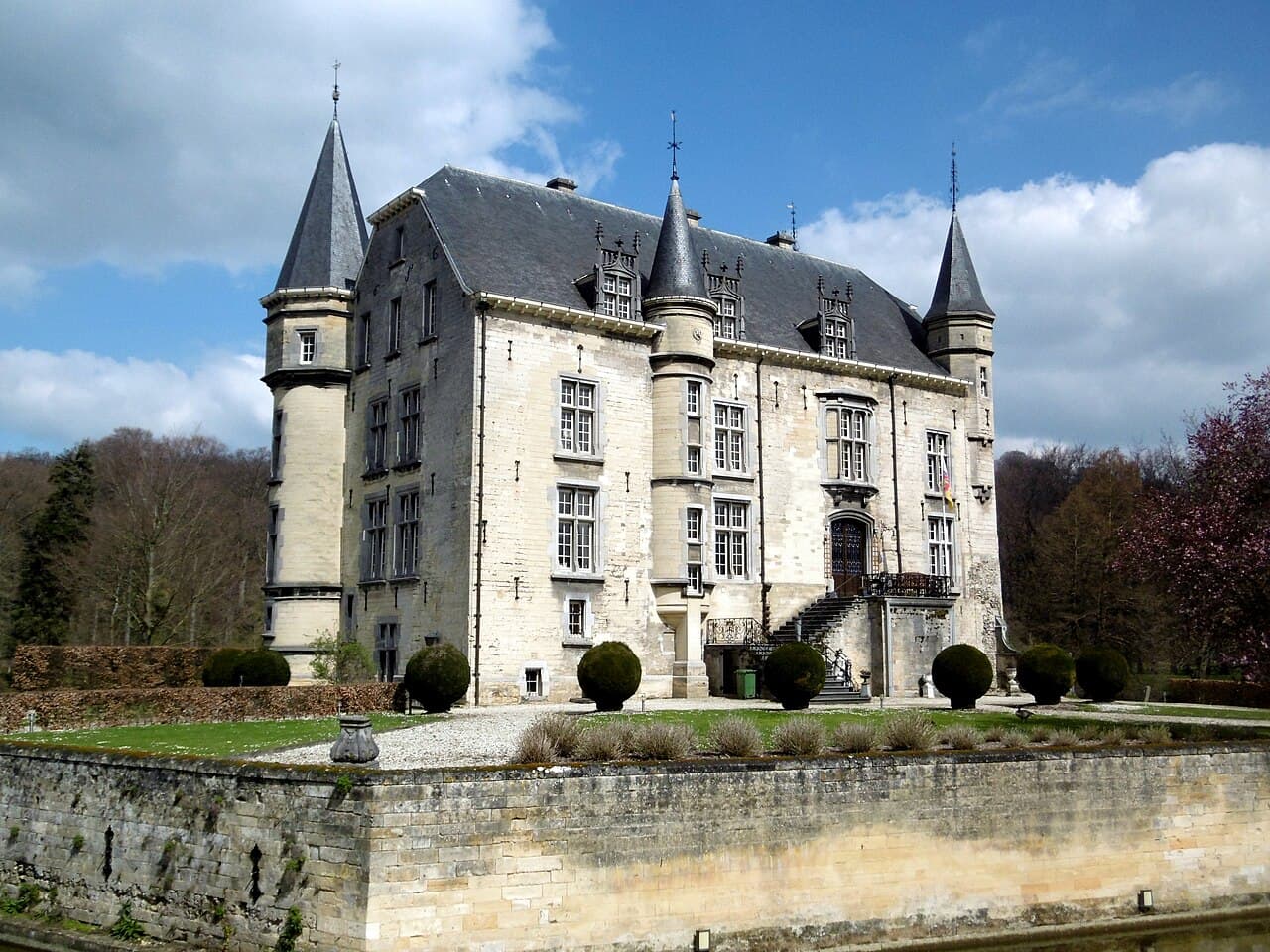
Schaloen Castle, also known locally as Kasteel Schaloen or Chaloen, is a remarkable example of a post-Renaissance moated castle located in the province of Limburg, Netherlands. Situated west of the village of Schin op Geul and within viewing distance of Genhoes Castle, Schaloen Castle embodies centuries of rich history and architectural evolution.
The castle's origins trace back to around 1200, when it was initially constructed as a defensive fortress commissioned by the noble family Van Hulsberg. The original structure was an almost square building fortified with massive buttresses at each corner and featured guerite towers atop these buttresses, providing enhanced defense and surveillance capabilities. The vaults of the present castle still contain remnants of this early medieval construction, offering a tangible link to its early medieval roots.
Medieval origins and turbulent history
The first documented mention of Schaloen Castle dates to 1375, with records from 1381 indicating partial ownership by knights Johan Struver van Hoelsbergh (also spelled Hulsberg) and Geraerdt Mulaerdt. By 1400, Johan had acquired full ownership, and the castle remained in his family for approximately 150 years. This period marked the castle's role as a noble residence and a strategic stronghold in the region.
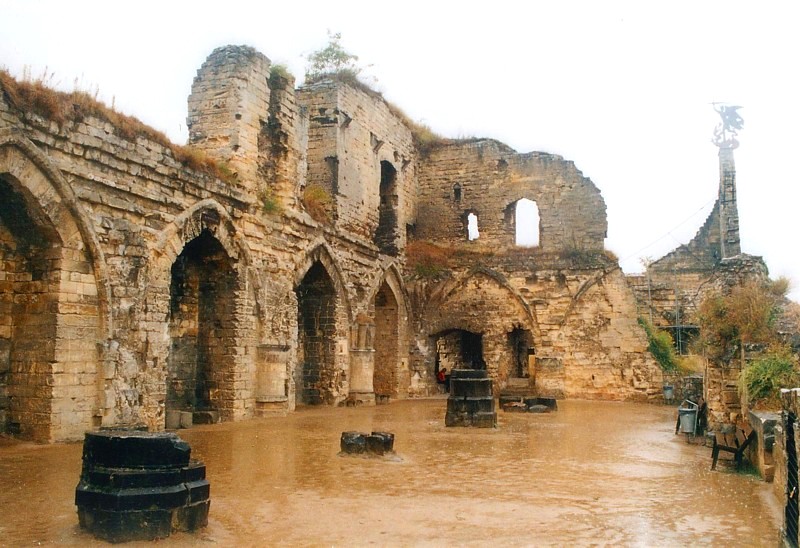
In 1574, during the Eighty Years' War, the castle was occupied by Louis of Nassau, a key figure in the Dutch struggle for independence. However, the following year, in 1575, Spanish troops destroyed the castle, leaving it in ruins. The devastation was so extensive that only fragments of the original medieval fortress survived.
Rebirth in the 17th and 18th centuries
The castle remained in a ruined state until 1650, when it came into the possession of Johan Reinier Hoen van Cartiels. He undertook the significant task of rebuilding the castle, completing reconstruction by 1656. This rebuilding phase incorporated late-Gothic architectural elements, particularly visible on the east facade, blending the medieval heritage with contemporary styles of the time. The castle was constructed primarily from marl stone, a local building material that contributes to its distinctive appearance.
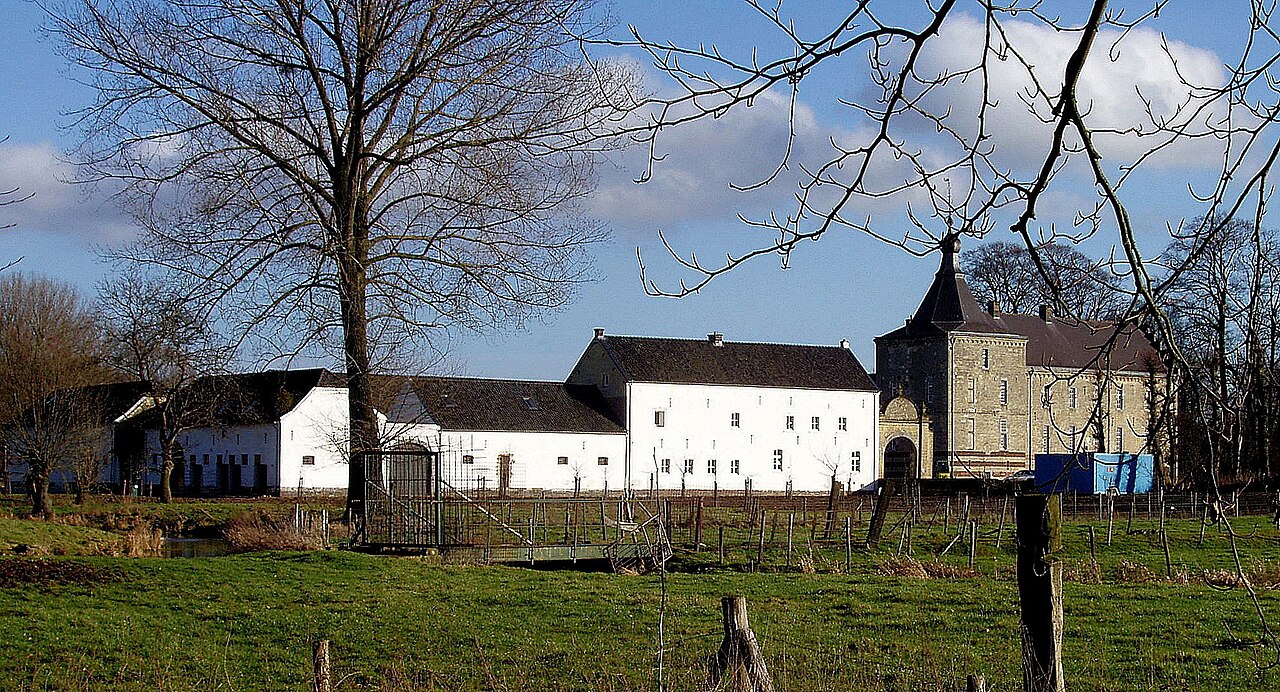
In the early 18th century, the castle's bailey was developed, including the construction of a gatehouse and associated farm buildings. These additions were functional, supporting agricultural uses while maintaining the castle's defensive character. The gatehouse, built in 1718, remains a prominent feature, complete with the original access bridge that spans the surrounding moat.
Architectural enhancements and neo-Gothic restoration
Through marriage, the castle passed into the hands of the De Villers Masbourg family. In 1894, a major restoration was commissioned by Count d' Villers - Masbourg Eclaye, a member of the Van Hulsberg family by marriage. The renowned Dutch architect Dr. Pierre Cuypers, famous for designing the Rijksmuseum in Amsterdam and restoring De Haar Castle, led the renovation. Cuypers' work introduced a neo-Gothic style to the castle, reviving medieval architectural motifs and enhancing the castle's historic character while updating it for modern use.
20th-century challenges and modern adaptation
Schaloen Castle continued to be inhabited by the Van Hulsberg family until 1934, when the last noble owner, a countess, left the property. During World War II, the castle was occupied by German forces and suffered extensive looting, rendering it uninhabitable. Subsequent decades saw the castle used as a school and periods of vacancy, during which the structure endured neglect and further damage.
In 1968, financial difficulties forced the sale of the castle. After years of decline and abuse, the property was acquired in 1985 by the Bot family, who undertook a comprehensive restoration. Their efforts transformed Schaloen Castle into a mixed-use complex featuring a private residence, holiday accommodations, and a hotel. The gatehouse on the bailey now houses a popular restaurant, and the entire castle complex remains surrounded by its original moat, preserving its defensive heritage.
Architectural features and layout
The castle's layout reflects its layered history, combining medieval defensive elements with post-Renaissance and neo-Gothic modifications. The original fortress's square plan with corner buttresses is echoed in the present structure, while the vaulted cellars preserve the earliest construction phases. The 17th-century rebuilding introduced more comfortable living quarters and stylistic updates, and the 18th-century additions of the bailey and gatehouse expanded the castle's functional footprint.
The marl stone construction gives the castle a characteristic pale hue, typical of Limburg castles, and the moat surrounding the complex enhances both its aesthetic appeal and historical defensive function. The neo-Gothic restoration by Cuypers added decorative elements such as pointed arches, ornate windows, and battlements that evoke medieval romanticism.
The gatehouse and bailey
The gatehouse, erected in 1718, serves as the main entrance to the castle grounds. It features a robust gateway with a defensive character, historically controlling access to the bailey and the main castle. The bailey itself was historically used for agricultural purposes, including farm buildings and stables, some of which have been repurposed in the modern era.
Cultural significance and visitor experience
Today, Schaloen Castle stands as a testament to the region's rich medieval and post-medieval heritage. Its layered architecture tells the story of noble families, wartime destruction, and revival through centuries. Visitors can appreciate the castle's historic ambiance while enjoying modern amenities such as the hotel and restaurant.
The castle's location in Limburg places it within a scenic landscape of rolling hills and historic sites, making it an attractive destination for cultural tourism. Its proximity to Genhoes Castle offers visitors the opportunity to explore multiple historic castles in one trip.
While the castle is privately owned and functions partly as a hotel, the restaurant in the gatehouse is open to the public, allowing guests to experience the castle's atmosphere firsthand. The moat and well-preserved architectural features provide excellent photographic opportunities and insights into Dutch castle architecture spanning several centuries.
Frequently asked questions (FAQ)
- What is the best time to visit Schaloen Castle?
- The best time to visit Schaloen Castle is during the spring and summer months when the surrounding Limburg landscape is lush and the weather is pleasant for exploring the castle grounds and nearby attractions.
- Can I dine at Schaloen Castle?
- Yes, the castle's gatehouse on the bailey houses a restaurant that is open to the public, offering visitors a chance to enjoy meals within the historic castle setting.
- Is Schaloen Castle accessible to the public?
- While Schaloen Castle functions as a private residence and hotel, the restaurant in the gatehouse is open to visitors. Access to other parts of the castle may be limited due to private ownership.
- When was Schaloen Castle originally built?
- Schaloen Castle was originally built around 1200 as a defensive fortress by the Van Hulsberg family, with significant rebuilding completed in 1656.
- What architectural styles are represented in Schaloen Castle?
- Schaloen Castle features a mix of architectural styles, including early medieval defensive elements, late-Gothic features from the 17th-century reconstruction, and a neo-Gothic restoration completed in 1894 by architect Pierre Cuypers.
Photo gallery

Information
Sources & official resources
Verify the information above using these authoritative references.
Loading map...
Visitor reviews
No reviews yet. Been here? Write the first review and help other travelers!
Write the first reviewVisited this castle? Share your experience
Your review helps other travelers and adds first-hand knowledge to our encyclopedia.