Valangin Castle
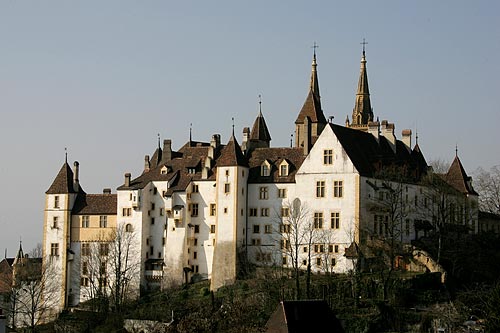
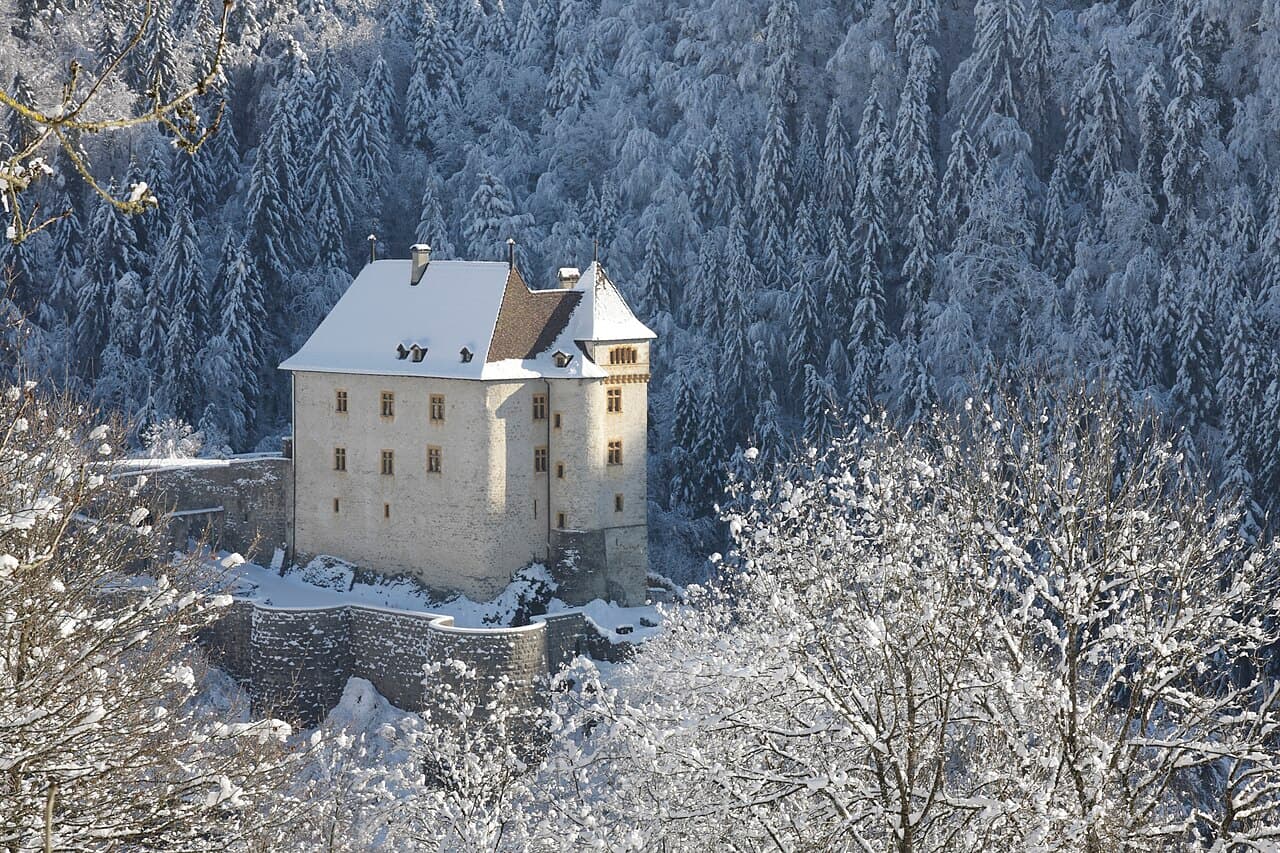
Valangin castle stands as a remarkable example of a high medieval hill castle in Switzerland, perched strategically on a rocky promontory overlooking the Seyon gorge. Its origins trace back to the mid-12th century, serving as the residence of the local lords of Valangin until 1566. The castle's architecture and fortifications evolved over several centuries, reflecting the shifting needs of defense and habitation, as well as the political ambitions of its owners.
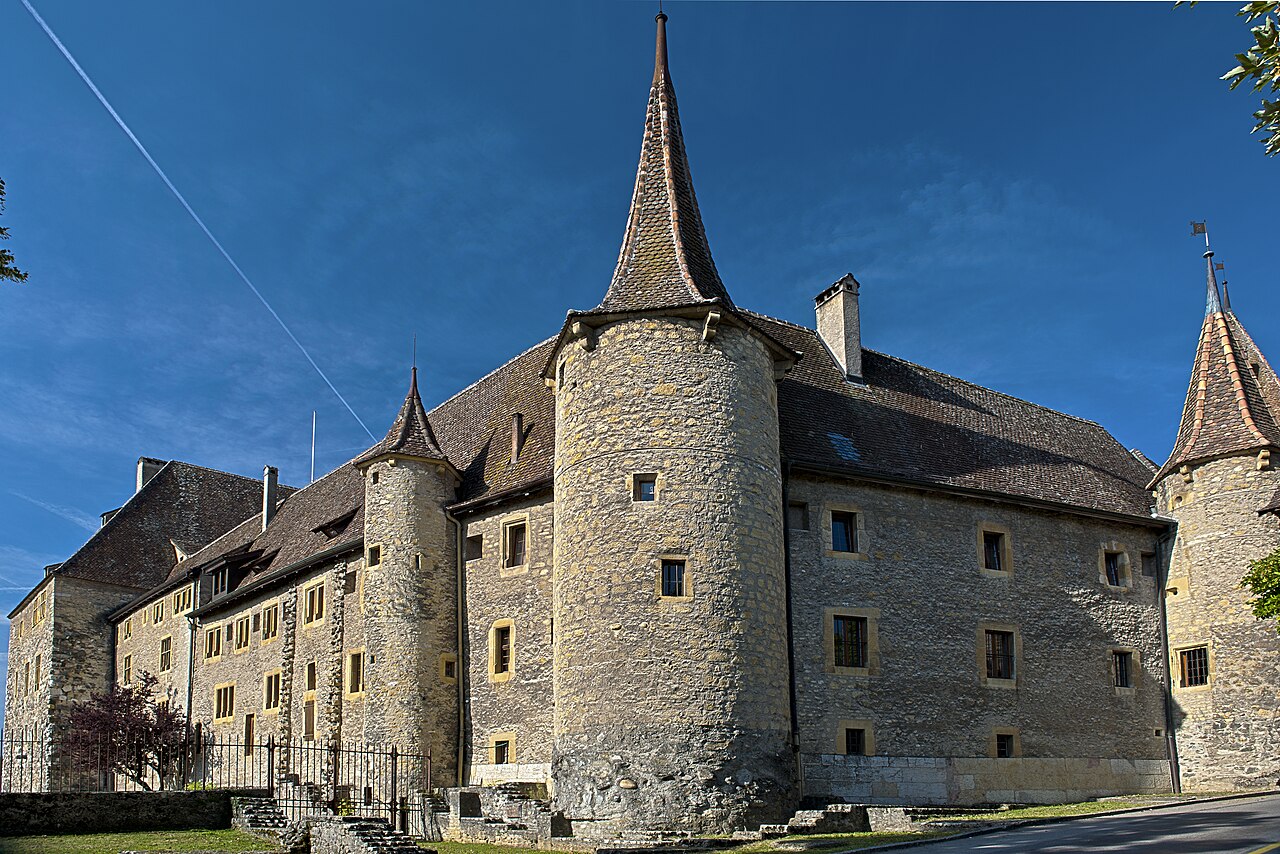
The castle's oldest visible remains date from the 13th century, including a distinctive donjon (keep) that now houses the current museum. This central tower is a robust, four-level structure that served both as a defensive stronghold and a noble residence. It features narrow arrow slits and a vaulted cellar, demonstrating medieval military architectural principles designed to withstand sieges and attacks. The courtyard, surrounded by a rampart, was the heart of the castle's daily life and administrative functions.
Historical significance and ownership
The castle's history is deeply intertwined with the noble families of the region. Initially built by the medieval lords of Valangin, it became a symbol of their power and territorial control. Documentation first mentions the castle explicitly in 1296, but archaeological and architectural evidence suggests an earlier foundation, possibly in the 11th century. By the early 13th century, the castle had passed into the hands of the counts of Neuchâtel, and from 1251 it was under the Aarberg-Valangin branch, vassals to the Bishop of Basel. These lords often competed politically and militarily with the counts of Neuchâtel, underscoring the castle's role as a regional power center.
The lords of Valangin sought to expand their influence through urban development, founding settlements such as Bonneville in the late 13th century and a borough near the castle around 1334. This expansion reflected their ambitions to consolidate control over the surrounding territory. After 1592, the lordship was reintegrated into the holdings of the counts of Neuchâtel, marking the beginning of the castle's decline in political importance.
Architectural evolution and fortifications
The castle's architecture showcases the typical features of medieval defensive residences adapted to the local topography. The original fortifications included a rectangular main tower approximately 9.7 by 7 meters, complemented by a residential wing and various utility buildings. The entire complex was constructed using durable stone masonry, leveraging the natural height advantage for defense.
In the late 13th century, the addition of the donjon with its four levels and arrow slits enhanced the castle's defensive capabilities. The surrounding bailey included a quadrangular tower known as the "Prisonnière," built in the mid-14th century, which served as part of the defensive perimeter. The castle was further fortified in the 15th century with an outer wall featuring eleven semicircular half-towers, open at the rear and pierced with loopholes for archery. These towers were connected by underground passages, allowing defenders to move unseen during attacks.
The castle's defenses were modernized around 1430 to counter the emerging threat of firearms, with the addition of semicircular towers designed to withstand cannon fire. These adaptations illustrate the castle's continuous evolution in response to advances in military technology.
Residential and functional spaces
Alongside its military functions, Valangin castle developed extensive residential quarters. Early 15th-century expansions included a large great hall and the "Monseigneur's chamber," reflecting the castle's role as a noble residence and administrative center. Around 1531, a "new house" was constructed, housing kitchens, ovens, chambers, and galleries. Unfortunately, this wing was destroyed by fire in 1747.
The castle contained numerous chambers by the mid-16th century, including well-appointed apartments with bedrooms, garderobes (medieval toilets), latrines, heating stoves, and a wine cellar. The presence of a wine press and proximity to vineyards near Lake Neuchâtel highlight the lords' economic activities. A chapel built in 1477 on a nearby promontory was connected to the castle via a fortified northern wall with a passage and town gate tower, emphasizing the site's religious as well as military significance.
Later history and preservation
Following its decline as a noble residence, the castle served various administrative and judicial roles. It functioned as a tribunal until 1848 and subsequently as a prison until 1894. During this period, some sections of the castle were altered or demolished, including the removal of the "Prisonnière" tower in 1789 and the lowering of the southern wing by one story.
In 1894, the castle was transferred to the Society of History and Archaeology of the Canton of Neuchâtel, marking its transformation into a museum. Restoration efforts between 1896 and 1916, and later in the 1990s, helped preserve the castle's structure and historical artifacts. Archaeological excavations uncovered architectural fragments and everyday items that enrich the understanding of medieval life at Valangin.
Today, the castle houses a museum collection featuring historical weapons, cannonballs, noble furniture, and traditional crafts such as bobbin lace-making demonstrations. The preservation of two prison cells and a wooden cage offers a tangible connection to its past use as a detention facility.
Medieval garden and cultural significance
In 2020, a medieval-themed garden spanning approximately 8,000 square meters was established adjacent to the castle. This garden comprises nine terraces inspired by medieval literature and botanical knowledge, enhancing the interpretive experience for visitors and celebrating the castle's rich heritage.
Valangin castle remains a nationally significant cultural monument in Switzerland, attracting visitors interested in medieval architecture, history, and regional heritage. Its well-preserved structures, combined with museum exhibits and the thematic garden, provide a comprehensive insight into the life and times of the medieval nobility in this part of Europe.
Frequently asked questions (FAQ)
- How do I get to Valangin Castle?
- Valangin Castle is located in Valangin, Switzerland, just a short drive from the city of Neuchâtel. You can reach it by public transport, taking a train to Neuchâtel and then a local bus or taxi to the castle. There are also parking facilities available for those who wish to drive.
- What is the historical significance of Valangin Castle?
- Valangin Castle dates back to the 13th century and is an important example of medieval Swiss architecture. It served as a stronghold for the Counts of Neuchâtel and played a vital role in the region's defense throughout its history. The castle's well-preserved structure provides insight into the feudal era and the lifestyle of its inhabitants.
- Can I visit Valangin Castle year-round?
- Yes, Valangin Castle is open to visitors throughout the year, although opening hours may vary by season. It is advisable to check the official website for specific visiting hours and any potential closures for maintenance or special events. Guided tours are available to enhance your experience.
- Is it possible to access the castle with a wheelchair?
- Valangin Castle has made efforts to improve accessibility, but some areas may be challenging for wheelchair users due to the castle's historic structure. It is recommended to contact the castle management in advance to inquire about specific accessibility options and assistance available during your visit.
- When is the best time to visit Valangin Castle?
- The best time to visit Valangin Castle is during the spring and early autumn months when the weather is milder, and the surrounding landscapes are beautiful. Additionally, the castle often hosts special events and guided tours during these times, making for a more enriching experience. Summer can also be a good time, but be prepared for larger crowds.
- What are the ticket prices for Valangin Castle?
- Tickets for Valangin Castle are reasonably priced, with discounts available for students, seniors, and children. Adult tickets typically cost around CHF 10, while children under a certain age may enter for free. Group rates are also available, so consider visiting with friends or family for a memorable day out.
- What nearby attractions can I visit after touring Valangin Castle?
- After exploring Valangin Castle, you can visit the charming town of Neuchâtel, which offers beautiful lakeside views and a vibrant cultural scene. The nearby Creux du Van, a natural rocky cirque, is perfect for hiking and enjoying stunning landscapes. Don’t miss the opportunity to explore local vineyards that produce excellent Swiss wines.
- What architectural features can I expect to see at Valangin Castle?
- Valangin Castle showcases impressive medieval architecture, including robust stone walls, a drawbridge, and a fortified tower. Visitors can admire the castle's well-preserved interiors, which reflect the living conditions of its historical inhabitants. The castle’s design not only served defensive purposes but also highlights the artistry of the period.
Photo gallery

Information
Website
Visit websiteSources & official resources
Verify the information above using these authoritative references.
Loading map...
Visitor reviews
No reviews yet. Been here? Write the first review and help other travelers!
Write the first reviewVisited this castle? Share your experience
Your review helps other travelers and adds first-hand knowledge to our encyclopedia.