Vajdahunyad Castle
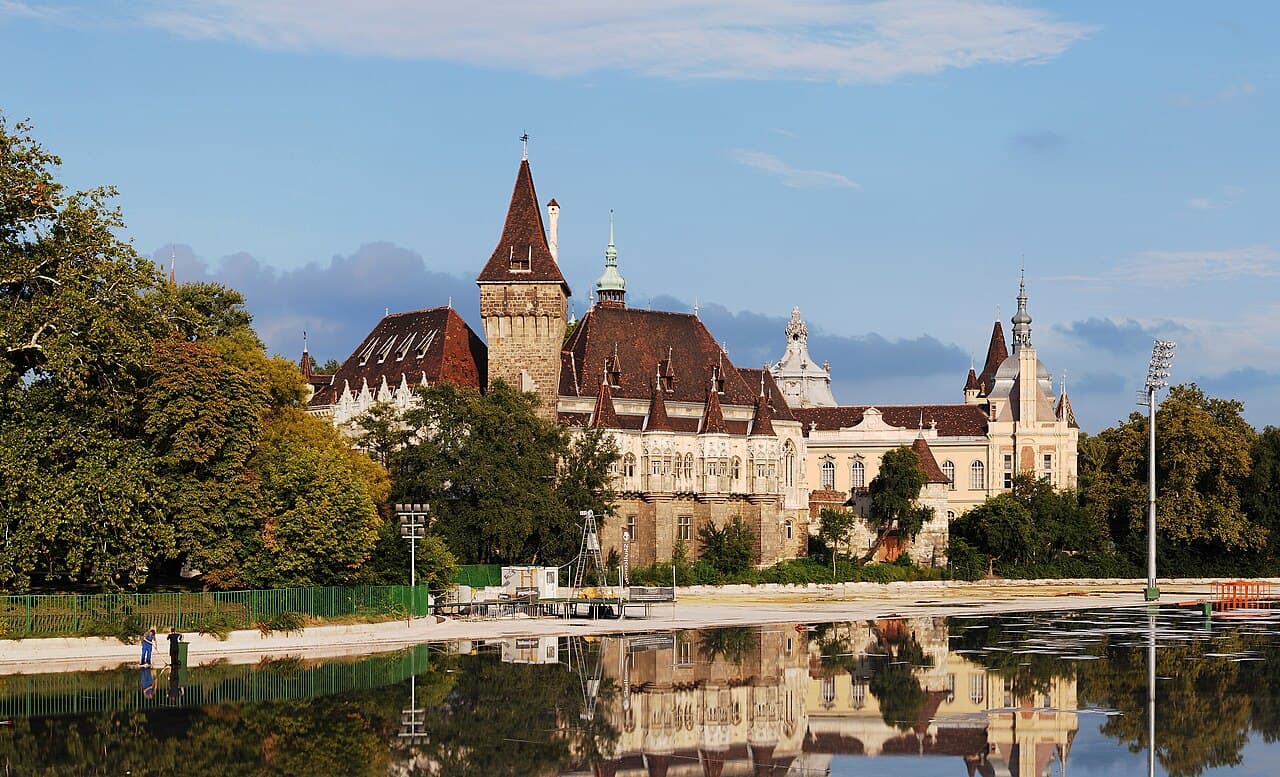
Vajdahunyad Castle, located in the heart of Budapest's City Park (Városliget), stands as a remarkable architectural ensemble and cultural landmark. Unlike traditional castles with medieval origins, Vajdahunyad Castle was conceived as a monumental tribute to Hungary's rich architectural heritage and its millennium of statehood. Originally built in 1896 for the Millennial Exhibition commemorating the 1000th anniversary of the Magyar conquest of the Carpathian Basin, the castle is a composite of several historical architectural styles and iconic buildings from across Hungary and Transylvania.
Designed by the prominent Hungarian architect Ignác Alpár, the castle was initially erected as a temporary structure made of wood and cardboard. Its immense popularity led to a permanent reconstruction in stone and brick, completed by 1908. Today, Vajdahunyad Castle is a well-preserved monument showcasing a blend of Romanesque, Gothic, Renaissance, and Baroque architectural styles. It houses the Hungarian Agricultural Museum, the largest of its kind in Europe, which offers extensive exhibits on the country's agricultural history and rural traditions.
Architectural composition and stylistic diversity
Vajdahunyad Castle is unique in that it combines twenty-one smaller buildings into a single complex, each a faithful replica of significant historical structures from the medieval Kingdom of Hungary and Transylvania. The castle is divided into four main sections, each representing a different architectural style:
Romanesque section
This part includes the Ják Chapel, inspired by the Romanesque church of Lébény, featuring a detailed portal modeled after the entrance of Ják Abbey. The cloister and pillars reflect the Árpád dynasty era, Hungary's early medieval period. The Romanesque section also features an auditorium and a stone bridge adorned with lion sculptures. The gatehouse here is notable for its imitation of a portcullis and battlements inspired by the Diakovár episcopal castle.
Gothic section
The Gothic wing is dominated by the Nyebojsza Tower, a replica of the original Vajdahunyad Castle tower in Transylvania, historically linked to the Hunyadi family. This section includes the Hunyadi loggias, a knights’ hall, a chapel from the Zápolya family estate, and a cathedral-like facade. The Hunyadi courtyard is adorned with relief portraits of Árpád dynasty kings and sculptures of King Matthias Corvinus and Beatrix of Aragon. The Apostles’ Tower completes this group, modeled after the citadel tower from Segesvár (Sighișoara).
Renaissance and baroque sections
The main entrance building showcases Baroque and Renaissance elements, with a dome inspired by the Charles Gate in Gyulafehérvár (modern Alba Iulia). The Katalin Bastion tower recalls the Catherine Gate of Brassó (Brașov), featuring a balcony inspired by the Bártfa town hall. German Renaissance influences appear in facades decorated with sgraffito, and a 50-meter-high tower capped with an onion dome exemplifies Baroque style. A smaller French Renaissance tower is adorned with dolphin motifs.
Historical background and cultural significance
The castle's name and Gothic wing pay homage to the medieval Vajdahunyad Castle in Transylvania, associated with the legendary 15th-century Hungarian military leader János Hunyadi and his wife Elizabeth Szilágyi. The original temporary pavilion was dismantled due to fragile materials, but the permanent stone and brick reconstruction was inaugurated in 1907 by Emperor Franz Joseph I. Since then, the castle has been a symbol of Hungarian national identity and architectural heritage.
Throughout the 20th century, Vajdahunyad Castle endured damage during World War II and the 1956 Hungarian uprising, necessitating restorations completed by 1985. It has been protected as a historic monument since 1991. The castle also houses a Roman Catholic chapel modeled on the medieval Ják Chapel, consecrated in 1915 and still active today.
Statues of notable Hungarians, including architect Ignác Alpár, the medieval chronicler Anonymus, and actor Béla Lugosi, adorn the grounds, reinforcing the castle's role in celebrating Hungarian culture and history. A bust of Béla Lugosi was clandestinely installed in 2003, adding a modern cultural layer to the site.
The hungarian agricultural museum
Since its reopening in 1907, Vajdahunyad Castle has been home to the Hungarian Agricultural Museum, the largest agricultural museum in Europe. The museum's exhibits cover a broad spectrum of Hungary's agricultural history, from Neolithic farming tools to 20th-century machinery. It includes interactive displays for children and comprehensive collections related to animal husbandry, hunting, fishing, and forestry.
The museum's hall of hunting is particularly notable for its extensive collection of antlers, horns, mounted animals, and hunting artifacts displayed under vaulted ceilings and stained glass windows. This evocative space resembles a sacred hall dedicated to hunting traditions and natural heritage.
Architectural details and visitor experience
The castle's interior is equally impressive, featuring a grand marble staircase, intricately carved columns, crystal chandeliers, and stained glass windows that enhance the historic atmosphere. The furnishings, designed by Dénes Györgyi and completed in 1912, consist of heavily carved wooden pieces in simple cubic forms, blending artistic elegance with monumental historicity.
Visitors can explore the castle's four bridges connecting it to the surrounding City Park, with the main entrance facing the iconic Heroes’ Square. Since 2015, access to the gatehouse tower and Apostles’ Tower has been possible, offering elevated views of the castle grounds and the park.
Vajdahunyad Castle serves not only as a museum but also as a venue for festivals, concerts, and cultural events, making it a vibrant part of Budapest's cultural life. Its picturesque setting among trees, ponds, and pebbled paths in City Park adds to its charm and appeal.
Visiting information and cultural events
Open to the public, Vajdahunyad Castle offers visitors a chance to immerse themselves in Hungary's architectural legacy and agricultural history. The museum hosts rotating exhibitions and educational programs suitable for all ages. Its location in City Park makes it easily accessible from Budapest's city center, with nearby attractions including the Széchenyi Thermal Baths and Heroes’ Square.
The castle's unique blend of styles and its rich collections make it a must-see destination for those interested in history, architecture, and Hungarian culture.
Frequently asked questions (FAQ)
- What is the historical significance of Vajdahunyad Castle?
- Vajdahunyad Castle was built to celebrate the 1000th anniversary of the Hungarian state and showcases Hungary's architectural heritage through replicas of historic buildings.
- Can I visit the Hungarian Agricultural Museum inside Vajdahunyad Castle?
- Yes, the castle houses the Hungarian Agricultural Museum, which is open to visitors and features extensive exhibits on Hungary's agricultural history.
- What architectural styles are represented in Vajdahunyad Castle?
- The castle uniquely combines Romanesque, Gothic, Renaissance, and Baroque architectural styles in its design.
- Is Vajdahunyad Castle accessible to visitors year-round?
- Yes, Vajdahunyad Castle is generally open daily from 10:00 to 18:00, though it is advisable to check for any seasonal changes or special closures.
- Are there any special events held at Vajdahunyad Castle?
- The castle hosts various festivals, concerts, and cultural events throughout the year, making it a lively cultural venue in Budapest.
Photo gallery

Information
Opening hours
10:00-18:00, daily
Ticket prices
€5 adult, €3 child
Current owner
State museum
Website
Visit websiteSources & official resources
Verify the information above using these authoritative references.
Loading map...
Visitor reviews
No reviews yet. Been here? Write the first review and help other travelers!
Write the first reviewVisited this castle? Share your experience
Your review helps other travelers and adds first-hand knowledge to our encyclopedia.