Aquincum
Aquincum was a significant Roman city and military fortress located on the northeastern borders of the Roman province of Pannonia. Today, its ruins lie within the Óbuda district of Budapest, Hungary, offering a unique glimpse into Roman urban and military architecture. Aquincum served as a vital military base and civilian settlement during the Roman Empire, reflecting the empire's strategic presence in Central Europe.
Historical background and significance
The site of Aquincum was initially established as a military camp (castrum) in the 1st century AD, designed to secure the empire's frontier along the Danube River. Over time, it evolved into a flourishing city, becoming the capital of the Roman province of Pannonia Inferior. The city reached its zenith in the 2nd and 3rd centuries AD, serving both as a military stronghold and a center of civilian life.
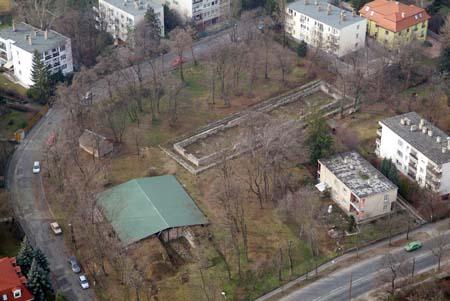
Aquincum's strategic location on the Danube made it a key point for controlling trade and military movements. The city was home to a legionary fortress, which was fortified with bastioned defensive walls and towers typical of Roman military architecture. These fortifications were designed to withstand invasions and protect the empire's northern boundaries.
The site is also historically notable for its cultural contributions. It is believed that Marcus Aurelius, the Roman emperor and philosopher, wrote parts of his famous work Meditations while stationed at Aquincum, highlighting the city's importance as a place of military and intellectual activity.
Architectural features and layout
The remains of Aquincum reveal a complex urban plan combining military and civilian elements. The fortress was characterized by thick bastioned walls with projecting towers that allowed defenders to cover all approaches with overlapping fields of fire. These walls enclosed barracks, administrative buildings, and storage facilities essential for sustaining the legion stationed there.
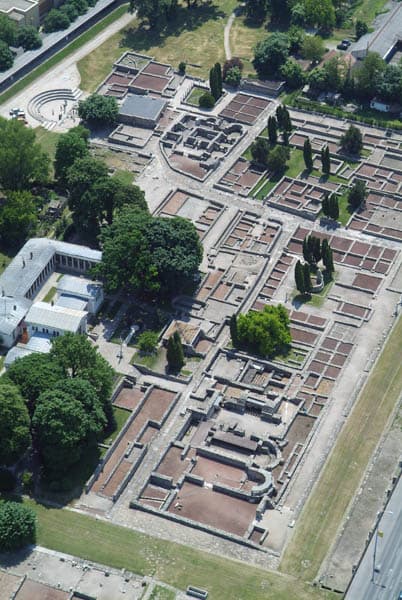
Outside the fortress walls, the civilian city developed with typical Roman features such as a forum, baths, amphitheater, and residential quarters. The ruins include well-preserved mosaics, public baths with hypocaust heating systems, and remnants of temples, showcasing the city's cultural and architectural sophistication.
The urban design reflects Roman engineering prowess, with paved streets, aqueducts supplying fresh water, and sewer systems. These infrastructures supported a population that at its peak numbered in the tens of thousands.
Archaeological discoveries and preservation
Excavations at Aquincum began in the late 19th century and have continued intermittently, uncovering extensive remains of the fortress and city. Archaeologists have revealed detailed insights into Roman military life, urban planning, and daily activities through artifacts such as coins, pottery, inscriptions, and tools.
The site is now a protected archaeological park and museum complex within Budapest, allowing visitors to explore the ruins and learn about Roman history in Hungary. The preservation efforts focus on maintaining the structural remains and displaying artifacts in situ, providing an immersive historical experience.
Cultural and heritage importance
Aquincum stands as one of the most important Roman archaeological sites in Central Europe. It illustrates the extent of Roman influence beyond Italy and into the provinces along the Danube frontier. The site contributes significantly to understanding Roman military architecture, urban development, and provincial life.
Today, Aquincum is a key tourist attraction in Budapest, drawing scholars, history enthusiasts, and visitors interested in Roman civilization. The site also hosts educational programs and events that highlight its historical legacy and architectural achievements.
Visiting Aquincum
The archaeological park is accessible to the public and includes a museum displaying artifacts excavated from the site. Visitors can walk among the ruins of the fortress walls, explore the remains of baths and the amphitheater, and view reconstructions of Roman buildings.
Information panels and guided tours provide context about the city's history, military significance, and daily life during the Roman era. The site is an essential destination for those interested in Roman history and ancient architecture.
Frequently asked questions (FAQ)
- What is the historical significance of Aquincum?
- Aquincum was once the capital of the Roman province of Pannonia and served as a vital military and economic center in ancient times. The site features extensive ruins, including an amphitheater, baths, and residential buildings, offering insight into Roman life in this region. Today, it is a UNESCO World Heritage site, attracting history enthusiasts from around the world.
- When was Aquincum built?
- Aquincum was established in the 1st century AD, with its development peaking during the Roman Empire. The archaeological site showcases structures from various periods, reflecting the evolution of Roman urban planning and architecture. Excavations continue to reveal more about its historical timeline.
- How do I get to Aquincum?
- Aquincum is easily accessible by public transportation, including trams and buses from central Budapest. The nearest tram stop is located within walking distance of the site, making it convenient for visitors. Additionally, guided tours often include transportation, enhancing the experience.
- What are the opening hours for Aquincum?
- Aquincum is open to visitors throughout the year, although hours may vary seasonally. Typically, the site opens at 10 AM and closes at 5 PM during the winter months, while summer hours extend until 6 PM. It's advisable to check the official website for any changes or special events.
- Can I take guided tours at Aquincum?
- Yes, guided tours are available at Aquincum, providing in-depth knowledge of the site's history and architecture. These tours are led by knowledgeable guides who can offer insights into the daily life of ancient Romans. Audio guides are also available for those who prefer to explore at their own pace.
- Is it possible to visit Aquincum with children?
- Aquincum is a family-friendly destination, with plenty of space for children to explore and learn about history. The site features interactive exhibits and educational activities designed to engage younger visitors. Families will appreciate the open areas where children can run and discover the ancient ruins.
- What are the ticket prices for Aquincum?
- Ticket prices for Aquincum are quite reasonable, with discounts available for students and seniors. Admission typically includes access to the museum and the archaeological park. Group rates are also offered, making it an affordable option for school trips or family outings.
- What is the best time to visit Aquincum?
- The best time to visit Aquincum is during the spring and fall when the weather is mild and pleasant. These seasons provide ideal conditions for exploring the outdoor ruins and enjoying the surrounding park. Summer can be quite hot, while winter may limit access due to weather conditions.
- Are there any nearby attractions to Aquincum?
- Yes, Aquincum is located near several other attractions, including the picturesque Margaret Island and the stunning Danube River promenade. Visitors can also explore the nearby Óbuda district, known for its charming streets and historical sites. These nearby attractions make for a full day of exploration in Budapest.
Photo gallery

Information
Loading map...
Visitor reviews
No reviews yet. Been here? Write the first review and help other travelers!
Write the first reviewVisited this castle? Share your experience
Your review helps other travelers and adds first-hand knowledge to our encyclopedia.