Citadella, Budapest
The Citadella is a prominent bastioned fortress situated on the summit of Gellért Hill in Budapest, Hungary. Constructed in the 19th century, this imposing structure was built with a strategic military purpose, commanding sweeping views over the city and the Danube River. The name "Citadella" derives from the Hungarian word for "citadel," referring to a type of fortress, and it is uniquely associated with this particular fortification on Gellért Hill, which has played a crucial role in Budapest's defensive history.
Historical background and strategic importance
The Citadella was erected following the Hungarian Revolution of 1848, during a period of political upheaval and military conflict within the Habsburg Empire. After the revolution was suppressed, the Habsburg authorities sought to establish a stronghold to control the city and prevent further insurrections. The fortress was completed in 1854 under the direction of the Austrian military, serving as a symbol of imperial power and a deterrent against rebellion.
Its location atop Gellért Hill was deliberately chosen for its commanding vantage point, providing clear views of the entire city of Budapest, including both Buda and Pest, as well as the Danube River. This elevated position allowed for effective surveillance and artillery placement, making the Citadella a key defensive installation.
Architectural features and design
The Citadella exemplifies 19th-century bastioned fortress design, characterized by its robust walls, angular bastions, and strategic layout intended to maximize defensive capabilities. The fortress is roughly rectangular in shape, with bastions at each corner designed to cover all approaches with overlapping fields of fire. These bastions allowed defenders to repel attackers from multiple angles.
The walls of the Citadella are constructed from stone and brick, with thick ramparts designed to withstand artillery bombardment. The fortress includes a main gate, several internal courtyards, and a network of underground passages and chambers used for storage and troop movement.
Within the fortress, there were barracks for soldiers, ammunition depots, and command quarters. The design reflects military architectural principles of the modern period, focusing on functionality and defense rather than aesthetic embellishment.
The citadella's role in budapest's history
Throughout its history, the Citadella has witnessed several significant events. During the Hungarian Revolution of 1956, it was a strategic point for both government forces and revolutionaries. The fortress's elevated position made it a focal point for artillery and observation.
After World War II, the Citadella gradually lost its military importance and was eventually opened to the public. Today, it serves as a popular tourist attraction and a cultural landmark, offering panoramic views of Budapest and the Danube.
Visitor experience and current status
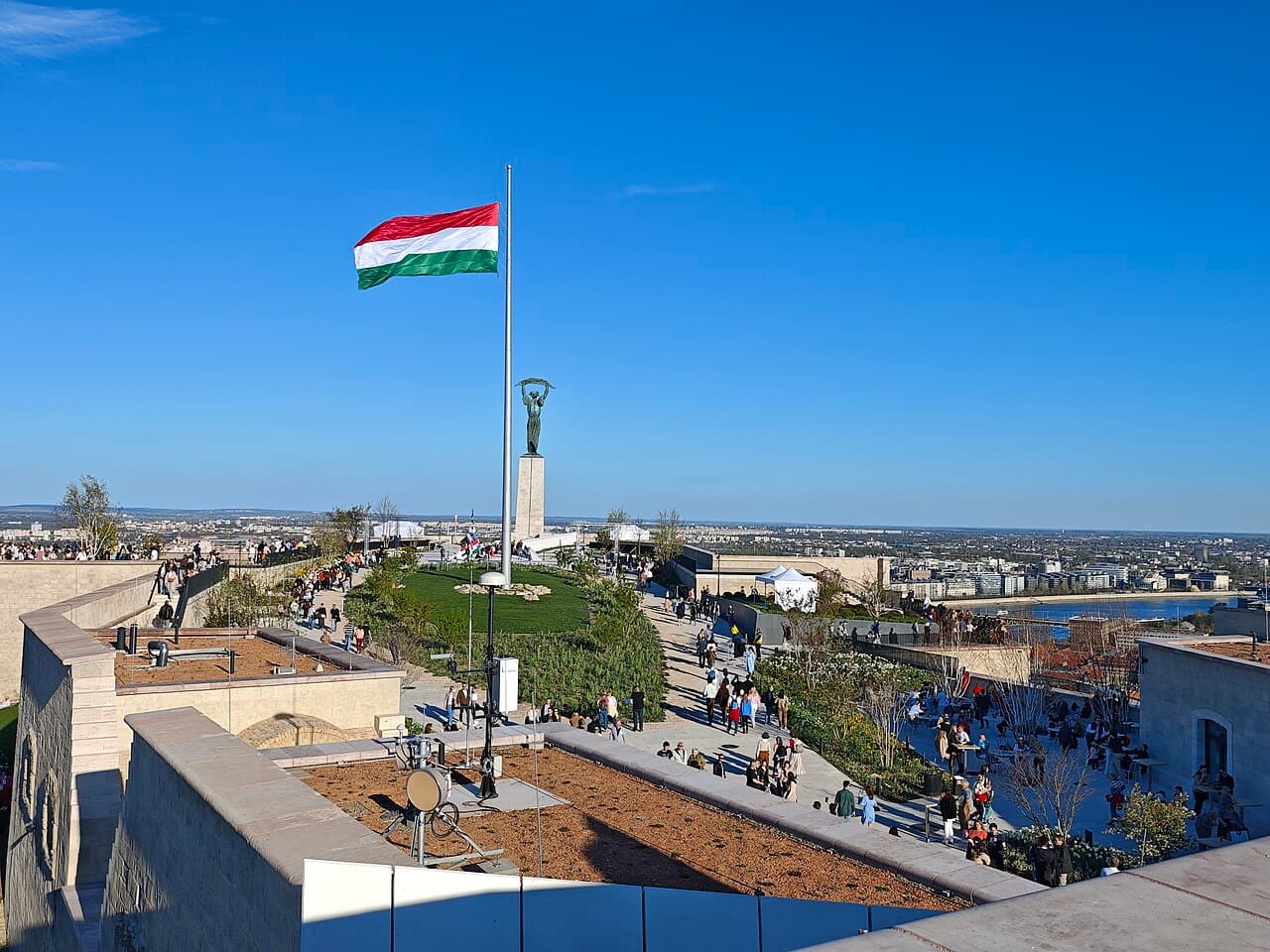
The Citadella is well preserved and accessible to visitors year-round. Tourists can explore the fortress grounds, including the bastions and courtyards, and enjoy the extensive vistas of Budapest's cityscape. The site also features monuments and memorials, including the iconic Liberty Statue, which commemorates those who sacrificed their lives for Hungary's freedom.
Visitors often combine a trip to the Citadella with hikes on Gellért Hill or visits to nearby attractions such as the Gellért Thermal Baths and the Liberty Bridge. The fortress remains a significant cultural and historical symbol in Budapest, reflecting the city's complex past and architectural heritage.
Architectural significance and preservation
The Citadella stands as an example of 19th-century military architecture adapted to the specific topography of Gellért Hill. Its bastioned design is typical of fortifications built to withstand the evolving artillery technology of the era. The fortress's preservation allows for the study of military engineering and urban defense strategies from the modern period.
Conservation efforts have maintained the structural integrity of the walls and bastions, ensuring that the Citadella remains a prominent historical monument. The site is managed to balance public access with preservation, allowing visitors to appreciate both the fortress's military function and its role in Budapest's urban landscape.
Frequently asked questions (FAQ)
- How do I get to the Citadella in Budapest?
- The Citadella is located on Gellért Hill and can be reached by foot via several hiking paths or by car. Public transportation options include buses and trams that stop near the base of the hill, followed by a short uphill walk.
- What is the historical significance of the Citadella?
- The Citadella was built in the 19th century by the Habsburgs after the Hungarian Revolution of 1848 to control Budapest and prevent further uprisings. It has served as a military fortress and a strategic observation point throughout its history.
- Can I visit the inside of the Citadella fortress?
- Yes, visitors can explore the fortress grounds, including the bastions, courtyards, and internal pathways. While some interior buildings are not open to the public, the outdoor areas offer a comprehensive experience of the site's military architecture.
- When is the best time to visit the Citadella?
- The Citadella is open daily from 9:00 to 20:00. Spring and autumn offer pleasant weather and fewer crowds, making these seasons ideal for visiting. Sunset visits are popular for panoramic views of Budapest illuminated at night.
- Is there an entrance fee to visit the Citadella?
- Visiting the Citadella is free of charge. There are no entrance fees, making it accessible to all visitors interested in history and panoramic views.
Photo gallery

Information
Opening hours
9:00-20:00, daily
Ticket prices
Free
Current owner
Municipality of Budapest
Loading map...
Visitor reviews
No reviews yet. Been here? Write the first review and help other travelers!
Write the first reviewVisited this castle? Share your experience
Your review helps other travelers and adds first-hand knowledge to our encyclopedia.