Uzhhorod Castle
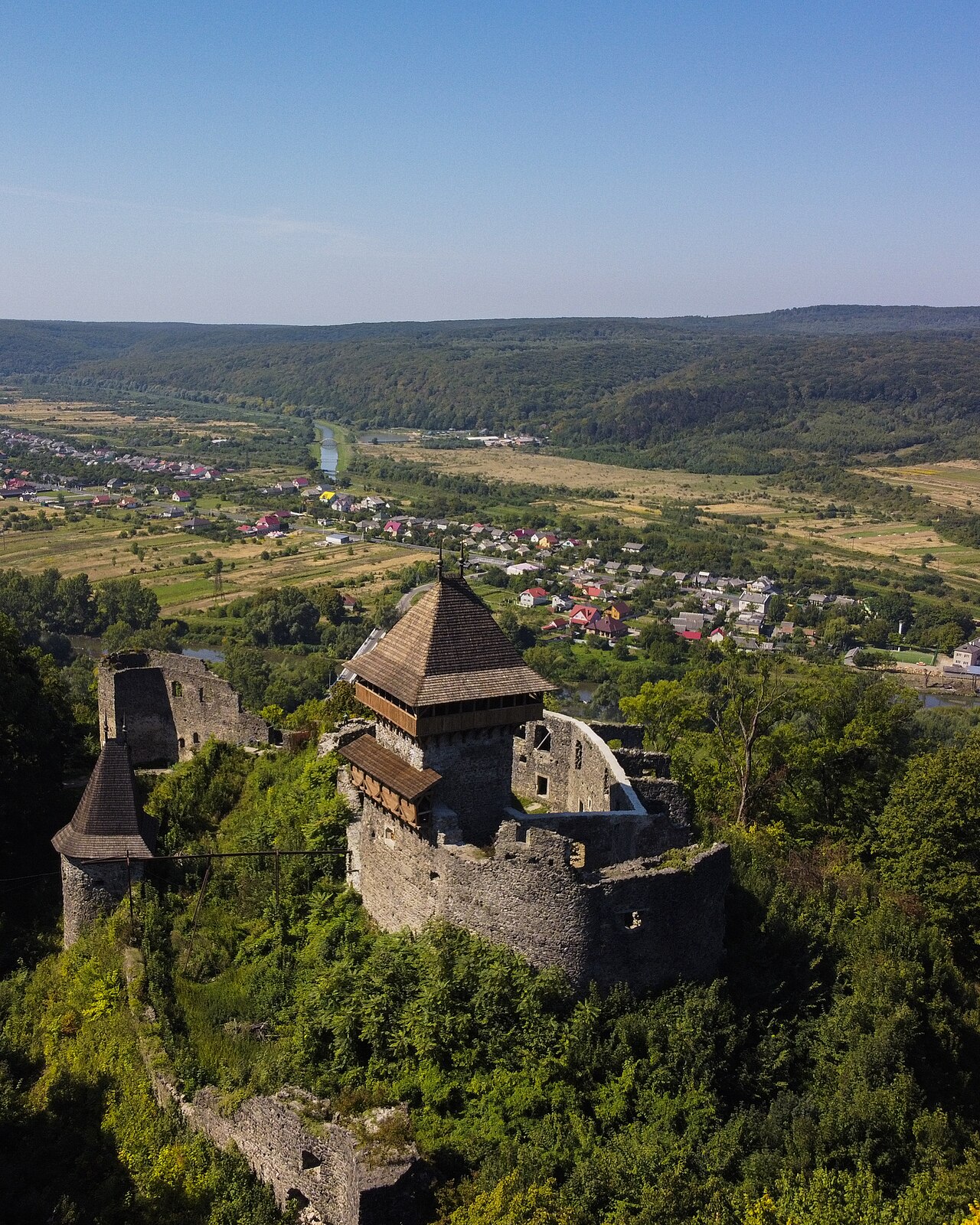
Uzhhorod Castle stands as a monumental testament to the rich history and architectural evolution of fortifications in western Ukraine. Perched strategically atop Castle Hill in the city of Uzhhorod, this hill castle has witnessed centuries of military, political, and religious developments since its inception in the early medieval period. Its commanding position overlooking the surrounding landscape allowed it to serve as a vital defensive stronghold and a center of regional power.
The origins of Uzhhorod Castle trace back to the early medieval era, initially founded by the White Croats, a Slavic tribe inhabiting the area. The first fortification was a wooden structure, strategically built on a hill to oversee and protect the adjacent settlement. This primitive fortress was under the control of Prince Laborec during the 9th century, who ruled the local principality until the arrival of the Hungarian tribes around 898 AD. The Hungarian conquest led to the destruction of the wooden fortress and the death of Prince Laborec near the river now bearing his name, marking a significant turning point in the castle’s history.
Medieval transformation and stone fortifications
Following the Hungarian conquest, the region became part of Ung County within the Kingdom of Hungary by the late 10th to early 11th centuries. During this period, the wooden fortification was replaced by a more durable stone castle, reflecting the evolving military architecture of the time. The stone castle demonstrated its defensive strength during the Pecheneg raid of 1086, successfully repelling an attack led by Khan Kutesk, which underscored the fortress’s strategic importance in the region.
The devastating Mongol invasion of 1241-42 prompted King Béla IV of Hungary to initiate widespread fortification efforts across his kingdom. Uzhhorod Castle was significantly reinforced during the mid-13th century, with enhancements to its stone walls and defensive structures to withstand future assaults. Archaeological evidence and historical records indicate that these fortifications were critical in maintaining the castle’s resilience during turbulent times.
Renaissance rebuilding and military modernization
A pivotal chapter in the castle’s history began in 1312 when King Charles Robert of Anjou granted the castle and its lands to the Italian Drugeth family as a reward for their loyalty during a rebellion. The Drugeths maintained control of Uzhhorod Castle for approximately 350 years, during which they undertook significant rebuilding efforts in the late 16th century. This renovation introduced bastions designed by Italian engineers, adapting the fortress to the emerging threats posed by firearms and gunpowder artillery. These bastions, rhomboid in shape and ranging from 10 to 15 meters in height, were edged with white stone tiles arranged in a square pattern, enhancing both their defensive capability and aesthetic presence.
The castle’s layout evolved into a roughly four-sided irregular plot shaped by the natural terrain of Castle Hill, covering about 8.5 hectares with an adjoining garden of 6 hectares. The defensive stone walls reached heights of up to 10 meters and thicknesses between 2.5 and 3 meters. These walls were protected on three sides by a deep moat, 8 to 10 meters in depth, historically crossed by a drawbridge with a chain mechanism, the remnants of which remain visible today through preserved chain holes.
The palace and citadel
The main palace, located on the northeast side of the hill, forms the heart of the fortress. This two-story rectangular building is crowned with square towers at each corner, featuring thick walls and embrasure openings on their upper floors designed for small arms and firearms defense. Serving as the citadel within the larger fortress, the palace is further protected by its own moat on three sides, crossed by an eastern drawbridge. Its northern wall is strategically positioned atop a steep cliff, rendering any assault from this direction nearly impossible.
Beneath the palace lie extensive underground casemates, which historically functioned as storage areas during peacetime and as shelters during sieges. The palace dungeon housed a prison and a chamber used for torture, highlighting the castle’s role in law enforcement and judicial matters throughout its history.
Historical conflicts and political significance
During the early 18th century, Uzhhorod Castle played a notable role in the Rákóczi War of Independence (1703–1711). In 1704, the fortress was besieged and surrendered to a group of Rusyn peasants led by Ivan Betsa. The castle’s strategic importance was further underscored in 1707 when it served as a meeting place for diplomats receiving envoys from Russia’s Peter I, emphasizing its role as a political and diplomatic center during this turbulent era.
Following the war, the castle came under the control of the Habsburg Monarchy. In 1775, Empress Maria Theresa transferred ownership to the Mukachevo Greek Catholic Eparchy, which transformed the site into a theological academy. This transition led to minor renovations, including the removal of the knight’s hall, reflecting the castle’s shift from a military fortress to a religious and educational institution.
Archaeological discoveries and cultural heritage
Archaeological excavations within the castle grounds have uncovered the foundations of a 13th-century church dedicated to St. George, an important religious structure referenced in documents dating back to 1248. Although the church has not been fully reconstructed, its remains have been conserved and integrated into the museum setting, offering visitors insight into the castle’s ecclesiastical history.
The castle courtyard houses several relocated bronze sculptures, including a mythical Turul bird, symbolically associated with the military successes of Rákóczi. Another notable artifact is the remains of a bronze fountain depicting the “Resting Hermes,” a Roman copy of a Greek original by the sculptor Lysippos. Although currently damaged and awaiting restoration, this fountain reflects the cultural richness preserved within the castle grounds.
Additionally, the courtyard features busts of Count Miklós Berchenyi and Countess Kristina Csáki, prominent figures linked to the castle’s ownership in the 17th and 18th centuries. These busts, installed in the early 21st century, contribute to the castle’s role as a site of historical memory and heritage.
Architectural significance and preservation
Uzhhorod Castle exemplifies the architectural evolution from a medieval fortress to a Renaissance artillery-resistant stronghold. Its combination of Renaissance architectural styles typical of northern Hungary with specialized fortifications adapted for gunpowder warfare illustrates the dynamic nature of military architecture in Central Europe.
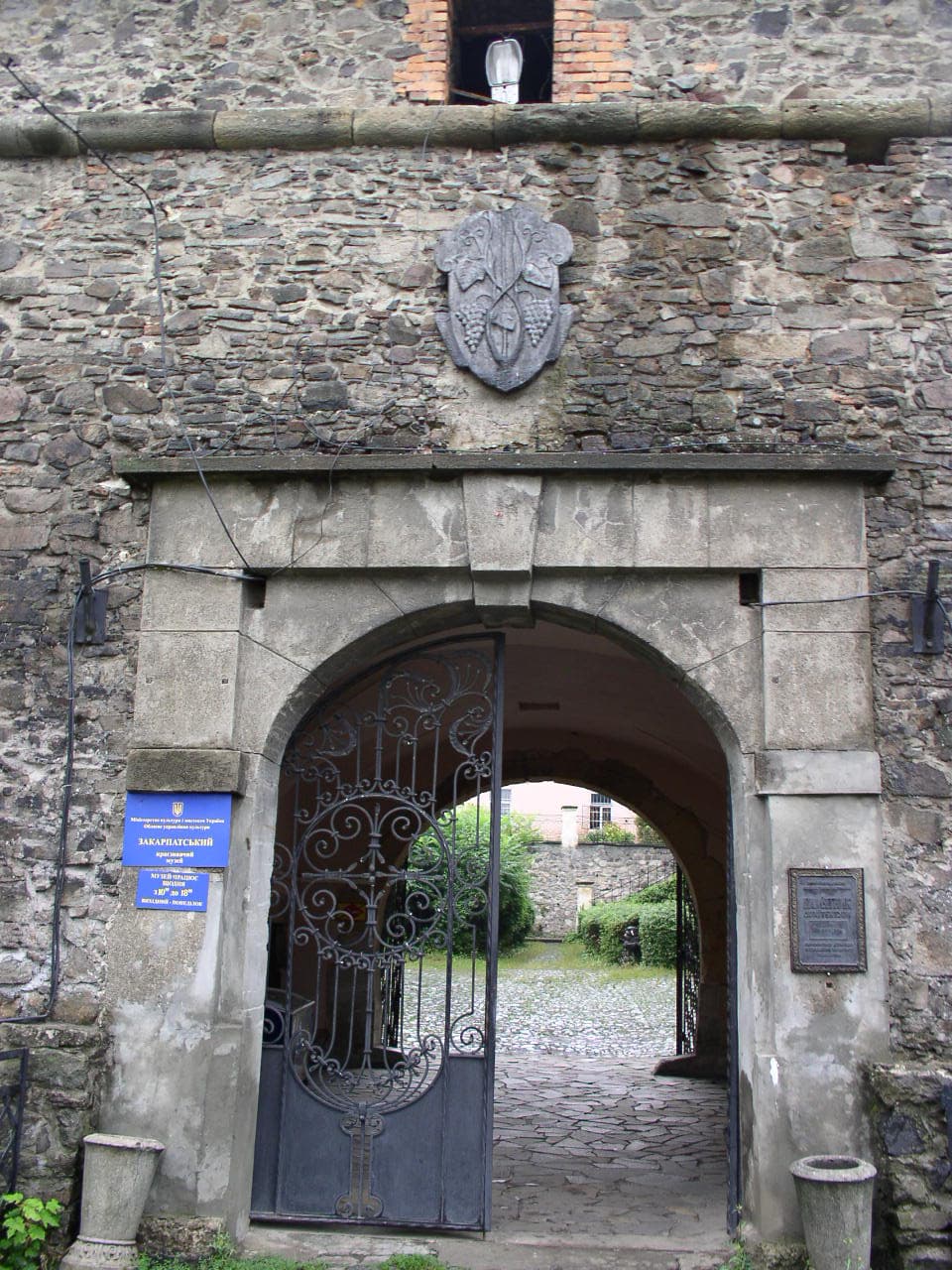
The castle’s well-preserved defensive walls, bastions, moats, and palace structures provide valuable insights into the construction techniques and strategic considerations of different historical periods. Today, Uzhhorod Castle functions as a regional museum, preserving its rich history and architectural legacy for visitors and scholars alike.
Frequently asked questions (FAQ)
- How do I get to Uzhhorod Castle?
- Uzhhorod Castle is located on Castle Hill in the city of Uzhhorod, accessible by local public transport or on foot from the city center. It is well-signposted and a popular tourist attraction.
- What are the opening hours of Uzhhorod Castle?
- The castle museum is generally open daily from 10:00 to 18:00, but it is advisable to check for seasonal variations or special closures before planning your visit.
- Is there an admission fee to visit Uzhhorod Castle?
- Yes, there is a modest admission fee to enter the castle museum, which helps support preservation efforts. Discounts may be available for students, seniors, and groups.
- What architectural styles are represented in Uzhhorod Castle?
- Uzhhorod Castle features a blend of early medieval foundations with significant Renaissance-era renovations, including bastions designed for gunpowder defense, reflecting its military evolution.
- Can I explore the underground casemates and dungeons?
- Visitors can explore parts of the underground casemates and dungeons during guided tours, which provide insights into the castle’s defensive and judicial history.
- Why is Uzhhorod Castle historically significant?
- Uzhhorod Castle has played key roles in regional defense, political diplomacy, and religious education over centuries, making it a vital cultural and historical landmark in Ukraine.
Photo gallery

Information
Sources & official resources
Verify the information above using these authoritative references.
Loading map...
Visitor reviews
No reviews yet. Been here? Write the first review and help other travelers!
Write the first reviewVisited this castle? Share your experience
Your review helps other travelers and adds first-hand knowledge to our encyclopedia.