Nevytske Castle
Nevytske Castle stands as a striking example of medieval fortification perched atop a volcanic rock cliff in the Zakarpatska oblast of Ukraine. Its ruins, visible from afar, tell a rich story of strategic military importance, architectural evolution, and turbulent history spanning nearly a millennium. The castle’s origins trace back to the 12th century, when it was initially constructed as a wooden fortification guarding vital trade routes through the Carpathian Mountains. Over centuries, it transformed into a formidable stone fortress adapting to new military technologies and political upheavals.
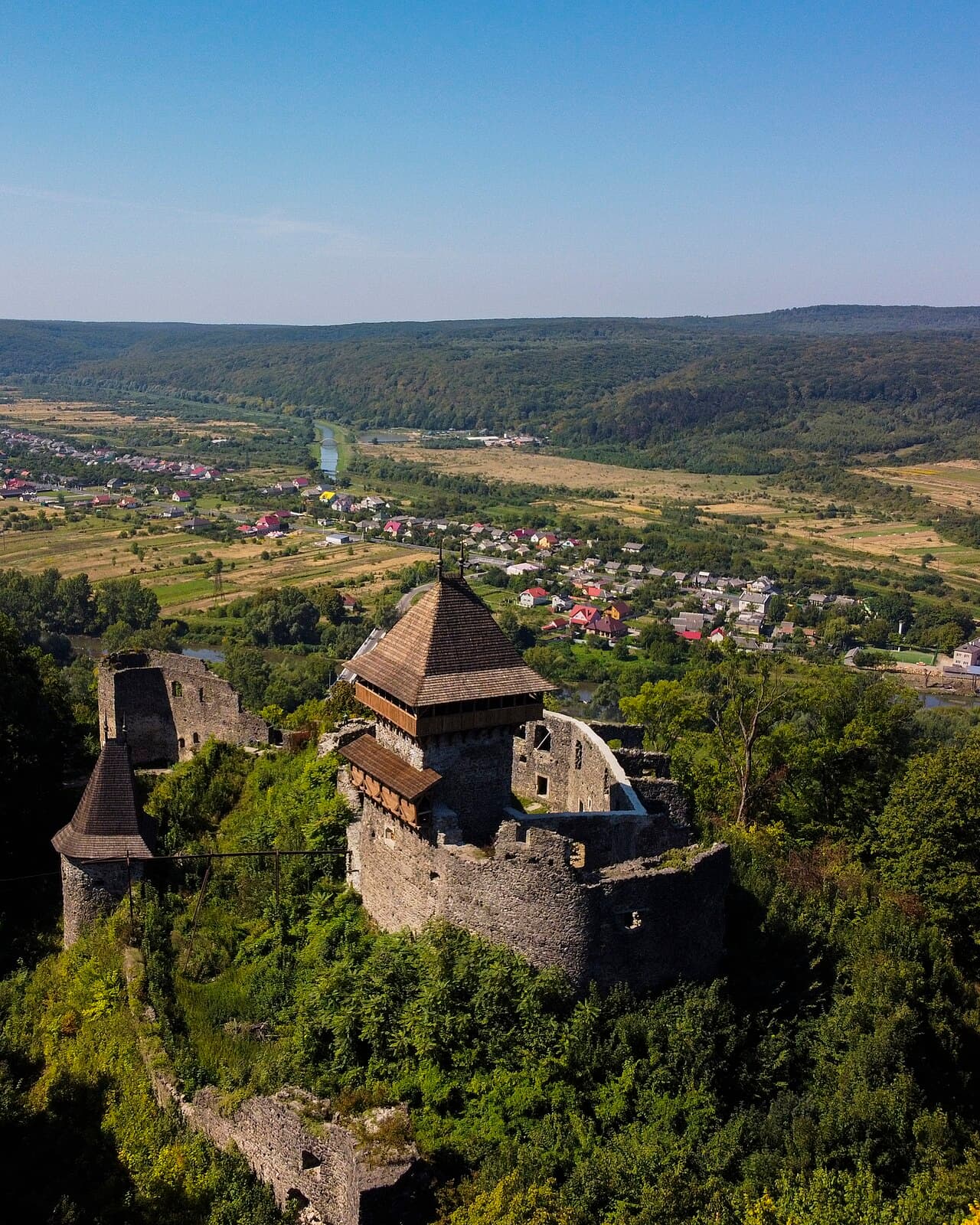
Located near the villages of Kamyanytsia and Nevytske, the castle overlooks the Uzh River, which winds close to its base. The site’s elevated position on a cliff approximately 120 meters above the river provided natural defensive advantages, complemented by man-made fortifications. The castle’s layout is centered on an oval courtyard surrounded by robust walls and multiple towers, including a prominent four-story square donjon that served as the main stronghold within the complex.
Early history and construction
The earliest fortification at Nevytske was a wooden structure built in the 12th century by medieval Hungarian rulers. Its primary purpose was to control important mountain passes and trade routes leading from the Carpathians toward the regions of Halych and Kyiv. This initial wooden fortress was destroyed in the 1241 Mongol-Tatar invasions, a devastating event that reshaped the region’s political landscape.
By the late 13th century, the fortress was reconstructed in stone, marking a significant upgrade in defensive capability. In 1279, King Ladislaus IV of Hungary granted ownership of the castle and surrounding lands to Finti, a voivode of the Obo family. Following Finti’s death, his brother Omodei took control until 1311. During this period, the castle was strengthened, including replacing an earlier round tower with a new square four-sided donjon, which became a defining feature of the castle’s silhouette.
Medieval conflicts and ownership changes
In the early 14th century, Nevytske Castle became a focal point of conflict amid Hungarian civil wars. Control of the fortress shifted between royal forces and local magnates as power struggles unfolded. In 1328, King Charles Robert of Anjou granted the fortress to the Drugeth family, a prominent Hungarian noble family of French descent. The Drugeths held the castle for over three centuries, overseeing extensive rebuilding efforts.
During the 15th century, the castle underwent significant architectural modifications to adapt to the increasing use of firearms. The Drugeths added lower outer walls designed to withstand cannon fire and constructed a three-story southern tower linked to the central courtyard by a covered gallery. This gallery, approximately 35 meters long, featured embrasures allowing defenders to control the access bridge and surrounding areas effectively.
Defensive layout and architectural features
The castle’s defenses were arranged in three concentric lines. The innermost line featured a stone wall reinforced by four towers dating from the late 14th to early 15th centuries. These towers included three semi-oval shapes and one triangular plan, providing robust protection to the central oval courtyard. Surrounding this was a middle fortified wall accompanied by a moat, which further slowed attackers.
The outermost defensive line consisted of earthworks combined with wooden and clay constructions, featuring two semi-circular bastions enclosing the castle grounds in a trapezoidal layout. This design reflected an adaptation to new military technologies, as the lower outer walls were intended to reduce vulnerability to artillery fire.
The main entrance was located on the northwest side, marked by a hexagonal gate tower oriented outward. Access was protected by two parallel defensive walls, and a drawbridge once spanned the moat in front of the gate. Within the courtyard, a large well approximately 3.5 to 4.5 meters deep provided a vital water source, collecting rainwater for the inhabitants.
Historical significance and decline
The fortress played a significant role during periods of regional unrest. While initially a royal stronghold, it became a center of power for local magnates during the Hungarian kingdom’s internal conflicts. The castle’s strategic importance was underscored during the 14th century when royal troops stormed it amid struggles against insurgent forces.
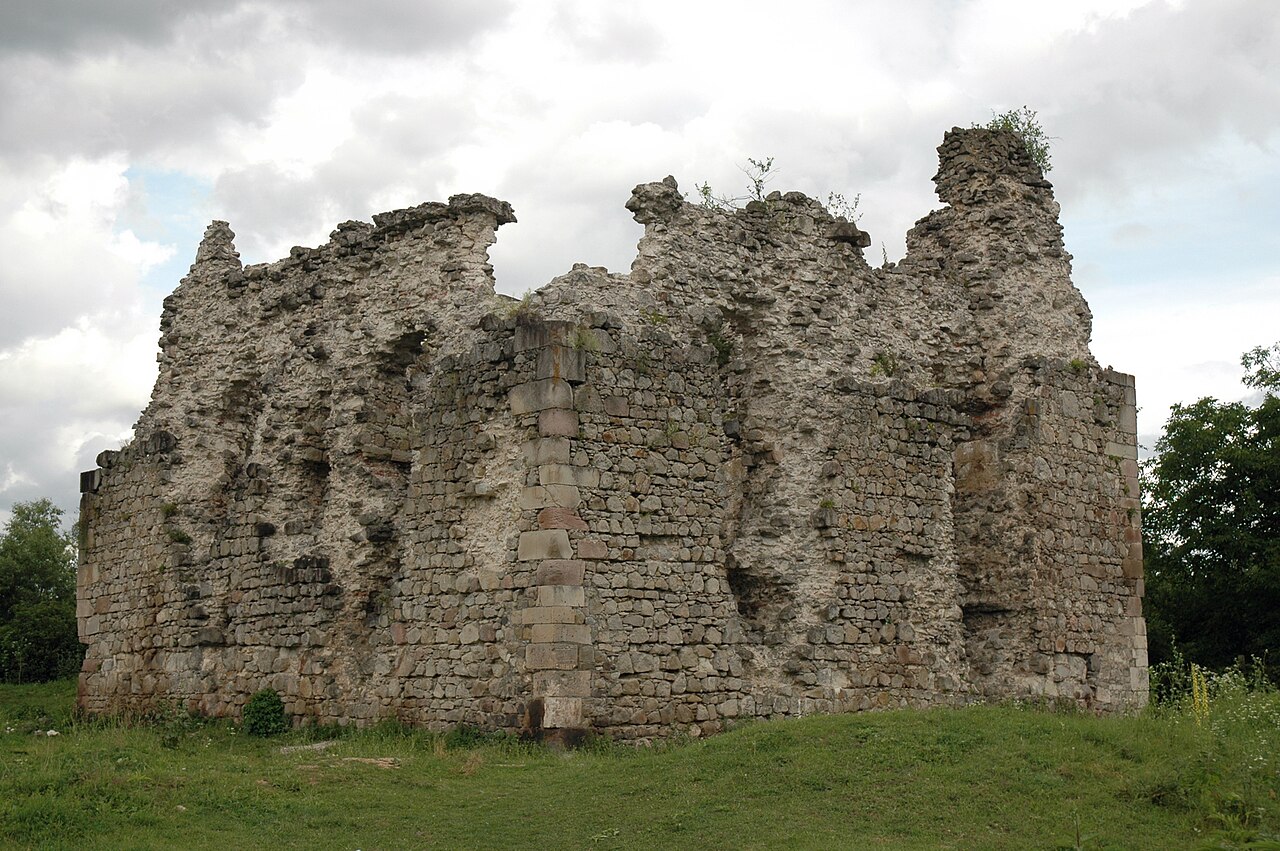
In the 17th century, the castle’s fortunes waned. In 1644, Transylvanian prince George I Rákóczi seized the fortress during religious wars and ordered its destruction. After this event, the castle was abandoned and gradually fell into ruin. Despite its dilapidated state, the site remained a symbol of the region’s medieval heritage.
Modern conservation and cultural legacy
By the late 19th century, the area near the castle was transformed with the creation of the Wagner Garden, named after botanist Karl Wagner. This park features a remarkable fountain that, due to natural water pressure, does not freeze even in winter, adding a unique charm to the site.
Recent decades have seen renewed interest in preserving Nevytske Castle. Archaeological excavations conducted between 2019 and 2021 have helped stabilize the ruins and reconstruct key features such as the donjon tower, which had lost its roof during a storm in 2019. Some towers have been fitted with provisional tented roofs to protect their upper sections, allowing visitors to appreciate the castle’s complex defensive architecture.
Today, the castle is freely accessible to visitors, offering an evocative glimpse into medieval fortification techniques and the turbulent history of the Carpathian region. Since 2006, the site has hosted a theatrical festival celebrating traditional wedding ceremonies, reviving ancient customs and attracting cultural tourism to the area.
Archaeological finds
Excavations have uncovered large stone cannonballs, some up to 25 centimeters in diameter, indicating the castle’s adaptation to early artillery warfare. These artifacts provide valuable insights into the military technology and defensive strategies employed during the castle’s active use.
Visitor experience
Visitors to Nevytske Castle can explore the ruins, including the donjon tower and the remains of the defensive walls and towers. The surrounding landscape offers scenic views of the Uzh River valley and the Carpathian foothills. The nearby Wagner Garden provides a peaceful complement to the rugged castle ruins, making the site a popular destination for history enthusiasts and nature lovers alike.
Frequently asked questions (FAQ)
- When was Nevytske Castle originally built?
- Nevytske Castle was originally constructed in the 12th century as a wooden fortification before being rebuilt in stone in the late 13th century.
- What is the architectural style of Nevytske Castle?
- The castle features Gothic architectural elements, including a square donjon tower and fortified walls adapted for early firearm defense.
- Is Nevytske Castle open to visitors and is there an entrance fee?
- Yes, Nevytske Castle is open to visitors free of charge, allowing exploration of its ruins and surrounding gardens.
- What notable features remain at Nevytske Castle?
- Key features include the four-story square donjon tower, multiple defensive walls and towers, a large well, and a covered gallery connecting the southern tower.
- What historical events affected Nevytske Castle?
- The castle was destroyed during the Mongol-Tatar invasions in 1241, contested during Hungarian civil wars, and partially destroyed by Transylvanian prince George I Rákóczi in 1644.
- Are there any cultural events held at Nevytske Castle today?
- Since 2006, the castle hosts a theatrical festival celebrating ancient wedding traditions, attracting visitors interested in regional culture.
Photo gallery

Information
Loading map...
Visitor reviews
No reviews yet. Been here? Write the first review and help other travelers!
Write the first reviewVisited this castle? Share your experience
Your review helps other travelers and adds first-hand knowledge to our encyclopedia.