Tibava Castle
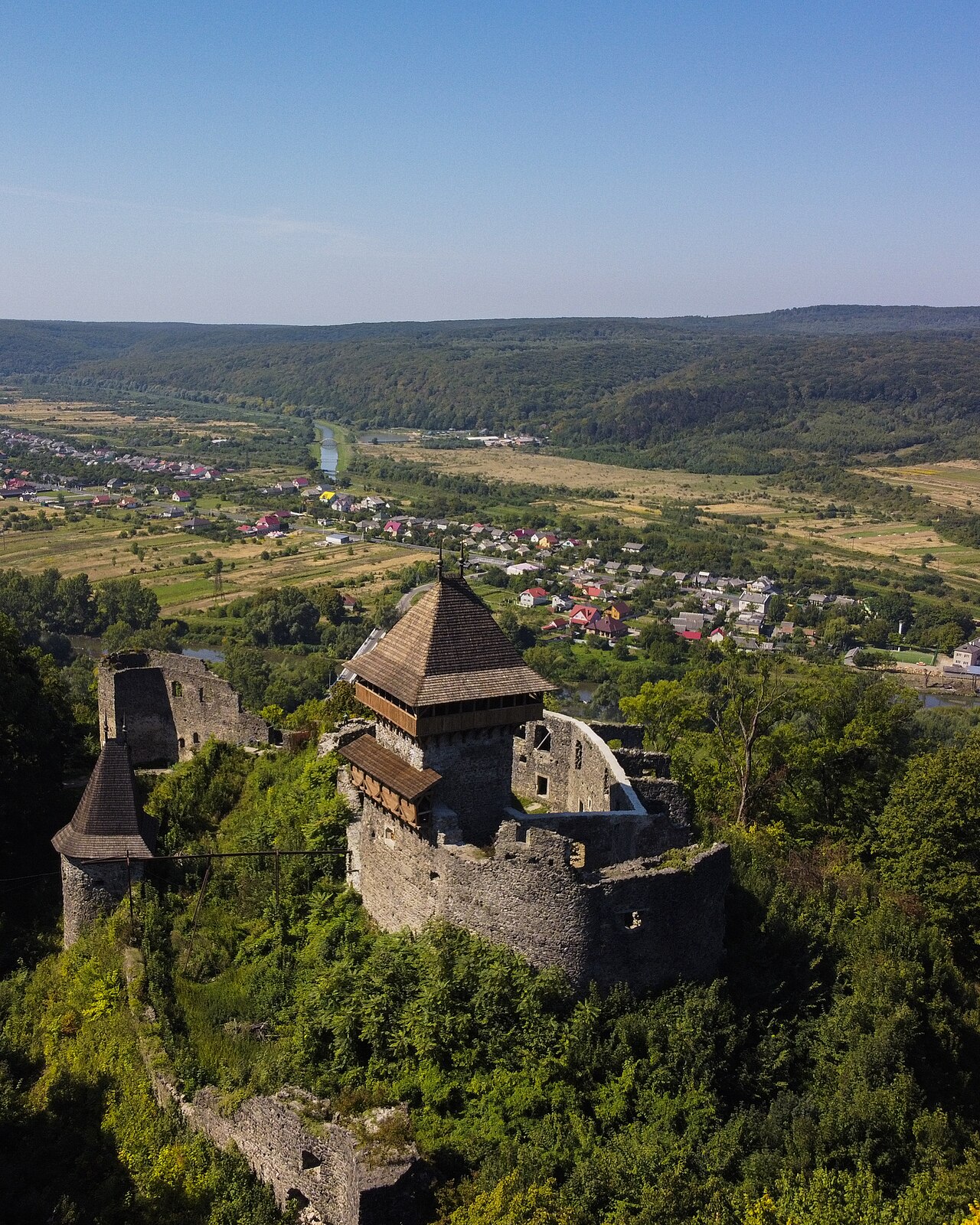
Tibava Castle is a significant medieval hill fortress located near the village of Podhoroď in eastern Slovakia. Constructed in the late 13th or early 14th century, the castle was established by the noble family of the lords of Michalovce, who were influential in the region during the High Medieval period. The castle's strategic position atop a rocky hill at 405 meters above sea level provided a commanding view of the surrounding landscape, making it an important defensive and residential site.
The origins and historical significance of Tibava Castle
The earliest documented mention of Tibava Castle dates back to 1337 under the name "castrum Tybauara", with a later record in 1419 referring to it as "castrum Tyba". These historical references confirm the castle's prominence in medieval Slovakia. However, Tibava Castle's history is marked by conflict and abandonment. It likely suffered destruction during the early 14th century amid regional military campaigns, possibly during the fighting against Omoděj of the Aba family in 1312 or the campaign led by King Charles Robert around 1321 to quell rebellion by Peter, son of Peteň. By 1338, the castle was recorded as abandoned, indicating the severity of the damage or strategic shifts in the region.
Although the castle's owners eventually regained control of the territory, they chose not to restore Tibava Castle. Instead, they built a new fortress closer to the village of Choňkovce, reflecting changes in defensive priorities and residential patterns. Over the following centuries, Tibava Castle fell into ruin and was completely demolished by 1715.
Architectural features and layout of the castle
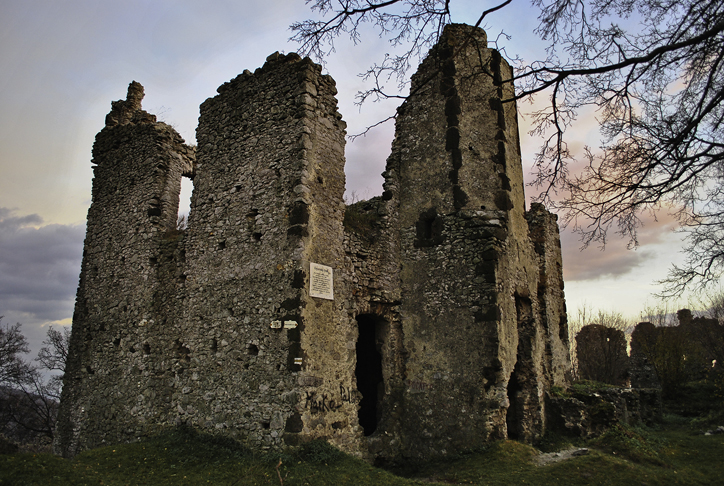
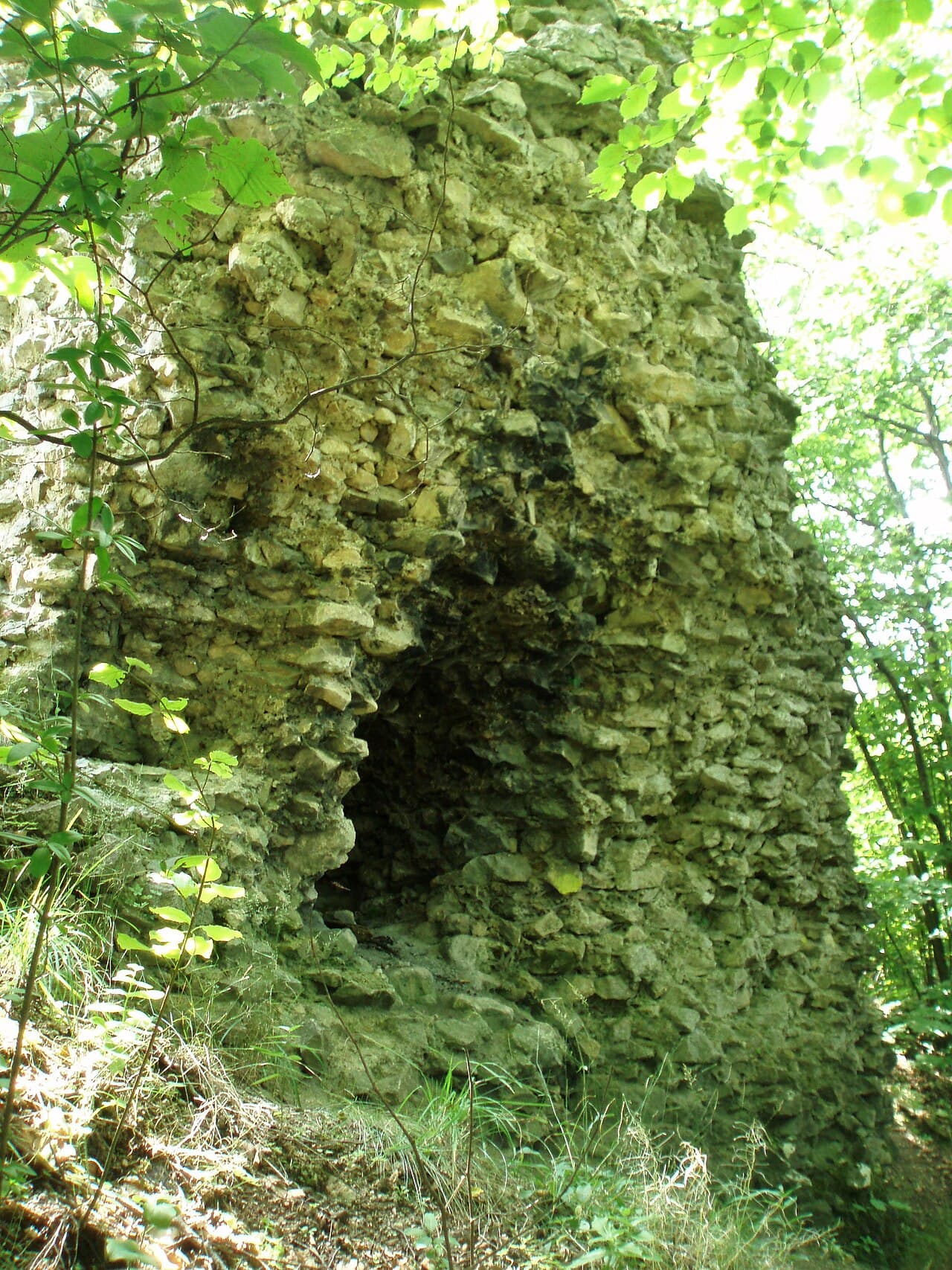
The remains of Tibava Castle occupy a compact oval-shaped area approximately 40 by 15 meters atop the rocky hill. The castle's design centers around a bergfried-type masonry tower, a hallmark of medieval fortifications used primarily for defense and refuge. This circular bergfried measures 11 meters in diameter and features a vaulted ground floor with a robust arched ceiling spanning about 3 meters. Access to the tower's interior was ingeniously provided by a staircase embedded within the thickness of the tower walls, starting from the first floor, enhancing both security and structural integrity.
Adjacent to the bergfried lies a residential building with an interior area of approximately 57 square meters. This structure likely served as living quarters or administrative chambers for the castle's occupants. Surrounding these core buildings is a thick curtain wall about 2.5 meters wide, which enclosed the courtyard and provided formidable defense against attackers.
The castle's entrance was probably located near the northern corner of the residential building where the curtain wall curves away, allowing controlled access while maximizing defensive capabilities. The overall layout reflects a well-planned medieval fortress optimized for both habitation and military defense.
Archaeological findings and cultural heritage
Archaeological excavations at Tibava Castle have uncovered fragments of ceramic pottery dating from the 13th to 14th centuries, providing valuable insights into the daily life and material culture of its medieval inhabitants. A remarkable discovery in 1946 revealed a cache of 25 Roman coins packed in a cloth pouch within the castle courtyard. These coins, now preserved at the Slovak National Museum in Martin, suggest that the site may have had earlier historical significance or connections to Roman trade routes, adding depth to the castle's historical narrative.
Today, the site of Tibava Castle is protected as part of the Podhorodský hradný vrch natural monument, established in 1986. This designation safeguards the unique limestone formations and native vegetation of the hill, preserving the natural setting that once shaped the castle's strategic location.
The castle's role in regional history and legacy
Tibava Castle's story reflects the turbulent medieval history of eastern Slovakia, marked by noble family rivalries, royal campaigns, and shifting defensive strategies. Although the castle was eventually abandoned and demolished, its remains offer a tangible connection to the region's feudal past. The bergfried tower and curtain walls stand as enduring symbols of medieval military architecture and the social hierarchy of the time.
While no longer standing intact, Tibava Castle continues to attract interest from historians, archaeologists, and visitors fascinated by medieval fortifications and Slovak heritage. Its protected status ensures that future generations can study and appreciate this emblematic hill castle and its place within Slovakia's rich historical landscape.
Frequently asked questions (FAQ)
- When was Tibava Castle built and by whom?
- Tibava Castle was built in the late 13th or early 14th century by the noble family of the lords of Michalovce, who were active in the region during that period.
- What are the main architectural features of Tibava Castle?
- The castle features a circular bergfried tower with a vaulted ground floor, a residential building, and a thick curtain wall enclosing the oval-shaped courtyard.
- Why was Tibava Castle abandoned?
- The castle was likely destroyed during early 14th-century conflicts and was abandoned by 1338. Its owners later chose to build a new fortress nearby instead of restoring Tibava.
- What archaeological discoveries have been made at Tibava Castle?
- Excavations uncovered 13th-14th century pottery and a cache of 25 Roman coins found in 1946, indicating earlier historical connections or trade.
- Is Tibava Castle accessible to visitors today?
- The castle remains are protected as part of the Podhorodský hradný vrch natural monument. While ruins can be visited, facilities and detailed visiting hours may be limited.
Photo gallery

Information
Current owner
State museum
Loading map...
Visitor reviews
No reviews yet. Been here? Write the first review and help other travelers!
Write the first reviewVisited this castle? Share your experience
Your review helps other travelers and adds first-hand knowledge to our encyclopedia.