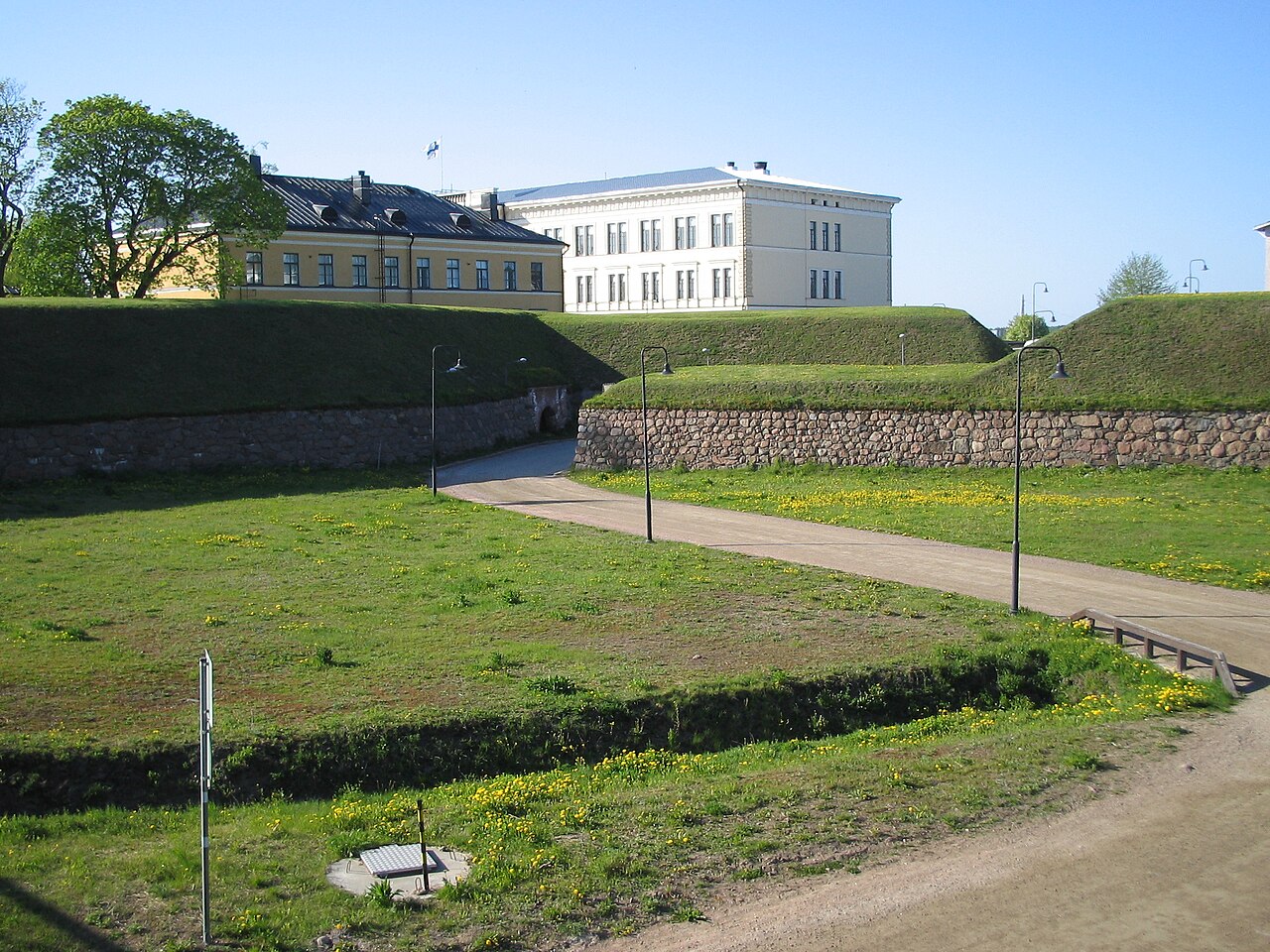
Utti Fortress
Utti fortress is a notable example of late 18th-century military architecture located in Kouvola, Finland. Constructed by the Russian Empire between 1791 and 1792, it was part of the extensive South-Eastern Finland fortification system designed to secure the region during the turbulent period of the Russo-Swedish conflicts. The fortress was strategically positioned to serve as a defensive stronghold against the Swedish army, complementing nearby fortresses such as Taavetti fortress.
Architectural design and features
The fortress is characterized by a main bastion system typical of the post-renaissance military architectural style, emphasizing geometric shapes and angled walls to deflect artillery fire. The bastions provided overlapping fields of fire, enhancing the fortress's defensive capabilities. In addition to the main bastions, Utti fortress included two outer redoubts, smaller detached fortifications designed to protect the main structure from direct assault and to serve as forward defensive positions.
The layout reflects the principles of bastioned fortification popularized in Europe during the 17th and 18th centuries, adapted to the local terrain of southeastern Finland. The fortress was surrounded by earthworks and ditches, which would have been filled with water or left dry depending on the design, to impede enemy advances.
Historical significance and military role
Utti fortress played a specific tactical role during the Russo-Swedish War of 1788-1790. Although the fortress itself was completed shortly after the war, the site was involved in military operations, including a battle fought in 1789 near Utti. The fortress was intended to hold the Swedish forces at bay until reinforcements from the Taavetti fortress could arrive, acting as a crucial part of the defensive network in southeastern Finland.
Following the conclusion of the war and the Finnish War (1808-1809), the geopolitical landscape changed dramatically when Finland was ceded to Russia as an autonomous Grand Duchy. Consequently, Utti fortress lost its strategic military importance and was soon decommissioned. The fortress was not maintained as an active military installation after 1809.
Preservation and current status
Today, Utti fortress stands as a restored historical site open to the public. The main bastion system has been renovated to preserve its structural integrity and to provide visitors with insight into the fortress's design and historical context. The site offers a tangible connection to the military history of southeastern Finland and the broader conflicts between Sweden and Russia during the late 18th century.
Visitors to the fortress can explore the bastions, earthworks, and redoubts, gaining an appreciation for the defensive strategies employed in the post-renaissance period. The preservation efforts highlight the importance of Utti fortress as a cultural heritage site, reflecting the military architecture and history of the era.
Location and accessibility
Located near the town of Kouvola, Utti fortress is accessible to visitors interested in military history and architecture. The site is managed to accommodate educational visits and tourism, contributing to the cultural landscape of the region.
Information
Loading map...
Visitor reviews
No reviews yet. Been here? Write the first review and help other travelers!
Write the first reviewVisited this castle? Share your experience
Your review helps other travelers and adds first-hand knowledge to our encyclopedia.