Liikkala Fort

Liikkala fort: Russian post-renaissance defensive stronghold in Finland
Kouvola, Finland
Post-Renaissance (17th–18th c.)

Liikkala Fort is a notable example of a Post-Renaissance military fortification constructed by the Russian Empire in the late 18th century. Built between 1791 and 1792, the fort was part of a broader strategic effort to secure the southeastern border of Finland, then under Russian control, against Swedish incursions. Its primary purpose was to defend the crucial road connecting the Swedish border to the town of Hamina, a key military and trading hub. This route had been exploited by the Swedish army during the Russo-Swedish War of 1788-1790, prompting the Russians to strengthen their defensive network in the region.

Strategic importance and historical context

The construction of Liikkala Fort occurred during a period of intense military rivalry between Sweden and Russia, which had long contested control over Finland. The South-Eastern Finland fortification system, of which Liikkala was a part, was designed to prevent future Swedish advances and secure Russian territorial gains following the war. The fort's location was carefully chosen to oversee and protect the vital road used by Swedish forces in their previous offensive against Hamina.

Following the Finnish War (1808-1809), which resulted in Finland becoming an autonomous Grand Duchy under Russian rule, the strategic value of Liikkala Fort diminished. The border between Sweden and Russia was pushed significantly westward, rendering the fort obsolete. Consequently, it was abandoned, and its military function ceased.

Architectural design and features

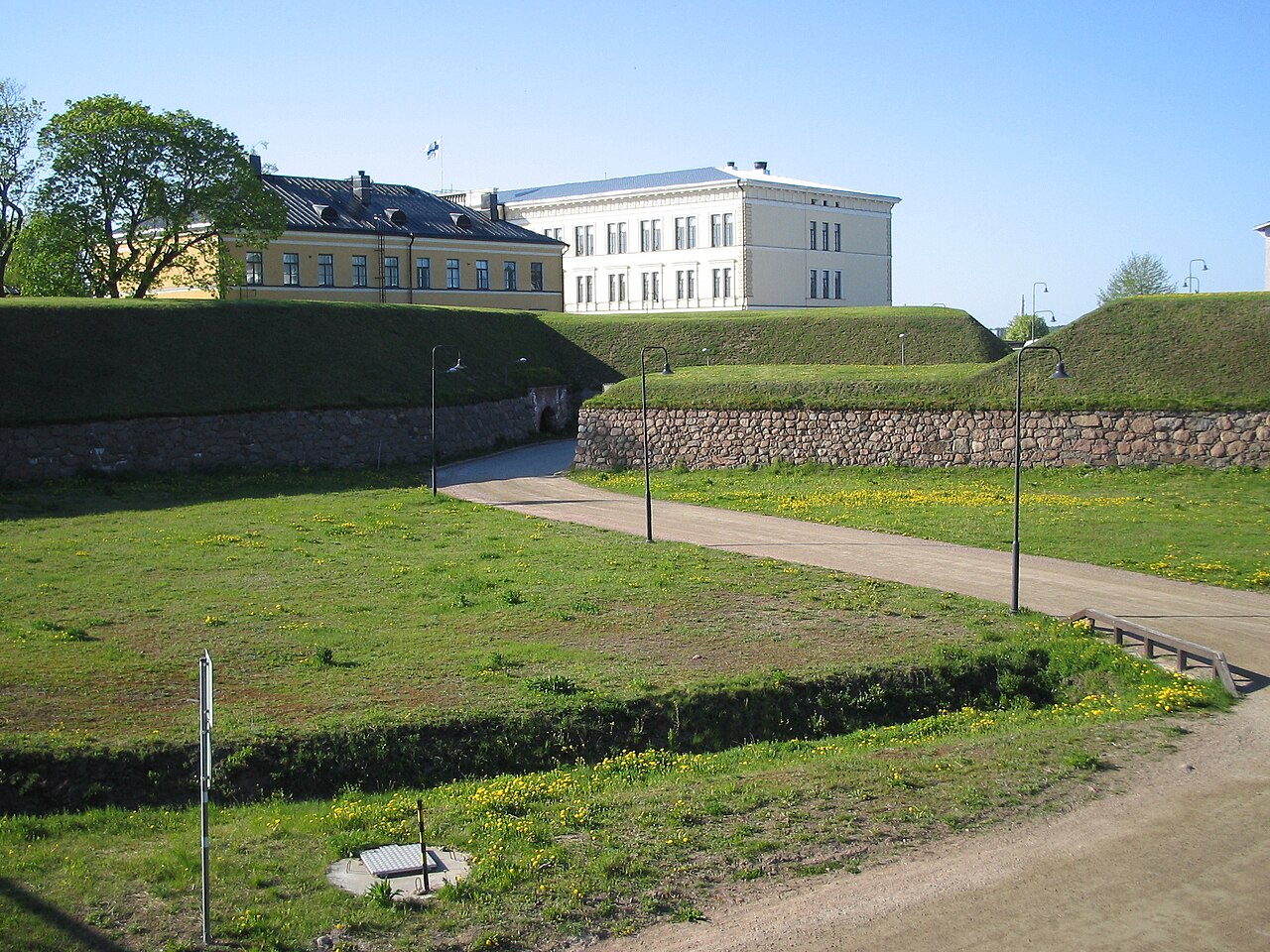
Liikkala Fort was constructed as a lowland fortification featuring a combination of bastioned earthworks and redoubts, typical of the late 18th century military engineering influenced by the principles of Vauban-style fortifications. The fort included two ground redoubts—small, enclosed defensive positions designed to cover specific approaches—and four demi-bastions, which projected outward from the main defensive walls to allow enfilading fire along the curtain walls.

The fort's defensive structures were primarily built using earthworks reinforced with timber and stone, a common practice for fortifications of the period in this region, balancing durability with the speed and economy of construction. The layout allowed defenders to cover multiple angles of approach and provided overlapping fields of fire, increasing the fort’s defensive capabilities.

Within the fort's perimeter, Russian barracks were constructed to house the garrison. Today, only ruins of these barracks remain, but they indicate the presence of a permanent military presence during the fort's operational period.

Preservation and restoration efforts

After its abandonment in the early 19th century, Liikkala Fort gradually fell into disrepair. However, since 1980, significant restoration efforts have been undertaken to preserve and stabilize the site. These efforts have been coordinated by the National Board of Antiquities and the Ministry of Labour as part of an employment project aimed at both cultural heritage conservation and community engagement.

Restoration work has focused on conserving the well-preserved ground walls and stabilizing the remaining ruins of the barracks. The fort's earthworks and bastions have been carefully maintained to retain their historical shape and defensive characteristics, providing visitors with a clear understanding of 18th-century military fortification techniques.

Today, the site serves as an important cultural and historical landmark, offering insights into the military history of southeastern Finland and the broader geopolitical struggles between Sweden and Russia during the late 18th and early 19th centuries.

Visiting Liikkala Fort

Liikkala Fort is accessible to the public, allowing visitors to explore the extensive earthworks and the remains of the barracks. The open-air site provides an evocative experience of historical military architecture amidst the Finnish landscape. Informational signage and guided tours are often available, helping visitors to appreciate the fort’s strategic design and historical significance.

Frequently asked questions (FAQ)

How do I get to Liikkala Fort?
Liikkala Fort is located just outside Kouvola, Finland, and is easily accessible by car or public transportation. If you are traveling by train, you can take a local bus or taxi from the Kouvola train station to reach the fort.
What is the historical significance of Liikkala Fort?
Liikkala Fort was built in the 18th century as part of the defense system against potential invasions. It played a crucial role in the Finnish War and reflects the military architecture of its time, making it an important site for understanding Finnish history.
When was Liikkala Fort constructed?
Construction of Liikkala Fort began in 1779 and was completed in 1785. It was designed to protect the region during a time of military unrest in Europe.
Can I visit Liikkala Fort year-round?
Yes, Liikkala Fort is open for visitors throughout the year, although the best time to visit is during the summer months when guided tours and special events are available. During winter, the site may be less accessible due to snow and ice.
Why is Liikkala Fort considered an architectural gem?
Liikkala Fort showcases unique military architecture typical of the 18th century, including robust stone walls and strategic layouts. Its design not only served defensive purposes but also demonstrates the engineering skills of that era.
Is it possible to take guided tours of Liikkala Fort?
Yes, guided tours are available and are highly recommended for visitors to fully appreciate the fort's history and architecture. Tours often include detailed narratives from knowledgeable guides about the fort's significance and stories from its past.
What are the opening hours for Liikkala Fort?
Liikkala Fort typically operates from 10 AM to 6 PM during the peak tourist season, with adjusted hours in the off-season. It is advisable to check the official website or local resources for the most current information before your visit.
Are there any nearby attractions to explore after visiting Liikkala Fort?
Yes, after visiting Liikkala Fort, you can explore the beautiful Kouvola region, including the nearby Repovesi National Park, known for its stunning landscapes and hiking trails. Additionally, Kouvola offers cultural experiences such as museums and local eateries.
What are the ticket prices for Liikkala Fort?
Ticket prices for Liikkala Fort are generally affordable, with discounts available for students and seniors. It is recommended to check the official site for the latest pricing and any special offers that may be available during your visit.

Loading map...

Visitor reviews

No reviews yet. Been here? Write the first review and help other travelers!

Write the first review

Visited this castle? Share your experience

Your review helps other travelers and adds first-hand knowledge to our encyclopedia.
Write a review

(5/5)

0/2000 characters

Your review will be visible after admin approval

Nearby castles

17.7 km
Hamina Fortress — Finland castle

Hamina Fortress

Hamina, Finland

Hamina fortress is a unique example of a bastioned fortress in Finland, notable for its rare circular layout inspired by Renaissance ideals of urban fortification. Constructed primarily in the 18th century following the Great Northern War, the fortress was built on the site of the former Vehkalahti town ruins. This strategic location near the Gulf of Finland made it a key military installation for controlling the coastal road and defending the region. Origins and strategic significance The fortress was initiated in the 1720s under the direction of Swedish general Axel von Löwen after the Treaty of Nystadt (1721) shifted the border between Sweden and Russia to the Kymeenlaakso area. The design reflects the Renaissance concept of an ideal fortified city, similar to the star-shaped city of Palmanova in Italy, but Hamina stands out as a rare circular fortification rather than a polygonal star shape. Its six bastions provided overlapping fields of fire, enhancing its defensive capabilities against artillery and infantry assaults. Architectural design and features Hamina fortress is classified as a bastioned fortress, a style that emerged in the post-Renaissance period to counter advances in siege artillery. Its circular plan is exceptionally rare among bastioned fortresses, which typically have polygonal or star-shaped layouts. The fortress comprises six bastions connected by thick curtain walls, surrounded by a defensive ditch. The bastions are angled to allow defenders to cover the walls with flanking fire, a hallmark of bastion fort design. The fortress also includes several internal structures such as barracks, magazines, and command buildings arranged within the enclosed area. The layout integrates both military functionality and urban planning principles, reflecting the Renaissance ideal of harmony between form and function. Historical developments and military role During its construction, the fortress was incomplete when the Russo-Swedish War of 1741–1743 began. Russian forces captured the fortress, and the subsequent peace treaty placed it under Russian control. The fortress became part of the South-Eastern Finland fortification system, designed to protect the approaches to St. Petersburg from western threats. Under Russian command, notably led by General Aleksander Suvorov, construction and improvements continued. In the early 19th century, the fortress underwent significant reconstruction under Dutch general Jan Pieter van Suchtelen to modernize its defenses. However, after Russia's conquest of Finland in the Finnish War (1808–1809), Hamina fortress lost its frontline military importance and was eventually abandoned as a fortress in the 1830s. Later military use and decline Despite losing military status, the fortress was reinforced again during the Crimean War (1853–1856) to defend against potential attacks from the British and French fleets. After this period, the fortress gradually fell into disuse. In the mid-20th century, restoration efforts began in 1957 to preserve the remaining structures. Current status and cultural significance Today, much of Hamina fortress remains well preserved, serving as a cultural venue for various events and festivals. Parts of the fortress are still in military use, notably housing the Finnish Reserve Officer School. The fortress is integrated into the urban fabric of Hamina city, making it a prominent historical landmark and tourist attraction. The fortress's rare circular design and its embodiment of Renaissance military architecture principles make it an important site for understanding the evolution of fortification in Northern Europe. Its layers of history—from Swedish construction to Russian adaptation and modern restoration—reflect the complex geopolitical history of the region. Architectural and urban planning legacy Hamina fortress exemplifies the transition from medieval fortifications to modern bastioned designs, combining military engineering with urban planning ideals. Its circular layout was intended to optimize defense while also representing a harmonious and orderly city plan, a concept rooted in Renaissance humanism. This makes Hamina an exceptional case study in the history of military architecture. The fortress's bastions, curtain walls, and ditches remain largely intact, allowing visitors to appreciate the sophisticated design and defensive strategies employed. The integration of military and civic functions within the fortress walls illustrates the dual role such structures played in early modern Europe. Visiting Hamina fortress Visitors to Hamina can explore the fortress's bastions, ramparts, and internal buildings. The site hosts cultural events, concerts, and reenactments that bring its history to life. The presence of the Reserve Officer School adds a living military dimension to the fortress, linking past and present. Its location on the coast of the Gulf of Finland offers scenic views and a tangible connection to the strategic maritime routes that influenced its construction and use.

Post-Renaissance (17th–18th c.)
Details
22.2 km

Utti Fortress

Kouvola, Finland

Utti fortress is a notable example of late 18th-century military architecture located in Kouvola, Finland. Constructed by the Russian Empire between 1791 and 1792, it was part of the extensive South-Eastern Finland fortification system designed to secure the region during the turbulent period of the Russo-Swedish conflicts. The fortress was strategically positioned to serve as a defensive stronghold against the Swedish army, complementing nearby fortresses such as Taavetti fortress.Architectural design and featuresThe fortress is characterized by a main bastion system typical of the post-renaissance military architectural style, emphasizing geometric shapes and angled walls to deflect artillery fire. The bastions provided overlapping fields of fire, enhancing the fortress's defensive capabilities. In addition to the main bastions, Utti fortress included two outer redoubts, smaller detached fortifications designed to protect the main structure from direct assault and to serve as forward defensive positions.The layout reflects the principles of bastioned fortification popularized in Europe during the 17th and 18th centuries, adapted to the local terrain of southeastern Finland. The fortress was surrounded by earthworks and ditches, which would have been filled with water or left dry depending on the design, to impede enemy advances.Historical significance and military roleUtti fortress played a specific tactical role during the Russo-Swedish War of 1788-1790. Although the fortress itself was completed shortly after the war, the site was involved in military operations, including a battle fought in 1789 near Utti. The fortress was intended to hold the Swedish forces at bay until reinforcements from the Taavetti fortress could arrive, acting as a crucial part of the defensive network in southeastern Finland.Following the conclusion of the war and the Finnish War (1808-1809), the geopolitical landscape changed dramatically when Finland was ceded to Russia as an autonomous Grand Duchy. Consequently, Utti fortress lost its strategic military importance and was soon decommissioned. The fortress was not maintained as an active military installation after 1809.Preservation and current statusToday, Utti fortress stands as a restored historical site open to the public. The main bastion system has been renovated to preserve its structural integrity and to provide visitors with insight into the fortress's design and historical context. The site offers a tangible connection to the military history of southeastern Finland and the broader conflicts between Sweden and Russia during the late 18th century.Visitors to the fortress can explore the bastions, earthworks, and redoubts, gaining an appreciation for the defensive strategies employed in the post-renaissance period. The preservation efforts highlight the importance of Utti fortress as a cultural heritage site, reflecting the military architecture and history of the era.Location and accessibilityLocated near the town of Kouvola, Utti fortress is accessible to visitors interested in military history and architecture. The site is managed to accommodate educational visits and tourism, contributing to the cultural landscape of the region.

Post-Renaissance (17th–18th c.)
Details
28.3 km

Ruotsinsalmi Sea Fortress

Kotka, Finland

Ruotsinsalmi sea fortress is a historic coastal fortress complex located near Kotka, Finland, constructed between 1790 and 1796 by the Russian Empire. It formed a crucial part of the South-Eastern Finland fortification system, designed to protect the approaches to St. Petersburg from naval threats during the post-Renaissance period. Strategically positioned on a group of islands in the Gulf of Finland, the fortress guarded the maritime routes and supported the nearby Kyminlinna fortress on the mainland.Historical context and strategic importanceThe fortress was built during a time of heightened military tensions between Russia and Sweden, as control over the Baltic Sea and the Finnish territories was contested. The South-Eastern Finland fortification system was Russia's response to these challenges, aiming to secure the southern coast of Finland and the vital maritime access to St. Petersburg, the Russian capital at the time.Ruotsinsalmi fortress was named after the nearby strait and was designed to complement other fortifications in the region. Its construction was part of a broader effort to establish a defensive network that could resist naval attacks and safeguard the empire's northwestern frontier.Architectural composition and featuresThe fortress complex consisted of three primary strongholds: Fort Katarina, Fort Elisabeth, and Fort Slava. These forts were complemented by multiple redoubts and artillery batteries strategically placed to cover the waterways and provide overlapping fields of fire.Fort Katarina and Fort Elisabeth were the largest and most fortified structures, featuring thick stone walls and bastioned earthworks typical of late 18th-century military engineering. The design incorporated coastal artillery emplacements to engage enemy ships, as well as facilities for troops and ammunition storage.Fort Slava served as a smaller yet vital defensive position, enhancing the fortress's overall coverage. The network of redoubts and batteries extended the defensive perimeter, creating a layered defense system that was difficult to bypass.Construction techniques and materialsThe fortress was constructed using locally available stone and earthworks, with masonry walls reinforced by angled bastions to deflect artillery fire. The layout reflected contemporary military architectural principles, emphasizing both defense and the ability to mount effective counterattacks.Military history and declineThe fortress's operational period as a defensive stronghold was relatively brief. Following the Finnish War (1808-1809), when Finland was ceded from Sweden to Russia, the strategic need for Ruotsinsalmi fortress diminished significantly. The newly expanded Russian territory reduced the fortress's role as a frontline defense.By the 1830s, Ruotsinsalmi fortress was officially disbanded and fell into disuse. Its military importance faded as newer technologies and shifting political borders rendered the fortifications obsolete.During the Crimean War in 1855, the fortress was targeted by an Anglo-French naval fleet. The attacking forces destroyed the largely abandoned fortress, ensuring it could no longer serve as a military base.Present-day remnants and preservationToday, only fragments of the original fortress survive. Visitors can explore remnants located near Catherine’s path and on the island of Tiutinen. The embankments of Fort Elisabeth have been restored in recent years, allowing for better appreciation of the fortress's original scale and layout.The site is accessible by regular boat services during the summer months, making it a popular destination for those interested in military history and coastal fortifications. Interpretive signage and guided tours help visitors understand the fortress's role in the region's history and its architectural significance.Significance for cultural heritage and tourismRuotsinsalmi sea fortress is recognized as an important cultural heritage site in Finland, reflecting the complex military and political history of the Baltic region. Its ruins provide valuable insights into late 18th-century fortification design and the geopolitical struggles that shaped Northern Europe.The fortress's location amidst scenic coastal landscapes adds to its appeal, combining natural beauty with historical intrigue. It remains a testament to the era's military engineering and the strategic importance of the Finnish archipelago.

Post-Renaissance (17th–18th c.)
Details

