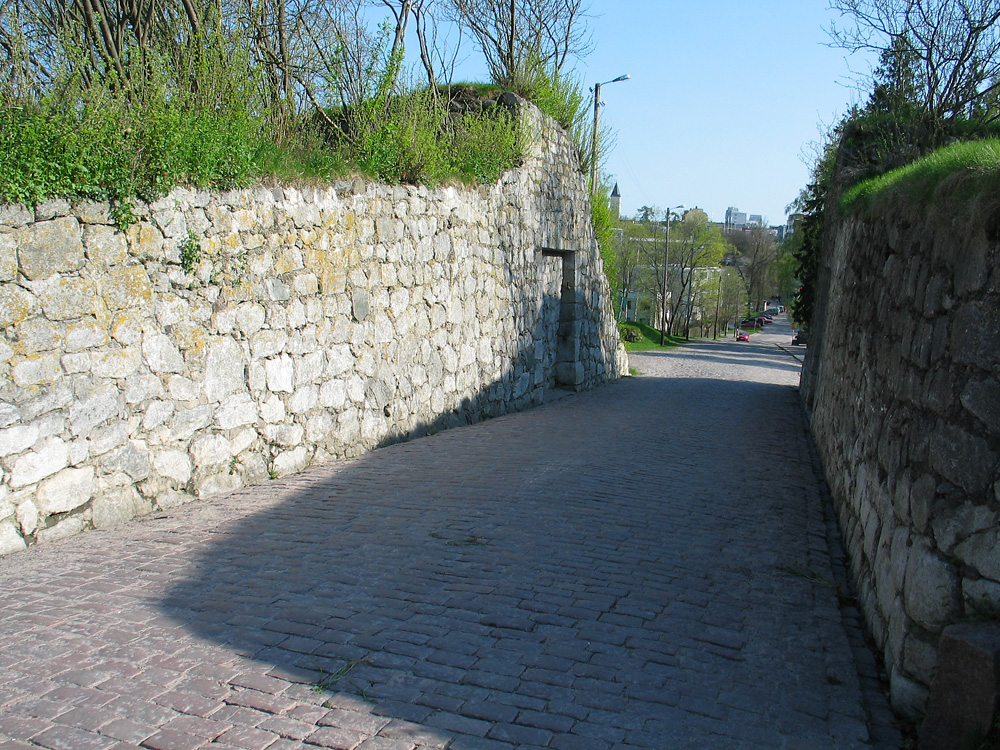
Taavetti Fortress
Taavetti Fortress is a significant military structure located in Luumäki, Finland, constructed by the Russian Empire between 1773 and 1796. This fortress was strategically positioned at important crossroads in South-Eastern Finland as part of a larger fortification system designed to defend Russian territories from potential Swedish incursions. The fortress reflects the military architectural principles of the post-Renaissance period, particularly the bastion fort style that was prevalent in European fortifications of the 17th and 18th centuries.
Historical context and strategic importance
The construction of Taavetti Fortress began in 1773 during a time of heightened tensions between Russia and Sweden. The fortress was part of a network of fortifications aimed at securing Russia's western borders following the Treaty of Åbo (1743), which had shifted control of parts of Finland to Russia. Positioned at a crossroads, Taavetti was crucial for controlling movement and communication routes in the region.
Its role was primarily defensive, intended to prevent Swedish advances into Russian-controlled Finnish territory. Despite its strategic design, the fortress saw limited military action and was used by the military only until 1803, after which it was abandoned as a military installation.
Architectural design and construction phases
Bastion fort layout
Taavetti Fortress is designed as a circular bastion fort, a style characterized by angular bastions projecting from the curtain walls, allowing defenders to cover all approaches with overlapping fields of fire. This design was a development from earlier medieval castles, adapted to withstand artillery bombardment.
The first phase of construction, completed between 1773 and 1781, established the main circular bastion walls. These bastions were constructed with thick earthworks and stone to absorb and deflect cannon fire. The fortress’s walls form a roughly circular shape enclosing the defensive perimeter.
Inner structures and later additions
The second phase, from 1791 to 1796, focused on building the inner parts of the fortress, including barracks, magazines, and other military facilities necessary to support a garrison. These buildings were typically constructed within the protective walls and designed for functionality and defense.
The fortress’s interior included a courtyard and various service buildings, which were essential for sustaining the soldiers stationed there during times of conflict.
Decline and restoration
After its military use ended in 1803, Taavetti Fortress fell into disrepair. Over the 19th and early 20th centuries, the structure suffered from neglect and natural decay, with many parts becoming ruins.
In the 1980s, a concerted restoration effort began to preserve the fortress as a cultural and historical monument. The restoration focused on stabilizing the bastion walls and conserving the remaining structures to prevent further deterioration.
Today, Taavetti Fortress is well preserved as a historical site. It is open to the public and hosts various summer events, including cultural festivals and historical reenactments, which help bring its history to life for visitors.
Visiting Taavetti Fortress
Visitors to Taavetti Fortress can explore the bastion walls and inner courtyard, gaining insight into 18th-century military architecture and the historical context of Russian-Swedish conflicts in Finland. The site offers a tangible connection to the region’s past and the evolution of fortification design.
The fortress’s location in Luumäki makes it accessible for day trips, and its open-air events provide an engaging way to experience Finnish history and heritage.
Architectural significance
Taavetti Fortress exemplifies the post-Renaissance bastion fort style adapted to the specific strategic needs of the Russian Empire in Finland. Its circular bastion design reflects the military engineering advances of the 18th century, emphasizing defense against artillery and control of key transportation routes.
The fortress is a rare surviving example of Russian military architecture in Finland from this period, offering valuable insights into the geopolitical struggles of Northern Europe during the late 18th century.
Information
Loading map...
Visitor reviews
No reviews yet. Been here? Write the first review and help other travelers!
Write the first reviewVisited this castle? Share your experience
Your review helps other travelers and adds first-hand knowledge to our encyclopedia.