Ustra Fortress
Ustra Fortress is a remarkable medieval stronghold situated near the municipality of Dzhebel in Bulgaria, perched atop a rocky peak at about 1,015 meters above sea level. This hill castle was originally constructed in the 10th century by the Byzantine Empire, most likely during the reign of Emperor Constantine VII Porphyrogennetos. Its strategic location in the eastern Rhodope Mountains allowed it to guard a vital trade route that connected different parts of the Balkans, making it a key military and economic asset in the region.
The fortress's history is deeply intertwined with the fluctuating power dynamics between the Byzantine Empire and the First Bulgarian Empire. Shortly after its construction, Bulgarian ruler Simeon I the Great captured Ustra in the early 10th century, highlighting its importance as a contested military objective. Although it reverted to Byzantine control around 913 as part of a peace treaty, the fortress remained a flashpoint in the ongoing conflicts between these two powers. Following the Bulgarian victory in the war with Byzantium ending in 927, Ustra was again affected by shifting borders under the peace terms of that period.
Medieval conflicts and changing control
Throughout the 13th century, Ustra Fortress continued to be a significant military prize. Byzantine chroniclers such as George Akropolites and Theodore Skoutariotes documented its capture by Bulgarian Emperor Michael II Asen in 1254 during his campaign to regain Rhodope territories from the Nicaean Empire. The fortress's control oscillated between Bulgarian and Byzantine hands, reflecting the broader regional struggles for dominance. It is believed that under Ivan Asen II, Bulgarian forces reclaimed Ustra sometime between the 12th and 14th centuries, underscoring its ongoing strategic value.
By the late 14th century, the fortress fell under the expanding influence of the Ottoman Turks, marking the end of its role as a Byzantine and Bulgarian stronghold. The Ottoman conquest transformed the political landscape of the Balkans, and Ustra's military significance diminished as new power centers emerged.
Architectural features and fortifications
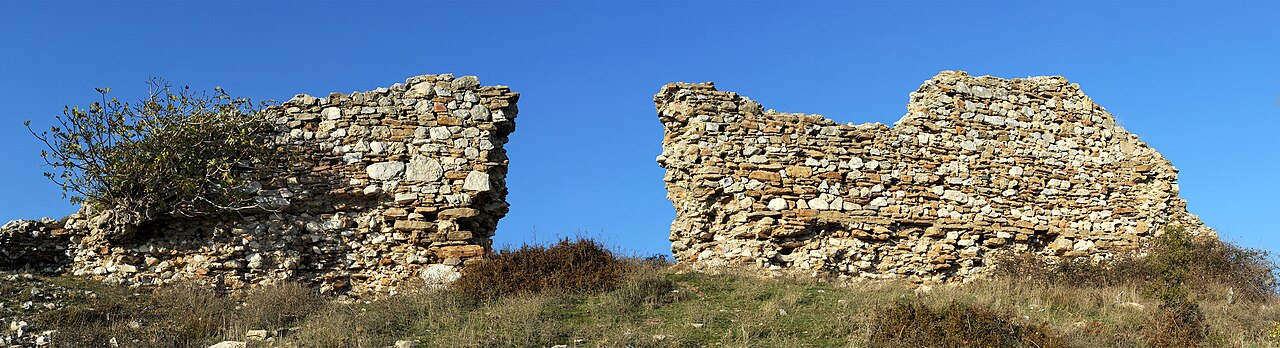
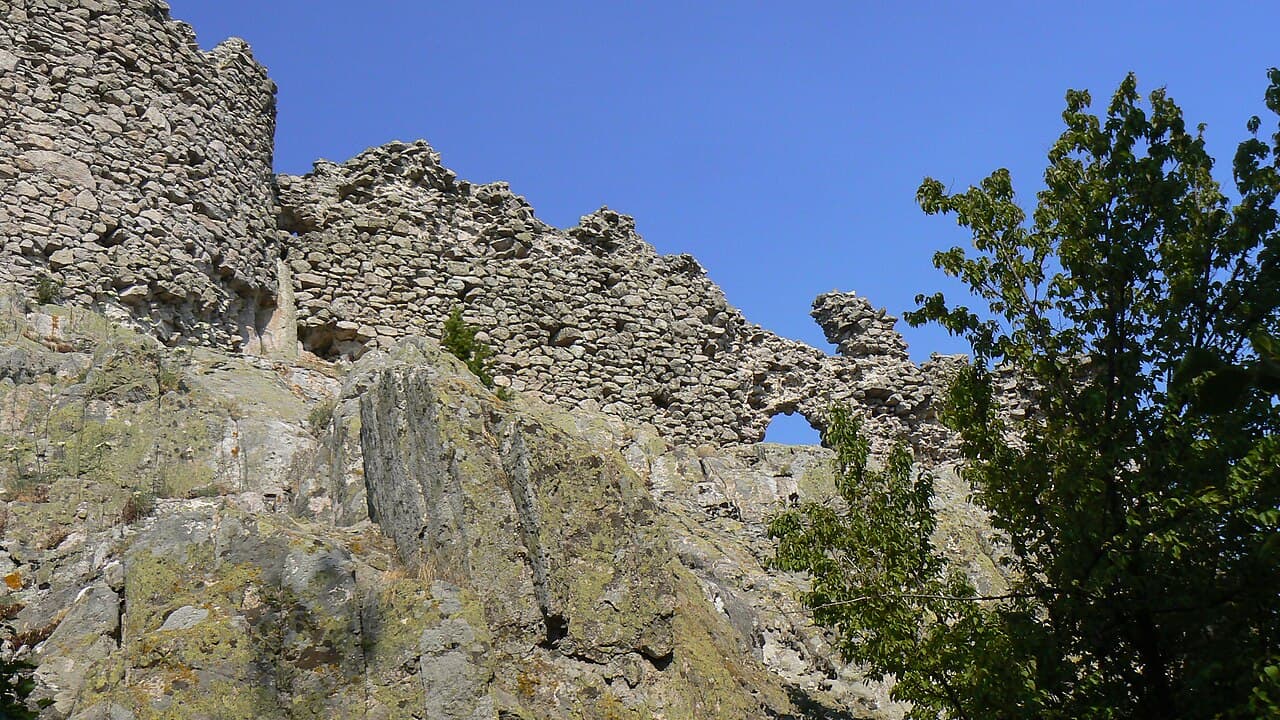
Ustra Fortress occupies a distinctive open quadrangle layout shaped roughly like the Cyrillic letter "П." The fortress's natural defenses are formidable, with nearly vertical cliffs on the northern and northwestern sides, providing commanding views and protection against attackers. The main defensive walls stretch approximately 113 meters in length, with a substantial thickness ranging from 2.8 meters at the base to 1.75 meters at the top. Remarkably, some sections of these ramparts still stand between eight and ten meters high, showcasing the fortress's robust construction.
The walls were built using finely cut stone blocks bonded with white mortar on the exterior, while the interior was filled with rubble stone also set in mortar. This technique provided both strength and durability, essential for withstanding sieges and harsh mountain weather. The fortress features three prominent towers, each rising three stories tall. Two of these towers are rectangular in plan, while one is semi-circular, a design choice that enhanced defensive capabilities by covering different angles of approach.
The lowest floors of all three towers served an important practical function as water reservoirs. Their walls were coated with thick mortar plaster mixed with fragments of broken bricks and large pottery shards, reinforcing the waterproofing and structural integrity. Two towers retain surviving stone staircases that once allowed movement between floors, indicating a well-planned internal layout for defenders and residents.
Main gate and internal structures
The fortress's main entrance is located on the eastern side, accessed by seven steps carved directly into the bedrock, which remarkably remain intact today. Near the gate, archaeologists uncovered foundations of quarters that likely housed guards tasked with defending the fortress. The entrance's design reflects both security and functionality, controlling access to the interior.
Within the fortress walls, excavations revealed the remains of eight buildings predominantly clustered in the southern and southeastern areas. These structures vary in size, with the largest measuring roughly 11 by 6 meters and smaller rooms as compact as 1.7 by 0.5 meters. Their layout suggests they served as living quarters, storerooms, and possibly workshops, supporting the daily needs of the garrison stationed at Ustra.
Archaeological discoveries and cultural significance
Excavations conducted between 1971 and 1973 uncovered over a thousand artifacts, including iron arrowheads, bronze and silver crosses, copper coins, and fragments of clay vessels. These finds provide valuable insight into the military, religious, and domestic life within the fortress during its active use. The presence of crosses indicates the Christian faith of its occupants, while the variety of weapons and coins reflects both the fortress's defensive role and its integration into broader economic networks.
Further archaeological research in 2006 revealed additional fortification works extending northeast from the main site. This discovery suggests that Ustra was part of a larger defensive system controlling the Rhodope region. Approximately 1.7 kilometers northeast lies another fortress visible from Ustra, indicating coordinated efforts to monitor and defend the territory.
Today, Ustra Fortress is recognized as a cultural monument of national importance in Bulgaria. It is part of a protected natural area known for its unique rock formations, attracting visitors interested in history, architecture, and nature. The fortress's well-preserved walls and towers offer a tangible connection to the medieval past and the complex history of the Balkans.
Strategic importance and legacy
The fortress's commanding position and robust fortifications made it a key military asset for controlling trade routes and regional power during the early and late medieval periods. Its repeated capture and recapture by Bulgarian and Byzantine forces underscore its strategic value. The transition to Ottoman control in the late 14th century reflects the broader shifts in Balkan geopolitics that shaped the region's history for centuries.
Ustra's architectural features, including its water reservoirs in the towers and the durable construction of its walls, reveal advanced medieval military engineering adapted to the challenging mountain environment. The site provides important evidence of how medieval fortresses functioned as both defensive structures and centers of daily life.
Visitors to Ustra Fortress today can explore its extensive ruins, gaining insight into medieval military architecture and the turbulent history of the Balkans. The fortress stands as a testament to the resilience and strategic foresight of its builders, preserving a significant chapter of Bulgarian and Byzantine heritage.
Frequently asked questions (FAQ)
- How do I get to Ustra Fortress?
- Ustra Fortress is located near Dzhebel in the Kardzhali Province of Bulgaria. Visitors typically reach the site by car or local transport followed by a hike up to the fortress on the rocky hilltop.
- What is the best time to visit Ustra Fortress?
- The best time to visit Ustra Fortress is during the late spring to early autumn months when weather conditions are favorable for hiking and exploring the ruins.
- Is Ustra Fortress accessible for people with limited mobility?
- Due to its hilltop location and rugged terrain, Ustra Fortress is not easily accessible for visitors with limited mobility. The site involves uneven paths and steep climbs.
- What can I expect to see at Ustra Fortress?
- Visitors can explore the well-preserved defensive walls, three tall towers with water reservoirs, the main gate with carved steps, and remains of living quarters and storerooms.
- Are there guided tours available at Ustra Fortress?
- Guided tours may be available through local tour operators or the regional museum in Kardzhali, providing historical context and detailed information about the fortress.
Photo gallery

Photo by Vassia Atanassova - Spiritia•Public domain
Information
Current owner
State museum
Loading map...
Visitor reviews
No reviews yet. Been here? Write the first review and help other travelers!
Write the first reviewVisited this castle? Share your experience
Your review helps other travelers and adds first-hand knowledge to our encyclopedia.