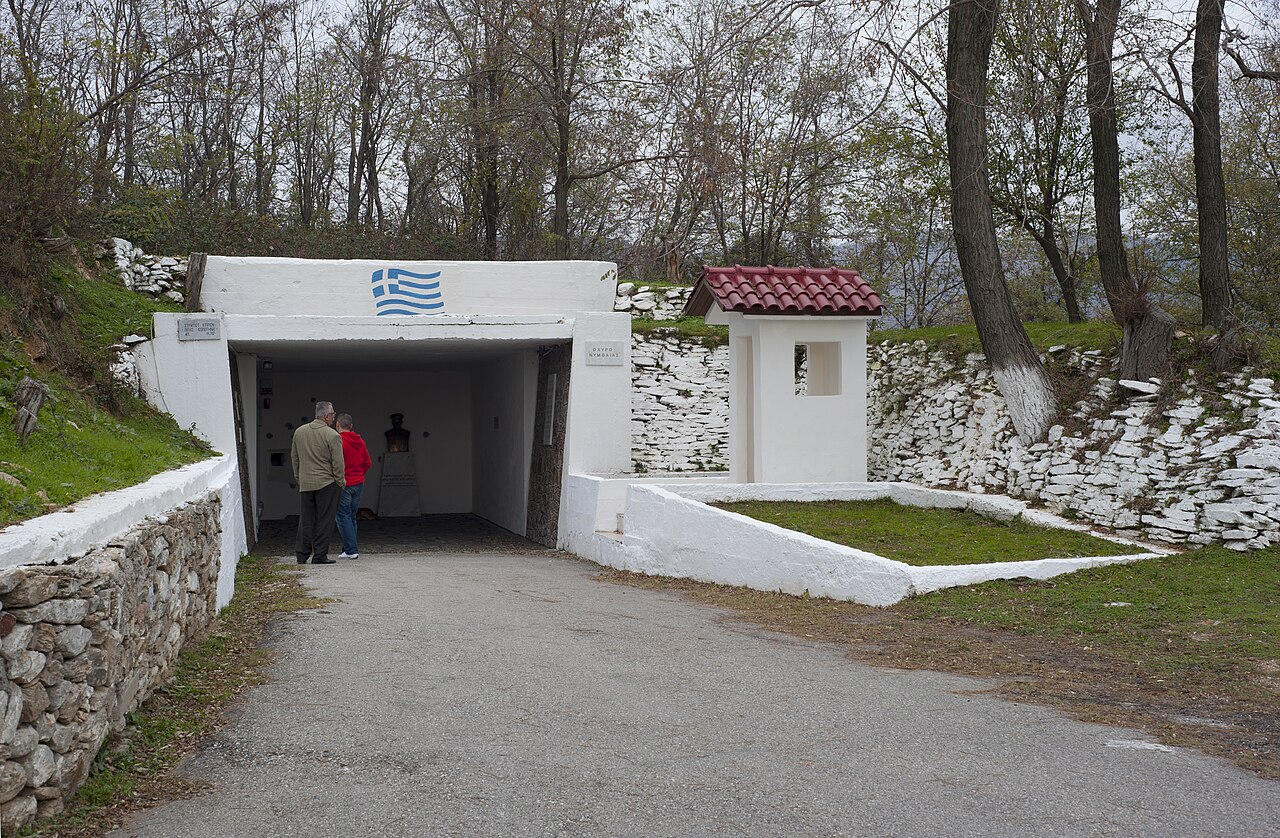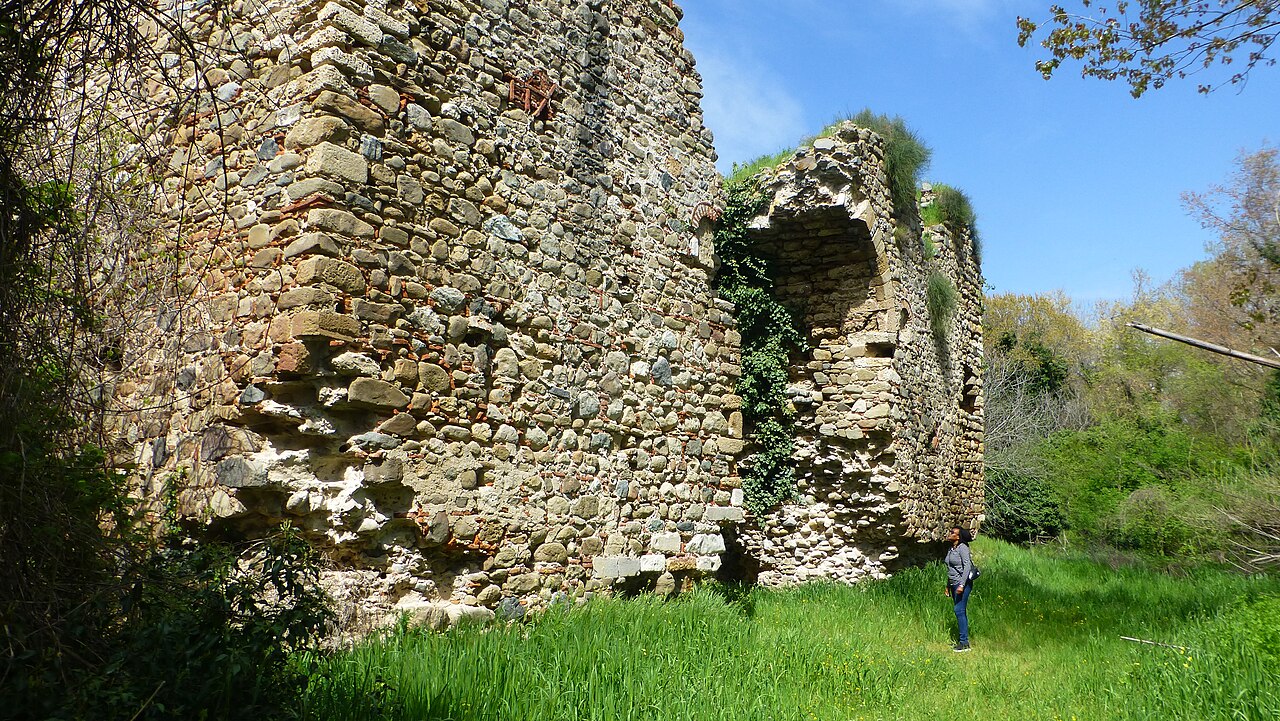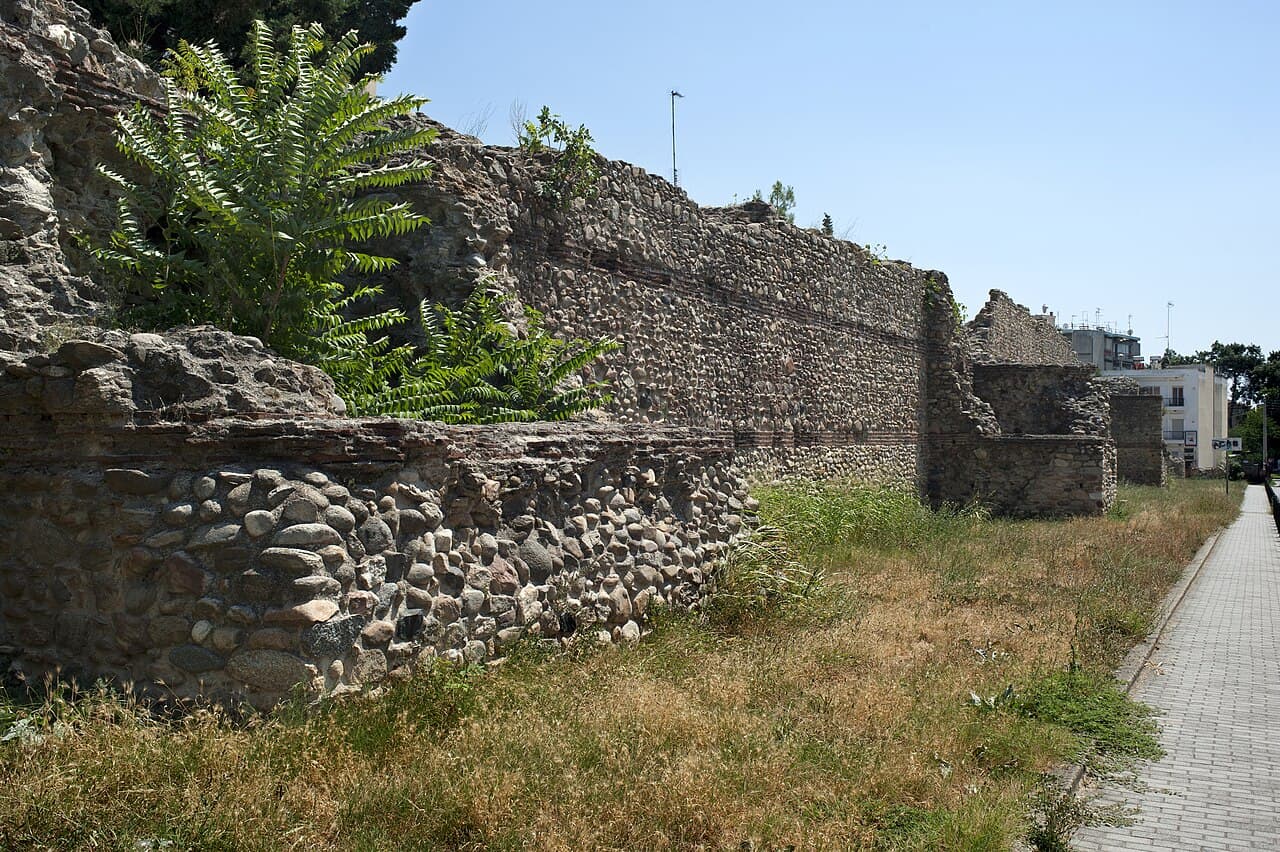
Frourio Komotini — Greece castle

Frourio Komotini

Frourio Komotini hill castle in Greece
Partially Preserved

Frourio Komotini is a notable hill castle located in the region of northeastern Greece. This castle is historically significant for its role in the defense and administration of the area, particularly during the medieval period. Its elevated position on a hill provided strategic advantages for surveillance and protection against invaders.

Historical background and significance

The castle's origins trace back to the Byzantine era, with subsequent modifications and fortifications added during the Ottoman period. It served as a military stronghold and administrative center, overseeing the surrounding region and controlling key routes. The castle's presence reflects the turbulent history of the area, marked by frequent conflicts and changing rulers.

Architectural features and layout

The castle is characterized by its stone curtain walls that enclose the inner courtyard, with remnants of defensive towers strategically placed along the perimeter. The walls incorporate arrow slits and battlements designed for archers and artillery defense. Although some sections have deteriorated over time, the structural layout reveals a typical hill castle design optimized for defense and visibility.

Defensive structures

The castle's fortifications include a main gatehouse fortified with a portcullis and guard chambers. The towers, positioned at key points, allowed defenders to monitor and repel attacks effectively. The elevated location also enabled defenders to observe approaching enemies from a distance.

Internal buildings

Within the castle walls, there are remains of residential quarters, storage facilities, and a small chapel. These structures indicate the castle's dual function as both a military installation and a place of habitation for soldiers and administrators.

Strategic location and landscape

Situated on a prominent hill, Frourio Komotini overlooks the surrounding plains and roadways. This vantage point was crucial for controlling movement through the region and providing early warning of potential threats. The natural topography enhanced the castle's defensive capabilities, making it difficult for attackers to mount a successful siege.

Current condition and preservation

Today, Frourio Komotini is partially preserved, with significant portions of its walls and towers still standing. The site is accessible to visitors interested in exploring its historical and architectural heritage. Preservation efforts focus on maintaining the existing structures and preventing further deterioration.

Visiting information and cultural importance

The castle is a cultural landmark in the region, attracting historians, archaeologists, and tourists. It offers insight into the medieval military architecture of Greece and the historical dynamics of the area. Visitors can explore the ruins, enjoy panoramic views, and learn about the castle's role in regional history.

Frequently asked questions (FAQ)

What is Frourio Komotini and where is it located?
Frourio Komotini is a historic hill castle situated in northeastern Greece, known for its medieval fortifications and strategic position.
Can visitors access Frourio Komotini today?
Yes, the castle is partially preserved and accessible to visitors who wish to explore its ruins and enjoy the views from its elevated location.
What architectural features does Frourio Komotini have?
The castle features stone curtain walls, defensive towers, arrow slits, battlements, and remnants of internal buildings such as residential quarters and a chapel.
Why was Frourio Komotini built on a hill?
Its hilltop location provided strategic advantages for defense, surveillance, and control over surrounding plains and key routes.
Is there any information on the castle's historical periods?
The castle has origins in the Byzantine era with modifications during the Ottoman period, reflecting the region's complex history.

Photo gallery

Frourio Komotini
Click to view

Photo by User:Ggia•CC BY-SA 3.0

1 photo • Click any image to view in full screen

Information

Hill Castle

Loading map...

Visitor reviews

No reviews yet. Been here? Write the first review and help other travelers!

Write the first review

Visited this castle? Share your experience

Your review helps other travelers and adds first-hand knowledge to our encyclopedia.
Write a review

(5/5)

0/2000 characters

Your review will be visible after admin approval

Nearby castles

7.7 km
Frourio Nymfaia — Greece castle

Frourio Nymfaia

, Greece

Frourio Nymfaia represents a significant example of a medieval fortress located in Greece, now preserved as archaeological ruins. Though the exact city of its location remains uncertain, this site offers valuable insights into the defensive architecture and historical military strategies of the region during the medieval period. Historical context and significance The fortress known as Frourio Nymfaia was likely constructed during the Middle Ages, a time when fortifications played a crucial role in protecting settlements and controlling strategic routes. Castles and fortified sites such as this one were essential for defense against invasions and local conflicts. The remains of Frourio Nymfaia contribute to understanding the broader historical landscape of medieval Greece, where various powers including Byzantine, Frankish, and Ottoman influences intersected. Architectural features and layout As an archaeological ruin, Frourio Nymfaia preserves remnants of its original stone walls and defensive structures. The fortress likely included typical medieval features such as thick curtain walls, towers for surveillance and defense, and possibly a gatehouse controlling access. The layout would have been designed to maximize defense, with elevated positions and limited entry points. Defensive walls and towers The surviving walls of Frourio Nymfaia show evidence of robust construction techniques characteristic of medieval fortifications. These walls would have been constructed to withstand sieges and attacks, incorporating battlements and arrow slits for archers. Towers, positioned at strategic intervals, provided vantage points for defenders to monitor the surrounding area and repel attackers. Interior structures and courtyards Within the fortress, there may have been courtyards serving as gathering and operational spaces for troops. Although much of the internal buildings have not survived intact, archaeological studies suggest the presence of living quarters, storage rooms, and possibly a chapel or small church, which were common in medieval castles. Current condition and archaeological importance Today, Frourio Nymfaia exists primarily as ruins, with many of its original structures reduced to foundations and partial walls. These remains are valuable for archaeological research, providing material evidence of medieval military architecture and settlement patterns in Greece. Preservation efforts focus on stabilizing the ruins and facilitating study and public access. Visiting Frourio Nymfaia As an archaeological site, Frourio Nymfaia may be accessible to visitors interested in medieval history and architecture. Visitors can explore the ruins to observe the layout and construction techniques of a medieval fortress firsthand. Information panels or guided tours, if available, would enhance understanding of the site's historical context and architectural significance. Frourio Nymfaia in the broader context of Greek medieval fortifications This fortress is part of a network of medieval castles and fortifications across Greece that illustrate the region's turbulent history. These sites reflect the strategic importance of controlling trade routes, defending against invasions, and asserting political power during the medieval period. Frourio Nymfaia adds to this narrative by offering a glimpse into local defensive architecture and historical military presence.

Late Medieval (14th–15th c.)
Details
11.9 km
Oxyro Nymfaias — Greece castle

Oxyro Nymfaias

, Greece

Oxyro Nymfaias is a notable example of a bastioned fortress located in Greece, reflecting the military architectural advancements that were prominent in the region. Although the exact city location remains unspecified, the fortress is recognized for its strategic design aimed at defense and control during periods of conflict.Architectural features and designThe fortress is characterized by its bastioned fortifications, which were a significant development in castle architecture. Bastions are angular structures projecting outward from the main walls, allowing defenders to cover adjacent walls with flanking fire. This design minimized blind spots and enhanced the fortress's ability to withstand sieges and artillery attacks. The walls of Oxyro Nymfaias would have been constructed robustly to resist cannon fire, a feature typical of bastioned fortresses that emerged in the late medieval to early modern periods.Defensive structuresWithin the fortress, one would expect to find thick curtain walls connecting the bastions, moats or ditches surrounding the perimeter, and gatehouses designed to control access. The bastions themselves likely contained platforms for mounting cannons or other artillery, reflecting the adaptation of castle defenses to gunpowder weaponry. The layout would have been carefully planned to maximize defensive coverage and provide secure areas for troops and supplies.Historical context and significanceWhile specific historical records about Oxyro Nymfaias are limited, bastioned fortresses in Greece generally date from the late medieval to early modern periods, a time when the introduction of gunpowder weapons transformed military architecture. Such fortresses were often constructed or upgraded in response to the increasing threat of artillery and changing warfare tactics. Oxyro Nymfaias would have played a role in regional defense, possibly overseeing important routes or coastal approaches, depending on its exact location.Military and strategic importanceThe bastioned design indicates a focus on defense against both traditional siege methods and artillery bombardment. This suggests that Oxyro Nymfaias was part of a network of fortifications intended to protect territories from invasion or rebellion. Its position in Greece places it within a historically contested region, where control of fortresses was crucial for maintaining political and military power.Preservation and current conditionThe current preservation state of Oxyro Nymfaias is not widely documented, but bastioned fortresses often survive as partially preserved or ruined structures due to their robust construction. Such sites are valuable for archaeological study and cultural heritage, offering insights into the evolution of military architecture and regional history.Tourism and accessibilityInformation on visitor access and facilities at Oxyro Nymfaias is scarce. However, bastioned fortresses in Greece typically attract interest from historians, architects, and tourists interested in military history. Visitors to similar sites can often explore the remains of walls, bastions, and other defensive features, gaining an understanding of the fortress's strategic design.

Late Medieval (14th–15th c.)
Details
25.8 km
Anastasiopolis — Greece castle

Anastasiopolis

, Greece

Anastasiopolis-Peritheorion is a significant archaeological site located in northern Greece, within the Rhodope regional unit of Western Thrace, southeast of the village of Amaxades. This site preserves the remains of an ancient fortified city that played a strategic role from the 5th to the 9th centuries. It stands as a testament to the region's historical importance as a coastal hub and a key waypoint along the Via Egnatia, the major Roman road connecting the Adriatic Sea to Byzantium (modern Istanbul). Historical background and significance The ancient city known as Anastasiopolis was likely established during the Late Roman period, named in honor of the Byzantine Emperor Anastasius I (reigned 491–518 AD). The city functioned as a fortified port on the Aegean Sea, facilitating maritime trade and military movements. Over time, the site also became known as Peritheorion, a name that appears in Byzantine sources from the 9th century. Scholars debate whether Anastasiopolis and Peritheorion represent two distinct settlements or a single city that underwent a renaming or administrative transformation. Located along the Via Egnatia, Anastasiopolis-Peritheorion was a critical station on this vital east-west route. The road connected the western provinces of the Roman Empire with Constantinople, enhancing the city's strategic and economic importance. The city's fortifications were likely strengthened in response to increasing threats during the early medieval period, including Slavic and Bulgarian incursions. Architectural features and fortifications The remains visible today primarily consist of the fortification walls that once enclosed the city. These walls date from different phases, with the earliest sections attributed to the 5th century and later additions and repairs extending into the 9th century. The walls are constructed from local stone and brick, featuring typical Byzantine defensive elements such as battlements and towers positioned at intervals to provide vantage points for surveillance and defense. The fortifications likely included a main gate controlling access to the city, as well as smaller posterns and watchtowers. The layout suggests a well-planned defensive system designed to protect the harbor and the urban area from seaborne and land-based attacks. Archaeological research and preservation Archaeological investigations at Anastasiopolis-Peritheorion have uncovered fragments of the city walls, foundations of buildings, and artifacts that attest to the city's occupation and function. The site remains partially excavated, with ongoing research aiming to clarify the city's historical phases and its relationship to the broader Byzantine frontier system. Due to its condition as ruins, the site is an important cultural heritage location that provides insights into Byzantine urbanism and military architecture in the northern Aegean region. Preservation efforts focus on stabilizing the existing walls and protecting the site from natural and human-induced deterioration. Geographical context and accessibility Situated in the coastal plains of Western Thrace, Anastasiopolis-Peritheorion overlooks the Aegean Sea, offering a strategic maritime position. Its proximity to the modern village of Amaxades allows for potential visitor access, although the site is not a major tourist destination and facilities are limited. The location along the ancient Via Egnatia highlights the city's historical role as a crossroads between Europe and Asia, linking various cultures and trade networks over centuries.

Late Medieval (14th–15th c.)
Details